

Will Diverticulitis Come Back? What Follow-Up Care Does to Lower the Odds of Another Attack

Key Takeaways
- Fewer than 5% of people with diverticulosis ever develop diverticulitis, and most who do have only one attack, according to NIDDK.
- The old rule of removing the colon after two attacks has been abandoned because later episodes are usually no more severe than the first.
- Nuts, seeds, and popcorn have not been shown to trigger diverticulitis, and avoiding them removes useful fiber for no proven benefit.
- A colonoscopy after an attack is mainly to rule out conditions that mimic diverticulitis and is typically timed around 6–8 weeks after recovery.
- NSAIDs, corticosteroids, and opioids are associated with higher risk of diverticulitis and perforation, so every prescriber should know your history.
- Regular physical activity and not smoking are linked to lower rates of both recurrence and complicated attacks in the cohort data summarized by Mayo Clinic and Harvard Health.
Diverticulitis can return, but most people who recover from a first uncomplicated attack never have another. Consumer health summaries put the chance of a second episode at roughly one in five to one in three over the following years. Follow-up care lowers that risk by confirming the diagnosis, checking the colon has healed, treating constipation, adjusting risk factors such as smoking and inactivity, and planning early action if pain returns.
The antibiotics are finished, the low-grade fever is gone, and the left lower belly no longer flinches when the car hits a pothole. Then comes the quieter worry, usually late in the evening: will this happen again? For anyone who has spent a night in an emergency department with diverticulitis, the question of diverticulitis recurrence tends to outlast the pain itself.
The honest answer is more reassuring than the internet suggests, and more nuanced than a simple yes or no. Recurrence is real, and some people do ride a frustrating cycle of flares. Yet the majority of first attacks are a one-time event, and the choices made in the weeks afterward, from the follow-up scan to the fiber on your plate, genuinely change the odds.
This explainer walks through what actually happens inside the colon, who tends to get careful follow-up and who is asked to simply watch and wait, and where the evidence is solid, thin, or plainly mythical.
What diverticulitis recurrence actually means, and how common it is
Diverticula are small pouches that bulge outward through weak spots in the wall of the colon, most often in the sigmoid section on the lower left. Having them is called diverticulosis, and it is extraordinarily common: the National Institute of Diabetes and Digestive and Kidney Diseases estimates that about 58% of Americans over 60 have diverticulosis, and most never know it. Diverticulitis is different. It means one or more pouches have become inflamed or infected, producing pain, tenderness, and often fever.
Diverticulitis recurrence simply means a second (or third) episode after a first one has fully settled. The word matters because doctors distinguish it from a flare that never quite resolved, and from persistent low-grade discomfort without inflammation, which has its own name and its own management.
How often does it come back? Fewer than 5% of people with diverticulosis ever develop diverticulitis at all, according to NIDDK. Among those who do, Harvard Health and Cleveland Clinic summaries suggest that somewhere between roughly one in five and one in three will experience another episode in the years that follow. Put the other way around: most people who have one attack do not have a second.
Two more points reshape the picture. First, when recurrence happens, it is usually no more severe than the first attack, a finding that overturned decades of surgical habit. Second, the risk is not evenly spread. Age at first attack, whether the first episode involved complications, and everyday factors such as smoking and body weight all tilt the odds, which is exactly why follow-up care is worth taking seriously.
What causes diverticulitis to keep coming back?
Nobody has a single, tidy explanation for why pouches that sat quietly for decades suddenly inflame, or why some people cycle through repeated flares. The older theory blamed a stray nut or seed lodging in a pouch. Research has not supported that idea, and Mayo Clinic now states plainly that there is no evidence these foods trigger attacks.
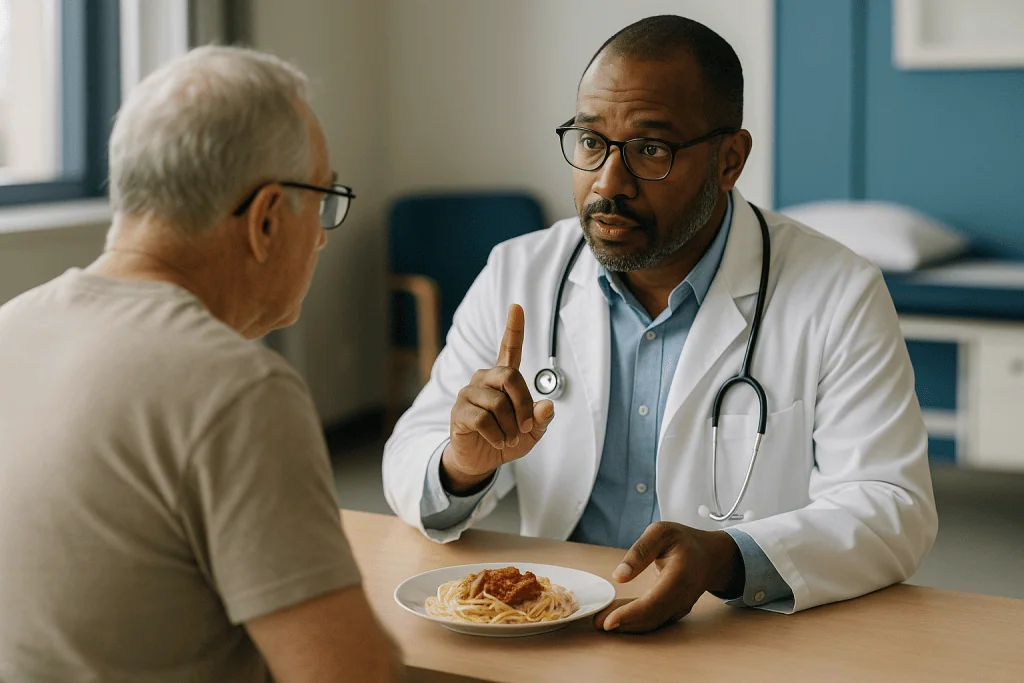
The current understanding, described across Mayo Clinic, Cleveland Clinic, and NIDDK, points to a mix of mechanical and biological factors:
- Pressure and stool consistency. Hard, infrequent stools raise pressure inside the colon. Pouches form where that pressure pushes the lining through gaps in the muscle wall, and a pouch under repeated strain may develop tiny tears that let bacteria into the surrounding tissue.
- Low-grade, ongoing inflammation. Some people appear to have a colon wall that stays mildly irritated between attacks, making the next episode more likely.
- Gut bacteria. Shifts in the microbial community lining the colon are being studied as a contributor, though this remains an area of active research rather than settled fact.
- Genetics. Studies of twins suggest inherited tendency accounts for a meaningful share of risk.
Layered on top are lifestyle factors that Mayo Clinic lists as raising risk: aging, obesity, smoking, physical inactivity, a diet high in animal fat and low in fiber, and certain medicines including steroids, opioids, and nonsteroidal anti-inflammatory drugs (NSAIDs, the common over-the-counter pain relievers such as ibuprofen).
The practical takeaway is that recurrence is rarely about one bad meal. It reflects a colon wall under sustained strain, and most of the levers that change that strain are the unglamorous, long-haul ones: bowel habit, movement, smoking, and weight.
How diverticulitis works inside the colon, in plain language
Picture the colon as a garden hose with a slightly worn wall. Where the rubber is thin, pressure from inside pushes out small blisters. Those blisters are diverticula. Their walls are thinner than the rest of the colon because they lack the full muscle layer, which is precisely why they are vulnerable.
An attack begins when the lining of a pouch is breached. Sometimes a hard bit of stool erodes the surface; sometimes the blood supply to the thin wall is briefly reduced. Either way, bacteria that normally live harmlessly inside the colon now reach tissue that was never meant to meet them. The immune system responds with swelling, warmth, and pain, felt most often in the lower left abdomen because that is where most pouches sit in Western populations.
What happens next determines whether the attack is called uncomplicated or complicated. In an uncomplicated episode, the inflammation stays contained around the pouch and gradually settles, with or without antibiotics. NHS guidance notes that symptoms usually start to improve within 2–3 days once treatment begins.
A complicated episode means the process has spread. The main forms, described by Mayo Clinic, are an abscess (a walled-off pocket of pus), a perforation (a hole allowing colon contents to leak), a fistula (an abnormal tunnel to another organ such as the bladder), or a stricture (scarring that narrows the colon). Complicated attacks are the minority, but they change everything about follow-up, which is why the first question a clinician asks when planning after-care is not how bad the pain was but what the imaging showed.
Once an attack heals, the pouch does not disappear. Scar tissue may make it slightly stiffer, and the same segment remains the most likely site for any future episode.
Who usually gets active follow-up, and who is usually asked to wait and watch
Follow-up after diverticulitis is not one-size-fits-all, and the differences are deliberate. Broadly, care teams sort people into groups based on how the first attack behaved.

Watchful waiting is usually offered to people whose first episode was uncomplicated on CT scan, who recovered fully, and who have no unusual features. For this group, guidance summarized by Mayo Clinic and Cleveland Clinic focuses on a single clinical review to confirm recovery, advice on diet and bowel habit, and clear instructions on what to do if pain returns. Many of these people are not asked to have any further tests unless something new appears.
Closer follow-up is usually arranged for people with a complicated first attack, an attack that was slow to settle, symptoms that linger beyond the expected 2–3 weeks, or a first episode at a younger age, since more years of life mean more opportunity for recurrence. Anyone whose imaging raised a question about the colon wall, or who has never had a colonoscopy, is also more likely to be scheduled for one.
Referral to a specialist typically follows repeated episodes, a persistent abscess, a fistula, signs of narrowing such as new constipation or thin stools, or a person who is immunosuppressed (has a weakened immune system because of illness or medicines), because attacks in that group carry higher complication rates.
None of these categories is rigid. A clinician weighs the whole picture, including other health conditions, how the person lives, and how anxious they feel about another episode. Someone told to wait and watch has not been dismissed; they have been given the follow-up plan that matches their evidence-based risk, and the door stays open if anything changes.
Uncomplicated versus complicated attacks: how follow-up differs
The single most useful thing to know about your own case is which column you sit in. The table below summarizes typical differences described across Mayo Clinic, NHS, and Cleveland Clinic guidance. Individual plans vary, and your treating team decides what applies to you.
| Feature | Uncomplicated first attack | Complicated first attack |
|---|---|---|
| What the scan shows | Inflammation confined around a pouch | Abscess, perforation, fistula, or stricture |
| Where treatment usually happens | Often at home, sometimes with a short hospital stay | Usually in hospital |
| Antibiotics | Not always needed in otherwise healthy people; decided case by case | Standard part of treatment |
| Typical symptom improvement | Within 2–3 days of starting treatment (NHS) | Longer; depends on the complication |
| Colonoscopy afterward | Considered if never had one or if anything is atypical | Commonly recommended, often around 6–8 weeks after recovery (Mayo Clinic) |
| Discussion of preventive surgery | Rarely, unless episodes repeat or quality of life suffers | More often, especially after abscess, fistula, or stricture |
| Chance of recurrence | Lower; most people have no further episode | Higher, and higher chance the next one is also complicated |
Two clarifications keep this table honest. The 6–8 week colonoscopy window is a typical range, not a rule, and it is chosen because the colon needs time to heal before a scope can pass safely and see clearly. And the phrase ‘not always needed’ about antibiotics reflects a real shift in practice: several trials found that selected people with mild uncomplicated diverticulitis recovered just as well without them. That decision belongs to the clinician who has seen your scan and your blood tests, never to a website.
What the first weeks after a diverticulitis attack usually look like
Recovery has a rhythm, and knowing it helps separate normal healing from a warning sign.
Days 1 to 3. Pain and tenderness are at their peak and then begin to ease. Many people are advised to rest the bowel with clear liquids for a short period, then move to low-fiber foods as symptoms settle. NHS guidance describes this early improvement as typically beginning within 2–3 days of treatment starting. Fever should fall during this window.
Days 4 to 14. Appetite returns. Diet progresses back toward normal, and the lower belly may still feel bruised or sensitive to pressure. Fatigue is common and usually reflects the body’s inflammatory response rather than ongoing infection. A follow-up call or visit often falls here to confirm the trajectory is right.
Weeks 2 to 6. Most people feel largely themselves. This is when the conversation shifts from treating to preventing: fiber intake climbs gradually, activity resumes, and any bowel-habit problems get addressed. Some people notice intermittent twinges or a change in stool pattern for several weeks; Cleveland Clinic notes that lingering symptoms warrant review rather than alarm.
Weeks 6 to 8 and beyond. If a colonoscopy has been recommended, it is usually scheduled once the colon has had roughly this long to heal, per Mayo Clinic. Any discussion about longer-term strategy, including whether surgery has a role, typically waits until this point so that decisions are made on a calm colon rather than an inflamed one.
A caution on the calendar: these are typical ranges drawn from published guidance, not promises. Older adults, people with other illnesses, and anyone whose first attack was complicated often move through these stages more slowly, and that is expected rather than worrying.
Do I need a colonoscopy after diverticulitis?
This is one of the most common questions at the follow-up visit, and the answer has changed as imaging has improved.
The purpose of a colonoscopy after diverticulitis is not to look at the pouches, which a CT scan has already shown. It is to make sure that what looked like diverticulitis on the scan was not, in a small minority of cases, something else that can mimic it, including colorectal cancer or inflammatory bowel disease. Mayo Clinic describes this as ruling out other conditions once the inflammation has resolved.
Who is usually asked to have one? Practice summarized by Mayo Clinic and Cleveland Clinic leans toward recommending a colonoscopy when:
- the attack was complicated (abscess, perforation, fistula, or stricture);
- the person has never had a colonoscopy, or is overdue for routine screening;
- symptoms did not settle as expected, or something on the CT scan looked atypical;
- there are additional features such as unexplained weight loss, anemia, or rectal bleeding.
For a healthy person with an uncomplicated attack, a clear CT scan, and a recent normal colonoscopy, many clinicians now consider a repeat scope unnecessary. The reasoning is that modern CT is very good at distinguishing diverticulitis from other causes, and that the yield of finding an unexpected problem in this group is low. Your own team will weigh your age, family history, and screening status.
Timing matters for safety. Scoping an inflamed colon carries a higher risk of injury and gives a poorer view, so the procedure is typically deferred until about 6–8 weeks after recovery, according to Mayo Clinic. If you are due for one, it is worth asking whether it can double as your routine screening test so you are not scheduled for two.
What is the recommended diet for people with diverticular disease, and does it prevent recurrence?
Diet advice for diverticular disease has a split personality, and understanding why removes a lot of confusion.
During an attack, the goal is to rest the bowel. Clinicians often suggest clear liquids for a day or two, then soft, low-fiber foods, before returning to a normal diet as pain fades. This is a short-term measure, not a way of life.
Between attacks, the advice flips. A higher-fiber diet is the cornerstone recommendation from NHS, Mayo Clinic, and NIDDK for long-term diverticular disease. Fiber softens and bulks stool, reducing the pressure inside the colon that strains pouch walls. The general adult target cited by the NHS is around 30 g of fiber a day, which most people in the United States and United Kingdom fall well short of. Increasing it gradually over several weeks, with plenty of fluid, avoids the bloating that makes people give up.
Good sources are unremarkable but effective: whole grains, beans and lentils, fruit with the skin on, vegetables, nuts, and seeds. Yes, nuts and seeds. The long-standing instruction to avoid them has been examined in large studies and not supported; Mayo Clinic states there is no evidence these foods cause diverticulitis.
What about red meat? Harvard Health notes that diets high in red meat and low in fiber are associated with higher diverticulitis risk in observational studies. Association is not proof, but shifting toward plant-forward eating is consistent with both diverticular and cardiovascular guidance.
A frank word on the evidence: fiber clearly helps constipation and is linked to lower risk of developing diverticular disease, but trials proving it prevents a second attack in people who have already had one are limited. Most clinicians recommend it anyway, because the downside is negligible and the broader health benefits are well established.
Can diverticulosis cause pain during exercise? Movement, weight, and smoking
People often notice their abdomen more after an attack, and a twinge during a run or a heavy lift can spark fear of recurrence. The reassuring point is that diverticulosis itself, the presence of pouches without inflammation, is usually painless. Johns Hopkins describes most people with diverticulosis as having no symptoms at all. Exercise-related abdominal discomfort has many causes, including muscle strain, gas, and simple jostling of a recently inflamed area, and it does not by itself signal a new attack. Pain that is steady, worsening, or comes with fever is a different matter and belongs in the ‘when to call’ section below.
Far from being a risk, physical activity appears protective. Mayo Clinic lists lack of exercise among the factors that raise diverticulitis risk, and Harvard Health summarizes cohort data showing that people who are regularly active, particularly with vigorous activity, have lower rates of diverticulitis than sedentary peers. The mechanism is thought to involve faster colonic transit and lower pressure inside the bowel.
Body weight is a second modifiable lever. Obesity, especially fat carried around the abdomen, is associated with a higher risk of both diverticulitis and its complications in the studies Mayo Clinic cites. This is not a matter of blame; it is a matter of mechanics and inflammation, and even modest changes in activity and diet are worth discussing with your team.
Smoking rounds out the trio. Smokers have higher rates of diverticulitis and of perforation, according to Mayo Clinic’s summary of risk factors. Quitting is the one change on this list with the strongest evidence for lowering the chance that any future attack turns complicated.
Once your clinician confirms recovery, returning to your usual exercise is generally encouraged rather than restricted. Start gently, and let the colon set the pace.
Medicines and diverticulitis recurrence: what the evidence actually supports
Patients frequently ask whether a pill can keep diverticulitis away. The truthful answer is that no medicine has been shown to reliably prevent recurrence, and several that were once hoped to help have not held up.
Antibiotics treat an active infection. They do not prevent the next one, and there is no role for taking them ‘just in case’ between episodes. For mild uncomplicated attacks in otherwise healthy people, trials have shown that recovery can be just as good without antibiotics, a finding reflected in NHS and Mayo Clinic guidance. Whether you need them is a decision for the clinician who has examined you.
Anti-inflammatory bowel medicines of the aminosalicylate class, used in inflammatory bowel disease, were tested in several trials for preventing diverticulitis recurrence. The results were disappointing, and mainstream guidance does not recommend them for this purpose.
Probiotics are widely marketed for gut health. NIDDK and Cleveland Clinic note that evidence they prevent diverticulitis recurrence is insufficient. They are not known to be harmful for most people, but they should not be presented as an effective preventive therapy, because the evidence does not support that claim.
Medicines that may raise risk deserve more attention than those that might lower it. Mayo Clinic lists NSAIDs, corticosteroids, and opioids as associated with higher risk of diverticulitis and, importantly, of perforation. Many people take NSAIDs routinely for joint pain or headaches. If you have had diverticulitis, tell every prescriber, and ask whether an alternative approach to pain is appropriate. Never stop a prescribed medicine on your own; some, particularly steroids, must be reduced under supervision.
Fiber supplements occupy a middle ground: they treat constipation effectively and are commonly suggested when dietary fiber alone falls short. Your team can advise whether one suits you.
When is recurrent diverticulitis surgery considered?
For decades, the rule of thumb was blunt: two attacks, then remove the affected segment of colon before a third. That rule has been retired, and understanding why says a lot about how thinking on recurrence has matured.
Surgeons abandoned the two-strikes approach when long-term data showed that later attacks are generally no more dangerous than the first, and that most people who have two episodes do not go on to have a catastrophic third. Removing a section of bowel carries its own risks, including infection, leakage at the join, and the possibility of a temporary stoma (an opening on the abdomen through which stool passes into a bag). Operating on everyone after two flares exposed many people to those risks without a clear benefit.
Today, Mayo Clinic and Cleveland Clinic describe surgery as an individualized decision, usually considered when:
- a complication such as a fistula, a stricture causing obstruction, or a persistent abscess has developed;
- a perforation with widespread leakage requires emergency treatment;
- episodes are frequent and are seriously eroding quality of life;
- the person is immunosuppressed, since attacks in that setting carry higher complication rates;
- there is uncertainty about the diagnosis that only removing the segment can resolve.
The operation, called a colectomy or sigmoid resection, removes the diseased segment and joins the healthy ends. It is often performed with minimally invasive techniques. Emergency operations are more likely to need a stoma than planned ones, which is one reason clinicians try to control inflammation first and operate, if at all, on a calm bowel.
Surgery reduces the chance of recurrence in the removed segment but does not eliminate the possibility of diverticulitis elsewhere in the colon. The alternative, continued medical management with prompt treatment of any flare, remains the right path for many people. The choice always rests with the patient and the treating team together.
What is the prognosis for recurrent diverticulitis?
Prognosis is a heavy word for what is, for most people, a manageable condition. Here is what the evidence supports, without gloss.
Most people who have a first uncomplicated attack recover fully and never have another. Of the minority who do experience diverticulitis recurrence, consumer summaries from Harvard Health and Cleveland Clinic suggest that the great majority of repeat episodes are also uncomplicated. Having had one attack does not, by itself, put you on a path toward perforation; the belief that each episode is worse than the last is the misconception that used to drive unnecessary surgery.
Risk does concentrate in certain groups. A complicated first attack raises the chance of both recurrence and future complications. Younger age at the first episode means more years at risk. Immunosuppression, smoking, and ongoing NSAID use all shift the odds unfavorably, according to Mayo Clinic’s summary of risk factors.
Some people develop a lingering pattern that is not quite recurrence: intermittent lower-abdominal discomfort, bloating, and altered bowel habit without fever or inflammation on scan. Clinicians call this symptomatic uncomplicated diverticular disease. It overlaps with irritable bowel syndrome and is managed with diet, bowel-habit regulation, and reassurance rather than antibiotics.
Long-term, the pouches remain, and the condition is best thought of as chronic but usually quiet. Diverticular disease is common enough that, according to Johns Hopkins, it is one of the most frequent reasons for gastrointestinal-related hospital visits in the United States, yet the overwhelming majority of people with diverticulosis live their whole lives without an attack.
What follow-up changes is not the underlying anatomy but the response to it: catching a flare early, avoiding the medicines and habits that tip toward complications, and having a plan so that the next twinge produces a phone call rather than a panic.
What people often get wrong about preventing diverticulitis flare ups
Diverticulitis attracts more folklore than most gut conditions, partly because the old advice was so confidently given. Several myths deserve a plain correction.
Myth: nuts, seeds, popcorn, and corn get stuck in the pouches and cause attacks. Large observational studies found no such link, and some found lower rates of diverticulitis among people who ate nuts and popcorn regularly. Mayo Clinic states there is no evidence these foods trigger attacks. Avoiding them removes good fiber sources for no benefit.
Myth: each attack is worse than the last, so surgery after two is inevitable. Follow-up data showed the opposite pattern for most people, and the two-attack rule has been dropped from mainstream practice.
Myth: once you have had diverticulitis, you should eat a permanent low-fiber diet. Low fiber is a short-term measure during a flare. Between attacks, NHS and NIDDK guidance is firmly the reverse: more fiber, not less.
Myth: antibiotics are always required. Selected people with mild uncomplicated diverticulitis recover without them, and unnecessary courses carry their own downsides. Whether you need them is a clinical judgment made on your specific case.
Myth: probiotics or a special supplement will prevent the next episode. The evidence does not support this claim. Products may be harmless, but they should not replace the measures that do have support.
Myth: exercise is risky for a colon with pouches. Regular physical activity is associated with lower risk, not higher.
Myth: diverticulitis is a sign of something you did wrong. Genetics and aging account for much of the risk. Lifestyle factors matter and are worth addressing, but a diagnosis is not a verdict on character.
The pattern in these myths is the same: an intuitive story, repeated so often it felt like fact, eventually tested and found wanting. Good follow-up care replaces the stories with what the studies actually show.
Questions to ask your care team about your follow-up plan
The follow-up visit tends to be short, and it is easy to leave without the answers that would let you sleep better. Bringing a list changes that. These questions are drawn from what patients commonly wish they had asked, and none has a universal answer; each depends on your scan, your history, and your team’s judgment.
- Was my attack classified as uncomplicated or complicated, and what exactly did the CT scan show?
- Do I need a colonoscopy, and if so, when is the safest time to schedule it? Can it also serve as my routine screening?
- How long should I expect residual tenderness or bowel changes to last, and at what point would lingering symptoms need another look?
- Which of my current medicines, including over-the-counter pain relievers, might raise my risk of another attack or of complications, and should any be reviewed with my prescriber?
- How much fiber should I be aiming for, how quickly should I increase it, and would a fiber supplement be appropriate for me?
- Is there anything about my age, immune status, or other conditions that puts me in a higher-risk group for recurrence?
- If pain returns, what should I do first: call the office, go to urgent care, or go to the emergency department, and which symptoms decide that?
- Is preventive surgery something we should discuss now, later, or not at all in my situation, and what would change that answer?
- When can I return to my usual exercise, work, and travel?
- Who do I contact if I have questions between visits?
Write the answers down or ask for them in your patient record. A clear plan for ‘what if it comes back’ is itself part of good follow-up, because the biggest difference between a contained flare and a complicated one is often how quickly it is recognized and treated.
When to call your doctor: red-flag signs after diverticulitis
Good follow-up does not lower the chance of recurrence to zero. What it does is make sure that if diverticulitis returns, or a complication develops, you recognize it early. Recovery normally moves steadily in the right direction. Anything that reverses that direction deserves a call the same day.
Contact your care team promptly if you notice:
- abdominal pain that returns, worsens, or spreads after it had been improving;
- fever or chills, especially with belly pain;
- repeated vomiting or inability to keep fluids down;
- no bowel movement or inability to pass gas for more than a day or two, or stools that have become pencil-thin;
- blood in the stool, or stool that is black and tarry;
- burning or pain when passing urine, air bubbles in the urine, or stool in the urine, which can signal a fistula to the bladder;
- symptoms that have not clearly improved within the timeframe your team described, typically a few days after starting treatment.
Seek emergency care immediately, without waiting for a call back, if you have:
- sudden, severe abdominal pain, or a belly that is rigid and exquisitely tender to touch;
- high fever with confusion, rapid heartbeat, or feeling faint;
- heavy rectal bleeding;
- signs of shock such as cold, clammy skin and lightheadedness.
These features can indicate perforation, a large abscess, or bleeding, all of which are treatable but time-sensitive. Mayo Clinic and NHS guidance both emphasize that sudden severe pain or a hard, tender abdomen warrants emergency assessment.
People who are older, who take steroids or other immune-suppressing medicines, or who have diabetes may show fewer warning signs even when a complication is developing, so a lower threshold for calling applies. You are never wasting anyone’s time by reporting a symptom that turns out to be nothing. The decision about what it means, and what to do next, belongs to the clinician who knows your case.
Frequently asked questions
What causes diverticulitis to keep coming back in some people?
Repeated attacks usually reflect a colon wall under ongoing strain rather than a single food or event. Contributing factors described by Mayo Clinic and NIDDK include constipation and high pressure inside the colon, low-grade persistent inflammation, genetic tendency, smoking, obesity, inactivity, and regular use of NSAIDs, steroids, or opioids. A complicated first attack and younger age at onset also raise the chance of recurrence.
How to prevent diverticulitis flare ups without medication?
The measures with the best support are unglamorous: a gradually increased high-fiber diet with plenty of fluid, regular physical activity, not smoking, and maintaining a healthy weight. Avoiding routine NSAID use where a clinician agrees an alternative is suitable also matters. No supplement or probiotic has been shown to prevent recurrence. Discuss any changes with your care team, who can tailor advice to your history.
Do I need a colonoscopy after diverticulitis if my CT scan was clear?
Not always. A colonoscopy after diverticulitis is mainly to rule out conditions that can mimic it on a scan. It is commonly recommended after a complicated attack, if you have never had one, if you are due for screening, or if anything looked atypical. For a healthy person with an uncomplicated attack and a recent normal colonoscopy, many clinicians consider a repeat unnecessary. Your team decides based on your full picture.
What is the best diverticulitis diet after a flare up?
During and immediately after a flare, clinicians often advise clear liquids briefly, then soft low-fiber foods until pain settles. Once recovered, the advice reverses toward a high-fiber diet of whole grains, beans, fruit, vegetables, nuts, and seeds, increased gradually over weeks with adequate fluid. The NHS cites a general adult target of about 30 g of fiber daily. Low fiber is a short-term measure, not a lifelong rule.
Can diverticulosis cause pain during exercise?
Diverticulosis itself is usually painless, so exercise-related twinges more often come from muscle strain, gas, or sensitivity in a recently inflamed area. Physical activity is associated with lower diverticulitis risk, not higher, according to Mayo Clinic and Harvard Health. Steady, worsening abdominal pain, especially with fever, is different and should prompt a call to your doctor rather than being attributed to exercise.
What is the prognosis for recurrent diverticulitis?
For most people, recurrent diverticulitis is manageable and repeat episodes are usually uncomplicated, similar in severity to the first. Risk of complications concentrates in those whose first attack was complicated, who are immunosuppressed, who smoke, or who use NSAIDs regularly. The pouches remain for life, but the condition is typically quiet between attacks, and prompt treatment of any flare keeps outcomes favorable for the majority.
When is recurrent diverticulitis surgery recommended?
Surgery is now an individualized decision rather than an automatic step after two attacks. It is usually considered for complications such as fistula, stricture, or persistent abscess, for emergencies like widespread perforation, for frequent episodes that seriously affect quality of life, or for immunosuppressed people at higher complication risk. The operation removes the affected colon segment and carries its own risks, which your surgeon will weigh with you.
Are antibiotics always needed to treat diverticulitis?
No. Trials have shown that selected otherwise healthy people with mild uncomplicated diverticulitis recover just as well without antibiotics, and NHS and Mayo Clinic guidance reflect this. Antibiotics remain standard for complicated attacks, for people who are unwell, and for those with weakened immune systems. Whether you need them is a clinical judgment made by the clinician who has examined you and reviewed your scan and blood tests.
How long does it take to fully recover from a diverticulitis attack?
Symptoms usually begin improving within 2–3 days of starting treatment, according to the NHS, and most people feel largely themselves within a few weeks. Residual tenderness, fatigue, or changed bowel habit can linger for several weeks. Complicated attacks, older age, and other health conditions typically lengthen recovery. These are typical ranges from published guidance, not promises, and symptoms that stall or reverse should be reported.
Does having diverticulitis increase my risk of colon cancer?
Diverticulitis itself is not considered a cause of colon cancer. The reason a colonoscopy is sometimes recommended afterward is that cancer can occasionally mimic diverticulitis on imaging, so the scope confirms the diagnosis rather than screening for a consequence of the attack. Routine colorectal screening recommendations apply to you as they would to anyone your age, and your team can align the two.
References
- Diverticular disease and diverticulitis (NHS)
- Diverticulosis and Diverticulitis (NIDDK, National Institutes of Health)
- Diverticulitis (Cleveland Clinic)
This article is for general information only and is not a substitute for professional medical advice. Please consult a qualified doctor about your individual situation.

More from the Blog

The Bristol Stool Chart: What Your Stool Type Says About Your Gut
The Bristol stool chart sorts stool into seven types by shape and firmness. Types 1 and 2 (hard lumps or lumpy sausages) usually signal…

Do All Hepatitis B Patients Need Antiviral Medicine? How Specialists Decide
Not everyone with hepatitis B needs antiviral medicine. Most adults who catch it acutely clear the virus on their own, and many people with…

Living With Autoimmune Hepatitis: Alcohol, Vaccines, Work and Long-Term Liver Check-Ups
Most people living with autoimmune hepatitis lead full lives on long-term immune-suppressing medicine, with regular blood tests to confirm the liver stays quiet. Alcohol…

Fever, Pain or Yellow Skin After Gallbladder Surgery: Signs Your Team Wants to Hear About
A low temperature in the first day or two after gallbladder surgery is common and usually settles. A fever of 101°F (38.3°C) or higher,…

Can Cirrhosis Improve With Treatment? What Realistic Progress Looks Like Over Years
Cirrhosis can improve with treatment in a meaningful, measurable way, though established scar tissue rarely disappears completely. When the underlying cause is controlled, such…
What Happens During an ERCP: From Sedation to Clearing a Blocked Bile Duct
During an ERCP you are sedated, a flexible endoscope is passed through the mouth to the top of the small intestine, and a thin…