

Wilms Tumor Prognosis: What Shapes the Outlook and What the Numbers Really Mean
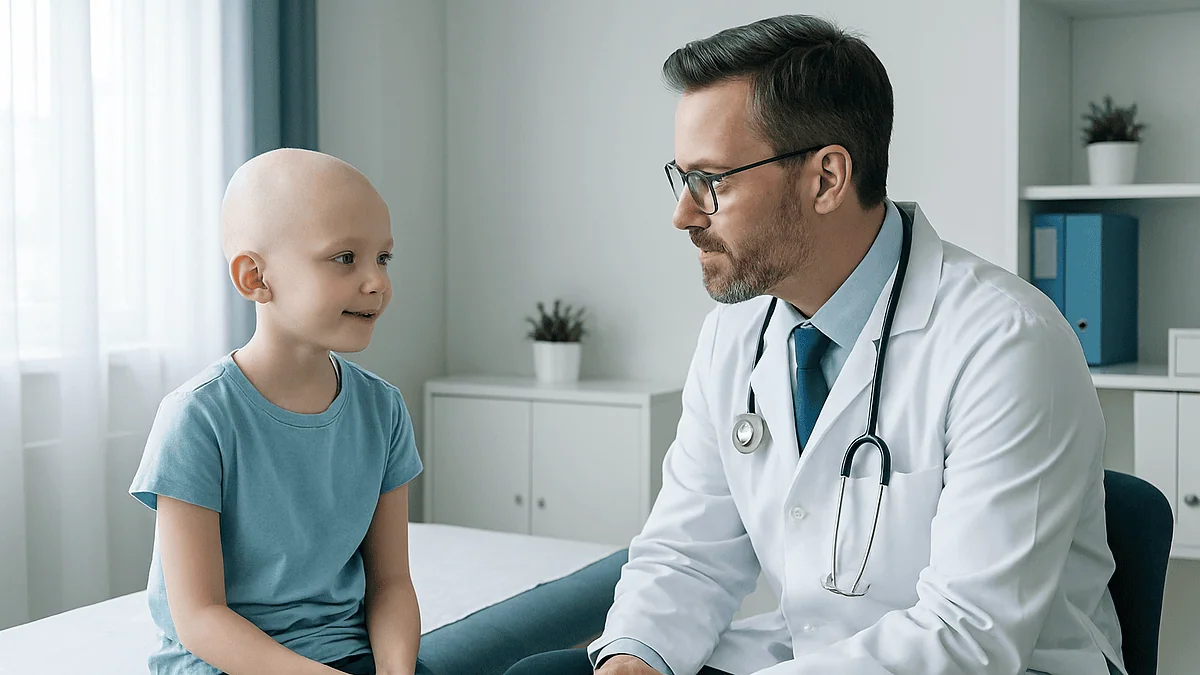
Key Takeaways
- About 9 in 10 children with Wilms tumor are alive five years after diagnosis, a figure that has held steady for two decades while treatment has become gentler.
- Diffuse anaplasia, found in roughly 1 in 10 Wilms tumors, is the single feature that most lowers survival, cutting it to roughly 33 to 40 percent at stage IV versus the high 80s for favorable histology.
- A favorable-histology tumor that has spread to the lungs still carries roughly 86 to 90 percent survival, so distant spread is less decisive than most parents assume.
- Children under two with a stage I favorable-histology tumor weighing under 550 grams may be candidates for surgery alone without chemotherapy.
- Combined loss of chromosome regions 1p and 16q, or gain of 1q, raises relapse risk in favorable-histology tumors and now formally guides treatment intensity.
- Roughly 15 percent of favorable-histology tumors relapse, most within two years, and survival after relapse ranges from about 40 to 80 percent depending on prior treatment and timing.
The prognosis for Wilms tumor is one of the most encouraging in pediatric oncology: about 9 in 10 children are alive five years after diagnosis, according to the National Cancer Institute. Outlook depends chiefly on tumor histology (favorable versus anaplastic), stage at diagnosis, certain chromosomal changes, and the child's age. Survival is highest for early-stage, favorable-histology tumors and lower when diffuse anaplasia or distant spread is present.
It usually starts with a bath. A parent soaps a toddler’s belly and feels something that was not there last week: a firm, smooth bulge to one side, the size of a lemon or larger, that doesn’t hurt when pressed. The child laughs, splashes, and seems fine. That mismatch between a frightening finding and a cheerful kid is one of the odd signatures of Wilms tumor, a kidney cancer that almost exclusively affects children under five.
Within days that family will be sitting across from an oncologist asking the only question that matters: will our child be okay? The honest answer is more hopeful than most people expect, but it comes wrapped in qualifiers: histology, stage, chromosomes, age. Those words carry real weight, and they deserve to be explained rather than glossed over.
This article walks through what the numbers actually measure, which factors move them, and where the evidence is firm versus still forming.
What does prognosis actually mean when a child has Wilms tumor?
Prognosis is a forecast, not a verdict. When clinicians talk about it for Wilms tumor, they are usually referring to two statistics gathered from large cooperative studies: overall survival (the share of children alive at a set point, typically four or five years) and event-free survival (the share who have had no relapse, second cancer, or death in that window). Both figures come from children treated years ago, so they tend to lag behind current practice rather than overstate it.
Survival percentages describe groups, and a group of a thousand children is not your child. A 90 percent figure means that in a large cohort with similar features, roughly 900 of every 1,000 were alive at five years. It does not tell you which 900. What it can do is orient a family: this is a cancer that pediatric oncology has learned to treat well, and most children go on to grow up.
Wilms tumor, also called nephroblastoma, is the most common kidney cancer in children, with about 650 new diagnoses a year in the United States according to the National Cancer Institute, and roughly 80 a year in the United Kingdom according to the NHS. Most children are between two and four when it is found. The rarity matters for prognosis in a practical way: nearly every child is treated on or according to a cooperative-group protocol, which is a large part of why outcomes are so consistent from one center to another.
What is the survival rate for Wilms tumor?
Taken as a whole, about 90 percent of children with Wilms tumor survive at least five years after diagnosis. The National Cancer Institute, Mayo Clinic, and the NHS all cite essentially the same figure, and the NHS phrases it plainly as about 9 in 10 children being cured. That number has been stable for two decades, which is itself telling: the field has shifted its energy from pushing survival higher to reducing how much treatment is needed to get there.
Context makes the figure more meaningful. In the 1930s, before combined surgery, radiation and chemotherapy, most children with this tumor died. By the 1970s, when the first National Wilms Tumor Study reported, survival was already climbing past 70 percent. The improvement came almost entirely from cooperative trials that pooled children across dozens of hospitals so that a rare disease could be studied rigorously.
Averages hide a wide spread, though. A two-year-old with a small, favorable-histology tumor confined to one kidney has an outlook well above 95 percent, while a child whose tumor shows diffuse anaplasia and has spread to the lungs faces something closer to a coin toss, based on National Cancer Institute data. The next sections take that average apart, because the pieces are where the real information lives.
How do stage and histology change the numbers?
Two variables carry most of the prognostic weight. Stage describes how far the tumor has spread; histology describes what the cells look like under the microscope. Pathologists sort Wilms tumors into favorable histology, which accounts for roughly 90 percent of cases, and anaplastic histology, found in about 10 percent according to the National Cancer Institute. Anaplasia is further split into focal (a small, contained area) and diffuse (scattered widely through the tumor), and diffuse anaplasia is the finding that changes the outlook most.
The table below summarizes approximate four-year overall survival by stage and histology from National Cancer Institute reporting of North American cooperative-group data. The figures are rounded and describe children treated in past trials.
| Stage | Favorable histology | Diffuse anaplasia |
|---|---|---|
| Stage I (confined to kidney, fully removed) | About 98 to 99 percent | Roughly 80 to 85 percent |
| Stage II (beyond kidney, fully removed) | About 96 to 98 percent | Roughly 80 percent |
| Stage III (residual tumor or lymph nodes in abdomen) | About 95 percent | Roughly 65 to 70 percent |
| Stage IV (spread to lungs, liver or beyond) | About 86 to 90 percent | Roughly 33 to 40 percent |
| Stage V (both kidneys) | About 87 percent | Substantially lower; small numbers |
Read across a row and the pattern is stark: at every stage, diffuse anaplasia roughly doubles or triples the risk. Read down a column and stage matters, but far less for favorable histology than people assume. A stage IV favorable-histology tumor, with spread to the lungs, still carries a survival rate in the high 80s.
Why does histology matter more than tumor size?
Parents often fixate on size, and understandably so; a tumor the size of a grapefruit sounds catastrophic. Yet Wilms tumors are frequently enormous at diagnosis simply because a toddler’s abdomen can hide a great deal before anyone notices, and large favorable-histology tumors do very well. Size feeds into staging and, for the youngest children, into whether treatment can be trimmed. It is not, on its own, a strong predictor of survival.
Anaplasia is a different story. The word describes cells with grossly enlarged, irregular nuclei and abnormal cell divisions, features that signal a tumor behaving in a more disordered way. Diffuse anaplasia tracks closely with mutations in a gene called TP53, which normally acts as a brake on damaged cells. When that brake fails, cells resist the DNA damage that chemotherapy and radiation rely on to work. That is the mechanism behind the numbers in the table above: anaplastic tumors are not necessarily faster growing, but they are harder to kill.
Focal anaplasia sits in between. Because the abnormal cells are confined to a small area that is removed with the kidney, children with focal anaplasia have outcomes much closer to favorable histology, according to the National Cancer Institute. Pathologists therefore examine many sections of a removed tumor, since the distinction between focal and diffuse can shift a child from one treatment group to another.
One further point worth knowing: anaplasia becomes more common with age. It is rare under two and increasingly frequent in children over five, which is one reason age enters the prognostic picture.
What are the symptoms of a Wilms tumor in a baby or toddler?
The classic presentation is the one from the bath: a painless, firm swelling or lump in the abdomen, usually on one side, discovered by a parent or during a routine exam. Mayo Clinic and MedlinePlus both list this as the most common sign. Babies and toddlers cannot say something feels wrong, so the mass is frequently the only clue, and the child may otherwise seem entirely well.
Other signs appear in a minority of children and are less specific. They include:
- Blood in the urine, which may look pink, red or cola-colored, or may be detected only on testing
- Abdominal pain, sometimes sudden if the tumor bleeds internally or ruptures
- Fever without an obvious infection
- Loss of appetite, nausea or vomiting
- Constipation from the mass pressing on the bowel
- High blood pressure, which can occur because the tumor alters kidney hormone signaling
- Tiredness or paleness if there has been slow blood loss
Notably absent from that list are the dramatic symptoms families tend to fear. Weight loss and general wasting are uncommon at diagnosis. Breathlessness or cough can occur when the tumor has spread to the lungs, but many children with lung spread have no chest symptoms at all; the spots are found on imaging.
Does symptom pattern affect prognosis? Only indirectly. A child brought in because of a lump found early may have a lower-stage tumor, but plenty of large, silent tumors are stage I, and some small ones have already spread. What symptoms do reliably determine is how quickly a child reaches imaging, and that is where parents and pediatricians make a difference.
How is Wilms tumor diagnosed, and why is biopsy often avoided?
Diagnosis begins with a physical exam and a simple ultrasound of the abdomen, which can distinguish a solid kidney mass from fluid-filled or benign causes within minutes and involves no radiation. If a mass is confirmed, a CT or MRI scan maps its extent, checks the opposite kidney, and looks at the major abdominal veins, where Wilms tumors sometimes grow as a cord of tissue. A chest CT looks for lung spread, the most common site of metastasis. Blood and urine tests assess kidney function, blood counts and clotting.
What surprises many families is the next step. In North America, the tumor is usually not biopsied before treatment. Instead, when imaging is consistent with Wilms tumor and the mass appears removable, surgeons proceed directly to nephrectomy, removing the affected kidney along with the tumor and sampling nearby lymph nodes. The pathology on that whole specimen provides the definitive diagnosis, the histology and the local stage all at once.
The reason for skipping a needle biopsy is prognostic. Puncturing the tumor risks spilling cells into the abdomen, which by definition upgrades the child to stage III and adds treatment. In Europe, the approach differs: children typically receive several weeks of chemotherapy first, based on imaging alone, to shrink the tumor before surgery. Both strategies produce very similar survival rates, according to National Cancer Institute reviews, which is a reassuring reminder that there is more than one sound path.
Mayo Clinic notes that genetic testing may be recommended when a child has features suggesting an underlying syndrome, since that changes surveillance for the remaining kidney and for siblings.
Does the child's age at diagnosis affect the outlook?
Age matters, and in a direction that comforts parents of the very young. Children under two tend to have the best outcomes. Their tumors are more often favorable histology, less often anaplastic, and more often confined to the kidney. The National Cancer Institute describes a very-low-risk group: children younger than two with a stage I favorable-histology tumor weighing less than 550 grams (a little over a pound). For these children, surgery alone, with close monitoring and no chemotherapy, has been studied as an option, with survival remaining excellent.
That approach illustrates a key idea. Every element of treatment carries a cost in later life, so the goal is to give the least that still reliably works. Identifying a group whose prognosis is so good that chemotherapy adds little benefit is a genuine advance, even though it moves the survival headline not at all.
Older children face a modestly different landscape. Anaplasia becomes more frequent after age five, and tumors are more likely to have spread beyond the kidney at diagnosis. Some kidney cancers found in older children and adolescents turn out not to be Wilms tumor at all but rarer entities such as renal cell carcinoma, which behave differently and are staged and treated on separate principles. Pathology settles that question.
Age is never used alone. It modifies the picture drawn by stage and histology, and in the youngest children with the most favorable features, it may open the door to less treatment rather than more.
What do genetics and tumor biomarkers add to the picture?
Over the past two decades, the biology inside the tumor has joined stage and histology as a formal part of risk assessment. Two chromosomal findings are now routinely tested in North American protocols. The first is loss of heterozygosity, meaning one copy of a chromosome segment is missing, at regions 1p and 16q. When both are lost together in a favorable-histology tumor, relapse risk rises, and the National Cancer Institute reports that treatment is intensified for those children to compensate. The second is gain of chromosome 1q, present in roughly a quarter to a third of favorable-histology tumors and associated with lower event-free survival; its role in guiding therapy is still being defined.
These markers explain part of an old puzzle: why some children with textbook low-risk tumors relapsed while others with more advanced disease did not. They are not deterministic. A tumor with 1q gain is more likely to come back, not destined to.
Separate from tumor genetics are the inherited or developmental syndromes that predispose to Wilms tumor. WAGR syndrome, Beckwith-Wiedemann syndrome and Denys-Drash syndrome each raise risk substantially, and children with these conditions are more likely to develop tumors in both kidneys or a second tumor later. The National Cancer Institute recommends surveillance ultrasound roughly every three months through about age eight for children with high-risk syndromes, because tumors caught on screening are typically smaller and lower stage.
For most families there is no syndrome and no family history. Only a small minority of Wilms tumors run in families, and the majority arise from changes that occur in kidney cells during fetal development, not from anything a parent did or failed to do.
How does treatment shape prognosis, and why is less sometimes more?
Treatment for Wilms tumor rests on three pillars, applied in different combinations according to risk group. Surgery removes the kidney and tumor and provides staging information. Chemotherapy uses medicines that interfere with rapidly dividing cells, given in cycles over a period that ranges from a few weeks for the lowest-risk children to roughly six months or longer for higher-risk disease, according to Mayo Clinic and the National Cancer Institute. Radiation therapy to the abdomen or lungs is reserved for children whose tumor has spread locally or distantly, or whose histology is anaplastic.
Which specific medicines, in what sequence and for how long, are decisions for the treating oncology team, and they follow cooperative-group protocols refined over fifty years. What a family can usefully understand is the logic: risk-adapted therapy. Children with the best prognostic features receive the shortest, gentlest regimens, while intensity is escalated only where the evidence shows it changes outcomes.
That philosophy has reshaped the field. Successive trials have removed radiation for most stage I and II favorable-histology tumors, shortened chemotherapy for many children, and tested surgery alone in the very-low-risk group, all without lowering survival. Meanwhile, children with diffuse anaplasia or unfavorable chromosomal markers receive more intensive treatment, which has modestly improved their historically poorer outcomes.
Response to treatment is itself prognostic. In protocols where chemotherapy precedes surgery, how much the tumor shrinks and what the pathology shows afterward help predict relapse risk. Lung metastases that disappear completely on early scans, for instance, may allow radiation to the lungs to be omitted in some children, according to National Cancer Institute reporting.
What happens if the tumor is in both kidneys?
Around 5 to 7 percent of children have tumors in both kidneys at diagnosis, designated stage V, according to the National Cancer Institute. These children are more likely to be young, to have an underlying predisposition syndrome, and to have nephrogenic rests, which are patches of persistent embryonic kidney tissue that can give rise to new tumors.
Bilateral disease is not a death sentence; overall survival sits in the high 80s for favorable histology. But it changes the strategy fundamentally. Removing both kidneys would leave a small child dependent on dialysis and awaiting transplant, so surgeons aim to preserve as much healthy kidney tissue as possible. Chemotherapy is given first to shrink the tumors, then surgeons perform partial nephrectomies, carving out tumor while sparing functioning kidney. Timing is delicate: waiting too long for further shrinkage risks the tumor becoming resistant, so protocols typically set a window of several weeks before surgery is planned.
The long-term concern shifts toward kidney function. The National Cancer Institute reports that the risk of end-stage kidney disease by twenty years after diagnosis is under 1 percent for children with a single-kidney tumor and no syndrome, compared with roughly 12 percent for those with bilateral disease. For children with Denys-Drash syndrome, which itself damages the kidneys, the risk is higher still. That is why blood pressure checks, urine protein monitoring and kidney function tests continue for life after bilateral Wilms tumor.
Families in this situation often meet both an oncologist and a kidney specialist early, and that dual perspective tends to serve the child well over the decades ahead.
What are the chances of relapse, and what does that mean for survival?
Roughly 15 percent of children with favorable-histology Wilms tumor experience a relapse, most often within two years of diagnosis and most commonly in the lungs or the abdomen, according to the National Cancer Institute. For anaplastic tumors the figure approaches 50 percent. Those numbers are why follow-up imaging is scheduled closely in the first few years and then spaced out.
Relapse is serious, but it is not the end of the road, and here the honest answer requires nuance. Outcomes after relapse depend on three things: what treatment the child originally received, how long after treatment the relapse occurred, and where it appeared. A child who relapses in the lungs more than a year after finishing a short two-medicine regimen with no radiation has a relatively favorable outlook; National Cancer Institute data put survival after relapse in this group at roughly 70 to 80 percent. A child who relapses early after intensive multi-agent therapy and radiation faces a harder path, with survival closer to 40 to 50 percent. Relapsed anaplastic disease remains the most difficult scenario.
Treatment for relapse typically involves different chemotherapy combinations from those used initially, often with surgery and radiation to the site of recurrence. Some children with high-risk relapse are considered for very intensive approaches within clinical trials. Decisions here are highly individualized and belong to the treating team.
One reassuring pattern deserves mention: late relapses, more than five years out, are rare. Once a child passes that threshold, the likelihood of the original tumor returning becomes very small, and attention turns to long-term health rather than surveillance for recurrence.
What does life look like years after Wilms tumor treatment?
Because so many children survive, the question of how they fare as adults has become central to how Wilms tumor is studied. The encouraging news is that most survivors, particularly those treated for low-stage favorable-histology disease with surgery and brief chemotherapy, grow up with health comparable to their peers. Living with one kidney is well tolerated; the remaining kidney enlarges and compensates, and the National Cancer Institute reports kidney failure in fewer than 1 percent of these survivors decades later.
Risks concentrate in children who needed more. Radiation to the abdomen in a growing child can affect spinal growth and, in girls, the uterus and ovaries, with implications for pregnancy later. Certain chemotherapy classes carry a small long-term risk to the heart muscle, and radiation to the chest adds to that. Second cancers occur in a small proportion of survivors, in the low single digits over several decades according to National Cancer Institute reporting, and are more common in those who received radiation.
None of this is hidden from families anymore. Survivorship clinics provide a written summary of exactly what treatment a child received and a tailored schedule of checks: blood pressure and urine testing for the remaining kidney, heart imaging where relevant, and age-appropriate cancer screening. Simple protective habits matter too. Protecting a solitary kidney means treating high blood pressure promptly, avoiding dehydration, and discussing with a doctor before taking medicines that stress the kidneys.
Psychologically, many survivors report little memory of treatment given how young they were. Parents often carry more of the weight, and support for them is a legitimate part of long-term care.
Is Wilms tumor the deadliest cancer for kids?
No, and the comparison is worth making because search engines are full of the question. Among childhood cancers, brain and central nervous system tumors are the leading cause of cancer death in children in the United States, according to the National Cancer Institute, having overtaken leukemia as leukemia outcomes improved. Certain rare cancers, such as diffuse midline gliomas of the brainstem, have survival rates that remain in the low single digits.
Wilms tumor sits near the opposite end of that spectrum. Its roughly 90 percent five-year survival places it alongside the most treatable childhood cancers, and for early-stage favorable-histology disease the figures approach those of a curable illness rather than a life-threatening one. That reframing matters for families in the first shocked days, when the word cancer drowns out everything else.
Honesty requires the other half of the sentence, though. About one child in ten with Wilms tumor does not survive, and those deaths are concentrated in diffuse anaplastic disease, stage IV anaplasia in particular, and in relapse after intensive therapy. Research effort has shifted toward these children, both through new agents in trials and through better biomarkers to identify them earlier.
Childhood cancer as a whole remains rare. The National Cancer Institute estimates roughly 15,000 new diagnoses a year in Americans under twenty, across all types, and Wilms tumor makes up a small slice. The odds of any given toddler developing it are very low, which is why a parent noticing a belly lump is not being paranoid but simply attentive.
When should you see a doctor about a lump or swelling in a child's belly?
Any new, firm lump or one-sided swelling in a child’s abdomen warrants a doctor’s visit within days, not weeks, even if the child seems perfectly well. Most such findings turn out to be benign, but the evaluation is quick, usually an exam and an ultrasound, and early imaging is the single thing a family can do to influence stage.
Seek same-day or emergency care if a child with a known or suspected abdominal mass develops any of the following: sudden severe belly pain, a rapidly enlarging or newly tender abdomen, vomiting, visible blood in the urine, unusual paleness, drowsiness or difficulty waking, rapid breathing or breathlessness, or a very high blood pressure reading. These can signal bleeding into or rupture of a tumor, or pressure on nearby organs, and they need prompt assessment.
Also worth a routine appointment are persistent unexplained fever, constipation that does not respond to usual measures, or a child who repeatedly refuses food and seems off without an obvious cause. None of these is specific to Wilms tumor, and most have ordinary explanations, but together with a swollen abdomen they add up.
Children with a known predisposition syndrome should be enrolled in scheduled ultrasound surveillance as recommended by their care team, and parents should not wait for the next appointment if they feel something new. Siblings of a child with bilateral or familial Wilms tumor may also be offered screening; that conversation belongs with a genetics specialist.
After treatment, contact the oncology team about new lumps, unexplained bruising, bone pain, persistent cough, or blood in the urine, and keep to the follow-up schedule even when everything feels normal. Normal is the goal, and confirming it is what the visits are for.
Frequently asked questions
What is the survival rate for Wilms tumor?
About 90 percent of children with Wilms tumor survive five years or more, according to the National Cancer Institute and the NHS. That average spans a wide range: stage I and II favorable-histology tumors have survival near 98 percent, stage IV favorable histology around 86 to 90 percent, and diffuse anaplastic stage IV disease roughly 33 to 40 percent. Histology, stage, chromosome markers and age together shape where an individual child falls.
Is Wilms tumor curable?
For most children, yes, in the sense that they finish treatment, do not relapse and grow into adulthood. The NHS describes about 9 in 10 children as cured. Clinicians tend to avoid the word during treatment because a small proportion relapse, usually within two years. Once five years have passed without recurrence, the chance of the original tumor returning is very low and follow-up shifts toward long-term health.
What are the symptoms of a Wilms tumor in a baby?
The most common sign is a firm, painless lump or swelling on one side of the abdomen, often noticed during bathing or dressing. Less common signs include blood in the urine, fever without infection, abdominal pain, constipation, poor appetite, vomiting and high blood pressure. Many babies otherwise seem completely well, which is why a new belly mass should be checked promptly even in a happy, active child.
How is Wilms tumor diagnosed?
Diagnosis starts with a physical exam and an abdominal ultrasound, followed by CT or MRI to map the tumor, check the other kidney and look for lung spread. Blood and urine tests assess kidney function and blood counts. In North America the tumor is usually removed surgically without a prior biopsy, and pathology on the whole specimen confirms the diagnosis and histology. In Europe chemotherapy often comes first, based on imaging.
What stage of Wilms tumor has the worst prognosis?
Stage IV with diffuse anaplastic histology carries the poorest outlook, with roughly 33 to 40 percent four-year survival in National Cancer Institute data. Stage alone is less predictive than many expect: stage IV favorable-histology disease still has survival in the high 80s. The combination of advanced stage and anaplasia, or early relapse after intensive treatment, defines the highest-risk group and is where current research is concentrated.
Does Wilms tumor come back?
It can. About 15 percent of favorable-histology tumors and roughly half of anaplastic tumors relapse, most often in the lungs or abdomen within two years of diagnosis. Survival after relapse depends on prior treatment, timing and site, ranging from roughly 70 to 80 percent for late lung relapse after minimal therapy to around 40 to 50 percent after early relapse following intensive treatment. Late relapses beyond five years are rare.
Can a child live a normal life with one kidney after Wilms tumor?
Yes, in the vast majority of cases. The remaining kidney enlarges and compensates, and the National Cancer Institute reports kidney failure in fewer than 1 percent of survivors of single-kidney Wilms tumor twenty years later. Lifelong sensible care matters: regular blood pressure checks, urine testing, staying hydrated, and asking a doctor before using medicines that can stress the kidneys. Contact sports are usually discussed individually with the care team.
Is Wilms tumor hereditary?
Usually not. Only a small minority of cases run in families or occur alongside a genetic syndrome such as WAGR, Beckwith-Wiedemann or Denys-Drash. Most tumors arise from changes in developing kidney cells before or shortly after birth, not from inherited mutations or anything parents did. When a syndrome is suspected, genetic testing is offered because it affects surveillance of the remaining kidney and may prompt screening for siblings.
What is the deadliest cancer for kids?
Brain and central nervous system tumors are the leading cause of childhood cancer death in the United States, according to the National Cancer Institute, and some rare brainstem tumors have very low survival. Wilms tumor sits at the opposite end, with roughly 90 percent five-year survival, making it one of the more treatable childhood cancers. Childhood cancer overall remains rare, with about 15,000 diagnoses a year among Americans under twenty.
How long does treatment for Wilms tumor take?
It varies with risk group. Very-low-risk children may have surgery alone with monitoring. Most children with favorable-histology tumors receive chemotherapy for a period ranging from a few weeks to about six months, and radiation is added for higher stages or anaplastic histology. Higher-risk regimens run longer. The specific plan, medicines and schedule are set by the treating oncology team following cooperative-group protocols, and follow-up imaging continues for years afterward.
This article is for general information only and is not a substitute for professional medical advice. Please consult a qualified doctor about your individual situation.

More from the Blog

Bronchiolitis Home Care for Parents: Nasal Saline, Gentle Suction and Smaller, Frequent Feeds
Bronchiolitis home care for most babies means supportive care while a viral infection runs its course: a few drops of nasal saline to loosen…
Picky Eating: What Is Normal, What Helps and When to Worry About Growth
Picky eating is a normal stage for most children between roughly ages 2 and 6, driven by a natural wariness of new foods and…
Incomplete Kawasaki Disease: How Pediatricians Decide to Treat When Not Every Sign Appears
Incomplete Kawasaki disease is diagnosed when a child has prolonged, unexplained fever with only two or three of the five classic signs instead of…

Heart Murmurs in Children: Why Most Are Innocent
A heart murmur in children is an extra whooshing sound made by blood moving through the heart, and most are innocent: they come from…
How Viral Croup Is Assessed and Treated: Oxygen Checks, Airway Swelling and Monitoring
Viral croup is treated by calming the child, checking oxygen levels and breathing effort, and reducing airway swelling. Most children need only rest, fluids…

When Whooping Cough Needs Hospital Care: Monitoring, Breathing Support and Hydration
Whooping cough (pertussis) needs hospital care mainly when a baby under about six months, or anyone with severe disease, has pauses in breathing, turns…