

Working, Eating and Resting During Lymphoma Treatment: A Practical Guide for Patients

Key Takeaways
- Chemotherapy for lymphoma is usually given in cycles over several months, and white blood cells typically reach their lowest point around 7 to 14 days after each dose, which is the week to plan work and social contact most carefully.
- Cancer-related fatigue is not relieved by rest alone; anemia, inflammation, poor sleep and low mood each contribute and several of those causes can be treated if reported.
- No diet, juice protocol or supplement has been shown in clinical trials to treat lymphoma, while restrictive eating can cause the weight and muscle loss that make treatment harder to tolerate.
- Food safety during low-count weeks means thoroughly cooked meat and eggs, pasteurized dairy, washed produce and promptly refrigerated leftovers, following the specific sheet issued by the treating team.
- A temperature of 38°C (100.4°F) or higher, or feeling suddenly unwell without a fever, is an emergency during chemotherapy and warrants an immediate call to the team's 24-hour line.
- Second cancers after lymphoma treatment are linked to specific exposures such as chest radiotherapy, particular chemotherapy drugs and smoking, which is why survivorship plans include tailored screening and why stopping smoking matters.
Many people keep some work, meals and routines going during lymphoma treatment, but the pattern usually follows the treatment cycle: a few harder days after each dose, then a gradual lift before the next one. Practical priorities are guarding against infection when white blood cells are low, eating small, safely prepared meals, pacing activity around predictable fatigue, and reporting fever or new symptoms to the treating team promptly.
The treatment calendar is stuck to the fridge with a magnet shaped like a lemon. Next to it sits a work laptop, still open on an email that begins, ‘Just checking in about the project timeline.’ The person reading it has a port under the skin below the collarbone, a faint metallic taste that will not leave, and a very ordinary question: how much of my normal week can I actually keep?
That question sits at the heart of life during lymphoma treatment. Lymphoma is a cancer of lymphocytes, the white blood cells that run much of the immune system, and its treatments are designed to reach those cells wherever they travel. That reach is exactly why daily life shifts: appetite, energy, sleep and immunity all move with the treatment rhythm.
This guide sets out what the evidence says about working, eating and resting through that rhythm, without pretending every week feels the same, and without making promises no clinician could keep.
What does life during lymphoma treatment actually involve?
It helps to start with what the treatments are doing inside the body, because almost every practical question about work, food and sleep traces back to a mechanism.
Chemotherapy uses drugs that damage cells while they divide. Lymphoma cells divide often, so they are vulnerable; but so are the cells lining the gut, the follicles that grow hair, and the bone marrow that makes blood cells. That single fact explains nausea, mouth soreness, hair loss and the drop in white cells that raises infection risk. Monoclonal antibodies are laboratory-made proteins that attach to a marker on the surface of lymphoma cells and flag them for destruction; they tend to cause reactions around the infusion itself rather than weeks of after-effects. Radiotherapy uses focused high-energy beams aimed at specific lymph node areas, so its side effects depend on which part of the body sits in the beam. Steroids, often part of lymphoma regimens, reduce inflammation and can kill lymphoma cells directly, but they also disturb sleep, mood and appetite.
Most people receive treatment as outpatients, arriving for a day visit and going home the same evening. According to the NHS, chemotherapy for non-Hodgkin lymphoma is usually given in cycles over several months, with a rest period between doses so healthy cells can recover. A smaller group with aggressive or relapsed disease receive more intensive inpatient treatment or a stem cell transplant, where the person’s own or a donor’s blood-forming cells are returned after very high-dose treatment.
The practical takeaway is that treatment life is rhythmic rather than uniform. The same person may be at a desk on day one, on the sofa on day four and walking the dog again by day twelve. Planning around that rhythm, rather than against it, is the core skill this guide is about.
Working during chemotherapy: who usually keeps going, and who is asked to pause?
There is no rule that says a lymphoma diagnosis ends employment for the duration of treatment. What determines the answer is the combination of regimen intensity, the nature of the job and the state of the blood counts on any given week.
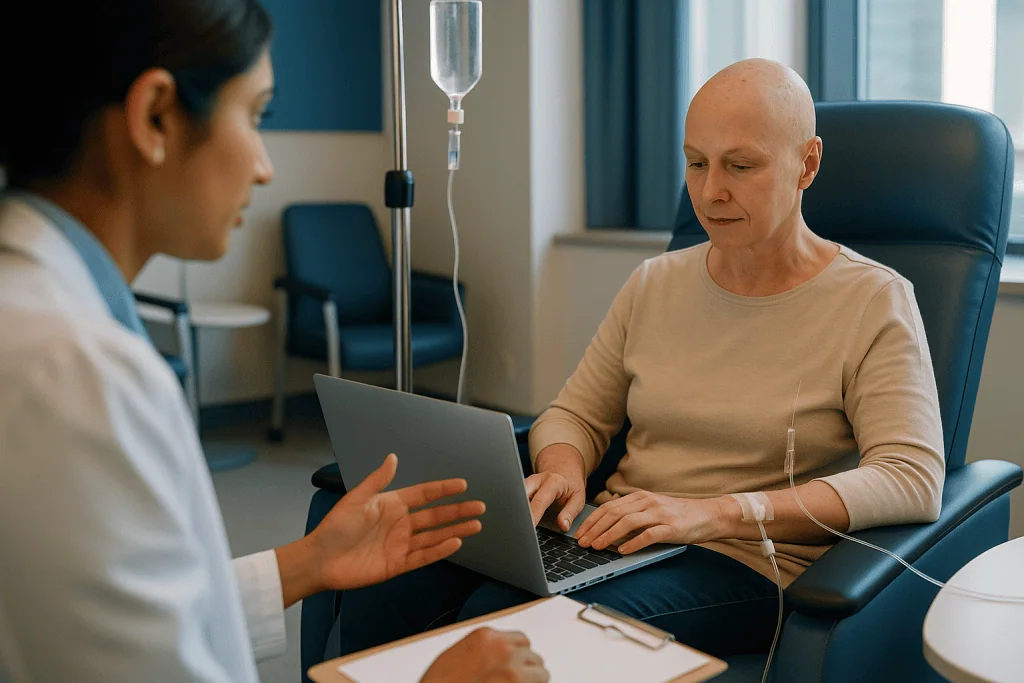
People who most often keep working, at least part-time, tend to share a few features: an outpatient regimen given every few weeks, a job that can flex around infusion days, and duties that do not expose them to large numbers of unwell people. Desk-based and remote roles fit this pattern best. Those on active monitoring, sometimes called watch and wait, for a slow-growing lymphoma that does not yet need treatment usually work as normal, with clinic visits and blood tests slotted in.
People who are commonly asked to pause or change duties include those whose work involves heavy physical labor, food handling, care of young children or patients, or operating machinery on days when anti-sickness medicines cause drowsiness. Anyone admitted for intensive inpatient chemotherapy or a stem cell transplant is generally off work for weeks to months, because the immune system is deliberately taken very low and recovery takes time.
Between these groups sits everyone else, and that is where a candid conversation with the treating team and an employer’s occupational health service matters most. Useful arrangements include shifting hours away from the low-count window described in the next section, working from home during that week, and agreeing in advance that a delayed cycle will not be treated as unreliability. In many countries, employment law gives people with cancer specific protections around reasonable adjustments; a hospital social worker or cancer charity helpline can explain what applies locally. The medical decision about fitness to work always sits with the treating team.
How does a treatment cycle unfold, week by week?
Ask anyone who has been through several cycles and they will describe a curve. Knowing its shape in advance turns unpredictable weeks into plannable ones.
Day one is the infusion. Many people feel surprisingly well that evening, partly because steroids given with treatment produce a short burst of energy and appetite. Days two to five are when nausea, taste changes and a heavy, flu-like feeling commonly arrive, and when steroid-related sleeplessness is most noticeable. Anti-sickness medicines, given as tablets or through the drip, are timed by the team to cover this window; the person’s job is to take them as prescribed rather than waiting to feel sick.
Days seven to fourteen are the nadir, the point at which white blood cells fall to their lowest. The NHS notes that the risk of infection is highest around this period after a dose of chemotherapy. This is the week to avoid crowded indoor spaces, cook food carefully and check temperature at the first hint of feeling unwell. Some people receive injections of a growth factor that encourages the marrow to rebuild white cells; bone ache is a recognized effect.
From roughly the third week, energy tends to lift, appetite returns and the person feels closest to their usual self. A blood test before the next cycle confirms counts have recovered; if they have not, the cycle is postponed a few days, which is common and not a sign the treatment is failing.
Radiotherapy follows a different rhythm: short daily visits on weekdays for several weeks, with tiredness that builds gradually rather than arriving in a wave. Antibody-only maintenance treatment, given every few months, tends to interrupt daily life least of all.
How different lymphoma treatments tend to shape daily routines
Two people with lymphoma can have very different weeks depending on which treatment they are on. The table below summarizes typical patterns described in mainstream patient guidance; individual experience varies, and the treating team’s advice takes precedence.
| Treatment | How it is usually given | Typical rhythm | Everyday-life questions it raises |
|---|---|---|---|
| Active monitoring (watch and wait) | No treatment yet; regular check-ups and blood tests | Clinic visits every few months | Coping with uncertainty; keeping work and routines normal |
| Outpatient chemotherapy, with or without an antibody | Day-unit infusion, often with steroid tablets for a few days | Cycles a few weeks apart over several months (NHS) | Planning around the low-count week; nausea; hair loss; part-time work |
| Radiotherapy | Short daily sessions, weekdays | Several consecutive weeks | Daily travel; skin care in the treated area; cumulative tiredness |
| Targeted oral drugs | Tablets taken at home | Continuous, sometimes for years | Remembering doses; drug interactions with food and supplements; ongoing side effects |
| Intensive inpatient treatment or stem cell transplant | Hospital admission | Weeks in hospital, months of recovery | Extended time off work; strict infection precautions; isolation |
Notice that the more intensive the treatment, the more the questions shift from ‘how do I fit this around my life’ to ‘how do I rebuild my life afterwards’. Both are legitimate, and both deserve a plan rather than improvisation.
Notice too that oral targeted drugs, which sound gentler because they come as tablets, still carry real practical demands: some must be taken away from certain foods, and many interact with common supplements or over-the-counter remedies. Anyone starting a tablet-based regimen should ask the pharmacist for a written list of what to avoid, and check before adding anything new.
Fatigue during lymphoma treatment: why is it different from ordinary tiredness?
People who have never had cancer treatment tend to picture fatigue as the tiredness after a long week: unpleasant, but fixed by a lie-in. Cancer-related fatigue is a different animal. Mayo Clinic describes it as a persistent exhaustion that is out of proportion to activity and is not relieved by rest, and notes that it can continue for weeks or months after treatment ends.
Several mechanisms stack up. Anemia, a shortage of red blood cells caused by the effect of chemotherapy on the marrow, means less oxygen reaches muscles and brain. Inflammatory signaling molecules released as lymphoma cells die contribute to a heavy, flu-like feeling. Poor sleep, reduced food intake, pain, anxiety and low mood each add their own weight, and some medicines, including anti-sickness drugs and steroids, alter energy in ways that vary through the day.
Because so many causes feed in, the first practical step is to tell the team rather than accept fatigue as inevitable. Some drivers are treatable: anemia can be corrected, thyroid function can be checked, depression can be managed, and sleep patterns can be adjusted. The second step is pacing. Rather than pushing through a good morning and collapsing for two days, people who cope best spread effort across the week, keep an energy diary to spot patterns, and schedule the tasks that matter most for the times of day they know they feel strongest.
The third step is counterintuitive but well supported: gentle movement, even a short daily walk, tends to reduce fatigue rather than deepen it, provided blood counts allow and the team agrees. Complete rest, day after day, deconditions muscles and makes the next task feel harder still.
What to eat during lymphoma treatment when appetite and taste keep changing
The honest answer to ‘what should I eat’ is: enough. During chemotherapy the body is repairing gut lining, rebuilding marrow and clearing dead cells, and all of that costs protein and calories at a time when food may taste like cardboard or metal.
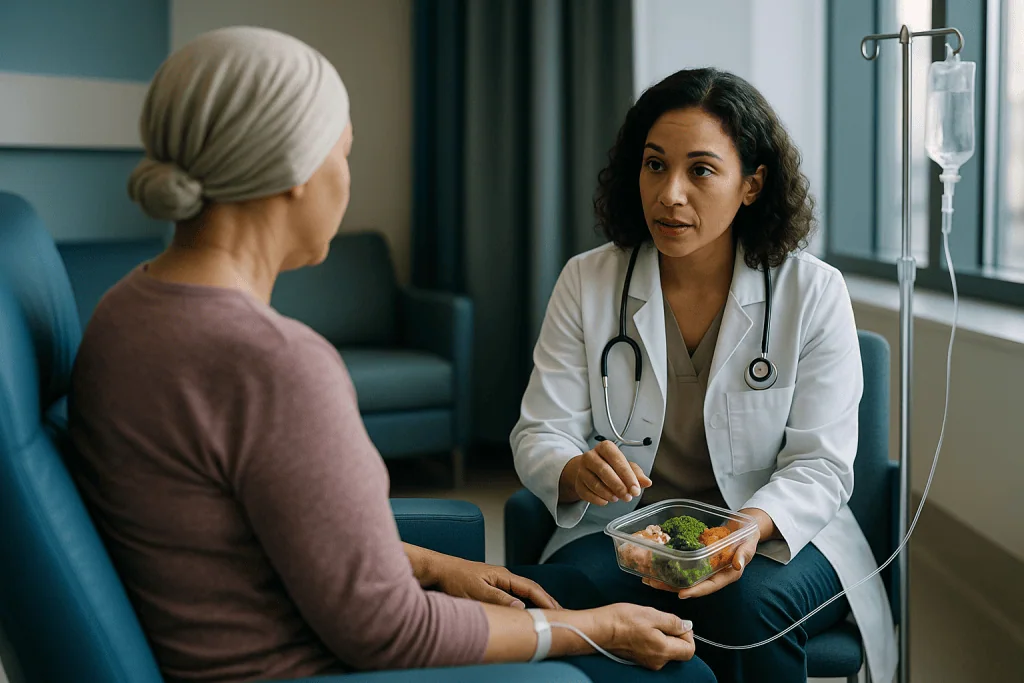
A few principles carry across most situations. Small, frequent meals suit a queasy stomach better than three large ones. Protein at each eating occasion, whether eggs, dairy, fish, poultry, beans, tofu or nut butters, supports tissue repair. Cool or room-temperature foods often smell less and are easier when nausea is present. When the mouth is sore, soft and smooth textures such as yogurt, porridge, mashed vegetables and soups are kinder than anything crunchy, acidic or spicy. When taste changes strip flavor, sharper seasonings, herbs and a little lemon can help; when everything tastes metallic, plastic cutlery and marinated foods sometimes make a difference.
Hydration matters as much as food. Vomiting, diarrhea and reduced drinking can tip someone into dehydration quickly, and several chemotherapy drugs are cleared by the kidneys. Keeping a drink within reach all day is simpler than trying to catch up in the evening.
Weight can move in either direction. Steroids stimulate appetite and can shift weight upward within a single cycle; nausea and mouth soreness push the other way. Neither should be managed with a crash diet or a restrictive eating plan without dietitian input. No specific ‘anti-cancer diet’, juice protocol or fasting regime has been shown in clinical trials to improve lymphoma outcomes, and some restrict exactly the calories and protein that treatment demands.
Most cancer centers have a dietitian attached to the team. Asking for a referral early, before weight has drifted, is one of the more useful requests a person can make.
Food safety when white blood cells are low
Neutrophils are the white blood cells that respond first to bacterial infection. When chemotherapy reduces them, an ordinary food-borne germ that a healthy gut would shrug off can cause serious illness. That is why food safety during treatment is less about nutrition and more about hygiene.
MedlinePlus sets out the standard advice for safe eating during cancer treatment, and the themes will be familiar to anyone who has run a kitchen carefully. Cook meat, poultry, fish and eggs thoroughly; avoid raw or undercooked versions, including rare steak, runny eggs, sushi with raw fish and homemade mayonnaise. Choose pasteurized milk, cheese and juice, and avoid soft mold-ripened or blue-veined cheeses unless the team says otherwise. Wash fruit and vegetables under running water, and peel where practical. Keep raw meat separate from ready-to-eat foods, using different boards and knives. Refrigerate leftovers promptly and reheat them until steaming hot, once only.
Some settings carry higher risk than others: buffets, salad bars, street food and deli counters where food sits out and is handled by many people. Bottled or freshly boiled water is sometimes advised when tap water quality is uncertain. Raw sprouts, unpasteurized honey and unwashed herbs are commonly on the avoid list.
Teams differ in how strict their guidance is. Some provide a formal ‘neutropenic diet’ sheet; others emphasize general food hygiene throughout treatment. Follow the version issued by the treating team, and ask directly if something is unclear rather than guessing.
These precautions are not permanent. Once treatment is finished and counts have recovered, most people return to their usual diet, though anyone who has had a stem cell transplant may be asked to continue precautions for longer.
How can you rest well when treatment keeps disturbing sleep?
Sleep is where the different strands of treatment life collide. Steroids taken in the morning may still be circulating at midnight. Anxiety about scan results peaks in the quiet hours. Nausea, night sweats, a full bladder from all that careful hydration, and the naps taken to survive the afternoon all conspire against a settled night.
A few adjustments are worth trying before assuming poor sleep is simply the price of treatment. Ask the team whether steroid tablets can be taken as early in the day as the regimen allows; many people find this alone shortens the wired feeling at night. Keep naps short and before mid-afternoon. Get outside in daylight during the morning, because light exposure anchors the body clock. Keep the bedroom cool, and have spare bedding within reach for sweats so a change does not turn into a full waking. Avoid caffeine after lunch and keep screens out of the last hour before bed.
Emotional rest matters as much as physical rest. Low mood and anxiety are common during cancer treatment and are not a personal failing; they are a predictable response to threat, uncertainty and disrupted routine. Cleveland Clinic’s lymphoma guidance highlights support services, counseling and peer groups as part of care rather than an optional extra. Many centers have clinical psychologists or specialist nurses who can teach practical techniques for racing thoughts at 3 a.m.
If sleeplessness persists, or low mood deepens to the point where getting up feels pointless, tell the team. Persistent insomnia and depression have specific treatments, and both make fatigue, pain and nausea harder to bear. Nothing about a lymphoma diagnosis means a person has to carry that alone.
Managing lymphoma treatment side effects at home and at work
Side effects are easier to live with when there is a plan for each one, written down before the first cycle rather than improvised in a bad week.
Nausea is best prevented rather than chased. Anti-sickness medicines work by blocking signals in the gut and brain that trigger vomiting, and they work far better taken on the schedule the team sets than taken once sickness has started. Ginger, small bland snacks and fresh air help some people at the margins.
Mouth care prevents a lot of misery. A soft toothbrush, gentle alcohol-free rinses and regular sips of water reduce the risk of ulcers becoming infected. A dental check before treatment starts, where time allows, is standard advice.
Hair loss depends on the drugs used. Where it is expected, it usually begins a few weeks after the first dose. Some centers offer scalp cooling, which narrows blood vessels in the scalp during infusion; its effectiveness varies by regimen and it is not suitable for everyone. Hats, scarves and wigs are personal choices, not medical ones.
Peripheral neuropathy, meaning numbness or tingling in fingers and toes caused by nerve irritation from certain drugs, has practical consequences at work: dropped objects, difficulty with buttons or typing, unsteadiness on stairs. Report it early, because the team may adjust treatment to prevent it worsening.
Skin becomes more sensitive to sun during several treatments; a high-factor sunscreen and a hat on commute days are sensible. Constipation from anti-sickness drugs and diarrhea from chemotherapy each have simple first-line management the team can advise on.
Vaccination questions come up often. Live vaccines are generally avoided during chemotherapy; inactivated vaccines, including seasonal flu shots for the person and their household, are usually encouraged. Timing is a team decision.
What lifestyle changes are recommended for people with lymphoma?
People often ask this question hoping for a single powerful change that will tip the odds. The evidence is less dramatic and more useful: a handful of ordinary habits that reduce complications during treatment and lower the risk of problems years later.
Stopping smoking sits at the top. Smoking impairs wound healing, raises infection risk, worsens lung effects of chest radiotherapy and some chemotherapy drugs, and adds to the long-term heart and second-cancer risks that lymphoma survivors already carry. Support to quit is available through most cancer teams.
Alcohol is a conversation to have with the team rather than a blanket rule. Some drugs are processed by the liver alongside alcohol, some anti-sickness medicines interact with it, and a sore mouth or nauseous stomach rarely welcomes it anyway. Many people choose to avoid it during active treatment and reintroduce it cautiously afterwards.
Sun protection matters during treatment because of drug-induced photosensitivity, and afterwards because skin cancers are among the more common second cancers after lymphoma treatment, particularly in areas that received radiotherapy.
Heart health deserves a long view. Certain chemotherapy drugs and radiotherapy to the chest can affect the heart years later. Keeping blood pressure, cholesterol and weight in a healthy range, staying active and not smoking are the same measures that protect anyone’s heart, but they carry extra weight here. Some survivorship plans include periodic heart checks; ask whether yours does.
Supplements deserve a word of caution rather than enthusiasm. High-dose antioxidants and herbal products can interfere with how chemotherapy and targeted drugs work, and no supplement has been shown in trials to treat lymphoma. Bring every bottle, including vitamins, to the pharmacist for review.
How much exercise is realistic during treatment?
The World Health Organization recommends that adults generally aim for 150–300 minutes of moderate activity a week, and it explicitly extends the value of regular movement to people living with chronic conditions, adjusted to what they can manage. During lymphoma treatment, the useful phrase is ‘adjusted to what they can manage’.
On the good days of a cycle, a brisk walk, a gentle cycle ride or a swim in a clean, uncrowded pool may be entirely realistic. On nadir days, walking to the end of the road and back may be the achievement. Both count. The goal is to avoid the spiral in which rest leads to deconditioning, deconditioning makes every task harder, and harder tasks lead to more rest.
A few safety points shape what is sensible. When platelets, the blood cells responsible for clotting, are low, contact sports and activities with a real risk of falls should be avoided because bruising and bleeding are more likely. When neutrophils are low, communal gyms and shared equipment are best skipped in favor of outdoor or home-based movement. Anyone with a central line should follow the team’s guidance on swimming and upper-body exercise. Dizziness, chest pain, breathlessness out of proportion to effort, or palpitations are reasons to stop and call.
Many cancer centers have physiotherapists or exercise specialists who can design a program that flexes with the treatment cycle. Resistance work with light weights or bands helps preserve the muscle that steroids and inactivity tend to strip away, which in turn supports energy, balance and the eventual return to full work.
What the evidence does not support is the idea that pushing through exhaustion proves strength. Pacing is the skill; intensity can wait until treatment is behind you.
What people often get wrong about life during lymphoma treatment
Some of the most persistent misunderstandings do real harm, either by adding fear or by encouraging unhelpful choices. A few deserve direct correction.
‘You have to stop everything.’ Most outpatient regimens allow a version of normal life around the harder days. Withdrawing completely from work, friends and movement often worsens fatigue and mood without improving safety.
‘Sugar feeds cancer, so cut it out.’ All cells use glucose, and the body will make it from other fuels if diet does not supply it. Restricting carbohydrates during treatment risks the weight loss and muscle wasting that genuinely worsen tolerance of chemotherapy. No trial has shown a sugar-free diet improves lymphoma outcomes.
‘Feeling terrible means it is not working.’ Side effects reflect the effect of drugs on healthy dividing cells, not on the lymphoma. Response is measured by scans and blood tests, not by how rough a week felt.
‘There is a survival rate for stage 4 lymphoma by age that applies to me.’ Published figures are population averages drawn from registries, and they vary widely by lymphoma subtype, by how the disease responds to initial treatment, by general fitness and by treatments that have changed since the data were collected. The treating team can explain what the statistics mean for a specific subtype; a single number found online cannot.
‘I will know if it comes back because I will feel it.’ Relapse is sometimes noticed by the person, through a new lump, drenching sweats or unexplained weight loss, but it is often picked up at planned follow-up before symptoms appear. That is why follow-up matters, and why new symptoms should be reported rather than self-interpreted.
‘Second cancers are inevitable.’ The risk is real but treatment-specific. Skin cancers, breast cancer after chest radiotherapy at a young age, lung cancer in smokers and certain blood cancers after particular chemotherapy drugs are the ones survivorship programs watch for. Screening and the habits described above reduce, though do not remove, that risk.
Questions to ask your care team before and during treatment
A consultation goes faster and further when the questions are written down. These are the ones that tend to unlock the most practical information about daily life; the answers will differ from person to person, which is exactly why they need asking.
- Which days of each cycle are my blood counts likely to be lowest, and how should I adjust work and social plans around them?
- Is my job, as I have described it, one I can continue, and would a letter to my employer about adjustments help?
- Which of my medicines might cause drowsiness, and should I avoid driving after taking them?
- Do you issue a specific food-safety or neutropenic diet sheet, and when do the restrictions end?
- Can I be referred to a dietitian now, before my weight changes?
- Can my steroid tablets be timed to reduce their effect on sleep?
- Which vaccines should I and my household have, and when?
- What activity is safe for me this cycle, and is there a physiotherapist or exercise program I can join?
- What is the 24-hour number to call, and what exactly should make me call it?
- Which of my supplements or over-the-counter remedies should I stop, and why?
- What long-term effects on heart, lungs, thyroid or fertility does my specific regimen carry, and what monitoring follows?
- How and how often will you check whether the treatment is working?
Bring a second person if possible, or ask whether the consultation can be recorded. People commonly retain only a fraction of what is said in an oncology clinic, and the details about timing and precautions are the ones most easily lost.
None of these questions challenges the team’s expertise. Good clinicians welcome them, because a person who understands the plan is far more likely to follow it safely.
When to call your doctor: red-flag signs during lymphoma treatment
Every lymphoma team gives out an emergency number, and the single most important habit during treatment is using it early. Waiting to see whether something settles overnight is the mistake that turns a manageable problem into an admission.
Call immediately, day or night, if you have a temperature of 38°C (100.4°F) or higher, or if you feel shivery, sweaty or suddenly unwell even without a measurable fever. The NHS is explicit that infection during chemotherapy can become life-threatening quickly when white cells are low, and that fever in this setting is treated as an emergency until proven otherwise. Do not take medicines that lower temperature before checking it, because they can mask the warning.
Call urgently for breathlessness, chest pain, a racing or irregular heartbeat, or swelling and pain in one calf, since blood clots are more common during cancer treatment. Call for bleeding that does not stop, unexplained bruising, blood in urine or stool, or a rash of tiny red spots, which can signal low platelets. Call for vomiting or diarrhea that prevents you keeping fluids down for more than a day, for mouth soreness that stops you drinking, for new confusion or severe headache, and for any reaction during or shortly after an infusion.
Between treatment cycles and after treatment ends, report a new lump in the neck, armpit or groin, drenching night sweats, fevers without an obvious cause, unexplained weight loss, or persistent itching. These are the symptoms teams ask about at follow-up because they can, though do not always, indicate the lymphoma is active again. They are reasons for a prompt appointment, not for self-diagnosis.
If in doubt, call. The team would far rather hear from you about something minor than miss something serious.
Frequently asked questions
Can I keep working during chemotherapy for lymphoma?
Many people on outpatient regimens continue some work, usually with adjustments such as reduced hours, remote working and time off around infusion days and the low-count week. Physically demanding jobs, roles with heavy public contact and food handling are more often paused. Intensive inpatient treatment or a stem cell transplant usually means weeks to months away. Fitness to work is a decision for the treating team, ideally alongside an employer’s occupational health service.
What are the most common lymphoma treatment side effects that affect daily life?
Fatigue, nausea, taste changes, mouth soreness, hair loss and a higher risk of infection are the ones people most often mention, along with sleep disturbance from steroids and tingling in the hands or feet from certain drugs. Which ones appear depends on the specific regimen. Most follow the treatment cycle, worst in the first two weeks after a dose and easing before the next, and most have practical management the team can set up in advance.
What is the survival rate for stage 4 lymphoma by age?
There is no single figure that applies to an individual. Published survival statistics are population averages that vary enormously by lymphoma subtype, by response to first treatment, by general health and by treatments that have changed since the data were gathered. Age is one factor among many. The treating team can explain what the published numbers for a specific subtype mean and how they relate to one person’s situation.
What are the first signs of lymphoma relapse?
Relapse is often found at planned follow-up before any symptoms appear, which is why keeping those appointments matters. When symptoms do occur, the ones teams ask about are a new or growing lump in the neck, armpit or groin, drenching night sweats, unexplained fevers, unintended weight loss and persistent itching. None of these confirms relapse on its own; they are reasons to contact the team promptly rather than to self-diagnose.
What is the most common secondary cancer after lymphoma?
It depends on the treatment received and on personal risk factors. Skin cancers are common across survivor groups, breast cancer is a recognized risk in women who had chest radiotherapy at a young age, lung cancer risk rises particularly in smokers, and certain blood cancers can follow specific chemotherapy drugs. Survivorship programs tailor screening to the individual’s treatment history, and stopping smoking and protecting skin from the sun reduce part of the risk.
What lifestyle changes are recommended for people with lymphoma?
The changes with the best evidence are ordinary ones: stop smoking, keep active within what blood counts allow, eat enough protein and calories, protect skin from the sun, follow food-safety precautions during low-count weeks, and discuss alcohol and supplements with the team because both can interact with treatment. In the long term, attention to blood pressure, cholesterol and weight matters because some lymphoma treatments raise heart risk years later.
How long does fatigue during lymphoma treatment last?
Within a treatment cycle, fatigue usually peaks in the first two weeks after a dose and eases before the next. Mayo Clinic notes that cancer-related fatigue can also persist for weeks or months after treatment finishes before it gradually lifts. Reporting it early matters, because treatable contributors such as anemia, thyroid problems, poor sleep and depression are common, and pacing combined with gentle activity tends to help more than complete rest.
Can I drink alcohol during lymphoma treatment?
Ask the treating team rather than assuming either way. Alcohol is processed by the liver alongside several chemotherapy and targeted drugs, interacts with some anti-sickness and sleep medicines, and irritates a sore mouth or unsettled stomach. Many people choose to avoid it during active treatment and reintroduce it cautiously afterwards. If you do drink, doing so on the better days of a cycle, in small amounts, is the usual practical advice.
Is it safe to be around children and visitors while my white cells are low?
Generally yes, with sensible precautions. The main risk comes from people who are unwell, so ask visitors with colds, coughs, stomach upsets or recent exposure to infections such as chickenpox to postpone. Good handwashing by everyone in the house, avoiding crowded indoor spaces during the low-count week, and keeping up to date with household vaccinations reduce risk. The team can advise on specific situations, such as contact with someone recently given a live vaccine.
Should I take vitamins or herbal supplements during lymphoma treatment?
Not without checking with the team or pharmacist first. Some high-dose antioxidants and herbal products can alter how chemotherapy and targeted drugs are processed, and no supplement has been shown in clinical trials to treat lymphoma. If blood tests show a genuine deficiency, the team will address it. Bring every product you take, including ordinary multivitamins, to an appointment so it can be reviewed against your specific regimen.
References
- NHS: Non-Hodgkin lymphoma, treatment
- NHS: Chemotherapy, side effects
- MedlinePlus: Safe eating during cancer treatment
- Cleveland Clinic: Lymphoma
This article is for general information only and is not a substitute for professional medical advice. Please consult a qualified doctor about your individual situation.

More from the Blog
Preparing for Neck Cancer Treatment: Dental Review, Nutrition Planning and Fitness Tests
Preparing for neck cancer treatment usually means three things done in the weeks before therapy starts: a dental review to treat or remove teeth…
Follow-Up After Thyroid Cancer: What Blood Tests and Ultrasound Track Over Time
After treatment for differentiated thyroid cancer, follow-up usually rests on three blood tests, thyroglobulin, thyroglobulin antibodies and TSH, paired with a neck ultrasound. Thyroglobulin…

Basal Cell Carcinoma in Older Adults: How Treatment Is Tailored to Health and Skin
Basal cell carcinoma treatment in older adults is tailored to the tumor's size, location, subtype and growth rate, and to the person's overall health,…
Rash and Diarrhea on Targeted Therapy: Why They Happen and When to Contact the Team
Rash and diarrhea are common side effects of targeted cancer therapy because the molecular switches these drugs block, such as EGFR, also keep skin…
Who May Be a Candidate for SBRT for Early-Stage Lung Cancer When Surgery Is Not Planned
SBRT for early-stage lung cancer is usually considered for people with a small non-small cell lung cancer that has not spread to lymph nodes…

Why a PSMA PET Scan Comes Before Lutetium-177 PSMA Therapy and What It Has to Show
A PSMA PET scan comes before lutetium-177 PSMA therapy because the treatment only works on cancer cells that display the PSMA protein, and the…