

Your First Cancer Rehabilitation Visit: What to Bring and Which Daily Tasks to Write Down
Key Takeaways
- A written list of ten specific daily tasks that have become harder, with start dates, shapes a rehab plan more than any description of how you feel.
- Bring a treatment summary naming each chemotherapy agent and radiation field, because specific drugs carry specific nerve, heart and bone risks the rehab team must plan around.
- Cancer-related fatigue is not relieved by rest and can persist for months after treatment ends, so a two-to-three-day energy log is more useful than the word tired.
- The four phases of cancer rehabilitation are preventive, restorative, supportive and palliative, and people often move between them as treatment changes.
- Early lymphedema often shows as heaviness, tightness or a ring that no longer fits rather than obvious swelling, and gradual supervised strengthening is no longer forbidden after node surgery.
- Major cancer organizations and the Mayo Clinic point survivors toward the general target of 150 minutes of moderate activity a week, built up gradually and adjusted around treatment cycles.
For a first cancer rehab appointment, bring your treatment summary, a current list of medicines and supplements, any recent scan or lab reports, comfortable clothing, and a written record of daily tasks that have become harder: dressing, stairs, cooking, driving, work tasks, sleep and concentration. Note when each problem started and how it changes through the day. The rehabilitation team uses these details to build an individual plan.
The night before her first cancer rehab appointment, a woman I spoke with for this piece sat at her kitchen table with a notepad and could not think of a single thing to write. Then her husband asked why the good saucepan had been living on the counter for three months. She wrote: can’t lift the big pan onto the top shelf. Then: hold the rail on the stairs now. By bedtime the page was full.
That is the paradox of cancer rehabilitation. The people who need it most have often spent months being asked about tumor size, blood counts and side effects, and almost never about whether they can still button a shirt or follow a recipe. The first rehab visit reverses that. It is the one appointment where the small, specific losses of ordinary life are the whole point.
This guide explains what actually happens at that visit, what to bring, and, most usefully, which everyday tasks are worth writing down before you walk through the door.
Why would a cancer patient go to rehab?
The word rehab still makes some people picture a sports injury or a stroke ward. Cancer rehabilitation sits in the same family, and the logic is identical: treatment saves or extends life, and the body pays for it in function. Surgery removes tissue and can shorten or scar muscle. Radiation stiffens the skin and joints in the treated field. Chemotherapy can damage the long nerves in the hands and feet, drain energy for months, and fog concentration. Hormonal therapies thin bone and stiffen joints. Weeks in bed cost strength faster than most people expect.
Rehabilitation exists to get that function back, or to protect what remains. The World Health Organization defines it as interventions designed to optimize functioning and reduce disability in people with health conditions, and estimates that roughly 2.4 billion people worldwide live with a condition that would benefit from it. People treated for cancer are a large slice of that group.
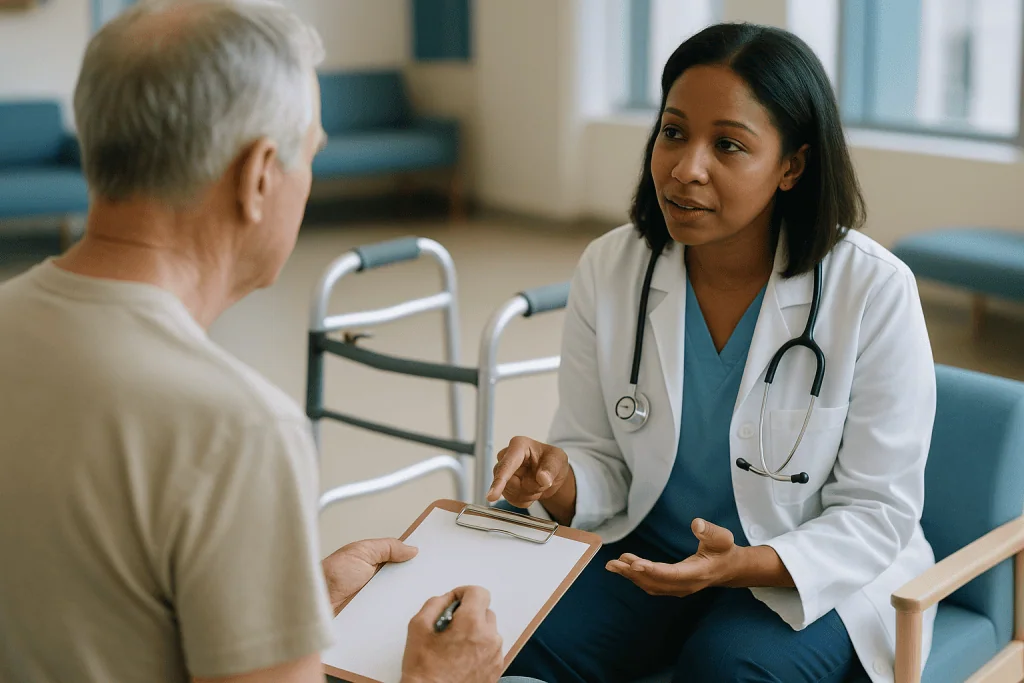
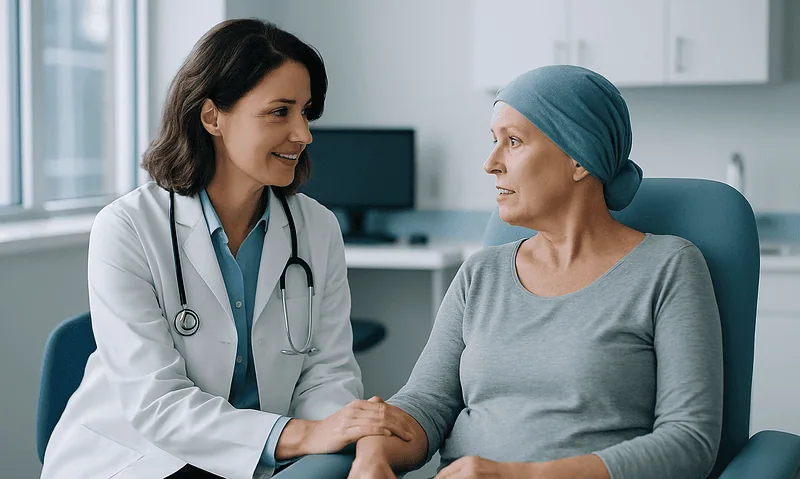
The clinicians involved vary. A physiatrist, a doctor who specializes in physical medicine and rehabilitation, often leads. Physical therapists work on strength, balance and walking. Occupational therapists focus on daily tasks: dressing, cooking, returning to a keyboard. Speech and language therapists help with swallowing and with thinking and memory changes. Lymphedema therapists manage swelling. Dietitians and psychologists join when needed.
The important shift is this: rehab is not a sign that treatment has failed, and it is not a luxury for when everything else is done. In many cancer centers it now starts before surgery and runs alongside chemotherapy. Why cancer patients need rehab comes down to a plain fact. Being alive and being able to live the day you want are not automatically the same thing, and the second one can be trained.
What actually happens at a first cancer rehab appointment
Expect a conversation first and an examination second. The oncology rehabilitation assessment, the structured evaluation a rehab clinician performs at the start of care, usually opens with your story: the diagnosis, each treatment you have had, what is planned next, and, crucially, what you could do before all this began. A gardener, a night-shift nurse and a retired accountant have different baselines and different goals.
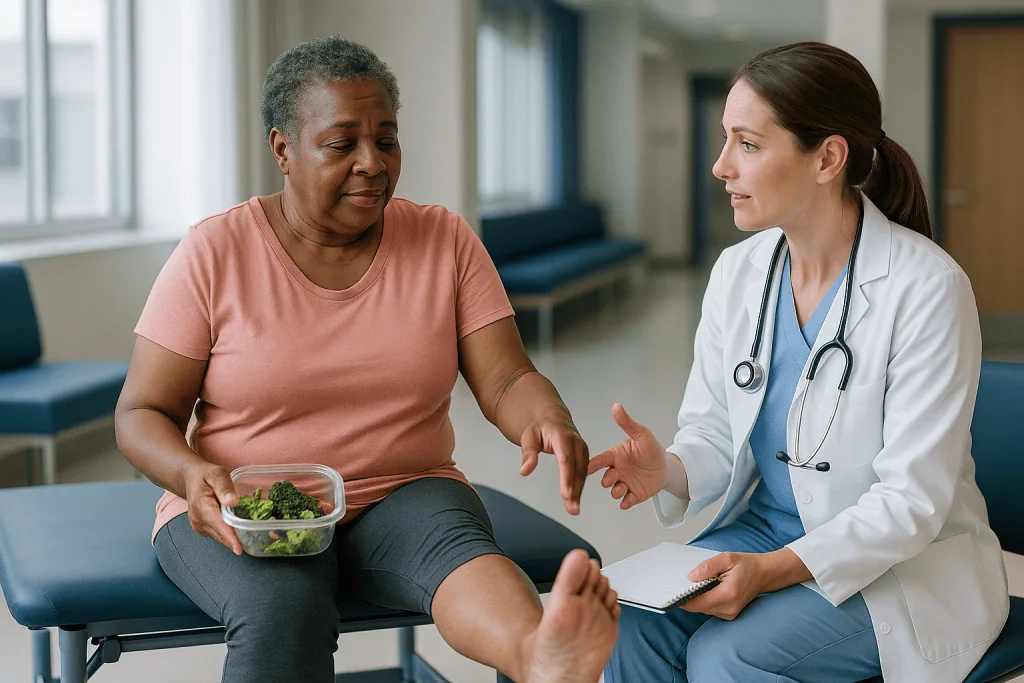
Then come the specifics. The clinician will ask about pain, fatigue, numbness, swelling, breathlessness, sleep, mood and thinking. This is where your written notes earn their keep, because these questions arrive quickly and memory under pressure is unreliable.
The physical part is practical rather than dramatic. You may be asked to stand from a chair without using your arms, walk a measured distance while the therapist times you, balance on one foot, grip a small device that measures hand strength, or raise your arms overhead. If you had breast, head-and-neck or pelvic surgery, the clinician will check range of motion in the affected area and measure limb circumference to establish a swelling baseline. Someone recovering from chemotherapy may have their feet tested with a light filament to map any loss of sensation.
Toward the end you set goals together. Good rehab goals are concrete: walk to the mailbox without stopping, lift a grandchild safely, sit through a full workday. Vague goals like getting stronger are hard to measure and easy to abandon.
You will usually leave with two or three starter exercises or strategies, not a full program, and a plan for how often to return. What to expect at cancer rehab, in short, is less a treatment than a careful inventory of what your body can do now and a shared decision about what to work on first.
Who cancer rehabilitation is usually for, and who is asked to wait
Almost anyone treated for cancer can be referred, and the range surprises people. A person three days out of colon surgery learning to cough and walk safely is receiving rehabilitation. So is a woman five years past breast cancer whose arm has begun to swell. So is a man with advanced lung cancer who wants enough stamina to attend his daughter’s graduation.
Referral tends to happen for specific reasons: weakness or deconditioning after a hospital stay, shoulder or arm stiffness after breast or chest surgery, lymphedema (swelling caused by damage to the lymph vessels that drain fluid from the tissues), peripheral neuropathy (nerve damage causing numbness, tingling or pain, usually in hands and feet), swallowing or speech problems after head and neck treatment, bowel and bladder changes after pelvic treatment, and persistent fatigue or cognitive changes that make work or home life harder.
Some people are asked to wait, and the reasons are protective rather than dismissive. A fresh surgical wound, a very low platelet count that raises bleeding risk, a low white cell count in a shared gym setting, an unstable heart rhythm, an active infection, or a bone weakened by tumor that has not yet been assessed for fracture risk can all mean the team delays hands-on therapy or exercise until it is safe. In those cases the first visit may still go ahead as an assessment and education session, with active work starting once the oncology team gives clearance.
Timing also matters in the other direction. Prehabilitation, rehab delivered before surgery or chemotherapy begins, aims to build a reserve of strength and lung capacity going in. If your treatment has not started yet, it is worth asking whether this is available to you.
None of this is a fixed rule. Who starts, who waits and for how long is a decision for the treating team based on your blood results, imaging and overall condition.
What are the four phases of cancer rehabilitation?
Clinicians often describe cancer rehabilitation in four phases, a framework first proposed in the 1980s and still used in teaching. Knowing which phase you are in helps make sense of what the team is asking of you.
Preventive rehabilitation happens before or very early in treatment. The aim is to reduce the impact of problems that can be predicted. Shoulder exercises taught before breast surgery, breathing training before a lung operation, and swallowing exercises started before head and neck radiation all fit here.
Restorative rehabilitation is for people whose treatment has finished or paused and who are expected to recover most of their function. This is the phase most people picture: rebuilding strength, restoring range of motion, retraining balance, getting back to work.
Supportive rehabilitation applies when the cancer or its treatment has caused a lasting change, such as an amputation, permanent nerve damage or a stoma. The goal shifts from restoring what was lost to adapting: new techniques, equipment, and strategies that keep daily life independent.
Palliative rehabilitation supports people living with advanced or progressing cancer. It is about comfort, safety and the tasks that matter most to that person right now, whether that is transferring from bed to chair without falling or having enough energy for a meal with family.
People move between phases, and the boundaries blur. Someone in the restorative phase may need supportive strategies for neuropathy that does not fully resolve. The value of the framework is that it forces a question rehab teams take seriously: what is the realistic aim for this person at this point? Writing down your own answer before the first visit, even roughly, gives the team something honest to work from.
What to bring to your first cancer rehab appointment
The single most useful document is a treatment summary: your diagnosis, the type and stage of cancer, dates and details of surgery, the chemotherapy or immunotherapy agents you received, the radiation field and number of sessions, and any ongoing hormonal or targeted therapy. Many oncology services can print one on request. If you cannot get it, a handwritten timeline is far better than nothing, because the rehab clinician needs to know which body regions and which nerve, heart or lung risks are in play.
Bring a complete list of everything you take: prescribed medicines, over-the-counter products, vitamins and herbal supplements. Some medicines cause dizziness, muscle weakness or bone thinning, and some blood thinners change how hands-on therapy is delivered. The rehab team is not there to alter your prescriptions, and the article will not discuss doses; the list simply tells them what to account for.
Recent laboratory results and imaging reports help too, particularly blood counts, and any scan report that mentions bone. The clinician wants to know whether a bone is safe to load before asking you to squat or carry weight.
Practical items matter more than people expect. Wear or bring loose clothing and supportive shoes you can walk and balance in. If you use a cane, walker, compression sleeve, splint, hearing aids or reading glasses, bring them; the team needs to see you as you actually function. Bring a list of your other clinicians and how to reach them.
Finally, bring a second set of ears if you can. First visits cover a lot of ground, and a partner or friend who takes notes lets you concentrate on the conversation. Ask beforehand whether the service allows companions in the assessment room.
Which daily tasks to write down before you go
This is the part most people skip, and it is the part that shapes your plan. Rehabilitation clinicians think in terms of activities: what you do, how, and what stops you. A list of symptoms tells them you are tired. A list of tasks tells them you can no longer stand long enough to cook dinner, which is a problem they can actually solve.
Walk through a typical day in your head and write down anything that has changed since treatment began. Useful categories include:
- Getting up and getting ready: rolling over in bed, rising from a low chair or the toilet, showering while standing, drying your back, fastening a bra, buttons, shoelaces.
- Kitchen and home: lifting a full kettle, opening jars, carrying laundry, reaching a top shelf, vacuuming, standing to prepare a meal.
- Moving around: stairs, getting in and out of a car, walking distances you used to manage, uneven ground, carrying groceries.
- Work and mind: concentrating on a document, remembering appointments, finding words, following a conversation in a noisy room, driving.
- Sleep, energy and mood: how many hours you sleep, whether you nap, the time of day you crash, what you cancel because of fatigue.
- Intimacy and continence: often unmentioned, often treatable, and entirely appropriate to write down.
For each item, add three details: when it started, whether it is getting better or worse, and what you do instead (avoid it, ask for help, use a gadget). Note the tasks you miss most, not just the ones that are hardest. Rehabilitation works best when it aims at what you actually want back.
Ten honest lines on this list will do more for your first cancer rehab appointment than an hour of trying to describe how you feel.
How to describe cancer-related fatigue so it counts
Fatigue is the most common complaint after cancer treatment and the hardest to convey. The word is too small. The National Cancer Institute describes cancer-related fatigue as distinct from ordinary tiredness: it is not relieved by rest, it can persist for months or even years after treatment ends, and it affects the ability to think and work as much as the ability to move.
Rehab teams can help with it, but only if they understand its shape. Two or three days of a simple fatigue log before the visit is worth more than any adjective. On a sheet of paper, divide the day into morning, midday, afternoon and evening. In each block, rate your energy from 0 (none) to 10 (your pre-treatment normal), note what you did, and note what you skipped or cut short. Add how you slept the night before.
Patterns emerge quickly. Some people are steady until mid-afternoon and then collapse. Others wake exhausted and improve. Some crash the day after any exertion, a pattern that changes how a therapist would pace an exercise plan. The team also wants to know about the things that travel with fatigue: poor sleep, low mood, pain, breathlessness on stairs, anemia on recent blood tests, or a thyroid that has not been checked since radiation to the neck.
Be specific about consequences. “I stopped driving to my sister’s because I am frightened I will fall asleep” is a sentence a clinician can act on. “I’m just wiped” is not.
Resist the instinct to downplay. People who have survived something frightening often feel they should be grateful rather than tired. Both are allowed, and the rehab plan will be built around the tired part.
Numbness, swelling and brain fog: the changes worth noting precisely
Three problems deserve their own notes because small details change the plan.
Peripheral neuropathy. Certain chemotherapy classes, including platinum agents and taxanes, can damage the long nerves that serve the hands and feet. Write down where the numbness or tingling starts and stops (toes only, or up to the ankle?), whether it is worse at night, whether you have dropped things, misjudged a step or burned yourself without noticing. The Mayo Clinic notes that neuropathy can affect balance and increase fall risk, so any near-fall is worth recording. The rehab team may respond with balance training, footwear advice and home safety changes, and may flag symptoms back to the oncologist.
Lymphedema. After lymph node surgery or radiation, fluid can pool in an arm, leg, chest wall or neck. The National Cancer Institute lists early signs that are easy to dismiss: a feeling of heaviness or tightness, a ring or watch that no longer fits, a sleeve that feels snug, skin that looks slightly shiny. Note which limb, when you first noticed it, whether it changes over the day, and any redness or warmth, which needs prompt medical review rather than a rehab visit.
Cognitive changes. Often called chemo brain, these are difficulties with memory, attention and word-finding that can follow chemotherapy, radiation, hormonal therapy or simply the stress and poor sleep of treatment. Write down concrete examples: paying a bill twice, losing the thread mid-sentence, needing to reread a paragraph three times. Occupational and speech therapists have practical strategies for this, but they need real examples, not the general sense that you are “not as sharp”.
In all three cases, the earlier the rehab team hears about it, the more options they usually have.
Your one-page checklist: what to bring and what to write down
People who arrive well prepared are not more organized than everyone else; they simply had a checklist. Print or copy the table below, tick what you have, and bring the sheet itself. Clinicians are used to reading patient notes and will not mind a page of scribbles.
| Category | Bring | Write down |
|---|---|---|
| Medical history | Treatment summary or timeline; recent blood and scan reports | Dates of surgery, chemo cycles, radiation; any planned treatment |
| Medicines | Complete list of prescriptions, over-the-counter products and supplements | Anything that makes you dizzy, drowsy or unsteady |
| Movement | Cane, walker, compression garment, splint; supportive shoes | Stairs, car transfers, walking distance, falls or near-falls |
| Daily tasks | Nothing physical | Ten specific tasks that have become harder, with start dates |
| Fatigue | Two to three days of an energy log | Crash times, sleep hours, what you cancel |
| Nerves and swelling | Photo of a swollen limb if it fluctuates | Where numbness stops; heaviness, tightness, ill-fitting jewelry |
| Thinking and mood | Nothing physical | Concrete memory or concentration slips; low mood, anxiety, sleep |
| Goals | A companion to take notes, if allowed | Three things you want back, ranked |
| Logistics | Contact list for your other clinicians; glasses and hearing aids | Questions you want answered before you leave |
Two notes on the table. First, the medication list is for the team’s awareness only; nothing in this article, and nothing a rehab therapist says, should change how you take a prescribed medicine without your prescriber’s involvement. Second, the goals row is deliberately last so you write it after the rest. Once the losses are on paper, what you want back usually becomes obvious.
What the following weeks usually look like after the first visit
The first appointment sets the map. The weeks that follow are where the walking happens, and the pace is slower and more deliberate than most people expect.
Typically you leave the first visit with a short home program: two or three exercises or strategies chosen because they are safe for you now and target your top goal. Follow-up visits, often weekly or every couple of weeks in the early phase, check how those went, progress them, and add new ones. A therapist watching you move once every fortnight is also a safety net; changes in strength, swelling or balance are caught early.
Progress is rarely a straight line. Chemotherapy cycles produce good weeks and bad weeks, and a plan built for the good week will fail in the bad one. Expect the team to adjust intensity around your treatment calendar, and tell them if a session leaves you flattened for two days. That is information, not failure.
Recovery timelines depend heavily on what is being rehabilitated. The National Cancer Institute notes that cancer-related fatigue may take months to resolve after treatment ends, and for some people persists longer. Shoulder range after breast surgery often improves over weeks with consistent stretching, while chemotherapy-induced neuropathy may improve slowly over many months or, for some, remain. Lymphedema is generally managed rather than eliminated, with the aim of keeping it stable. Your own team can give ranges relevant to your situation; no article can.
Discharge from active rehab usually comes when you have met your goals or reached a plateau where a home program is enough. Many services keep the door open for a return visit if something changes later. Keep your task list and update it. The next time a saucepan ends up living on the counter, you will notice sooner.
Cancer rehab exercises after chemo: what the evidence actually supports
For decades the advice to people on chemotherapy was to rest. The evidence has moved firmly the other way. Major cancer organizations now recommend that people during and after treatment stay as physically active as their condition allows, and the Mayo Clinic’s survivorship guidance echoes the general adult target of at least 150 minutes of moderate aerobic activity a week, built up gradually and adapted to the individual. Regular activity is associated with less fatigue, better mood, preserved muscle and improved physical function during and after treatment.
What that looks like in practice varies enormously, which is exactly why rehab exists. A supervised program usually blends three elements.
Aerobic work, meaning anything that raises your breathing rate: walking, stationary cycling, swimming once wounds and ports allow. The starting point may be five minutes. The principle is small, frequent, progressive.
Resistance training, using body weight, bands or light weights to rebuild muscle lost during bed rest and treatment. After lymph node surgery this was once forbidden; current understanding is that gradual, supervised strengthening is generally safe and may help, though the team will monitor the limb.
Balance and flexibility, particularly important with neuropathy, after pelvic or abdominal surgery, and for anyone on treatments that thin bone.
The honest caveats matter. Exercise reduces fatigue for many people but not all. It does not shrink tumors, and no reputable program claims it does. Some days the right dose is a walk to the end of the street. People with low platelets, bone metastases, active infection or heart changes from certain drugs need specific limits set by their oncology and rehab teams before starting.
Cancer rehab exercises after chemo are not a test of willpower. They are a prescription, individually written, and worth following at the pace it was written.
What people often get wrong about cancer rehab
Several beliefs keep people from getting help, or from getting the most out of it.
“Rehab is only for after treatment.” Prehabilitation before surgery and rehab running alongside chemotherapy are now standard in many centers. Waiting until everything is finished means losing ground that could have been held.
“I should be grateful, not complaining about my shoulder.” Gratitude and a frozen shoulder can coexist. Rehab clinicians hear this constantly and it does not make them think less of anyone. Loss of function is a medical problem with medical solutions.
“Fatigue means I should rest more.” Rest matters, but prolonged inactivity feeds cancer-related fatigue by stripping muscle and stamina. The evidence supports paced, progressive activity as one of the better-supported approaches, always tailored to blood counts and treatment stage.
“Lifting anything will cause lymphedema.” Older advice banned lifting after node surgery. Current guidance from major cancer bodies supports gradual, supervised strengthening, with monitoring. Blanket avoidance leads to a weaker arm, not a safer one.
“If it hasn’t come back by now, it never will.” Nerve recovery is slow and can continue over many months. Shoulder mobility can improve years later with the right stretching. Do not close the file on a problem without asking.
“Rehab is a gym program.” Occupational therapy for kitchen tasks, speech therapy for word-finding, pelvic floor therapy after prostate or gynecologic treatment and swallowing therapy after head and neck cancer are all rehabilitation, and none happens on a treadmill.
“Any trainer can do this.” Oncology rehabilitation is a specialty. Clinicians trained in it know which chemotherapy agents affect the heart, which bones need imaging before loading, and how to read a blood count. That knowledge is the difference between a helpful session and a harmful one.
Questions to ask your care team at the first cancer rehab appointment
A first visit moves fast. Having your questions written down means you leave with answers rather than a vague sense that you meant to ask something. Choose the ones that fit your situation.
- Which of the problems I have written down can rehabilitation realistically help, and which are better handled by my oncologist or another specialist?
- Are there any activities, positions or exercises I should avoid right now because of my blood counts, my surgery, my bones or my heart?
- How will you coordinate with my oncology team, and who do I call if something changes between visits?
- What is the first goal we are working toward, and how will we both know when we have reached it?
- How often will I need to come in, and roughly how long do people with problems like mine usually work with the service?
- What should I do on a day when treatment leaves me too exhausted for the program?
- Is there anything I should start before surgery or the next treatment cycle to protect my function?
- Which early signs of lymphedema, nerve damage or a fall risk should I watch for, and who do I report them to?
- Are there strategies, equipment or workplace adjustments that could help with the thinking and memory changes I have noticed?
- Can a partner or family member learn parts of the program to support me at home?
- What happens when I am discharged: can I come back if a problem returns?
Write the answers next to the questions during the visit, or ask your companion to. Rehabilitation is a partnership with a lot of homework, and the plan works best when you understand not just what to do but why. If an answer is unclear, say so before you leave. Every decision about what is safe, what to start and when to pause sits with your treating team, and good teams would rather explain twice than have you guess.
When to call your doctor
Rehabilitation is for gradual problems. Some changes are not gradual and should not wait for a therapy session. Contact your oncology team, or emergency services where indicated, if you notice any of the following.
- Fever during or after chemotherapy, or chills and shaking, which can signal infection when white cell counts are low and is treated as urgent.
- A swollen, warm, red or painful limb, especially the calf, or new swelling that comes on over hours rather than weeks. This can indicate a blood clot or infection, both of which need prompt assessment. Redness or warmth in a limb with lymphedema also needs same-day medical review.
- Sudden breathlessness, chest pain, coughing up blood or a racing heartbeat, which require emergency care.
- New severe back pain, leg weakness, numbness in the saddle area, or loss of bladder or bowel control. In someone with cancer these can signal pressure on the spinal cord and are a medical emergency.
- Bone pain that is new, worsening or brought on by ordinary movement, which needs imaging before any further exercise.
- A fall, particularly with a head strike or if you take a blood thinner, even if you feel fine afterward.
- Confusion, a severe headache, a seizure, or sudden difficulty speaking or seeing.
- Unusual bleeding or bruising, or dizziness and fainting.
- Numbness spreading rapidly up a limb, or a sudden loss of hand function.
Tell your rehab team about any of these afterward too, because they change what is safe in your program. Between visits, a good rule is simple: gradual and predictable belongs in your notebook for the next appointment; sudden, severe or unfamiliar belongs on the phone today. Your treating team would always rather hear from you unnecessarily than not at all.
Frequently asked questions
What usually happens at the first oncology appointment compared with the first rehab visit?
The first oncology appointment focuses on diagnosis, staging, scan results and treatment options. The first rehab visit focuses on function: what you can and cannot do today, how fatigue, numbness, swelling and thinking changes affect daily life, and what you want to get back. Rehab clinicians examine strength, balance, walking and range of motion, then set concrete goals with you and send you home with a short starter program.
Why would a cancer patient go to rehab if the treatment worked?
Because treatment that controls cancer often leaves function behind. Surgery, radiation and chemotherapy can cause weakness, stiff joints, nerve damage, swelling, fatigue and concentration problems that do not resolve on their own. Rehabilitation is the part of care that addresses those losses directly, and starting it does not mean anything has gone wrong with the cancer treatment itself.
What are the four phases of cancer rehabilitation?
The four commonly described phases are preventive (before or early in treatment, to reduce predictable problems), restorative (rebuilding function after treatment), supportive (adapting to lasting changes such as permanent nerve damage or a stoma) and palliative (maintaining comfort, safety and valued activities in advanced disease). People can move between phases, and the framework helps the team agree on realistic aims.
What is the average life expectancy after stopping cancer treatment?
There is no meaningful average; it depends entirely on the cancer type, its extent, why treatment stopped, and the person’s overall health. Someone who completes treatment successfully and someone who stops because treatment is no longer helping are in completely different situations. The only reliable answer comes from your own oncology team, who can discuss what is known for your specific circumstances and what supportive and rehabilitation care remains available.
What should I expect at cancer rehab if I am still having chemotherapy?
Expect the team to plan around your treatment cycle. They will ask when your next infusion is, check recent blood counts, and adjust intensity for the days you are likely to feel worst. Sessions may be shorter and gentler in the week after chemotherapy. Active exercise may be paused if platelets or white cells are very low, with the visit used for assessment and education instead.
How is an oncology rehabilitation assessment different from a normal physical therapy evaluation?
It adds cancer-specific screening. The clinician checks which chemotherapy agents you received because some affect nerves or the heart, whether any bones are weakened by tumor before asking you to load them, whether lymph node surgery or radiation puts a limb at risk of swelling, and how your blood counts constrain exercise. The functional testing is similar, but the safety framework around it is cancer-specific.
Are cancer rehab exercises after chemo safe with numb feet?
Usually yes, with adjustments. Numb feet raise fall risk, so a rehab team typically emphasizes supported balance work, supportive footwear, home safety changes and exercises done seated or holding a stable surface at first. They will also check your feet for unnoticed injuries. Report any near-falls, and never begin unsupervised balance exercises on uneven ground until your team has assessed you.
Should I write down emotional changes too, or just physical ones?
Write both. Low mood, anxiety, poor sleep and fear of recurrence directly affect energy, concentration and motivation to do a home program, and rehab teams routinely screen for them. Noting specific examples, such as waking at three every morning or avoiding social plans, helps the team decide whether to involve a psychologist or address sleep as part of your plan.
How many rehab sessions will I need?
It varies with the problem and your treatment schedule, and no honest source can give a fixed number. Early on, visits are often weekly or every couple of weeks, spacing out as your home program takes over. Fatigue and nerve recovery tend to be measured in months, while shoulder mobility after surgery often improves over weeks. Ask your team for a range specific to your goals.
Can rehab help with chemo brain?
It can help you manage it. Occupational and speech therapists teach practical strategies: structured routines, external memory aids, single-tasking, planning demanding work for your best hours, and workplace adjustments. Addressing sleep, fatigue and mood often improves concentration as well. Bring concrete examples of memory or attention slips so the team can target the strategies to the situations that actually trouble you.
This article is for general information only and is not a substitute for professional medical advice. Please consult a qualified doctor about your individual situation.

More from the Blog
Inside a Breast Cancer Tumor Board: Who Sits at the Table and What Gets Decided
A breast cancer tumor board is a scheduled meeting where a surgeon, medical oncologist, radiation oncologist, radiologist and pathologist, often with a nurse navigator,…

Medicines After a Bone Marrow Transplant: Anti-Rejection, Antivirals and What Blood Tests Track
After a bone marrow (stem cell) transplant, most people take a combination of immunosuppressants to prevent graft-versus-host disease, plus preventive antiviral, antifungal and antibiotic…
Why Is a Fever During Chemotherapy Treated as Urgent? What to Do the Moment It Starts
A fever during chemotherapy is treated as an emergency because chemotherapy can lower neutrophils, the white blood cells that fight bacteria, so an ordinary…

What Molecular Response Means in Myeloid Leukemia and How Often It Is Measured
In chronic myeloid leukemia, molecular response describes how far the level of BCR-ABL1, the abnormal gene that drives the disease, has fallen in the…
Bleeding, Breathing Changes or Fever After Head Cancer Treatment: When to Call Your Team
After head and neck cancer treatment, call your care team the same day for any fever at or above the threshold they gave you…

Is a Second Pathology Review Useful for Lymphoma? Why Subtype Accuracy Matters
A second pathology review of a lymphoma biopsy is widely considered worthwhile, especially before treatment begins. Lymphoma has dozens of subtypes that can look…