

Your First Chemotherapy Infusion Day: Check-In, Blood Work, Pre-Medication and the Infusion

Key Takeaways
- Chemotherapy drugs are compounded to order after your blood results are reviewed, which is why a wait between the blood draw and the first bag is built into every infusion day.
- A complete blood count gates treatment because neutrophils, platelets and hemoglobin fall after each cycle, typically reaching their lowest point 7 to 14 days later according to the National Cancer Institute.
- Pre-medications given before the chemotherapy target nausea pathways and allergic-type reactions, and a corticosteroid pre-med is the usual reason for a flushed, wired, sleepless first night.
- Ports and PICC lines are used partly because some chemotherapy drugs can damage tissue if they leak from a small arm vein, so delivering them into a large central vein lowers that risk.
- A fever of 100.4°F (38°C) or higher during chemotherapy is treated as an emergency by the National Cancer Institute and Cleveland Clinic, and warrants an immediate call to your 24-hour line.
- First infusions often run longer than later ones because several drugs are deliberately given at a slower rate the first time so nurses can watch for reactions.
On a first chemotherapy infusion day, most people check in, have weight and vital signs recorded, give a blood sample, and wait for results before the pharmacy prepares the medicines. Nurses then give pre-medications to prevent nausea and reactions, connect the infusion through a vein or port, monitor you throughout, and send you home with instructions and a 24-hour contact number.
The night before, you may find yourself laying out clothes the way you might before a long flight: something soft, sleeves that push up, a cardigan you can shrug off. A bag by the door holds a phone charger, a paperback you will probably not open, and a folded list of medicines in your own handwriting. It is a strange kind of packing, because you are not going anywhere. You are going to sit in a chair for most of a day while medicine drips into your arm.
People searching for chemotherapy infusion day what to expect are usually asking a smaller question underneath: will I know what is happening to me, hour by hour? That is a fair thing to want. The infusion suite runs on a sequence that is logical once explained, and almost nothing about it is improvised.
This guide walks through that sequence, from the front desk to the drive home, using what the major cancer and health organizations actually describe rather than what a well-meaning neighbor remembers from a decade ago.
Chemotherapy infusion day what to expect: the day in order
Chemotherapy given by infusion means medicine delivered slowly into a vein through a thin tube, rather than swallowed as a tablet. The day around that drip follows a fairly fixed order in most infusion suites, and understanding the order takes away a surprising amount of the dread.
You arrive and check in. A nurse or assistant records your weight, temperature, blood pressure, pulse and oxygen level, and confirms your identity against your wristband. Blood is drawn, either from your arm or from a port if you have one. Then comes the first wait, because the results decide whether treatment goes ahead as planned that day.
Once the oncology team reviews the numbers and gives the go-ahead, the pharmacy prepares your specific medicines. Chemotherapy drugs are compounded to order for each patient, based on that day’s measurements, so they are rarely mixed in advance. That is the second wait, and it is normal.
Pre-medications come next: fluids and medicines to prevent nausea and allergic-type reactions. Only then does the chemotherapy itself begin, one bag at a time, often with a saline flush between drugs. Nurses check on you at set intervals and more often during the first minutes of a new drug.
When the last bag finishes, the line is flushed, the needle or IV is removed, and you receive written instructions, take-home prescriptions if needed, and a phone number to call around the clock. Most people having infusion chemotherapy go home the same day, as the NHS and Mayo Clinic both describe, unless a regimen specifically requires an overnight stay.
The rest of this article slows each of those steps down.
Check-in: why they weigh you every single time
Check-in feels administrative, but two parts of it are clinical safety steps in disguise.
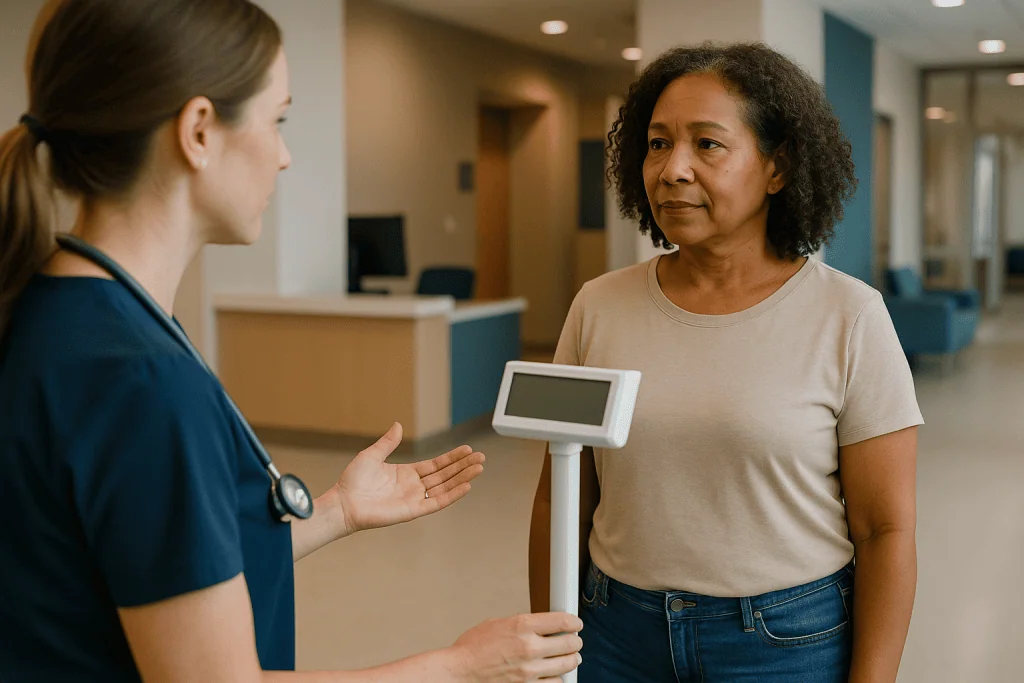
The first is the scale. Many chemotherapy doses are calculated from body surface area, a figure derived from your height and weight, or from kidney function that itself depends partly on weight. If your weight shifts noticeably between visits, the team may need to recalculate. That is why you will be weighed at nearly every appointment, sometimes to the surprise of people who feel it is unnecessary. It is not a judgment about your body; it is arithmetic that keeps the dose matched to you. The prescribing oncologist makes any adjustment, never the nurse at the desk and certainly never you.
The second is the identity check. Expect to be asked your full name and date of birth repeatedly, and to see nurses scan your wristband before each bag is hung. National safety guidance treats chemotherapy as a high-alert class of medicines, meaning errors carry serious consequences, so the double-checking is deliberate and slightly tedious by design.
You will also be asked how you have been since your last visit. Answer in specifics rather than reassurance. Two nights of loose stools, a sore mouth, a new tingling in your fingertips, a fever you treated with a fever reducer: each of these can change what happens today. Bring an honest list of everything you take, including vitamins, herbal products and over-the-counter painkillers, because some interact with chemotherapy or affect liver and kidney tests.
Consent is usually signed at a separate education visit before the first infusion, but the nurse may review it again. Ask anything you did not ask then. The chair is not the place to be polite about confusion.
Blood work first: what the labs are checking before treatment
The blood test that gates almost every infusion is a complete blood count, or CBC: a measurement of red cells, white cells and platelets in a small sample. Three numbers within it matter most on treatment day.
Neutrophils are the white cells that fight bacterial infection. Chemotherapy suppresses the bone marrow that makes them, and if today’s count is already low, giving more treatment risks leaving you unable to fight an ordinary infection. Platelets help blood clot; a low count raises bleeding risk. Hemoglobin, the oxygen-carrying protein in red cells, tells the team how anemic you are and partly explains fatigue.
Alongside the CBC, a chemistry panel checks kidney function through creatinine, and liver function through enzymes and bilirubin. Many chemotherapy drugs are cleared from the body by the kidneys or liver, so if either organ is struggling, the drug can build up and side effects intensify. Some regimens also require checking electrolytes such as potassium and magnesium, which certain drugs deplete.
Results from a standard panel usually return within about an hour, though this varies with the laboratory. During that window the team decides whether treatment proceeds, is adjusted, or is postponed. The pharmacy typically waits for that decision before compounding, because the finished drugs have a short shelf life and are made specifically for you.
Some centers draw labs a day or two ahead so the day itself runs faster. If yours does, the wait shrinks but the logic is the same. According to the National Cancer Institute, blood counts tend to reach their lowest point roughly 7 to 14 days after a dose, which is why the team wants to see them recovered before the next one.
Who is treated today, and who is usually asked to wait
Infusion suites are for people whose regimen has to be delivered into a vein: many chemotherapy drugs, along with some immunotherapies and targeted therapies that are given the same way. People on entirely oral regimens usually take tablets at home and visit only for monitoring. Whether you sit in the chair at all was decided by your oncologist when the plan was chosen, and the choice depends on the cancer type, its stage, your general health and the evidence behind each option.
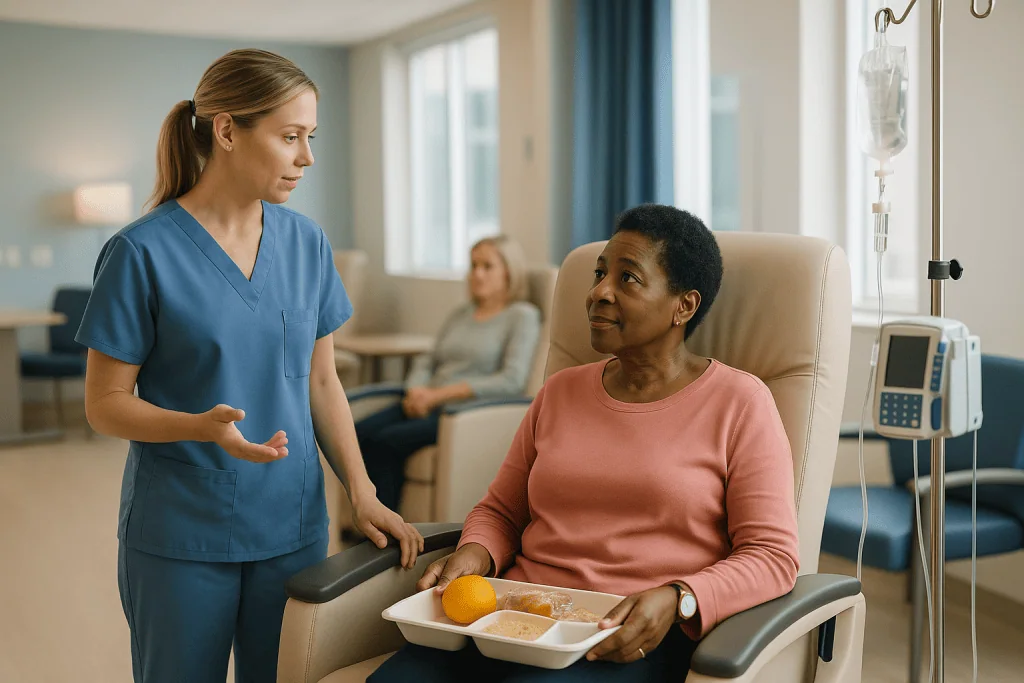
On the day, the more pressing question is whether treatment proceeds as scheduled. The team commonly postpones when:
- the neutrophil or platelet count has not recovered enough from the previous cycle
- you have a fever, a suspected infection or an infected access site
- kidney or liver tests have shifted in a way that would make the planned dose unsafe
- side effects from the last cycle, such as severe diarrhea, mouth ulcers or nerve symptoms, have not settled
- a new problem has appeared, such as shortness of breath or a rash, that needs assessment first
A postponement of about a week is common and is not a sign the treatment is failing. The NHS explains that delays give the body time to recover between cycles, and the whole schedule is built with that possibility in mind. Sometimes, rather than delaying, the oncologist reduces the intensity or swaps a drug; that decision is theirs, informed by guidelines, and you should feel free to ask what changed and why.
People occasionally ask to push ahead despite low counts because they have arranged childcare or time off. The honest answer is that a low-count infusion can land you in hospital with an infection, which costs far more days than a week’s delay.
Chemo port vs IV: where the medicine actually goes in
Chemotherapy has to reach a vein, and there are three usual routes. A peripheral IV is a short cannula placed in a vein of the hand or forearm for a single session. A PICC line, short for peripherally inserted central catheter, is a long, thin tube threaded from an upper-arm vein to a large vein near the heart and left in place between visits. A port is a small reservoir placed under the skin of the upper chest, connected to a catheter that also ends in a large vein; it is accessed with a special needle and sits invisibly under a healed scar between treatments.
| Access type | Where it sits | How long it stays | What it feels like on the day |
|---|---|---|---|
| Peripheral IV | Hand or forearm vein | Removed after each session | Brief sting on insertion; arm kept fairly still |
| PICC line | Upper arm to a large central vein | Weeks to months, with regular dressing changes | No new needle; dressing checked and flushed |
| Port | Under the skin of the upper chest | Months or longer, for the course of treatment | One needle through numbed skin; hands free during infusion |
Why not always use a simple IV? Some chemotherapy drugs are vesicants, meaning they can damage skin and tissue if they leak outside the vein. Delivering them into a large central vein, where blood flow dilutes them quickly, lowers that risk. Central access also spares fragile arm veins over a long course, and it allows blood draws without a fresh puncture.
Ports and PICCs carry their own risks, mainly infection and blood clots, which is why nurses inspect the site each visit. The Cleveland Clinic and Johns Hopkins both describe these options in patient terms. Which one you have is a clinical decision made with your team, weighing the drugs planned, the expected duration and your own veins.
Pre-medication: what those first bags are for
Before any chemotherapy drug is connected, most people receive pre-medications, often called pre-meds. These are given to prevent problems rather than treat them, which is why they come first and why they run even when you feel perfectly well.
The largest group targets nausea. Chemotherapy triggers nausea partly by releasing serotonin in the gut and partly by acting on signaling centers in the brain. Anti-nausea medicines work along those pathways: one class blocks serotonin receptors, another blocks a brain signal called substance P, and corticosteroids are added because they reduce nausea through a mechanism that is still not fully understood. Your oncologist matches the combination to how strongly your particular drugs tend to provoke nausea, following published guideline categories rather than guesswork.
A second group prevents infusion reactions. Some drugs can cause flushing, itching, rash, fever or breathing difficulty during the drip, especially the first time. An antihistamine and sometimes a fever reducer or corticosteroid, given beforehand, blunt that response.
A third element is plain fluid. A bag of saline before, during or after certain drugs protects the kidneys by keeping urine flowing, and it is why you may need the bathroom more than usual.
Pre-meds have their own effects. Antihistamines can make you drowsy or restless. Corticosteroids often produce a flushed face, a burst of energy, a heightened appetite, hiccups and a poor night’s sleep afterward; some people describe an odd wired-but-tired feeling that fades over a day or two. Knowing this in advance stops you mistaking a steroid buzz for something going wrong.
Timing, choice and any change to pre-meds sit entirely with your prescribing team. If a particular one leaves you feeling unwell, tell them; alternatives within each class exist.
How long does chemo infusion take on the first day?
The truthful answer has two parts: the drip itself, and everything around it.
The chemotherapy portion alone varies enormously by regimen. According to the NHS, a session can last from a few minutes to several hours, depending on the drugs and how they must be given. Some medicines are pushed in over minutes; others run over an hour or more because rapid delivery would irritate the vein or raise the chance of a reaction. A handful are connected to a small portable pump that you take home, delivering the drug continuously over a couple of days before a nurse disconnects it.
Then add the surrounding steps: check-in, blood draw, waiting for results, the oncology review, pharmacy compounding, pre-medications, saline flushes between drugs, and a short observation period at the end. For a multi-drug regimen, the whole visit commonly fills most of a working day. Ask your nurse for a realistic estimate rather than relying on the appointment slot, which often reflects when the chair is booked, not when you leave.
First infusions frequently run longer than later ones. Several drugs are given at a slower rate the first time so nurses can watch for reactions, then sped up on subsequent cycles once you have tolerated them. If your second visit is noticeably shorter, that is why.
Treatment is organized into cycles: a dose or set of doses followed by a recovery break, then repeated. The NHS notes that a course of chemotherapy often lasts between three and six months, though some plans are shorter and some, particularly maintenance schedules, run longer. Your own timeline is set by the treating team and may shift with how you respond and how well you recover between cycles.
Chemotherapy infusion day what to expect: how the infusion feels
Most of the time, an infusion feels like very little. The medicine is at room temperature, so a cool sensation up the arm is common with a peripheral IV. Some drugs produce a metallic or chemical taste as they circulate, occasionally within a minute of starting; hard candy or a mint helps many people. Others cause a flush of warmth in the face, a brief sinus or nose tingle, or a sense of pressure at the port site as the flush goes in. A few are colored, which surprises people watching the line.
The pump will beep. It beeps when a bag is empty, when the line kinks because you bent your arm, and when air is detected. Beeping is a request for a nurse, not an alarm about you.
Nurses take vital signs before starting each new drug and again during the first several minutes, because most acute infusion reactions announce themselves early. Symptoms to report immediately, without waiting to see if they pass, include itching or hives, sudden flushing, chest or back tightness, difficulty breathing, dizziness, a racing heart, or a feeling that something is simply wrong. The standard response is to pause the infusion, give medicines to settle the reaction, and often restart more slowly once you are stable. Reactions are uncomfortable but the suite is set up precisely to manage them.
Watch the entry site too. Burning, stinging, swelling or coolness around a peripheral IV can mean the drug is leaking into surrounding tissue, called extravasation. Say so at once; early action limits harm.
Between checks, people read, doze, chat, work on laptops or simply stare out the window. Boredom is a legitimate and common experience, and a reassuring one.
What to bring to chemo, and what to wear
Packing for an infusion is less about the medicine and more about surviving a long, air-conditioned sit.
Start with clothing. Choose a top with sleeves that roll above the elbow if you have a peripheral IV or PICC, or a shirt that buttons or has a wide neckline if you have a chest port, so the nurse can reach it without you undressing. Layers matter: infusion suites run cool, and saline and cool medicine can chill you from the inside. Blankets are usually available, but a familiar wrap or a pair of thick socks is a comfort worth carrying. Skip strong perfume or scented lotion; smells can worsen nausea for you and for the person in the next chair.
Then the practical items:
- a written list of all medicines and supplements, plus any allergies
- a notebook or phone note for questions and for jotting side effects later
- a full water bottle and light snacks that sit easily, such as crackers or fruit
- headphones, a charger, a book or downloaded shows
- lip balm and sugar-free mints or hard candy for dry mouth and odd tastes
- reading glasses, insurance information and photo identification
- a companion for the first visit, if allowed, both for company and to listen alongside you
Leave valuables at home and keep hands free of rings that could tighten if your fingers swell slightly from fluids.
One item people forget is a plan for the ride home. Pre-medications can sedate you, and a first infusion is not the day to test how you feel behind the wheel; the NHS advises checking with your team before driving after treatment. Arrange a driver or a booked ride, and tell the nurse if that falls through so they can help.
Eating, drinking and moving during the infusion
Unless your team tells you otherwise, eat something light before you arrive. An empty stomach tends to worsen nausea, and a long morning without food combined with a corticosteroid pre-med can leave you shaky. The National Cancer Institute suggests small, bland, easily digested meals around treatment rather than heavy or greasy food. Toast, oatmeal, yogurt, rice or a plain sandwich are typical choices. Some people find that whatever they eat on infusion day becomes associated with treatment and loses its appeal later, so avoid your favorite dish that morning.
Drink steadily through the day. Fluids help your kidneys clear the drugs and reduce the headache and lightheadedness that come with dehydration. The saline bags add to this, which means bathroom trips. Your pump is on a wheeled pole and is designed to travel with you; ask the nurse to show you how to unplug it and move safely the first time, and never disconnect a line yourself.
Move a little. Standing to stretch, walking the corridor with your pole, flexing your ankles: these reduce stiffness and, for people at higher clot risk, keep blood moving in the legs. If you have a peripheral IV in the arm, keep that elbow relatively straight so the line does not occlude.
Infection control matters even in the chair. Wash or sanitize your hands before eating, and ask visitors with colds or stomach bugs to stay home. If you have young children, discuss visiting with the team.
Finally, sleep if you can. Antihistamine pre-meds make many people drowsy, and a nap is one of the few genuine pleasures of a treatment day. Nurses will wake you when they need to.
Going home: the first evening and the two weeks after
The infusion ends with a flush, the removal of the needle or IV, a few minutes of observation, and a stack of paperwork. Read the paperwork that evening; it repeats what the nurse said while you were tired.
The first night is often defined by the pre-meds rather than the chemotherapy. A corticosteroid can leave you flushed, hungry and unable to sleep, while an antihistamine may have you dozing by early afternoon. Fatigue, a mild headache and a slightly off taste are common. Many people are surprised to feel more or less normal.
Nausea has two phases. Acute nausea begins within the first 24 hours; delayed nausea can start after that and persist for a few days, according to the National Cancer Institute. Take-home anti-nausea medicines are usually prescribed on a schedule for the first days rather than only when you feel sick, because preventing nausea is easier than reversing it. Follow the schedule your team gave you and call if it is not working.
For roughly the first 48 hours, traces of chemotherapy leave the body in urine, stool and vomit. The Cleveland Clinic and others advise flushing the toilet with the lid down, washing hands well, and having caregivers wear gloves when handling soiled items during this window.
The middle stretch is the one to plan around. Blood counts typically dip to their lowest point 7 to 14 days after treatment, per the National Cancer Institute, which is when infection risk is highest and when fatigue often peaks. Keep the thermometer where you can find it.
If your regimen causes hair loss, the Mayo Clinic notes it usually begins two to four weeks after treatment starts. Mouth soreness, constipation or diarrhea, and taste changes may appear within the first week and generally ease before the next cycle.
What people often get wrong about the first infusion
The picture most people carry into the infusion suite comes from films and from older relatives’ experiences, and much of it is out of date.
You will be violently sick that evening. Modern anti-nausea prevention, built on guideline-matched combinations of drug classes, has changed this substantially. Some people still struggle with nausea, and it should always be reported, but many first-timers are startled by how ordinary the evening feels.
You will feel the drug working. Chemotherapy does not tingle its way to a tumor. The sensations you notice on the day come mostly from cool fluid, saline flushes and pre-medications.
A delay means the treatment is failing. Postponing a cycle for low blood counts is a routine safety adjustment that protects you from infection. Cancer response is judged by scans and markers over time, not by whether every date on the calendar held.
Chemo is one drug. Most regimens combine several medicines with different mechanisms, each given in its own bag with a flush between. That is a large part of why the day is long.
A port means major surgery. Port placement is a short procedure done under local anesthetic with sedation, usually as an outpatient, as the Cleveland Clinic describes.
You cannot eat or drink. Unlike surgery, chemotherapy rarely requires fasting. A light meal beforehand and snacks during are generally encouraged unless your team says otherwise.
You can drive yourself home. Sedating pre-medications make this unwise on a first visit, and many centers require a driver.
Everyone loses their hair. Whether hair thins depends on the specific drugs; some regimens cause little or none. Ask what is expected with yours rather than assuming.
Questions to ask your care team before and on the day
The education visit and the first chair check-in are the moments when the team expects questions, and the good ones are practical. Write yours down; corticosteroids and nerves both erase memory.
- Which drugs am I receiving today, in what order, and roughly how long will each run?
- What pre-medications will I get, and what might I feel from them?
- Will I need a port or PICC line, and if so, when and how is it placed?
- What are the specific side effects most associated with my regimen, and when do they usually appear?
- Which anti-nausea medicines am I taking home, and should I take them on a schedule or only when needed?
- What temperature counts as a fever for me, and which number do I call at 3 a.m.?
- On which days after treatment are my blood counts likely to be lowest?
- Are there foods, supplements, alcohol or over-the-counter medicines I should avoid during treatment?
- Can I work, exercise, travel or be around grandchildren, and are there days I should be more cautious?
- What would make you delay or change my next cycle, and how would that decision be made?
- Who do I contact for emotional support, nutrition advice or help with practical arrangements?
- Is this regimen intended to shrink the cancer before surgery, lower the risk of it returning, or control it long term?
That last question matters because it frames everything else. Knowing the goal your oncologist has set helps you weigh side effects and schedule changes with the same lens the team uses.
Bring a companion to listen if you can. Studies of clinic consultations consistently show people remember only a fraction of what is said, and a second set of ears fills gaps. If you leave with a question unanswered, the nurse line exists for exactly that.
When to call your doctor: red flags after chemotherapy
Every infusion suite hands out a 24-hour number, and the single most useful habit you can build is to use it early rather than wait for morning. Oncology teams would far rather hear about a borderline temperature at midnight than treat a serious infection at dawn.
Call immediately, day or night, if you notice:
- a temperature of 100.4°F (38°C) or higher, or shaking chills even without a measured fever; the National Cancer Institute and Cleveland Clinic treat this as an emergency during chemotherapy because a low neutrophil count can let infection spread fast
- vomiting that continues despite your anti-nausea medicines, or being unable to keep fluids down for a day
- severe or bloody diarrhea, or no bowel movement for several days with abdominal pain
- redness, swelling, pain, warmth or discharge at your IV, PICC or port site, or swelling of the arm on the side of a PICC or port
- unusual bleeding: nosebleeds that will not stop, blood in urine or stool, bruises appearing without injury
- mouth sores that stop you eating or drinking
- new confusion, severe headache, or sudden weakness
Call emergency services rather than the clinic line for chest pain, sudden shortness of breath, swelling of the face or throat, fainting, or a sudden rash with breathing trouble, since these may signal a severe allergic reaction, a blood clot or a heart problem.
Between those extremes sit the symptoms that deserve a same-day call during office hours: nausea that is manageable but wearing you down, new tingling or numbness in fingers or toes, a rash, ringing in the ears, or fatigue so heavy you cannot manage basic tasks. None of these are failures to endure. Each can prompt an adjustment, and the team can only adjust what they know about.
Every decision about pausing, changing or continuing treatment rests with your treating team. Your part is to report clearly and promptly.
Frequently asked questions
How long does chemo infusion take on the first day?
The drug portion can range from a few minutes to several hours depending on the regimen, according to the NHS, and the full visit with check-in, blood work, pharmacy preparation and pre-medications often fills most of a working day. First infusions tend to run longer because some drugs are given slowly the first time to watch for reactions, then faster in later cycles.
What should I bring to my first chemo appointment?
Bring a written list of all your medicines and supplements, a water bottle, light snacks, layers of clothing, entertainment with headphones, a charger, lip balm and a notebook for questions and side effects. Wear a top that gives easy access to your arm or chest port. Arrange a driver, since sedating pre-medications can make driving unsafe after a first infusion.
Can I eat before chemotherapy?
Yes, in most cases a light meal beforehand is encouraged unless your team gives different instructions. An empty stomach tends to worsen nausea, and the National Cancer Institute recommends small, bland, easily digested foods around treatment. Avoid heavy or greasy meals, and consider skipping favorite dishes on infusion day, since some people later associate them with treatment and lose their appetite for them.
Will I feel sick during the infusion itself?
Most people do not feel nauseated while the drugs are running, because anti-nausea pre-medications are given first and take effect before the chemotherapy starts. Sensations during the drip are usually mild: a cool feeling in the arm, a metallic taste or a warm flush. Nausea, when it occurs, more often appears in the hours or days afterward, which is why take-home anti-nausea medicines are prescribed on a schedule.
Chemo port vs IV: do I need a port for chemotherapy?
Not everyone does. A peripheral IV in the arm is adequate for many short courses, while a port or PICC line is often chosen when drugs can damage tissue if they leak from a small vein, when treatment will last months, or when arm veins are fragile. The decision is made by your oncology team based on the specific drugs planned and the expected duration.
Why was my chemotherapy delayed because of blood counts?
Chemotherapy suppresses the bone marrow, and if neutrophils or platelets have not recovered from the previous cycle, giving more treatment raises the risk of serious infection or bleeding. A delay of about a week is a routine safety step built into treatment planning, not a sign the treatment is failing. Your oncologist may also adjust the plan; that decision rests with them.
What are pre-meds for before chemo?
Pre-medications prevent problems before they start. Anti-nausea medicines from several classes block the gut and brain signals that chemotherapy triggers, antihistamines and sometimes a corticosteroid blunt allergic-type infusion reactions, and saline protects the kidneys by keeping urine flowing. They can cause drowsiness, flushing, hiccups or a wired feeling that evening, which is expected and worth reporting if troublesome.
Can I drive myself home after my first chemo infusion?
It is generally not advised for a first infusion. Antihistamine and other sedating pre-medications can slow reactions, and you will not yet know how the treatment affects you. The NHS recommends checking with your care team before driving after chemotherapy, and many centers require a designated driver. Arrange a ride in advance and tell the nurse if your plans change.
First chemo side effects timeline: when do side effects start?
Acute nausea can begin within the first 24 hours and delayed nausea after that, lasting a few days, according to the National Cancer Institute. Fatigue often builds over the first week. Blood counts typically reach their lowest point 7 to 14 days after treatment, when infection risk peaks. If your drugs cause hair loss, the Mayo Clinic notes it usually starts two to four weeks after treatment begins.
Is it safe for my family to be around me after chemotherapy?
Yes, ordinary contact is safe. For roughly the first 48 hours, traces of chemotherapy leave the body in urine, stool and vomit, so the Cleveland Clinic and others advise flushing with the lid down, thorough handwashing, and gloves for anyone handling soiled items. The greater concern runs the other way: people with colds or stomach bugs should stay away while your counts are low.
References
This article is for general information only and is not a substitute for professional medical advice. Please consult a qualified doctor about your individual situation.

More from the Blog

Who May Be a Candidate for HIPEC? Peritoneal Spread, Imaging and the Surgical Evaluation
People considered for HIPEC usually have cancer confined to the lining of the abdomen, a primary tumor type where the approach is supported by…

Working, Eating and Resting During Lymphoma Treatment: A Practical Guide for Patients
Many people keep some work, meals and routines going during lymphoma treatment, but the pattern usually follows the treatment cycle: a few harder days…
Preparing for Neck Cancer Treatment: Dental Review, Nutrition Planning and Fitness Tests
Preparing for neck cancer treatment usually means three things done in the weeks before therapy starts: a dental review to treat or remove teeth…
Follow-Up After Thyroid Cancer: What Blood Tests and Ultrasound Track Over Time
After treatment for differentiated thyroid cancer, follow-up usually rests on three blood tests, thyroglobulin, thyroglobulin antibodies and TSH, paired with a neck ultrasound. Thyroglobulin…

Basal Cell Carcinoma in Older Adults: How Treatment Is Tailored to Health and Skin
Basal cell carcinoma treatment in older adults is tailored to the tumor's size, location, subtype and growth rate, and to the person's overall health,…

Rash and Diarrhea on Targeted Therapy: Why They Happen and When to Contact the Team
Rash and diarrhea are common side effects of targeted cancer therapy because the molecular switches these drugs block, such as EGFR, also keep skin…