Anosmia
Anosmia is the loss of smell. Learn about anosmia symptoms, common causes, how doctors diagnose it, treatment options, outlook, and when to see a doctor.
Quick answer
Anosmia is the complete loss of the sense of smell. It is most often caused by nasal or sinus problems, viral infections such as colds or COVID-19, or head injury, and can also relate to aging, medications, or neurological conditions. Doctors diagnose it with smell tests, nasal examination, and sometimes imaging; treatment depends on the cause and recovery varies.
What is anosmia?
Anosmia is the medical term for a complete loss of the sense of smell. It comes from Greek words meaning “without smell.” A person with anosmia cannot detect odors such as smoke, food, flowers, or perfume. When the sense of smell is reduced but not entirely gone, doctors use the term hyposmia. Because taste and smell work closely together, many people with anosmia also notice that food seems bland or that flavors are muted, even though the taste buds on the tongue may be working normally.
Anosmia can be present from birth (congenital anosmia), but far more often it develops later in life. It may appear suddenly, for example after a head injury or a viral infection, or it may develop slowly over months or years. Temporary anosmia is very common: most people have experienced a short-term loss of smell during a heavy cold or sinus infection. Persistent anosmia is less common but affects people of all ages, and it becomes more frequent with advancing age.
Although loss of smell is sometimes dismissed as a minor problem, it can affect safety, nutrition, mood, and quality of life. Smell warns us of gas leaks, smoke, and spoiled food, and it plays a large role in the enjoyment of eating. For this reason, anosmia is taken seriously by doctors, and it is usually evaluated by specialists in ear, nose, and throat medicine. In many hospital groups, including Acibadem, the Otorhinolaryngology (ENT) department is the unit that assesses and manages smell disorders.
Anosmia symptoms
The central symptom of anosmia is simple: you cannot smell. However, anosmia symptoms can show up in several different ways, and people often notice the effects on daily life before they realize the sense of smell itself has changed.
- Inability to detect odors, such as coffee, perfume, smoke, or garbage
- Food tasting bland or “flat”, even when it is well seasoned
- Reduced appetite or changes in eating habits, sometimes leading to weight loss or, in some people, weight gain from over-salting or over-sweetening food
- Not noticing body odor, bad breath, or spoiled food
- Failing to smell smoke, gas, or burning, which can be a safety concern
- Distorted smells (parosmia), where familiar odors smell wrong or unpleasant, often during recovery
- Smelling odors that are not there (phantosmia), such as a burning or chemical smell
- Low mood, anxiety, or a sense of isolation related to the loss
Anosmia symptoms can differ depending on the type and stage. In congenital anosmia, a person has never been able to smell, so there is no sense of “loss”; the condition is often discovered in childhood or adolescence when the person realizes others can smell things they cannot. In conductive anosmia, something physically blocks odors from reaching the smell receptors high in the nose, so the loss often fluctuates with nasal congestion and may improve when the nose clears. In sensorineural anosmia, the smell nerve cells or the brain pathways that process smell are damaged; the loss is usually more constant and may be accompanied by parosmia or phantosmia during any recovery. Anosmia related to a neurological (nerve or brain) condition may develop gradually and may be accompanied by other symptoms such as tremor, memory changes, or headaches.
Anosmia causes and risk factors
Smell depends on a chain of events: odor molecules must reach the top of the nasal cavity, bind to specialized nerve cells in the olfactory epithelium (the smell-sensing lining), and send signals along the olfactory nerve to the brain. A problem anywhere along this chain can cause anosmia. Common anosmia causes fall into a few broad groups.
- Nasal and sinus conditions. Chronic sinusitis (long-lasting inflammation of the sinuses), nasal polyps (soft, noncancerous growths inside the nose), severe allergic rhinitis (hay fever), and a deviated septum can block airflow to the smell receptors. These are among the most frequent causes of long-term smell loss and are often at least partly treatable.
- Viral infections. The common cold, influenza, and COVID-19 can damage the smell-sensing lining or the supporting cells around it. Post-viral anosmia often improves over weeks to months, but in some people it persists.
- Head injury. A blow to the head can shear the delicate olfactory nerve fibers where they pass through the skull, or bruise the smell-processing areas of the brain. Recovery after trauma is variable and can be slow.
- Aging. The number and sensitivity of smell receptors tend to decline with age, and older adults are more likely to notice reduced smell.
- Neurological conditions. Reduced or lost smell can be an early feature of Parkinson’s disease and Alzheimer’s disease, and can occur with multiple sclerosis or after a stroke. Smell loss alone does not mean a person has one of these conditions, but doctors may consider them when other symptoms are present.
- Medications and toxins. Some medicines, including certain antibiotics, blood pressure drugs, and nasal decongestant sprays used for long periods, may affect smell. Exposure to industrial chemicals, solvents, or heavy metals, and long-term smoking can also damage the smell lining.
- Tumors and surgery. Rarely, growths in the nose, sinuses, or at the base of the brain press on the olfactory pathway. Surgery in the nose or skull base can sometimes affect smell as well.
- Congenital causes. Some people are born without a working sense of smell, occasionally as part of a genetic condition such as Kallmann syndrome, which also affects hormone development.
- Radiation therapy to the head and neck, and some hormonal or nutritional disorders, are less common causes.
Risk factors for anosmia include older age, smoking, a history of chronic sinus disease or nasal allergies, previous head trauma, repeated upper respiratory infections, occupational exposure to chemicals or dust, and a family history of neurological disease. Having one or more risk factors does not mean a person will develop anosmia, but it may increase the likelihood.
Anosmia diagnosis
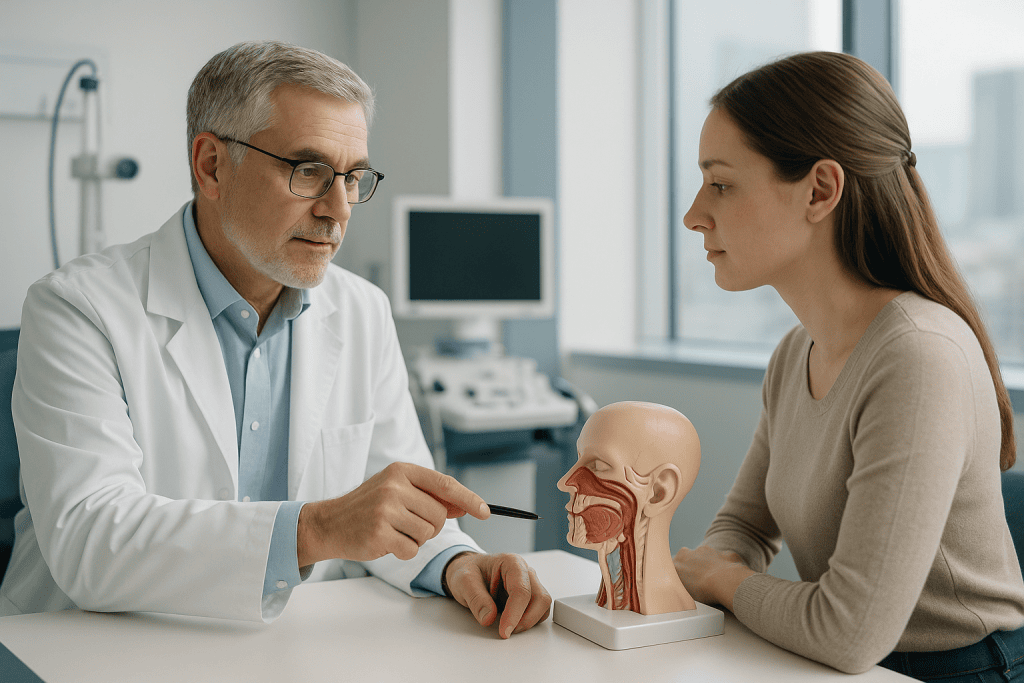
Anosmia diagnosis begins with a careful conversation and a physical examination. Your doctor will usually ask when the loss started, whether it was sudden or gradual, whether it fluctuates, whether you have had recent infections or head injuries, what medications you take, and whether you have other symptoms such as nasal blockage, facial pain, headaches, or changes in memory or movement. This history often points toward the most likely cause.
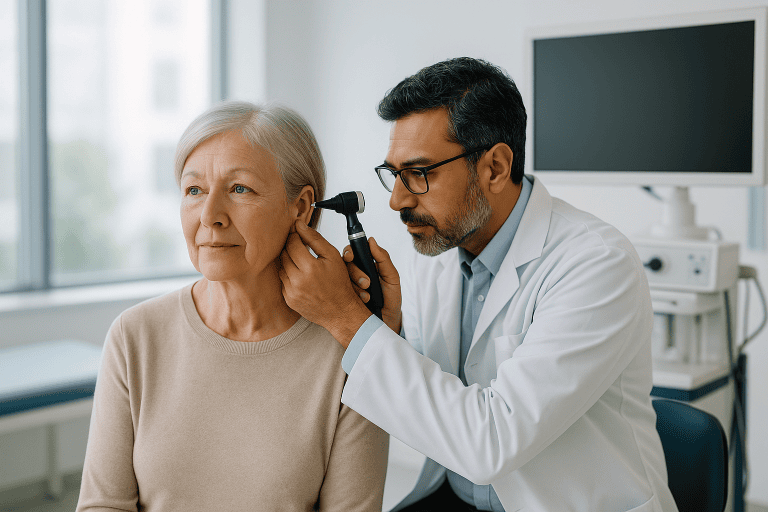
The examination usually includes looking inside the nose. A doctor may use a nasal endoscope, a thin, flexible or rigid tube with a light and camera, to inspect the nasal passages and the region near the smell receptors for swelling, polyps, discharge, or structural problems. This is typically done in the clinic after a numbing spray.
To measure the sense of smell objectively, doctors use standardized smell tests. These may involve scratch-and-sniff cards, pens filled with specific odors, or bottles containing different concentrations of a scent. The tests assess whether you can detect an odor at all (threshold), tell different odors apart (discrimination), and name them (identification). Results are compared with expected values for your age and sex and help classify the loss as complete anosmia, partial hyposmia, or normal smell. Because taste and smell overlap, a simple taste test may also be performed.
Imaging is not needed for everyone. However, your doctor may order a CT (computed tomography) scan of the sinuses if a blockage or chronic sinus disease is suspected, since CT shows bone and sinus anatomy clearly. An MRI (magnetic resonance imaging) scan of the brain and olfactory pathways may be recommended when the cause is unclear, when there has been a head injury, when neurological symptoms are present, or when the loss began suddenly without an obvious reason. MRI can show the olfactory bulbs, which are the smell-processing structures at the front of the brain, and can help rule out a tumor or other brain condition.
Additional tests depend on the suspected cause. Blood tests may be used to check for nutritional deficiencies, thyroid problems, or hormonal conditions, particularly in suspected congenital anosmia. Allergy testing may be considered if allergic rhinitis is thought to be contributing. In some cases, referral to a neurologist is arranged if a nerve or brain disorder is a possibility.
Anosmia treatment options
Anosmia treatment depends on the cause, and it is important to understand that not every case can be fully reversed. The main goals are to treat any underlying condition, to support recovery of the smell pathway where possible, and to reduce the impact of smell loss on safety and quality of life.
Treating nasal and sinus disease. When anosmia is caused by inflammation or blockage, treatment of that condition often improves smell. Options may include saline (salt water) nasal rinses, corticosteroid nasal sprays or drops to reduce swelling, a short course of oral corticosteroids in selected cases, antihistamines for allergies, or antibiotics if a bacterial sinus infection is present. For chronic sinusitis with polyps that does not respond to medication, newer injectable biologic medicines that target specific inflammatory pathways may be considered by a specialist.
Surgery. If nasal polyps, a severely deviated septum, or chronic sinus disease block airflow to the smell receptors, endoscopic sinus surgery may be recommended. This is performed through the nostrils using a camera and fine instruments, without external cuts. Surgery aims to open the sinuses and remove polyps; smell often improves afterward in many people, though results vary and polyps can return over time.
Observation and time. After a viral infection, the smell lining has a natural ability to regenerate. Many people recover some or all of their sense of smell within weeks to months without specific treatment. Your doctor may recommend a period of watchful waiting with follow-up testing, especially in the first months after onset.
Olfactory training (smell rehabilitation). This is a structured exercise in which a person deliberately sniffs a small set of distinct odors, commonly rose, lemon, clove, and eucalyptus, for a short period twice a day over several months, while concentrating on the memory of each scent. It is thought to stimulate regeneration and reorganization of smell pathways. It is safe, inexpensive, and is often recommended for post-viral and post-traumatic anosmia, although the degree of benefit differs from person to person.
Reviewing medications. If a medicine is suspected of contributing, your doctor may adjust the dose or suggest an alternative. You should not stop prescribed medication on your own.
Treating other underlying causes. Nutritional deficiencies can be corrected, tumors can be treated by the appropriate specialist, and neurological conditions are managed with the help of a neurologist. In these situations, improvement in smell depends on how the underlying condition responds.
What is not proven. A range of supplements and alternative therapies are marketed for smell loss. Evidence for most of them is limited or inconsistent, and some can interact with other medicines. It is reasonable to discuss any supplement with your doctor before using it.
For congenital anosmia and for damage to the olfactory nerve that does not recover, there is currently no treatment that restores smell. In these cases, care focuses on safety measures, nutrition, and emotional support.
Living with anosmia and outlook
The outlook for anosmia varies widely. Smell loss caused by a cold, flu, or sinus inflammation often improves once the nose clears or the underlying condition is treated. Post-viral anosmia frequently improves over several months, and some people continue to notice gradual gains for a year or longer. Recovery after head injury is less predictable; some people regain smell partially, while others do not. Anosmia linked to aging or neurological disease tends to be long-lasting. Doctors generally cannot promise recovery, but they can give a realistic sense of what to expect based on the cause and how long the loss has lasted.
Practical adjustments can make daily life safer and more enjoyable:
- Install and regularly test smoke detectors and, if you use gas appliances, a natural gas or carbon monoxide detector.
- Label food with dates and follow storage guidelines, since you may not smell spoilage.
- Take extra care with cooking, using timers and visual cues rather than relying on the smell of burning.
- Experiment with texture, temperature, color, and spices such as chili or ginger, which are sensed by the tongue and mouth rather than the nose, to keep meals interesting.
- Keep up personal hygiene routines on a schedule rather than waiting to notice odor.
- Tell family, friends, and coworkers, so they can help alert you to smells you cannot detect.
Anosmia can affect mood and social life. Many people describe feeling disconnected from memories, from loved ones, or from the pleasure of eating. These feelings are common and valid. If low mood or anxiety becomes persistent, it is worth raising with your doctor, and support groups for people with smell disorders exist in many countries.
Frequently asked questions
What are the first anosmia symptoms people usually notice?
Many people first notice that food seems bland or that they no longer enjoy eating, rather than noticing the loss of smell itself. Others realize they cannot smell something obvious, such as coffee, smoke, or perfume, that people around them can detect. Sometimes a family member points it out first. If the loss comes on suddenly, it is usually more noticeable than a gradual decline.
Is anosmia permanent?
Not necessarily. Whether anosmia is permanent depends largely on its cause. Loss related to colds, sinus inflammation, or nasal polyps often improves with time or treatment. Post-viral anosmia frequently recovers over months, though not in everyone. Anosmia from head injury or from congenital causes is more likely to be long-lasting. A doctor can offer a more specific outlook after identifying the cause.
What are the most common anosmia causes?
The most common anosmia causes are nasal and sinus problems such as chronic sinusitis, nasal polyps, and allergies, and viral infections including the common cold, influenza, and COVID-19. Head injury, aging, certain medications, smoking, and some neurological conditions are other recognized causes. In a small number of people, the cause is never fully explained.
How is anosmia diagnosis confirmed?
Anosmia diagnosis usually combines a detailed medical history, an examination of the nose (often with a small camera called an endoscope), and a standardized smell test that measures your ability to detect and identify odors. Depending on the findings, your doctor may order a CT scan of the sinuses or an MRI of the brain, and occasionally blood tests, to look for the underlying cause.
What is the most effective anosmia treatment?
There is no single best anosmia treatment because it depends on the cause. When inflammation or blockage is responsible, nasal steroid sprays, saline rinses, or sinus surgery may restore smell in many cases. For post-viral or post-traumatic loss, olfactory training combined with time is often recommended. For nerve damage that does not recover or for congenital anosmia, no treatment is currently proven to restore smell.
Does anosmia affect taste?
Yes, indirectly. The tongue detects basic tastes such as sweet, salty, sour, bitter, and umami, and these usually still work in anosmia. However, most of what we call “flavor” comes from smell. Without it, foods can seem bland or similar to one another. Many people with anosmia find that spicy, sour, or strongly textured foods remain more enjoyable.
Can anosmia be an early sign of a serious illness?
In most people, anosmia is caused by nasal or sinus problems or by a viral infection and is not a sign of a serious disease. However, gradual smell loss can occasionally be an early feature of neurological conditions such as Parkinson’s disease, and rarely a growth in the nose or skull base is responsible. This is why persistent or unexplained anosmia is worth evaluating rather than ignoring.
When to see a doctor
Temporary loss of smell during a cold or sinus infection usually does not require medical attention and improves as the infection clears. It is reasonable to see a doctor if smell loss lasts longer than a few weeks after an illness, if it develops without an obvious reason, if it is gradually worsening, or if it is affecting your eating, safety, or mood. An ENT specialist can perform the tests needed for anosmia diagnosis and discuss anosmia treatment options.
Seek prompt or urgent medical care if loss of smell occurs together with any of the following red-flag warning signs:
- Sudden loss of smell after a head injury, especially with confusion, vomiting, or loss of consciousness
- Severe headache, particularly one that is new, worsening, or unlike any you have had before
- Vision changes, such as double vision or loss of part of your visual field
- Weakness, numbness, or difficulty speaking, which may indicate a stroke and require emergency care
- Nosebleeds that are frequent or one-sided, or a persistent blocked nostril on one side only
- Clear, watery fluid dripping from the nose, especially after a head injury or sinus surgery, which can indicate a leak of the fluid surrounding the brain
- Facial swelling, high fever, or severe facial pain alongside sinus symptoms
- New tremor, stiffness, memory problems, or balance difficulties developing with gradual smell loss
These symptoms do not always mean something serious is happening, but they need to be assessed by a doctor without delay so that the cause can be identified and treated appropriately.
Medically reviewed by the Acıbadem International Medical Board September 13, 2026
See our medical review board →
Update history
- PublishedSeptember 13, 2026
- Medical review approvedSeptember 13, 2026
- Last content updateSeptember 13, 2026