FESS
FESS (functional endoscopic sinus surgery) is a minimally invasive procedure that opens blocked sinus passages through the nostrils. It helps improve drainage and relieve chronic sinusitis symptoms.
Quick answer
FESS (functional endoscopic sinus surgery) is a keyhole operation performed through the nostrils with a small camera. The surgeon widens the natural drainage openings of the sinuses and removes obstructing tissue such as polyps, so mucus can drain and medications can reach the sinus lining. It is used for chronic sinusitis that persists despite medical treatment, usually as a day-case procedure under general anaesthesia.
Sinus Surgery for Chronic Sinusitis: Understanding FESS
Functional endoscopic sinus surgery, usually shortened to FESS, is a keyhole form of sinus surgery performed entirely through the nostrils using a thin camera called an endoscope. It opens the natural drainage pathways of the sinuses when chronic inflammation, nasal polyps or narrow anatomy keep them blocked. It is considered for people whose chronic sinusitis continues despite a proper, structured course of medical treatment, not as a first step, and not for every blocked nose.
Living with chronic sinusitis is often more exhausting than the people around you realise. The symptoms may come and go, but for many patients they never truly disappear: nasal blockage, facial pressure, thick drainage, a reduced sense of smell, recurrent infections, cough, headaches, poor sleep and a constant need for medication. Over months and years, that pattern quietly shapes work, travel, exercise and social life. Feeling genuinely well becomes the exception rather than the rule.
If you are weighing up sinus surgery, you probably have specific questions. Is the operation really necessary in your case? How uncomfortable is it? How long does recovery really take, and when could you get back to work and exercise? Will the result last, or will the symptoms creep back? You may also be trying to understand why your sinusitis keeps returning despite antibiotics, nasal sprays, allergy treatment or repeated visits to different specialists. This page answers those questions as directly and honestly as the subject allows.
The honest starting point is this: FESS does not remove your tendency to inflammation. What it does is restore ventilation and drainage through the natural sinus pathways, so that mucus can clear, infections have less opportunity to take hold, and the medications you use afterwards can actually reach the tissue they are meant to treat. For the right patient, selected after careful diagnosis, that combination can substantially reduce the burden of chronic sinusitis over the long term.
At Acibadem, evaluation for FESS sits within modern ear, nose and throat care, supported by nasal endoscopy, computed tomography imaging, and allergy or infection work-up where these are needed. The emphasis is on understanding why your sinuses are blocked, choosing the least invasive option that is likely to work, and guiding you through recovery with clear, realistic expectations rather than sweeping reassurance.
What Is FESS?
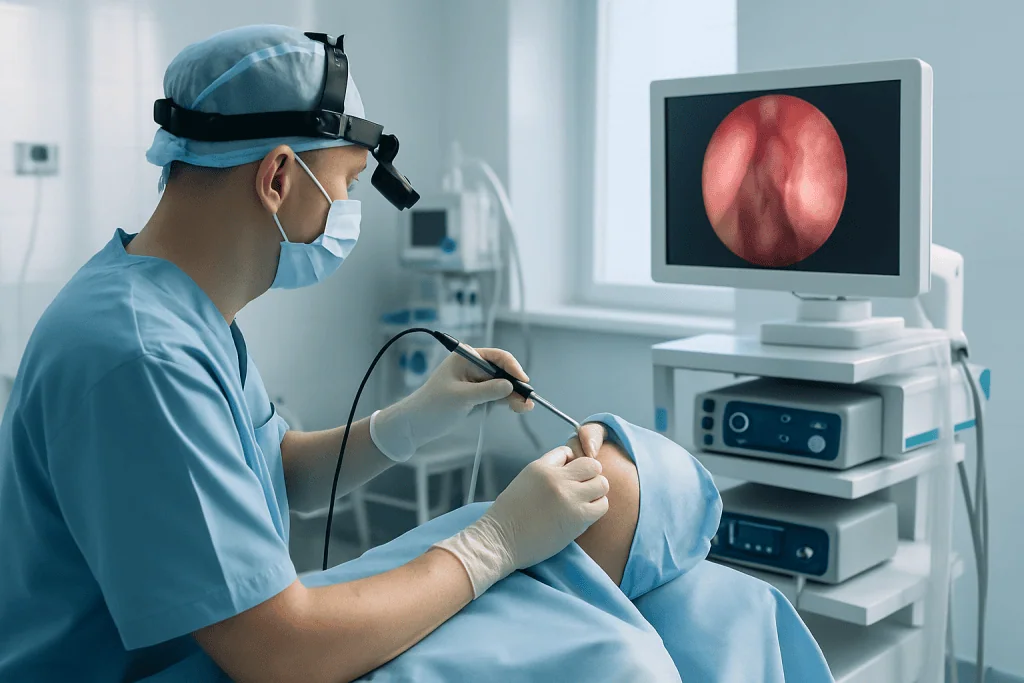
FESS stands for functional endoscopic sinus surgery. It is a minimally invasive procedure performed through the nostrils using an endoscope: a slim rod-lens camera that transmits a magnified view of the nasal cavity and sinus openings to a monitor. Because the surgeon works entirely inside the nose, there are usually no external incisions and no visible scars. Fine specialised instruments pass alongside the endoscope to remove obstructing tissue and enlarge the natural sinus openings under direct vision.
To understand what the operation achieves, it helps to know the anatomy. The sinuses are air-filled spaces in the bones around your nose, cheeks, forehead and eyes. Their lining constantly produces mucus, which normally drains through narrow channels into the nose and is cleared without you noticing. When those channels are blocked, by chronic inflammation, nasal polyps, anatomical narrowing, infection or scarring from previous surgery, mucus becomes trapped. Trapped mucus stagnates, pressure builds, and the environment favours persistent symptoms and repeated infection. FESS is aimed precisely at those blocked channels, not at the sinuses as a whole.
What does the “functional” in FESS actually mean?
The word “functional” means the operation is designed to restore how the sinuses work, not to strip them out. The surgeon enlarges the natural drainage openings, removes only inflamed or obstructing tissue, and deliberately preserves as much healthy mucosa as possible, because that lining is what sweeps mucus out of the sinuses after healing. This philosophy distinguishes FESS from older, more radical sinus operations, which removed larger amounts of tissue through external incisions and often left the sinus lining unable to clear itself properly. In FESS, less is frequently more: the aim is a sinus system that ventilates, drains and responds to medication.
Which sinuses can the surgeon reach?
All four sinus groups can be reached endoscopically: the maxillary sinuses in the cheeks, the ethmoid sinuses between the eyes, the frontal sinuses in the forehead and the sphenoid sinuses deep behind the nose. Rather than treating everything by default, the surgeon can operate sinus by sinus, opening only the areas that your CT scan and endoscopic examination show to be diseased. A limited procedure might address one blocked maxillary sinus; extensive polyp disease might require all four groups to be opened on both sides. The exact extent is planned from your symptoms, endoscopy findings, imaging, previous treatments and overall health, and it should be explained to you before the operation, not after.
What is an ethmoidectomy?
An ethmoidectomy is the part of endoscopic sinus surgery that opens the ethmoid sinuses: the honeycomb of small, thin-walled air cells sitting between the eyes. It is often the central step of FESS, because the ethmoid region acts as a junction box for sinus drainage: the maxillary and frontal sinuses drain through or beside it, so disease here tends to block several sinuses at once. During an ethmoidectomy the surgeon removes the thin bony partitions and inflamed tissue within these cells, converting the honeycomb into an open, ventilated space. Depending on the pattern of disease, the front (anterior) cells, the back (posterior) cells or both may be opened.
Is sinus surgery a serious surgery?
Sinus surgery is a genuine operation performed close to the eyes, the tear ducts, the base of the skull and significant blood vessels, so it deserves to be taken seriously, but it is also minimally invasive, usually carried out under general anaesthesia as a day-case or short-stay procedure, and serious complications are rare in experienced hands. The realistic risks worth understanding include bleeding, infection, crusting, adhesions (bands of scar tissue inside the nose), temporary changes to smell, and the possibility that symptoms persist or return over time. Rare but important risks include injury to the eye socket or to the thin bone separating the sinuses from the brain, which can cause a leak of cerebrospinal fluid. A frank pre-operative discussion should cover all of these in the context of your own anatomy and disease, so you can weigh the risks against the burden of ongoing symptoms.
Who May Need FESS Surgery?
FESS surgery is usually considered when chronic sinus disease continues despite a structured course of medical treatment. That course may include saline rinses, nasal corticosteroid sprays, allergy management, antibiotics when infection is suspected, short courses of oral steroids for selected patients, and treatment of contributing conditions such as asthma or reflux. Surgery is typically recommended only once the diagnosis has been confirmed and the non-surgical options have been genuinely tried or carefully considered: an operation offered before that point deserves questioning.
Which symptoms lead to an evaluation?
The symptoms that most often prompt a surgical assessment are persistent nasal obstruction, facial pressure or fullness, thick nasal or post-nasal drainage, chronic cough driven by that drainage, recurrent sinus infections, a reduced sense of smell, headaches associated with sinus inflammation, and the grinding fatigue that comes with poor nasal breathing and broken sleep. Patients evaluated for FESS usually describe symptoms lasting many weeks, or episodes recurring again and again over months or years. Some have frequent, clear-cut infections; others feel constantly congested without ever having an obvious infection; for some, the loss of smell and taste becomes the most distressing part of the disease. Symptoms alone, however, are never enough to decide that FESS is appropriate: the findings have to match.
How is the diagnosis confirmed before surgery?
Diagnosis begins with a detailed medical history and a focused ENT examination. Nasal endoscopy lets the physician look directly inside the nasal passages and identify inflammation, polyps, pus, structural narrowing, scarring or other abnormalities that explain the symptoms. A sinus CT scan then shows the extent and location of disease within the sinuses themselves and maps the anatomy the surgeon must respect: the position of the eyes, the skull base, the drainage pathways. In selected cases, allergy testing, immune evaluation, microbiology cultures, dental assessment or an asthma work-up may be added, because chronic sinusitis often has more than one driver. Surgery planned without this diagnostic groundwork is surgery planned on guesswork.
Some patients seek a second opinion because they have been advised to have surgery elsewhere and want to confirm whether it is truly necessary. Others have already had a sinus operation and come because symptoms have returned or scar tissue has formed. In both situations the task is the same: to establish whether FESS is likely to address the actual underlying problem, and which treatment plan offers the best balance of benefit and risk for that individual, which sometimes means recommending against an operation.
What Can an Operation on Sinus Passages Treat?
An operation on sinus passages is most commonly performed for chronic rhinosinusitislong-standing inflammation of the nose and sinuses that has stopped responding adequately to medication. Chronic rhinosinusitis occurs with or without nasal polyps. Patients with polyps often experience severe congestion, loss of smell, mouth breathing, disturbed sleep and a recurring need for steroid medication; for them, surgery can remove the polyps, open the sinus passages and, just as importantly, create access for the ongoing topical therapy that keeps the disease controlled afterwards.
Another common indication is recurrent acute sinusitis: repeated episodes of genuine sinus infection separated by periods of partial or complete recovery. If endoscopy and imaging show an anatomical blockage or persistent disease that keeps setting up the next infection, FESS may be considered to break that cycle at its source rather than treating each episode as it arrives.
FESS is also used for selected cases of fungal sinus disease, mucoceles, certain obstructive sinus cysts, complications of chronic infection, and sinus disease arising from a dental source after appropriate assessment: the roots of the upper teeth sit directly beneath the maxillary sinuses, which is why some patients are also reviewed by colleagues in oral and maxillofacial surgery before a plan is finalised. In revision cases, FESS can address scarring, residual obstruction or recurrent polyps left after previous operations, though revision anatomy demands more careful imaging review.
In some patients, FESS is combined with related nasal procedures during the same anaesthetic. A deviated nasal septum may limit the surgeon’s access to the sinuses or contribute to obstruction in its own right, in which case septoplasty may be performed at the same time. Significantly enlarged turbinates can also be reduced if they meaningfully affect breathing. In children, persistent congestion is often driven by the adenoids rather than the sinuses, which is why adenoid surgery (adenoidectomy) is frequently the more appropriate procedure at younger ages. Whether any combined procedure makes sense in your case should be discussed explicitly before surgery, not discovered afterwards.
It is equally important to say what FESS does not treat. It is not the correct answer to every blocked nose or every headache. Allergic rhinitis on its own, migraine, tension-type headache, reflux-related throat symptoms and sleep-disordered breathing can all mimic or overlap with sinus complaints. A careful diagnostic pathway exists precisely to keep patients with these conditions away from an operation that would not help them, and to identify the patients whose anatomy and disease genuinely stand to benefit from an endoscopic approach.
How Endoscopic Sinus Surgery Is Performed
Endoscopic sinus surgery follows a defined pathway: confirming the diagnosis, planning the operation on your imaging, performing the procedure through the nostrils, and then supervising the weeks of internal healing that determine the final result. Each stage matters; the operation itself is only the middle of the story.
Preoperative evaluation and planning
Preparation begins with defining the surgical target. Your ENT specialist reviews your symptoms, previous treatments, endoscopy findings, CT images, medical history, allergies, current medications and any earlier nasal or sinus operations. If you have asthma, aspirin-exacerbated respiratory disease, an immune condition, a bleeding disorder or other significant illness, additional assessment may be arranged before a date is set, because these conditions influence both the operation and the aftercare.
It helps to gather your existing medical records ahead of the evaluation: earlier imaging, operation notes, medication lists and any pathology or culture reports show the team how your disease has behaved over time and which treatments have already been tried. An up-to-date examination is still usually required, because the surgical plan has to match the current state of your nose, not the state it was in when an older scan was taken.
Before the operation you receive practical instructions covering fasting, smoking, alcohol and nasal care. Decisions about pausing or continuing any of your regular medicines, including blood thinners and supplements that affect bleeding, belong to your treating doctors, who will give you a specific, written plan. If active infection or severe inflammation is present, medication may be prescribed beforehand to reduce swelling and improve visibility during surgery. The anaesthesia team assesses your fitness for general anaesthesia and discusses the relevant risks in light of your age, health and the planned extent of the procedure.
Step by step: what happens in the operating theatre
Although every operation is tailored to the individual, a typical FESS procedure follows this sequence:
- General anaesthesia is administered and the nasal lining is treated with medication to shrink swelling and reduce bleeding.
- The endoscope is introduced through the nostril, giving the surgeon a magnified view of the nasal cavity and sinus openings on a monitor.
- The blocked natural openings are identified and enlarged, and obstructing bone partitions, polyps or thickened mucosa are removed with fine instruments while healthy lining is preserved.
- Each diseased sinus group, maxillary, ethmoid, frontal or sphenoid, is opened according to the pre-operative plan; tissue can be sent for pathology or culture where this will guide further treatment.
- Bleeding is controlled, the cavities are irrigated clear, and absorbable spacers or dressings are placed only if the surgeon judges them useful for healing.
- You wake in a monitored recovery area, and the team confirms you are comfortable and stable before discharge the same day or after a short stay.
The operation is highly anatomical. Because the sinuses border the eyes, the brain, major blood vessels and the tear drainage pathways, careful technique and detailed planning are not optional extras: they are the operation. In more complex cases, image-guided navigation may be used to correlate the surgical field with your CT scan in real time, particularly when the anatomy has been altered by previous surgery, when polyps are extensive, or when disease involves the deeper sphenoid or frontal regions. Navigation supports orientation; it does not replace the surgeon’s anatomical knowledge, and it is used selectively rather than routinely.
Additional tools are chosen to fit the diagnosis. Powered micro-instruments remove polyps and diseased tissue precisely while sparing normal structures. Suction and irrigation keep the field clear. Modern haemostasis techniques limit bleeding. Traditional nasal packing is not always necessary; if any packing or spacer is used, its type and the removal plan are explained to you in advance so there are no surprises at follow-up. The duration of surgery varies with its extent: a limited single-sinus procedure may be relatively short, while extensive polyposis, revision surgery, combined septoplasty or multi-sinus disease takes correspondingly longer.
Is balloon sinuplasty painful?
Balloon sinuplasty is generally well tolerated: it is performed under local or general anaesthesia, and patients typically describe pressure rather than sharp pain during the procedure, with some soreness and congestion in the days afterwards. It is a related but different technique from FESS: a small balloon is inflated within a blocked sinus opening to widen it, without removing tissue. That makes it an option only for carefully selected patients with limited disease of certain sinuses; it cannot remove polyps, open the ethmoid labyrinth or deal with extensive inflammation. Whether a balloon technique, conventional FESS or a combination suits you depends entirely on what your endoscopy and CT scan show, which is why the choice follows the diagnosis rather than preference alone.
Early recovery and follow-up
After FESS, nasal congestion, mild bleeding or blood-tinged discharge, crusting, pressure, fatigue and a temporarily reduced sense of smell are all common in the early healing period. These are expected and usually settle gradually as the lining recovers. Discomfort is generally manageable with the medications your team prescribes or recommends; medicines that increase bleeding risk should only be used if your physician has approved them.
Saline rinses are usually a central part of recovery. They clear mucus, crusts and dried blood from the healing cavities and keep the nasal lining moist. Your physician will tell you when to begin rinsing and how often to repeat it. Nasal steroid sprays or other topical treatments may be restarted or adjusted according to the condition that was operated on, for polyp patients in particular, this ongoing topical therapy is part of the treatment, not an afterthought.
The sense of smell deserves its own mention, because it worries many patients. Smell is often reduced immediately after surgery while the lining is swollen and crusted, and it commonly improves as healing progresses, particularly in patients whose loss was caused by polyps physically blocking the olfactory region high in the nose. How much returns, and how quickly, varies from person to person and depends on how long the sense was impaired and on the underlying inflammatory disease, so realistic expectations for your particular situation belong in the pre-operative conversation rather than the recovery room.
Follow-up visits matter more after this operation than after many others, because internal healing cannot be judged by how the nose feels from the outside. At these visits the physician may perform nasal endoscopy to remove crusts, check that the widened sinus openings remain open, reduce the risk of adhesions forming, and fine-tune your medication. This supervised aftercare is one of the strongest determinants of a durable result, especially for patients with polyps, asthma, allergy or revision surgery. Your team will also explain which post-operative symptoms need review between scheduled visits.
In the early weeks you will usually be advised to avoid strenuous exercise, heavy lifting, forceful nose blowing and swimming, and to delay air travel for a period your surgeon defines based on the extent of surgery and how your healing is progressing. Many patients return to desk-based work and light daily activities within several days, but healing inside the sinuses continues quietly for weeks to months, which is why the follow-up schedule extends beyond the point at which you feel back to normal.
Why Acting Early Matters
Chronic sinusitis is not usually an emergency, but leaving it unevaluated for years allows the problem to become more entrenched. Persistent inflammation feeds ongoing blockage, recurrent infection, polyp growth, disturbed sleep, reduced productivity and an ever-lengthening list of medications. For some patients, uncontrolled sinus disease also makes asthma harder to manage, because the upper and lower airways inflame together.
When sinus drainage stays blocked, trapped mucus and inflammation create a cycle that becomes progressively harder to break with medication alone. Repeated antibiotic courses and recurring oral steroids may buy temporary relief, but they do not remove the obstruction that keeps restarting the problem. Over time, many patients notice flare-ups arriving more often, fatigue deepening and the sense of smell fading further.
In rare situations, sinus infection can spread beyond the sinuses, most often towards the eye and, very rarely, towards the brain. These complications are medical emergencies, and their existence is one reason chronic sinus disease should be properly assessed rather than simply endured year after year.
Early specialist evaluation does not mean early surgery. It means establishing the correct diagnosis, treating the reversible causes, and deciding at the right moment whether FESS is appropriate. For many patients the outcome of an early evaluation is better medical treatment, not an operation, and for those who do need surgery, it is a clearer, shorter path to getting their days back.
Potential Benefits of FESS
The benefit you can realistically expect depends on your diagnosis, the extent of disease, the surgical plan and the quality of long-term medical care afterwards. With that caveat stated plainly, these are the reasons appropriately selected patients choose the operation.
| Benefit | What It Means for You |
|---|---|
| Improved sinus drainage | Opening blocked sinus pathways helps mucus drain more naturally and interrupts the cycle of congestion and infection. |
| Better nasal airflow | When obstruction is caused by sinus inflammation, polyps or associated nasal narrowing, breathing through the nose can become easier once healing is complete. |
| Reduced frequency of flare-ups | Many appropriately selected patients experience fewer or milder sinus episodes, although ongoing medical treatment is often still needed. |
| Improved access for medications | Once the sinus openings are enlarged, rinses and topical medications can reach the inflamed lining they were previously unable to touch. |
| No external incision | Because FESS is performed through the nostrils, there are typically no visible facial scars. |
| More precise diagnosis and treatment | Endoscopic surgery allows direct visualisation and, where needed, removal of tissue for pathology or culture to guide the next stage of care. |
Recovery Timeline After Sinus Surgery
Recovery from sinus surgery varies with the person and the extent of the procedure, but the following timeline reflects what many patients can expect after FESS.
| Time Period | What Patients Can Expect |
|---|---|
| Day 1 | Most patients feel congested and tired after anaesthesia. Mild bleeding or blood-tinged drainage is common. Instructions focus on rest, head elevation, medications and when to start nasal care. |
| First week | Nasal blockage, crusting, pressure and reduced smell may continue. Many patients resume light activities, while heavy lifting, strenuous exercise and forceful nose blowing are avoided. |
| First month | Breathing and drainage usually improve gradually. Follow-up endoscopy and cleaning may be performed. Saline rinses and topical medications remain important to support healing. |
| Longer term | Internal healing continues over several months. Patients with polyps, allergies, asthma or recurrent inflammation may need ongoing medical management to maintain the result. |
How painful is sinusitis surgery?
Discomfort after FESS is real but usually modest, and it is typically described as pressure, congestion and a dull headache rather than sharp pain. Because there are no external incisions, the recovery tends to feel more like a heavy cold than a conventional operation. Prescribed or recommended medication controls the discomfort for most patients, and the sensation of blockage, which many people find more bothersome than pain, eases as crusting clears over the first weeks. It is worth knowing that some patients find the follow-up nasal cleaning briefly unpleasant; it is quick, and it materially improves healing.
Is it normal to have chronic sinusitis after sinus surgery?
Yes, symptoms can persist or return after sinus surgery, and understanding why is essential before you decide to operate. FESS corrects obstruction; it does not switch off the inflammatory tendency that caused the disease. Patients with nasal polyps, asthma, aspirin sensitivity or significant allergy carry that tendency for life, which is why their surgery is best understood as one part of a long-term treatment strategy that continues with rinses, topical therapy and follow-up. For patients with severe polyp disease, newer medical treatments that target the underlying inflammation may also form part of long-term management; whether any of them is appropriate is a decision for your treating physician. Persistent symptoms can also reflect scarring, incomplete opening at the original operation, or a diagnosis that was never mainly sinus disease in the first place, all reasons why revision cases are assessed with fresh endoscopy and imaging rather than assumptions.
What Influences a Good Outcome?
A good outcome after FESS begins with correct patient selection. Surgery works best when the symptoms, the endoscopic findings and the CT imaging all point to the same conclusion: sinus disease that will improve if its drainage pathways are opened. If the dominant problem is actually migraine, allergy alone, non-allergic rhinitis, sleep apnoea or another condition, FESS will not fix it, however well it is performed.
The type and extent of disease matter as well. A patient with a single narrowed sinus opening recovers differently from one with widespread polyps, asthma-associated inflammation, aspirin sensitivity, fungal disease or a history of previous operations. None of these situations rules out a good result, but they usually demand longer medical treatment and closer follow-up, and that should be built into your expectations from the outset.
Surgical planning and technique carry real weight, because sinus anatomy varies from person to person. Detailed CT review identifies the safest route and the areas that genuinely need treatment. Preserving healthy tissue, minimising trauma, controlling bleeding and preventing scar formation all contribute to better healing. In complex or revision anatomy, navigation technology supports orientation, but the decisive factor remains the surgeon’s anatomical expertise and judgement.
Postoperative care is the factor you can influence most. Using saline rinses as instructed, attending every follow-up visit, avoiding smoking, managing your allergies and taking prescribed medications consistently all support the healing lining. Skipping the follow-up phase because the nose already feels better is one of the more common ways a technically good operation ends in a disappointing result.
Finally, general health plays its part. Smoking, uncontrolled diabetes, immune problems, poorly controlled asthma, environmental irritants and inconsistent medication use can each affect recovery and long-term symptom control. For patients with chronic inflammatory disease, FESS is a means of improving sinus function and making long-term management more effective, not a one-time fix that ends the story.
How Acibadem Organises Care Around FESS
Patients considering FESS usually need more than an operating theatre: they need confidence in the diagnosis, a clearly explained plan, and coordinated care before, during and after treatment. Acibadem’s approach to endoscopic sinus surgery is built around those needs, pairing specialist ENT assessment with a structured pathway that runs from first evaluation through supervised aftercare.
ENT specialists at Acibadem evaluate sinus disease through modern diagnostic pathways, including nasal endoscopy and high-resolution sinus imaging where indicated, with treatment decisions grounded in evidence-based protocols and adapted to your anatomy, symptoms, previous treatments and medical history. When cases are complex, care can involve collaboration with related specialties, allergy and immunology, pulmonology, radiology, infectious diseases, ophthalmology or neurosurgerydepending on what the evaluation uncovers. Some patients learn during this process that part of their problem is allergic, dental, pulmonary or neurological in origin; a well-organised work-up prevents treatment from being aimed too narrowly.
The technology used supports precision and safety: endoscopic camera systems for magnified visualisation inside the nasal passages, CT imaging to map anatomy and obstruction, image-guided navigation in selected revision or complex cases, and specialised instruments that allow the surgeon to work through the nostrils with minimal disruption to surrounding tissue. None of this replaces careful diagnosis; it serves it.
Because chronic sinusitis is not one single disease, treatment planning is deliberately individual. A patient with polyps and asthma needs a different plan from someone with recurrent infections caused by a narrow sinus opening; a revision patient needs a more detailed imaging review and a different follow-up strategy. And because supervised aftercare shapes the final result as much as the operation itself, follow-up endoscopy visits are built into the treatment plan from the start rather than added as an afterthought.
Deciding Whether FESS Is Right for You
If chronic sinus symptoms continue to affect your breathing, sleep, smell, energy or quality of life despite medical treatment, a specialist evaluation is the step that clarifies whether FESS has a role. The decision rests on a careful review of your symptoms, endoscopy findings, imaging, previous treatments and overall health, never on symptoms alone, and never on frustration alone.
For some patients, the right next step is optimised medical therapy rather than an operation. For others, FESS offers a way to restore sinus drainage, reduce recurrent inflammation and make long-term treatment genuinely effective. Many patients also find value in a second opinion when they have already been advised to have surgery, have had a previous sinus operation, or cannot get a clear answer to why their symptoms keep returning: a fresh review of the same scans sometimes changes the plan considerably.
Whatever the recommendation turns out to be, you should leave the evaluation able to answer four questions in your own words: what exactly is blocked, why medication alone has not fixed it, what the operation would open, and what the plan is for the months after surgery. When those four answers are clear, the decision about FESS usually makes itself.
Preparation
- Before FESS, an ENT specialist usually evaluates symptoms with nasal endoscopy and sinus CT imaging. Patients may be asked to stop blood-thinning medications and avoid smoking before surgery. Fasting is required if general anesthesia is planned.
Aftercare
- After FESS, mild bleeding, congestion, and crusting are common for several days. Patients are usually advised to use saline rinses, avoid nose blowing, and attend follow-up visits for nasal cleaning. Strenuous activity should be avoided until the surgeon confirms it is safe.
Frequently Asked Questions
What affects the cost of FESS?
The final cost depends on the extent of sinus disease, imaging needs, surgeon and hospital fees, anaesthesia, whether additional procedures are needed, medicines and follow-up care. Travel and international patient services may also affect the total budget.
How can I get a personalised quote for FESS at Acibadem?
You can request a free consultation and share your medical history, symptoms, previous treatments and any sinus imaging or reports. The ENT team can review your case and provide a personalised treatment plan and quote.
Is FESS usually included in a treatment package?
Packages may include the ENT consultation, surgery, anaesthesia, hospital services, basic medicines and follow-up, but inclusions vary by case. It is important to confirm what is included before travel.
Can the quote change after the specialist evaluation?
Yes. The quote may change if new findings show more extensive disease, if additional procedures are recommended, or if extra tests or hospital observation are needed.
Is choosing FESS abroad only a financial decision?
No. Patients should also consider surgeon experience, hospital quality standards, communication support, travel comfort, recovery time and access to follow-up care. This information is general and not a substitute for medical or financial advice.
Medically reviewed by the Acıbadem International Medical Board September 13, 2026
See our medical review board →
Update history
- PublishedJune 8, 2026
- Medical review approvedSeptember 13, 2026
- Last content updateSeptember 12, 2026
Trusted care for international patients
From the Acibadem Blog

Flying After FESS: How Long International Patients Usually Wait Before Heading Home
Most surgical teams ask patients to remain near the hospital until the first follow-up visit after functional endoscopic sinus surgery, commonly around one to…

Chronic Sinusitis: What a Permanent Fix Really Means (and What FESS Does)
For most people, chronic sinusitis cannot be permanently cured in the sense of never returning, but it can usually be brought under long-term control.…