Quick answer
Asbestosis is a chronic lung disease caused by long-term inhalation of asbestos fibers, leading to scarring of the lung tissue and progressive breathing problems. At Acibadem in Turkey, evaluation focuses on medical history, imaging, lung function testing, and specialist assessment, while treatment aims to relieve symptoms, support breathing, prevent complications, and monitor long-term lung health.
What is asbestosis?
Asbestosis is a long-term lung disease caused by breathing in asbestos fibers over a prolonged period. Asbestos is a group of naturally occurring minerals that were widely used in construction, shipbuilding, insulation, and many industrial products throughout much of the twentieth century because they resist heat and fire. When asbestos-containing materials are cut, drilled, or disturbed, they release tiny fibers into the air. These fibers are small enough to be inhaled deep into the lungs, where the body cannot fully remove them.
Over many years, the trapped fibers irritate the lung tissue and cause scarring, a process doctors call pulmonary fibrosis (thickening and stiffening of the lung tissue). Scarred lung tissue cannot expand and take in oxygen as well as healthy tissue, which is why people with asbestosis often feel short of breath. In medical classification systems, asbestosis is coded as ICD-10 J61 and belongs to a group of occupational lung diseases known as pneumoconioses, lung conditions caused by inhaling mineral dusts at work.
Answering the question “what is asbestosis” also means understanding who it affects. The condition is almost always linked to workplace exposure. People at risk include those who worked with asbestos before modern safety regulations took effect, such as construction workers, shipyard workers, insulation installers, plumbers, electricians, miners, and workers in factories that made asbestos products. Family members of these workers were sometimes exposed to fibers carried home on clothing. Because the disease develops slowly, symptoms usually appear decades, often 10 to 40 years, after the exposure began. This long delay means many people diagnosed today were exposed in past decades, even in countries where asbestos use is now restricted or banned.
It is important to know that asbestosis itself is not a cancer. However, asbestos exposure also raises the risk of other conditions, including lung cancer and mesothelioma (a cancer of the lining around the lungs and abdomen), so people with a history of asbestos exposure need ongoing medical follow-up.
Symptoms of asbestosis
Asbestosis symptoms develop gradually and usually appear many years after exposure. In the early stages, some people have no noticeable symptoms at all, and the disease may only be found on a chest scan done for another reason. As scarring in the lungs progresses, symptoms tend to become more obvious and more limiting.
Common asbestosis symptoms include:
- Shortness of breathat first only during exercise or exertion, and later, in more advanced disease, even at rest.
- A persistent dry cougha cough that does not produce mucus and does not go away.
- Chest tightness or chest painoften described as a feeling of pressure or discomfort in the chest.
- Fatiguefeeling unusually tired, partly because the body works harder to get enough oxygen.
- Crackling sounds when breathing ina doctor may hear fine crackles (sometimes compared to the sound of Velcro) at the base of the lungs through a stethoscope.
- Finger clubbingin some people with more advanced disease, the fingertips become wider and rounder, and the nails curve more than usual.
- Loss of appetite and unintended weight lossmore common in later stages.
How symptoms feel often depends on the stage of the disease. In mild or early asbestosis, breathlessness may only appear during heavy activity, such as climbing stairs or walking uphill, and can be easy to dismiss as normal aging or being out of shape. In moderate disease, everyday tasks such as dressing, showering, or walking short distances may cause noticeable breathlessness. In advanced asbestosis, extensive scarring can strain the right side of the heart, which pumps blood through the lungs. This can lead to a complication called cor pulmonale (heart strain caused by lung disease), with symptoms such as swelling in the ankles and legs.
Because these symptoms overlap with many other lung conditions, including chronic obstructive pulmonary disease (COPD), heart failure, and other forms of pulmonary fibrosis: the pattern of symptoms alone cannot confirm asbestosis. A careful medical evaluation is always needed.
Causes and risk factors
The only established cause of asbestosis is inhaling asbestos fibers. When these needle-like fibers reach the small air sacs of the lungs (called alveoli), the body’s immune cells try to break them down but cannot. The resulting long-term inflammation gradually replaces healthy, elastic lung tissue with stiff scar tissue. This scarring is permanent, which is why asbestosis causes lasting changes rather than a temporary illness.
Several factors influence whether exposure leads to disease and how severe it becomes:
- Amount and duration of exposurethe risk generally rises with heavier and longer exposure. Asbestosis typically develops after years of regular exposure rather than a single brief contact, although any avoidable exposure should be prevented.
- Type of workoccupations with historically high exposure include mining and milling of asbestos, insulation work, shipbuilding and ship repair, construction and demolition, boiler and pipe work, automotive brake and clutch repair, and manufacturing of asbestos products such as cement sheets, tiles, and textiles.
- Secondary (household) exposurefamily members who handled or washed a worker’s dusty clothing were sometimes exposed to significant fiber levels at home.
- Environmental exposureliving near asbestos mines or factories, or disturbing old asbestos-containing building materials during renovation, can also lead to exposure.
- Smokingsmoking does not cause asbestosis by itself, but it can worsen lung damage and greatly increases the risk of lung cancer in people who were also exposed to asbestos. Quitting smoking is one of the most important protective steps for anyone with asbestos exposure.
- Time since exposurebecause the disease develops slowly, risk continues for decades after exposure ends. Symptoms often first appear 10 to 40 years later.
Asbestosis is not contagious and cannot be passed from person to person. It also cannot be inherited, although family members may share the same exposure history if they lived or worked in the same environment.
Diagnosis of asbestosis
Asbestosis diagnosis rests on three pillars: a documented history of significant asbestos exposure, evidence of lung scarring in a pattern consistent with asbestosis, and the exclusion of other conditions that could explain the findings. Because no single test proves the disease on its own, doctors combine several sources of information.
The evaluation usually includes:
- Detailed occupational and exposure historyyour doctor will ask about your work history, the tasks you performed, the years of exposure, whether protective equipment was used, and any possible household or environmental exposure. The long delay between exposure and symptoms makes this history essential.
- Physical examinationlistening to the lungs for characteristic fine crackles at the lung bases and checking for signs such as finger clubbing or leg swelling.
- Chest X-rayoften the first imaging test. In asbestosis, it may show small, irregular shadows, mainly in the lower parts of the lungs. It may also show pleural plaques (areas of thickening on the lining of the lungs), which are a separate marker of asbestos exposure.
- High-resolution CT scan (HRCT)a detailed computed tomography scan of the chest. HRCT is more sensitive than a plain X-ray and can detect early scarring, its pattern, and its distribution, which helps distinguish asbestosis from other forms of fibrosis.
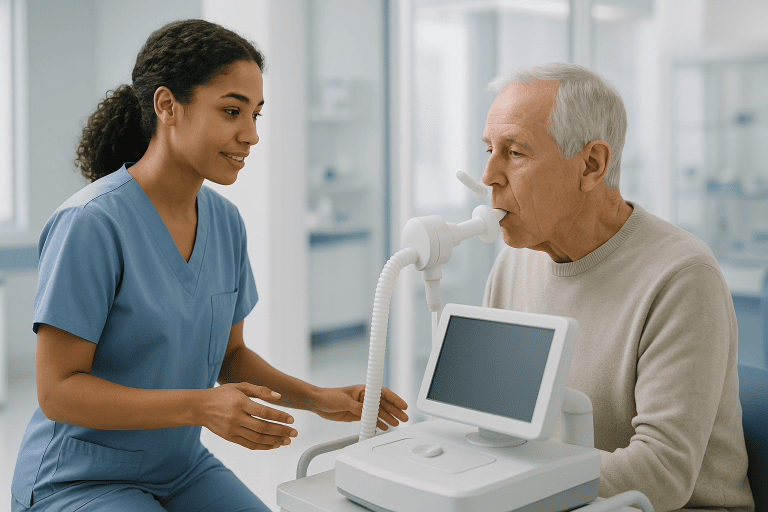
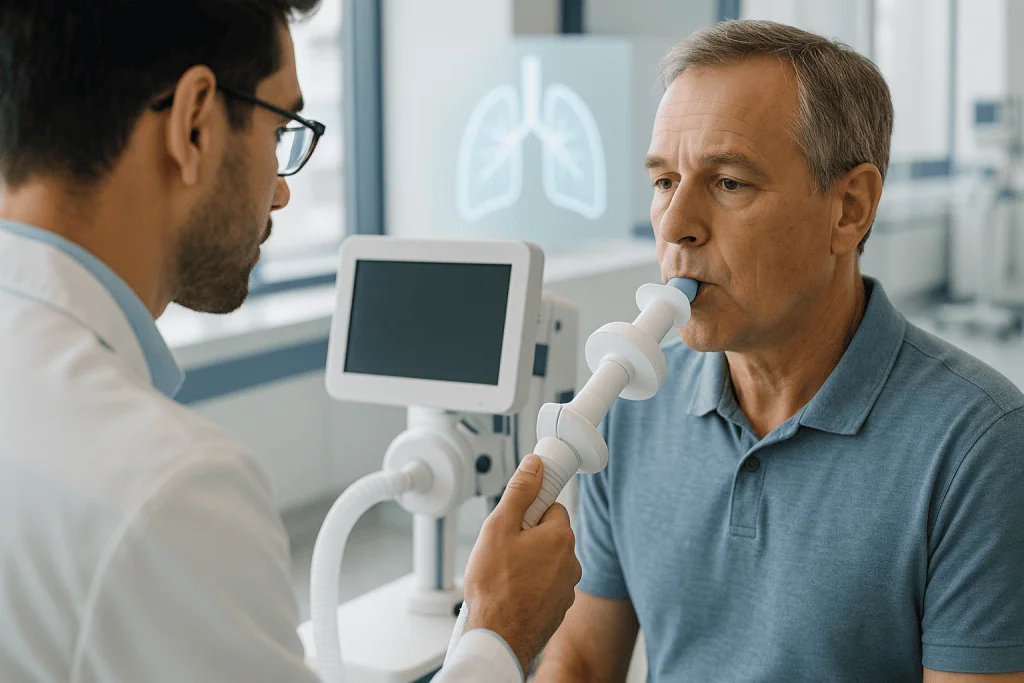
- Pulmonary function tests (breathing tests)these measure how much air the lungs can hold, how quickly air moves in and out, and how well oxygen passes from the lungs into the blood. Asbestosis typically causes a restrictive pattern, meaning the lungs cannot expand fully, along with reduced oxygen transfer.
- Blood oxygen measurementa pulse oximeter (a small sensor placed on the finger) or an arterial blood sample can show whether oxygen levels are low, at rest or during a walking test.
- Additional tests in selected casesoccasionally, doctors may recommend bronchoscopy (passing a thin camera into the airways) with fluid sampling, or rarely a lung biopsy (taking a small tissue sample), if the diagnosis remains uncertain or another disease must be ruled out. In most people with a clear exposure history and typical imaging findings, a biopsy is not needed.
Diagnosis and long-term monitoring are usually managed by a pulmonologist, a doctor who specializes in lung diseases. In hospital settings such as Acibadem, this evaluation is carried out within the pulmonology department, which brings together breathing tests, chest imaging, and specialist assessment in one place.
Treatment options for asbestosis
There is currently no treatment that can reverse the lung scarring caused by asbestos, and no medication is proven to cure the disease. Instead, asbestosis treatment focuses on slowing further damage, easing symptoms, preventing complications, and helping people stay as active as possible. An overview of how this condition is managed is available on the dedicated asbestosis page.
Depending on the stage of disease and your overall health, your care team may recommend one or more of the following approaches:
- Stopping further exposurethe essential first step. This means avoiding any additional contact with asbestos at work or at home, including during renovations of older buildings.
- Smoking cessationquitting smoking helps preserve remaining lung function and lowers the added risk of lung cancer. Your doctor may offer counseling, nicotine replacement, or medications to support quitting.
- Monitoring (watchful waiting)in mild disease with few or no symptoms, regular check-ups with breathing tests and periodic imaging may be all that is needed. This allows doctors to detect any progression or complications early.
- Vaccinationsinfluenza, pneumococcal, and other recommended vaccines help prevent chest infections, which can be more serious in scarred lungs.
- Medications for symptom reliefalthough no drug removes the scarring, doctors may prescribe inhalers to ease breathlessness in people who also have airway narrowing, and treat infections promptly with antibiotics when needed. Any medication plan should be tailored by your doctor.
- Pulmonary rehabilitationa structured program of supervised exercise, breathing techniques, and education. In many cases, rehabilitation improves stamina, reduces the sensation of breathlessness, and supports daily functioning, even though it does not change the scarring itself.
- Oxygen therapyif blood oxygen levels fall below a certain point, supplemental oxygen delivered through a small tube under the nose can relieve symptoms and reduce strain on the heart. Some people need oxygen only during activity or sleep; others need it continuously.
- Treatment of complicationsif the disease strains the heart or leads to other problems, additional treatments may be needed, coordinated between lung and heart specialists.
- Lung transplantationin carefully selected people with severe, progressive disease that no longer responds to other measures, transplant evaluation may be considered. This is a major operation with strict eligibility criteria and is appropriate only for a small minority of patients.
Because asbestosis is a lifelong condition, treatment is usually an ongoing partnership between the patient and the pulmonology team, adjusted over time as needs change.
Living with asbestosis and outlook
The outlook for asbestosis varies widely from person to person. In many people, especially those with lighter past exposure, the disease progresses slowly or remains stable for years, and life can continue with relatively few limitations. In others, particularly after heavy or prolonged exposure, scarring may worsen over time and increasingly limit breathing. Doctors cannot reliably predict the course for any individual, which is why regular follow-up matters.
Practical steps that often help people live better with asbestosis include:
- Attending all scheduled follow-up visits, including breathing tests and imaging, so changes are caught early.
- Not smoking and avoiding secondhand smoke, dust, fumes, and air pollution where possible.
- Staying physically active within your limits, gentle, regular exercise helps maintain fitness and can reduce breathlessness over time.
- Keeping vaccinations up to date and seeking treatment early for chest infections.
- Maintaining a healthy weight and balanced diet, since both excess weight and undernutrition can make breathing harder.
- Seeking emotional supportliving with a chronic lung disease can be stressful, and counseling or patient support groups may help.
People with asbestosis also carry a higher lifetime risk of lung cancer and mesothelioma because of their asbestos exposure. This does not mean cancer is inevitable, most people with asbestosis do not develop mesothelioma, but it is a reason for lifelong medical surveillance and for reporting new or changing symptoms promptly. In some countries, workers diagnosed with asbestosis may be entitled to occupational-disease compensation; your doctor can document the diagnosis, and a legal or social-services advisor can explain local procedures.
Frequently asked questions
What is asbestosis in simple terms?
Asbestosis is scarring of the lungs caused by breathing in asbestos fibers, usually over years of exposure at work. The scar tissue makes the lungs stiff, so they cannot expand fully or transfer oxygen efficiently, which leads to breathlessness and a persistent dry cough. It is a chronic, non-cancerous lung disease that typically appears decades after the exposure occurred.
Can asbestosis be cured or can the lungs heal?
No treatment currently exists that can remove the scarring or cure asbestosis, and the damaged lung tissue does not heal back to normal. However, this does not mean nothing can be done. Stopping further exposure, quitting smoking, pulmonary rehabilitation, vaccinations, and oxygen therapy when needed can ease symptoms, protect remaining lung function, and support quality of life. Many people live for years with the condition when it is well managed.
How serious is asbestosis?
Severity varies greatly. Some people have mild scarring that changes little over many years, while others experience gradual worsening that increasingly limits breathing and, in advanced cases, strains the heart. The seriousness generally reflects how much asbestos was inhaled and for how long, along with factors such as smoking. Regular monitoring by a lung specialist helps identify progression early so care can be adjusted.
What are the first symptoms of asbestosis?
The earliest asbestosis symptoms are usually breathlessness during exertion, such as climbing stairs, and a dry cough that lingers. Because these signs develop slowly and are easy to attribute to aging or lack of fitness, the disease is often not recognized until it is more advanced. Anyone with a history of asbestos exposure who notices new breathlessness or a persistent cough should mention that exposure history to a doctor.
How long after asbestos exposure does asbestosis develop?
There is typically a long delay, often 10 to 40 years, between exposure and the first symptoms. This is why people are still being diagnosed today from exposures that happened decades ago. The delay also means that a normal chest scan shortly after exposure does not rule out disease appearing later, so long-term follow-up is often recommended for people with significant exposure histories.
Is asbestosis the same as mesothelioma or lung cancer?
No. Asbestosis is scarring (fibrosis) of the lung tissue and is not a cancer. Mesothelioma is a cancer of the lining around the lungs or abdomen, and lung cancer arises in the lung tissue itself; both are also linked to asbestos exposure. Having asbestosis indicates significant past exposure and is associated with a higher risk of these cancers, which is one reason ongoing medical surveillance is advised.
Which doctor treats asbestosis?
Asbestosis is diagnosed and managed by pulmonologists, physicians who specialize in lung diseases. Depending on your situation, care may also involve occupational medicine specialists, cardiologists if the heart is affected, and rehabilitation teams. In hospital systems such as Acibadem, this care is coordinated through the pulmonology department, which handles breathing tests, imaging, and long-term follow-up.
When to see a doctor
If you have ever worked with asbestos or lived with someone who did, it is reasonable to discuss this history with a doctor even if you feel well, so a baseline assessment and follow-up plan can be arranged. See a doctor promptly if you notice new or worsening breathlessness, a cough lasting more than a few weeks, chest discomfort, or unexplained fatigue or weight loss.
Seek urgent medical attention if you experience any of the following red-flag warning signs:
- Sudden or severe shortness of breath, especially breathlessness at rest or that wakes you from sleep.
- Blue or gray discoloration of the lips, face, or fingertips, which can signal dangerously low oxygen levels.
- Chest pain that is severe, crushing, or spreads to the arm, neck, or jaw.
- Coughing up blood, even in small amounts.
- High fever with worsening cough or colored phlegm, which may indicate a chest infection that needs prompt treatment.
- New or rapidly increasing swelling of the ankles or legs, which can be a sign of heart strain.
- Confusion, extreme drowsiness, or fainting, which may reflect very low oxygen levels.
Getting timely medical help for these warning signs can prevent complications from becoming life-threatening. For ongoing symptoms that are not an emergency, an evaluation by a lung specialist is the appropriate next step, particularly for anyone with a known history of asbestos exposure.
Medically reviewed by the Acıbadem International Medical Board September 3, 2026
See our medical review board →
Update history
- PublishedJune 14, 2026
- Medical review approvedSeptember 3, 2026
- Last content updateSeptember 2, 2026