Bone Cancer
Bone Cancer is a rare cancer that starts in bone tissue. Learn symptoms, causes, diagnosis, treatment options and when to seek care.

Quick answer
Bone cancer is a malignant tumor that starts in bone tissue or reaches the bones from another part of the body, and treatment depends on the cancer type, stage, and location. At Acibadem in Turkey, evaluation typically includes imaging, biopsy, and pathology review, followed by a personalized plan that may combine surgery, chemotherapy, radiotherapy, and supportive care.
What is bone cancer?
Bone cancer is a disease in which abnormal cells grow out of control within a bone. The medical code C41.9 refers to a malignant tumor, a cancerous growth, of bone or joint cartilage when the exact bone is not specified. When people ask “what is bone cancer,” it helps to know that doctors divide it into two broad groups. Primary bone cancer starts in the bone itself. Secondary (metastatic) bone cancer starts somewhere else in the body, such as the breast, prostate, or lung, and later spreads to the bone. Secondary bone cancer is far more common than primary bone cancer, and the two are treated differently, because a cancer that spreads to bone is still treated as the original cancer type.
Primary bone cancer is rare. The main types include osteosarcoma (which arises from bone-forming cells and most often affects children, teenagers, and young adults), Ewing sarcoma (another cancer mainly of children and young adults), and chondrosarcoma (which arises from cartilage cells and is more common in middle-aged and older adults). Bone cancer can develop in any bone, but it often appears in the long bones of the arms and legs, the pelvis, or the spine.
Because bone cancer is uncommon, many bone lumps and aches turn out to be benign (non-cancerous) conditions. Even so, persistent bone symptoms should always be checked by a doctor, because early diagnosis generally allows more treatment choices.
Symptoms of bone cancer
Bone cancer symptoms often develop gradually, and in the early stages they can be mistaken for sports injuries, growing pains in children, or arthritis in adults. The most common warning signs include:
- Bone painoften the first symptom. It may come and go at first, then become steady. Pain that is worse at night or during rest, rather than only with activity, is a particular reason to see a doctor.
- Swelling or a lump over a bone, which may be tender or warm to the touch.
- Reduced movement if the tumor is near a joint, making it stiff or painful to use.
- A bone that breaks more easily than expectedcancer can weaken bone, so a fracture may occur after a minor bump or fall. Doctors call this a pathological fracture.
- Unexplained tiredness, fever, weight loss, or night sweats, which can appear as the disease advances, particularly with Ewing sarcoma.
- Numbness, tingling, or weakness if a tumor in the spine presses on nerves.
Symptoms can differ by type and stage. In early-stage disease, mild, intermittent pain may be the only sign. As a tumor grows, the pain usually becomes constant and a visible swelling may appear. Osteosarcoma often causes pain around the knee or upper arm in young people, while chondrosarcoma tends to grow more slowly and may cause a dull ache in the pelvis or thigh over months. When bone cancer has spread, or when another cancer has spread to bone, symptoms may include pain in several areas, general fatigue, and, in some cases, high blood calcium levels, which can cause thirst, nausea, and confusion.
None of these bone cancer symptoms proves that cancer is present, infections, benign tumors, and injuries can cause similar problems. What matters is that persistent or worsening symptoms are evaluated rather than ignored.
Causes and risk factors
In most people who develop primary bone cancer, no clear cause is ever found. Research into bone cancer causes suggests that the disease begins when the DNA (the genetic instructions inside cells) of a bone or cartilage cell becomes damaged in a way that lets the cell multiply uncontrollably. Why this happens in a particular person is usually unknown. However, several factors are known to raise the risk:
- Age and growth. Osteosarcoma and Ewing sarcoma occur most often during the teenage growth spurt, when bones are growing rapidly. Chondrosarcoma becomes more common with increasing age.
- Previous radiation therapy. People who received high-dose radiation to treat another cancer, especially at a young age, have a somewhat higher risk of later developing bone cancer in the treated area.
- Certain inherited conditions. Rare genetic syndromes, such as Li-Fraumeni syndrome and hereditary retinoblastoma (an inherited eye cancer of childhood), increase the risk of osteosarcoma.
- Paget disease of bone. This non-cancerous condition, in which bone is remodeled abnormally, mainly affects older adults and slightly increases the risk of osteosarcoma.
- Benign bone conditions. Some non-cancerous bone and cartilage growths, such as multiple hereditary exostoses (inherited cartilage-capped bone growths), can occasionally transform into chondrosarcoma.
It is important to stress what does not cause bone cancer. Ordinary injuries such as knocks, falls, and fractures do not cause it; an injury often simply draws attention to a tumor that was already there. Having a risk factor does not mean a person will develop bone cancer, and many people diagnosed with it have no known risk factors at all.
Diagnosis
Bone cancer diagnosis follows a stepwise process. It usually begins with a doctor asking about symptoms and examining the painful or swollen area, followed by tests to look at the bone in detail:
- X-rays are typically the first imaging test. A cancerous tumor can make bone look ragged, produce abnormal new bone, or create a visible hole in the bone.
- MRI (magnetic resonance imaging) uses magnets and radio waves to create detailed pictures of the tumor and the soft tissue around it. It is often the most important scan for showing exactly how far a tumor extends within a bone.
- CT (computed tomography) scans combine many X-ray images to show cross-sections of the body. A chest CT is commonly used to check whether the cancer has spread to the lungs, one of the most frequent sites of spread.
- Bone scans and PET scans are nuclear medicine tests that can show whether other bones or organs are affected, which helps with staging (working out how far the cancer has spread).
- Blood tests cannot diagnose bone cancer on their own, but certain enzymes, such as alkaline phosphatase, may be raised, and blood tests help assess overall health before treatment.
The definitive test is a biopsythe removal of a small sample of the tumor so a pathologist (a doctor who examines tissue under a microscope) can confirm whether cancer cells are present and identify the exact type. A biopsy may be done with a needle through the skin, usually guided by imaging, or through a small operation. Because a poorly placed biopsy can complicate later surgery, guidelines recommend that the biopsy be planned by, or in close coordination with, the specialist team that will carry out the definitive treatment.
Once the diagnosis is confirmed, doctors assign a stage based on the tumor’s size, its grade (how abnormal and fast-growing the cells look), and whether it has spread to lymph nodes or distant organs. Staging matters because it strongly influences which bone cancer treatment options are recommended.
Treatment options for bone cancer
Bone cancer treatment is highly individualized. The plan depends on the type of tumor, its grade and stage, its location, the patient’s age and general health, and the patient’s own priorities. Care is usually coordinated by a multidisciplinary team, orthopedic tumor surgeons, medical oncologists (cancer physicians who prescribe drug treatments), radiation oncologists, radiologists, and pathologists working together. In hospital groups such as Acibadem, drug-based cancer care of this kind is organized through a medical oncology department, while children and adolescents with bone tumors are typically managed within pediatric oncology services that are experienced in childhood cancers.
Surgery
Surgery is the main treatment for most primary bone cancers. The goal is to remove the entire tumor together with a margin of healthy tissue around it. In many cases, surgeons can now perform limb-sparing surgery, removing the affected section of bone and replacing it with a metal implant (prosthesis) or a bone graft, so the arm or leg is preserved. Amputation, removal of part or all of a limb, is needed less often than in the past, but it may still be recommended when the tumor involves major nerves and blood vessels or when limb-sparing surgery would not remove the cancer safely. After either type of surgery, rehabilitation with physical therapy is an important part of recovery.
Chemotherapy
Chemotherapy uses medicines that kill fast-dividing cells. It is a standard part of treatment for osteosarcoma and Ewing sarcoma, and it is often given both before surgery (to shrink the tumor and treat any microscopic spread) and after surgery (to reduce the risk of the cancer returning). Conventional chondrosarcoma generally responds poorly to chemotherapy, so surgery is usually the mainstay for that type. Chemotherapy has side effects, such as nausea, hair loss, fatigue, and increased infection risk, that the care team monitors and manages throughout treatment.
Radiation therapy
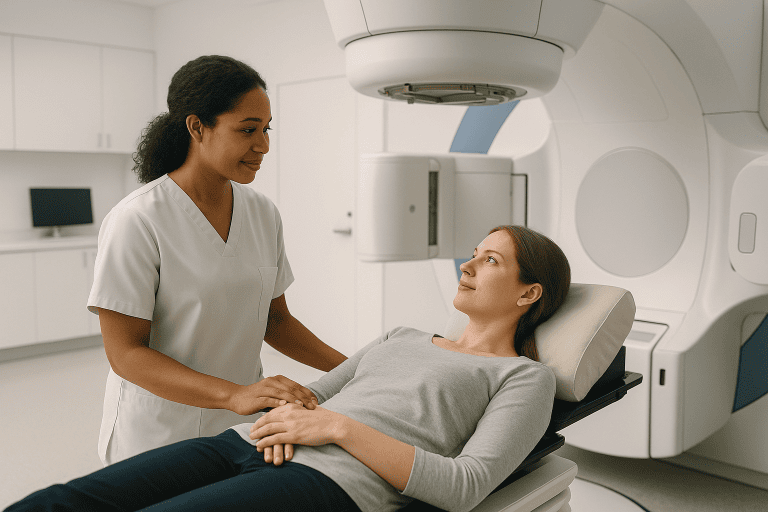
Radiation therapy uses precisely targeted high-energy beams to destroy cancer cells. Ewing sarcoma is relatively sensitive to radiation, which may be used alongside or instead of surgery in some situations. For other bone cancers, radiation may be used when a tumor cannot be fully removed, or to relieve pain when cancer has spread to bone.
Targeted and other drug therapies
For certain rare bone tumors and for cancers that have spread to bone from elsewhere, doctors may use targeted therapies (drugs aimed at specific molecules in cancer cells) or bone-strengthening medicines that reduce pain and lower the risk of fractures. Whether these options apply depends on the exact diagnosis, and your oncologist can explain what is relevant in your case.
Watchful waiting and supportive care
Active treatment is recommended for almost all confirmed malignant bone tumors, but a period of careful observation may be appropriate for some low-grade or uncertain bone lesions, with repeat imaging to check for change before deciding on surgery. Throughout and after treatment, doctors monitor how the disease is responding. Imaging tests such as PET-CT imaginga scan that combines a metabolic picture of cell activity with detailed anatomy, may be used to help stage the cancer, assess how well treatment is working, and check for recurrence during follow-up. Supportive (palliative) care, which focuses on controlling pain and other symptoms, is offered alongside cancer treatment at any stage, not only at the end of life.
Living with bone cancer and outlook
A bone cancer diagnosis changes daily life, and it is normal to feel anxious, angry, or overwhelmed. The outlook varies widely. In general, the prognosis depends on the type of tumor, its grade, whether it has spread at the time of diagnosis, how completely it can be removed with surgery, and how well it responds to chemotherapy. Localized bone cancers that are fully removed often have a considerably better outlook than cancers that have already spread, but every situation is different, and no doctor can promise a particular outcome. Your own care team is the best source of information about what the statistics mean, and do not mean, for you personally.
Life during and after treatment often involves regular follow-up visits with physical examinations and imaging for several years, because most recurrences happen within the first years after treatment. Rehabilitation is central: after limb-sparing surgery or amputation, physical and occupational therapy help people regain strength, mobility, and independence, and many people return to work, school, and physical activity. Practical support matters too, pain management, nutrition advice, help with fatigue, and psychological counseling or support groups can all make the experience more manageable. Children and adolescents treated for bone cancer usually have long-term follow-up to watch for late effects of treatment on growth, heart, hearing, and fertility, which is one reason ongoing specialist care is recommended even after treatment ends.
Frequently asked questions
What is bone cancer in simple terms?
Bone cancer is a growth of abnormal, cancerous cells inside a bone. When it starts in the bone itself it is called primary bone cancer, which is rare; when another cancer, such as breast or prostate cancer, spreads into a bone it is called secondary or metastatic bone cancer, which is more common. The two are treated differently, so identifying exactly which kind is present is a key first step.
What are the first symptoms of bone cancer?
The earliest symptom is usually bone pain, which may come and go at first and often becomes worse at night or at rest. Swelling or a lump over a bone, stiffness near a joint, or a fracture after only a minor injury can also be early signs. These symptoms are much more often caused by injuries or benign conditions than by cancer, but pain that persists for more than a few weeks or steadily worsens should be checked by a doctor.
Can bone cancer be cured?
In many cases, yes, particularly when a primary bone cancer is found before it has spread and can be completely removed with surgery, often combined with chemotherapy. Cure is less likely, though not impossible, when the cancer has already spread at diagnosis. Because outcomes depend heavily on the tumor type, stage, and response to treatment, only your own care team can give you a realistic picture of your individual situation, and even then no outcome can be guaranteed.
How serious is bone cancer?
Bone cancer is a serious diagnosis that requires specialist treatment, but seriousness varies widely from person to person. Low-grade, localized tumors that are fully removed generally carry a much better outlook than high-grade tumors or cancers that have spread to the lungs or other bones. Prompt diagnosis and treatment at a center experienced in bone tumors generally improves the range of options available.
How is bone cancer diagnosed?
Bone cancer diagnosis usually starts with an X-ray of the painful area, followed by an MRI scan to show the tumor in detail and a CT scan of the chest to check for spread. Blood tests and bone or PET scans may be added for staging. The diagnosis is only confirmed by a biopsy, in which a small piece of the tumor is removed and examined under a microscope to identify the exact type of cancer.
Is bone cancer caused by an injury?
No. Bumps, falls, and fractures do not cause bone cancer. Sometimes an injury draws attention to a bone that already contains a tumor, for example, when a weakened bone breaks after a minor knock, which can make it seem as though the injury caused the cancer. Known risk factors include prior radiation therapy, certain inherited genetic syndromes, and some pre-existing bone conditions, but in most people no cause is ever identified.
What is recovery like after bone cancer treatment?
Recovery depends on the treatment received. After limb-sparing surgery or amputation, most people need months of physical therapy to rebuild strength and mobility, and those with a prosthesis or artificial limb learn to use it during rehabilitation. Chemotherapy side effects such as fatigue usually improve gradually after treatment ends. Regular follow-up visits with imaging continue for several years to watch for recurrence, and many people return to their usual activities over time.
When to see a doctor
See a doctor promptly if you or your child has any of the following:
- Bone pain lasting more than a few weeks, especially pain that is getting worse, wakes you at night, or occurs at rest rather than only with activity.
- A new lump or swelling over a bone, whether or not it is painful.
- A bone fracture after a minor injury or with no clear cause.
- Persistent limping or reluctance to use an arm or leg in a child, without an obvious injury.
- Unexplained weight loss, fever, or night sweats together with bone pain.
Seek urgent medical attention the same day if bone or back pain is accompanied by new numbness, tingling, or weakness in the arms or legs, or by loss of bladder or bowel control, as these can indicate pressure on the spinal cord, which needs emergency assessment. Likewise, sudden severe pain in a limb that gives way may indicate a fracture through weakened bone and should be evaluated immediately. Most people with these symptoms will not have cancer, but only a medical evaluation can rule it out, and earlier diagnosis generally means more treatment options.
Medically reviewed by the Acıbadem International Medical Board September 13, 2026
See our medical review board →
Update history
- PublishedJune 8, 2026
- Medical review approvedSeptember 13, 2026
- Last content updateSeptember 12, 2026