Cholangiocarcinoma
Cholangiocarcinoma is bile duct cancer. Learn about symptoms, causes, diagnosis, treatment options, prognosis, and when to see a doctor.
Quick answer
Cholangiocarcinoma is a cancer that starts in the bile ducts, the channels that carry bile from the liver to the small intestine, and treatment depends on the tumor’s location and stage. At Acibadem in Turkey, care typically involves imaging and biopsy for diagnosis, followed by an individualized plan that may include surgery, biliary drainage, chemotherapy, radiotherapy, or targeted treatments.
What is cholangiocarcinoma?
Cholangiocarcinoma is a cancer that begins in the bile ducts. The bile ducts are thin tubes that carry bile: a fluid made by the liver that helps digest fats, from the liver and gallbladder into the small intestine. When cells lining these ducts grow abnormally and out of control, they can form a tumor. Doctors also call this disease bile duct cancer. In the international coding system used by hospitals (ICD-10), cholangiocarcinoma that arises inside the liver is recorded under code C22.1.
Doctors usually describe cholangiocarcinoma by where it starts:
- Intrahepatic cholangiocarcinoma begins in the small bile ducts inside the liver.
- Perihilar (hilar) cholangiocarcinoma begins where the main bile ducts leave the liver. This is the most common location.
- Distal cholangiocarcinoma begins in the section of the bile duct closer to the small intestine, outside the liver.
Cholangiocarcinoma is uncommon compared with many other cancers. It occurs most often in adults over the age of 50, and it can affect both men and women. It is more frequent in some parts of Asia, where certain long-term bile duct infections are more common. Because the bile ducts sit deep inside the body and early tumors often cause few or no symptoms, cholangiocarcinoma is frequently found at a later stage, which is one reason early evaluation of warning signs matters.
Understanding what cholangiocarcinoma is, how it is diagnosed, and what treatment may involve can help you and your family have more informed conversations with your medical team.
Symptoms of cholangiocarcinoma
Cholangiocarcinoma symptoms often develop slowly, and early tumors may cause no noticeable problems at all. Many of the most recognizable signs appear when a tumor blocks a bile duct, causing bile to back up into the blood and tissues.
Common cholangiocarcinoma symptoms include:
- Jaundicea yellow tint to the skin and the whites of the eyes, caused by a buildup of bilirubin (a yellow pigment in bile).
- Itchy skinoften widespread and persistent, also related to bile substances collecting in the skin.
- Dark urineurine that looks tea-colored or brown.
- Pale or clay-colored stoolsbecause less bile reaches the intestine.
- Pain in the upper right side of the abdomen, which may spread toward the back.
- Unintended weight loss and loss of appetite.
- Fatigue or a general feeling of weakness.
- Fever, sometimes with chills, especially if bile trapped in the ducts becomes infected.
- Nausea or vomiting, particularly if a bile duct infection develops.
Symptoms can differ depending on where the tumor is located. Perihilar and distal tumors sit in or near the main bile duct, so they tend to block bile flow earlier and often cause jaundice, dark urine, and itching sooner. Intrahepatic tumors, which grow inside the liver, may not block the main ducts until they are larger. As a result, they are sometimes discovered later, or found by chance on imaging performed for another reason, and may first cause vague symptoms such as dull abdominal discomfort, tiredness, or weight loss rather than jaundice.
In more advanced disease, symptoms may become more pronounced: abdominal swelling, worsening pain, significant weight loss, and repeated bile duct infections can occur. None of these symptoms is unique to cholangiocarcinomagallstones, hepatitis, and other liver or pancreas conditions can cause similar problems, so a careful medical evaluation is essential to find the actual cause.
Causes and risk factors
Like most cancers, cholangiocarcinoma develops when cells acquire genetic changes that make them grow uncontrollably. In many patients, no single cause can be identified. However, research has linked several conditions and exposures, collectively called cholangiocarcinoma causes and risk factors, to a higher chance of developing the disease. Having a risk factor does not mean a person will develop cancer, and many people with cholangiocarcinoma have no known risk factors at all.
Recognized risk factors include:
- Primary sclerosing cholangitis (PSC)a chronic disease in which the bile ducts become inflamed and scarred. This is one of the strongest known risk factors in Western countries.
- Chronic liver disease and cirrhosislong-term scarring of the liver from any cause.
- Chronic viral hepatitislong-standing infection with hepatitis B or hepatitis C viruses.
- Liver fluke infectionparasitic worms acquired from eating raw or undercooked freshwater fish, mainly in parts of East and Southeast Asia. Long-term infection irritates the bile ducts.
- Bile duct abnormalities present from birthsuch as choledochal cysts (pouch-like widenings of the bile duct) and related conditions.
- Bile duct stones and chronic bile duct inflammationlong-standing stones inside the liver’s ducts (hepatolithiasis) increase risk.
- Older agemost people are diagnosed after age 50.
- Obesity, diabetes, and fatty liver diseasethese have been associated with a modestly increased risk in a number of studies.
- Heavy alcohol use and smokingboth may contribute to risk, particularly when combined with other liver disease.
- Certain chemical exposureshistorically, an old imaging contrast agent called thorotrast (no longer used) and some industrial chemicals have been linked to bile duct cancer.
Because chronic inflammation of the bile ducts appears to be a common thread, people with conditions such as primary sclerosing cholangitis are often followed regularly by liver specialists. If you have one of these conditions, your doctor may recommend periodic checkups or imaging, although there is no universally agreed screening program for cholangiocarcinoma in the general population.
Diagnosis of cholangiocarcinoma
Cholangiocarcinoma diagnosis usually involves several steps, because the bile ducts are difficult to examine directly and other conditions can look similar. Doctors combine blood tests, imaging, and, in most cases, a tissue sample to confirm the disease and determine its extent.
Medical history and physical examination
Your doctor will ask about your symptoms, medical history, medications, and possible risk factors, and will examine you for jaundice, abdominal tenderness, and other signs of liver or bile duct problems.
Blood tests
Blood tests cannot diagnose cholangiocarcinoma on their own, but they provide important clues:
- Liver function tests measure bilirubin and liver enzymes. A pattern suggesting blocked bile flow raises suspicion of a bile duct problem.
- Tumor markers, such as CA 19-9 and CEA, are proteins that can be elevated in bile duct cancer. However, they can also rise in noncancerous conditions, so they are used to support, not confirm, the diagnosis and to monitor treatment.
Imaging tests
Imaging is central to finding the tumor, judging its size and location, and planning treatment:
- Ultrasound is often the first test, showing widened bile ducts or a mass.
- CT scan (computed tomography) gives detailed cross-sectional pictures of the liver, bile ducts, and nearby blood vessels and lymph nodes.
- MRI with MRCP (magnetic resonance cholangiopancreatography) produces detailed images of the bile ducts themselves and is especially useful for mapping the tumor before surgery.
- PET-CT combines a metabolic scan with a CT scan and may be used in selected patients to look for cancer spread elsewhere in the body. You can read more about how this scan works on the PET-CT imaging page.
Endoscopic procedures and biopsy
To examine the ducts from inside and obtain tissue, doctors may use:
- ERCP (endoscopic retrograde cholangiopancreatography): a flexible tube passed through the mouth to the bile duct opening; doctors can inject contrast dye, take brushings of cells, and place a stent (a small tube that keeps the duct open) during the same procedure.
- Endoscopic ultrasound (EUS)an ultrasound probe on an endoscope that allows close-up imaging and needle sampling of the tumor or nearby lymph nodes.
- Percutaneous biopsya needle sample taken through the skin under imaging guidance, most often for tumors inside the liver.
A biopsyexamining tumor cells under a microscope, is usually needed to confirm cholangiocarcinoma. In some situations, such as when surgery is clearly planned, doctors may proceed based on strong imaging findings. Increasingly, biopsy tissue is also tested for specific gene changes (molecular testing), because some newer medicines target particular mutations.
Staging
Once cancer is confirmed, doctors determine the stagehow large the tumor is and whether it has spread to lymph nodes, blood vessels, or other organs. Staging guides treatment decisions and usually relies on the imaging tests described above, sometimes with an additional surgical look inside the abdomen (laparoscopy).
Treatment options for cholangiocarcinoma
Cholangiocarcinoma treatment depends on the tumor’s location, its stage, your liver function, and your overall health. Because this cancer is complex, care is typically planned by a multidisciplinary team, surgeons, medical oncologists (cancer physicians who use drug treatments), radiation specialists, gastroenterologists, and radiologists, who review each case together. At hospital groups such as Acibadem, drug-based cancer care is coordinated through the medical oncology department working alongside surgical and liver teams.
Surgery
Surgery is the only treatment with the potential to cure cholangiocarcinoma, but it is possible only when the tumor can be completely removed and has not spread widely. Depending on the tumor’s location, surgery may involve removing part of the liver (liver resection), removing a section of the bile duct, or, for distal tumors, a larger operation that removes part of the pancreas and small intestine as well (known as the Whipple procedure). These are major operations, and your surgical team will assess carefully whether you are a suitable candidate.
Liver transplantation
In a small, carefully selected group of patients, most often with early perihilar tumors that cannot be removed by standard surgeryliver transplantation combined with other treatments may be considered at specialized centers. Strict criteria apply, and this option is not appropriate for most patients.
Chemotherapy and targeted therapy
Chemotherapymedicines that kill fast-growing cancer cells, is a mainstay of treatment when surgery is not possible, when cancer has spread, or sometimes after surgery to lower the chance of the cancer returning. Targeted therapies are newer drugs that act on specific gene changes found in some cholangiocarcinomas (for example, alterations in genes called FGFR2 or IDH1). Whether these are an option depends on molecular testing of your tumor. Immunotherapy, which helps the body’s immune system recognize cancer cells, may also be combined with chemotherapy in certain situations. Your oncology team will explain which drug treatments are suitable in your specific case.
Radiation therapy
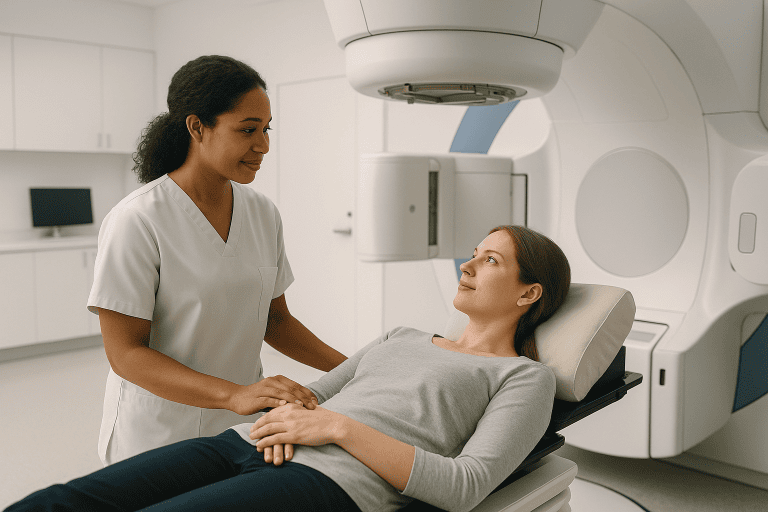
Radiation therapy uses focused high-energy beams to damage cancer cells. It may be used when surgery is not possible, after surgery in selected cases, or to relieve symptoms such as pain or duct blockage.
Procedures to relieve bile duct blockage
Regardless of the overall treatment plan, relieving a blocked bile duct is often a priority because it reduces jaundice, itching, and infection risk. Doctors may place a stent through an endoscope (ERCP) or through the skin (percutaneous drainage) to keep bile flowing. These procedures do not treat the cancer itself but can significantly improve comfort and make other treatments safer.
Observation and supportive (palliative) care
In some situations, for example, when a person is too frail for active treatment, or while awaiting further test results, doctors may recommend a period of close monitoring rather than immediate intervention. Palliative care, which focuses on relieving symptoms such as pain, itching, nausea, and fatigue, is valuable at every stage of the disease and can be provided alongside active cancer treatment, not only at the end of life. Discussing goals of care openly with your team helps ensure that treatment matches your priorities.
Living with cholangiocarcinoma and outlook
Hearing that you or a loved one has cholangiocarcinoma is difficult, and it is natural to have questions about the future. The honest answer is that outlook varies widely from person to person. It depends on where the tumor is, whether it can be surgically removed, how far it has spread, how well the liver is working, and how the cancer responds to treatment. In general, outcomes are better when the tumor is found early and can be completely removed, and less favorable when the disease is advanced at diagnosis, which, unfortunately, is common. No doctor can promise a specific outcome, and statistics describe groups of patients, not any single individual.
Living with cholangiocarcinoma often involves regular follow-up visits, blood tests, and imaging to monitor the disease or watch for recurrence after treatment. Practical steps that many patients find helpful include:
- Keeping a written list of symptoms, medications, and questions for each appointment.
- Eating small, frequent meals and asking about dietary support if weight loss or poor appetite is a problem; a dietitian can help.
- Reporting new or worsening jaundice, fever, or pain promptly, since blocked or infected bile ducts often need quick attention.
- Seeking emotional support, from family, counselors, or patient support groups, because anxiety and low mood are common and treatable.
- Involving palliative care early to manage symptoms and maintain quality of life.
Research into cholangiocarcinoma is active, particularly in targeted drugs and immunotherapy, and treatment options have expanded in recent years. Your medical team can tell you whether a clinical trial, a research study testing new treatments, might be appropriate for you.
Frequently asked questions
What is cholangiocarcinoma in simple terms?
Cholangiocarcinoma is cancer of the bile ducts: the tubes that carry bile from the liver to the intestine. It can start inside the liver, at the point where the ducts leave the liver, or in the duct closer to the intestine. It is often called bile duct cancer and mostly affects adults over 50.
How serious is cholangiocarcinoma?
Cholangiocarcinoma is generally considered a serious cancer, largely because it often causes few symptoms until it has grown or spread, making early detection difficult. Seriousness varies with the tumor’s location and stage: tumors found early and removed surgically have a more favorable outlook than advanced disease. Only your own medical team, with full knowledge of your case, can discuss what the diagnosis means for you.
Can cholangiocarcinoma be cured?
A cure is possible in some patients, most often when the tumor is caught early and completely removed by surgery. For many patients, however, the cancer is found at a stage where surgery is not possible; in these cases, treatments such as chemotherapy, targeted therapy, and radiation aim to control the disease, relieve symptoms, and extend life rather than cure it. Honest, individualized conversations with your doctors are the best way to understand your situation.
What are the first symptoms of cholangiocarcinoma?
Early cholangiocarcinoma often causes no symptoms. When symptoms do appear, the most recognizable are jaundice (yellowing of the skin and eyes), itchy skin, dark urine, and pale stools, all signs of blocked bile flow. Vaguer symptoms such as tiredness, upper abdominal discomfort, poor appetite, and unexplained weight loss can also occur, especially with tumors inside the liver. These symptoms have many other possible causes, so evaluation by a doctor is needed to find the reason.
What causes cholangiocarcinoma?
In many patients, no clear cause is found. Known risk factors include primary sclerosing cholangitis (a chronic bile duct inflammation), cirrhosis, chronic hepatitis B or C infection, liver fluke infection in some regions, bile duct cysts present from birth, long-standing bile duct stones, older age, obesity, and diabetes. Having a risk factor does not mean cancer will develop, and many people with the disease have none of them.
How is cholangiocarcinoma diagnosed?
Diagnosis usually combines blood tests (liver function and tumor markers), imaging (ultrasound, CT, MRI with MRCP, and sometimes PET-CT), and endoscopic procedures such as ERCP or endoscopic ultrasound to view the ducts and collect cell samples. In most cases, a biopsy examined under a microscope confirms the diagnosis, and further tests determine the cancer’s stage and any gene changes that could guide treatment.
What is recovery like after bile duct cancer surgery?
Surgery for cholangiocarcinoma is a major operation, and recovery typically takes weeks to months, depending on the type of surgery and your overall health. Expect a hospital stay, gradual return of energy and appetite, and regular follow-up visits with imaging and blood tests to monitor healing and watch for recurrence. Your surgical team will give you a personalized recovery plan and explain which symptoms to report promptly.
When to see a doctor
If you notice possible symptoms of a bile duct problem, do not wait for them to resolve on their own. Seek medical attention promptly if you experience:
- Yellowing of the skin or eyes (jaundice)always requires medical evaluation.
- Dark, tea-colored urine or pale, clay-colored stools.
- Persistent itching without an obvious skin cause.
- Ongoing pain in the upper right abdomen, especially if it is worsening or spreading to the back.
- Unexplained weight loss or loss of appetite.
- Fever with chills, particularly together with jaundice or abdominal pain: this can signal a bile duct infection, which may become an emergency and often needs urgent treatment.
- New confusion, severe weakness, or vomiting that will not stop in someone with known liver or bile duct disease.
If you have already been diagnosed with cholangiocarcinoma, contact your care team quickly about any new fever, worsening jaundice, increasing pain, or signs of infection around a drain or stent. These symptoms often need prompt assessment. Even when the cause turns out to be something less serious, early evaluation gives doctors the best chance to identify the problem and treat it effectively.
Medically reviewed by the Acıbadem International Medical Board September 2, 2026
See our medical review board →
Update history
- PublishedJune 8, 2026
- Medical review approvedSeptember 2, 2026
- Last content updateSeptember 2, 2026