Quick answer
Ewing sarcoma is a rare cancer that usually starts in bone or nearby soft tissue, most often in children, adolescents, and young adults, and is treated according to its location and stage. At Acibadem in Turkey, care typically combines detailed imaging and biopsy for diagnosis with a personalized plan that may include chemotherapy, surgery, and radiotherapy under a multidisciplinary oncology…
What is ewing sarcoma?
Ewing sarcoma is a rare type of cancer that most often begins in bone, although it can also start in the soft tissues around bones, such as muscle or cartilage. A sarcoma is a cancer that develops in the body’s connective and supporting tissues, which is different from the more common cancers that begin in organs like the lungs or breast. Ewing sarcoma belongs to a group of tumors sometimes called the Ewing family of tumors, and in medical coding it is often classified under ICD-10 code C41.9 when the exact bone of origin is not specified.
When people ask what is ewing sarcoma in practical terms, the simplest answer is that it is a fast-growing bone and soft-tissue cancer that mainly affects children, teenagers, and young adults. It is most frequently diagnosed during the second decade of life, around the years of rapid growth in adolescence, although it can occur in younger children and, less commonly, in adults. It appears slightly more often in boys than in girls, and it is diagnosed more often in people of European ancestry than in people of African or Asian ancestry.
The most common places for ewing sarcoma to develop are the pelvis (hip bones), the femur (thigh bone), the tibia and fibula (lower leg bones), the humerus (upper arm bone), the ribs, and the spine. Because it is an aggressive cancer, it can spread, or metastasize, to other parts of the body, most often the lungs, other bones, or the bone marrow (the soft tissue inside bones where blood cells are made). Despite being aggressive, ewing sarcoma is considered a treatable cancer, especially when it is found before it has spread, and treatment approaches have improved considerably over recent decades.
Symptoms of ewing sarcoma
Ewing sarcoma symptoms often develop gradually and can be easy to mistake for common problems such as sports injuries, growing pains, or minor infections. This is one of the reasons the diagnosis is sometimes delayed, particularly in active teenagers who frequently have bumps and bruises. Symptoms depend on where the tumor is located, how large it has grown, and whether the cancer has spread.
Common ewing sarcoma symptoms include:
- Pain at the tumor site, often in a bone or joint. The pain may come and go at first, then become steadier and more intense. It frequently worsens at night or with activity.
- Swelling or a lump near the affected bone, which may feel warm or tender to the touch. A lump is easier to notice on an arm or leg than deep in the pelvis or chest.
- Reduced movement or stiffness in a nearby joint, or a limp if the tumor is in the leg or pelvis.
- A broken bone with little or no injury, because the tumor can weaken the bone (doctors call this a pathologic fracture).
- Fever that has no clear cause and may come and go.
- Tiredness, unintended weight loss, or loss of appetite, which are more common when the disease is advanced.
- Numbness, tingling, or weakness if a tumor in the spine or pelvis presses on nerves.
Symptoms can differ depending on how far the cancer has progressed. In localized disease (cancer that is confined to the place where it started and nearby tissue), symptoms are usually limited to pain and swelling at one site. In metastatic disease (cancer that has spread), a person may also have more general symptoms such as persistent fever, fatigue, weight loss, or breathing problems if the lungs are involved. Tumors deep in the pelvis or chest wall may cause few outward signs until they are quite large, which is why they are sometimes found later than tumors in the arms or legs.
It is important to remember that all of these symptoms are far more often caused by conditions other than cancer. However, bone pain that persists for weeks, worsens over time, or wakes a child at night deserves medical evaluation rather than watchful reassurance.
Causes and risk factors
Ewing sarcoma causes are not fully understood, but researchers have identified the key change inside the tumor cells. In most cases, the cancer cells contain a chromosomal translocation, which means two chromosomes (the structures that carry genes) have swapped pieces of genetic material. The most common swap joins a gene called EWSR1 on chromosome 22 with a gene called FLI1 on chromosome 11. This creates an abnormal fusion gene that drives the cells to grow uncontrollably.
Several points about causes are worth emphasizing:
- It is not inherited. The genetic change happens in the tumor cells during a person’s lifetime; it is not passed down from parents, and it is not passed on to a patient’s future children.
- It is not caused by anything the patient or family did. No diet, activity, injury, or exposure has been shown to cause ewing sarcoma. An injury sometimes draws attention to a tumor that was already there, but the injury itself does not cause the cancer.
- It is not contagious. It cannot spread from person to person.
Known risk factors are limited. Age is the strongest one, since most cases occur between about 10 and 20 years of age. Sex plays a small role, with boys affected slightly more often than girls, and the disease is more common in people of European descent. Unlike many adult cancers, ewing sarcoma has no established link to smoking, radiation exposure before diagnosis, or environmental chemicals. Because there are no known preventable causes, there is currently no way to prevent ewing sarcoma or to screen for it in the general population.
Diagnosis of ewing sarcoma
Ewing sarcoma diagnosis usually begins when a doctor evaluates persistent bone pain, swelling, or a lump. The doctor will take a medical history, perform a physical examination, and then arrange tests in a stepwise way.
Imaging tests
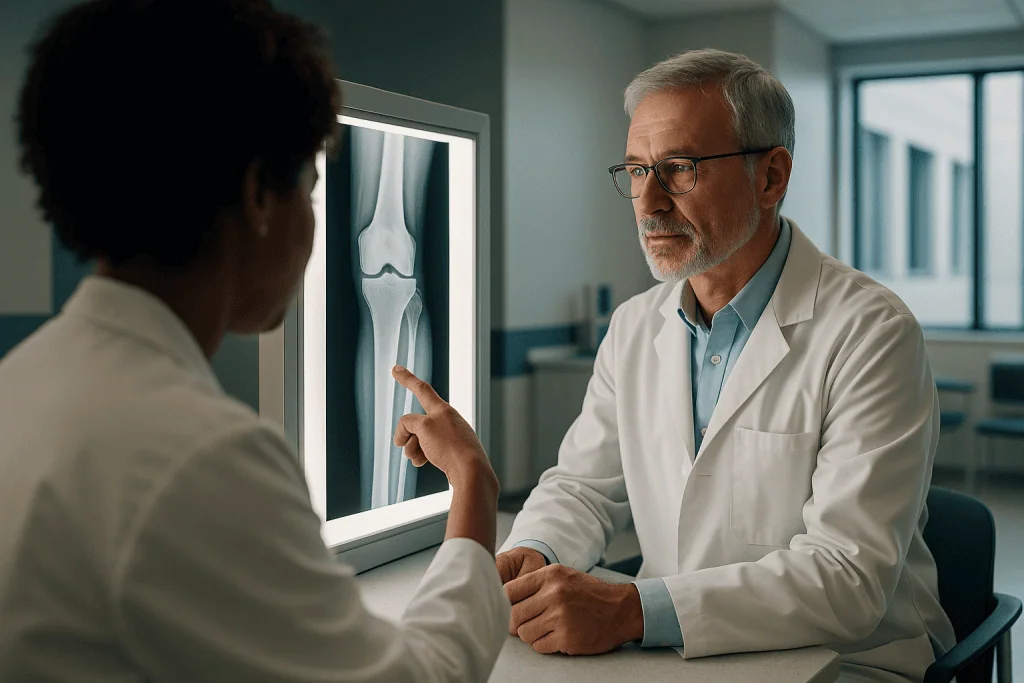
- X-ray: Often the first test. An X-ray of the painful area may show bone destruction or an unusual bone reaction that raises suspicion of a tumor.
- MRI (magnetic resonance imaging): A scan that uses magnets to create detailed pictures of bone and soft tissue. MRI is the main tool for showing exactly how large the tumor is and which nearby structures it involves, which is essential for planning treatment.
- CT (computed tomography): A detailed X-ray-based scan, commonly used to check the lungs, since the lungs are the most frequent site of spread.
- PET-CT and bone scans: A PET-CT scan combines a scan that highlights metabolically active cells (such as cancer cells) with a CT scan, and it helps doctors search the whole body for areas of spread. You can read more about this test on the PET-CT Imaging page. A bone scan may be used for a similar purpose.
Biopsy and laboratory tests
Imaging can suggest ewing sarcoma, but only a biopsy can confirm it. A biopsy means removing a small sample of the tumor, either with a needle or through a small surgical procedure, so that a pathologist (a doctor who examines tissue under a microscope) can study the cells. The pathologist looks for the typical appearance of ewing sarcoma cells and usually performs molecular tests to look for the characteristic EWSR1 gene rearrangement, which confirms the diagnosis with a high degree of certainty. Ideally, the biopsy is planned by the same surgical team that will later remove the tumor, because the biopsy path matters for future surgery.
Doctors may also test the bone marrow with a small sample taken from the hip bone to check whether cancer cells have spread there, and they will order blood tests to assess general health, blood counts, and markers such as lactate dehydrogenase (an enzyme that can be elevated in some cancers).
Staging
Once the diagnosis is confirmed, doctors determine the stage, which describes how far the cancer has spread. In practice, the most important distinction is between localized disease (no detectable spread) and metastatic disease (spread to the lungs, other bones, or bone marrow). Staging guides the intensity and sequence of treatment and gives the care team a realistic picture of the outlook.
Treatment options for ewing sarcoma
Ewing sarcoma treatment almost always combines several approaches, because the disease can shed microscopic cancer cells into the bloodstream even when scans show only one tumor. For this reason, watchful waiting is not an appropriate strategy for ewing sarcoma; the standard of care is active treatment that addresses both the visible tumor and any hidden cells elsewhere in the body. Because most patients are children or adolescents, care is usually coordinated by specialists in Pediatric Oncology, while adult patients are typically managed by a Medical Oncology Department working with orthopedic surgeons and radiation specialists. At hospital groups such as Acibadem, these teams work together in a multidisciplinary format, which is the internationally accepted model for sarcoma care.
Chemotherapy
Chemotherapy means using medicines that kill fast-growing cells throughout the body. It is the backbone of ewing sarcoma treatment and is usually given in two phases: several cycles before local treatment (to shrink the tumor and attack hidden cancer cells) and additional cycles afterward (to reduce the risk of the cancer coming back). Standard regimens combine several drugs given in repeating cycles over many months. Chemotherapy causes side effects such as hair loss, nausea, fatigue, and lowered blood counts, which the care team monitors and manages closely.
Surgery
Surgery aims to remove the tumor completely with a margin of healthy tissue around it. Thanks to modern techniques, most patients with tumors in the arms or legs can have limb-sparing surgery, in which the affected section of bone is removed and reconstructed with a metal implant or a bone graft, rather than amputation. Amputation is now uncommon but may still be recommended in specific situations where it offers the safest chance of removing all of the cancer. Tumors in the pelvis, spine, or chest wall require complex surgical planning by experienced sarcoma surgeons.
Radiation therapy
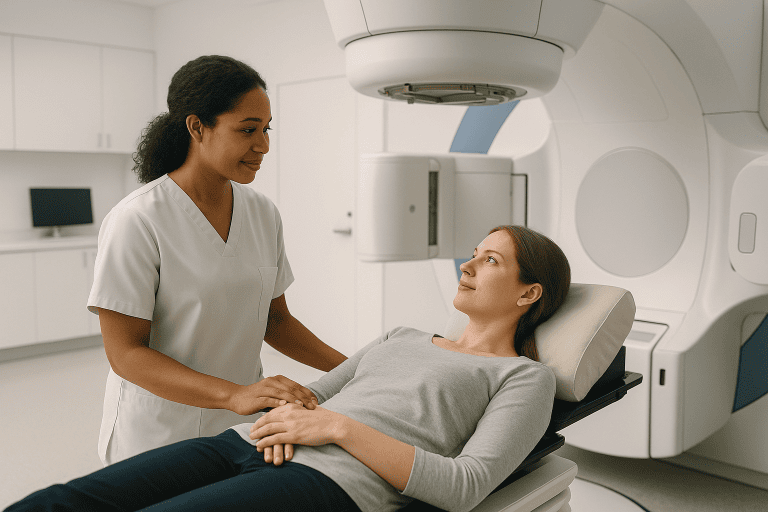
Radiation therapy uses precisely targeted high-energy beams to destroy cancer cells. Ewing sarcoma is relatively sensitive to radiation, so this treatment may be used instead of surgery when the tumor is in a location that cannot be safely operated on, in addition to surgery when the tumor could not be removed with clear margins, or to treat areas of spread. Radiation in growing children is planned carefully, because it can affect bone growth and carries a small long-term risk of other health problems.
Treatment for advanced or recurrent disease
When ewing sarcoma has spread at diagnosis or comes back after treatment (a recurrence), doctors may use more intensive chemotherapy, additional surgery or radiation, or, in selected cases, high-dose chemotherapy supported by a stem cell transplant (a procedure that restores the bone marrow after very strong treatment). Clinical trials, which are research studies testing new therapies, may also be an option and are often discussed with families in these situations. Throughout treatment, supportive care, managing pain, nutrition, infection risk, and emotional well-being, is an essential part of the plan.
Living with ewing sarcoma and outlook
A full course of ewing sarcoma treatment usually lasts many months, and recovery continues well beyond the last cycle of therapy. Rehabilitation with physical therapy is often needed after limb surgery to rebuild strength and movement. Schooling, work, and family routines are affected, and many families benefit from psychological support and social services during this period.
The outlook depends on several factors, including whether the cancer has spread at diagnosis, where the tumor is located, its size, how well it responds to initial chemotherapy, and the patient’s age. In general terms, localized ewing sarcoma that responds well to treatment has a substantially better outlook than disease that has already spread, and many patients with localized disease are cured. Metastatic or recurrent disease is more difficult to treat, but meaningful responses and long-term survival do occur, and treatment can control the disease and relieve symptoms even when cure is uncertain. No doctor can guarantee an individual outcome; your care team can explain what the available evidence means for your specific situation.
Survivors are followed for many years after treatment ends. Follow-up visits typically include physical examinations and periodic imaging to watch for recurrence, as well as checks for late effects of therapy, such as heart or kidney changes from certain chemotherapy drugs, effects on growth or fertility, and issues related to surgical reconstructions. Long-term follow-up is a normal and expected part of survivorship, not a sign that something is wrong.
Frequently asked questions
What is ewing sarcoma in simple terms?
Ewing sarcoma is a rare, fast-growing cancer that usually starts in a bone, and sometimes in the soft tissue near a bone. It mainly affects children, teenagers, and young adults. It develops because of a genetic change that occurs inside the tumor cells during a person’s life; it is not inherited from parents and is not caused by anything the patient or family did.
Can ewing sarcoma be cured?
In many cases, yes. When the cancer is found before it has spread and is treated with the standard combination of chemotherapy plus surgery or radiation, a majority of patients can be cured. When the disease has already spread at diagnosis, cure is harder to achieve but still possible for some patients. Every situation is different, so the most reliable answer comes from the treating team, who know the details of the individual case.
How serious is ewing sarcoma?
Ewing sarcoma is a serious, aggressive cancer that requires prompt, intensive treatment at a center experienced in sarcoma care. At the same time, it is one of the cancers where treatment has improved markedly over the decades, and many patients, especially those with localized disease, go on to live long, healthy lives after treatment. Seriousness and hopelessness are not the same thing.
What are the first symptoms of ewing sarcoma?
The earliest ewing sarcoma symptoms are usually pain and swelling at the site of the tumor, most often in a leg, arm, pelvis, or the chest wall. The pain may initially come and go and is often blamed on a sports injury or growing pains, but it tends to persist, worsen over weeks, and may become more noticeable at night. Some patients also have unexplained fever or tiredness.
How is ewing sarcoma diagnosed?
Diagnosis starts with imaging, typically an X-ray followed by an MRI of the affected area, and is confirmed with a biopsy, in which a small tissue sample is examined under a microscope and tested for the characteristic gene change. Additional scans, such as a chest CT and a PET-CT or bone scan, and sometimes a bone marrow test, are used to find out whether the cancer has spread.
How long does ewing sarcoma treatment take?
A standard course of treatment commonly lasts many months, often close to a year, because chemotherapy is given in repeated cycles before and after surgery or radiation. Recovery and rehabilitation continue after that, and follow-up visits carry on for years. Your care team can give you a personalized timeline based on the treatment plan chosen for your case.
Can ewing sarcoma come back after treatment?
Yes, recurrence is possible, which is why long-term follow-up with regular examinations and imaging is standard. The risk of the cancer returning is highest in the first few years after treatment and decreases over time. If a recurrence is found, further treatment options exist, and finding it early generally gives doctors more choices.
When to see a doctor
Persistent bone pain in a child, teenager, or young adult should never be dismissed as ordinary growing pains without evaluation, especially if it lasts more than a few weeks or steadily worsens. See a doctor promptly if you or your child has any of the following warning signs:
- Bone or joint pain that lasts more than a few weeks, keeps getting worse, or does not improve with rest.
- Pain that wakes the child at night or is present even without activity.
- A visible or growing lump or swelling on a bone, arm, leg, rib, or elsewhere, especially if it is warm or tender.
- A bone that breaks after minor or no injury.
- Unexplained fever, weight loss, or persistent fatigue alongside bone pain.
- A new limp, weakness, numbness, or loss of bladder or bowel control, which can signal pressure on nerves and needs urgent assessment.
Most of these symptoms will turn out to have a less serious explanation, but because ewing sarcoma responds best when treated early, timely medical evaluation matters. If a doctor has already ordered tests and symptoms are worsening while you wait, let the medical team know so the evaluation can be prioritized.
Medically reviewed by the Acıbadem International Medical Board September 13, 2026
See our medical review board →
Update history
- PublishedJune 14, 2026
- Medical review approvedSeptember 13, 2026
- Last content updateSeptember 12, 2026