Pregnancy Nephropathy
Learn what pregnancy nephropathy is, its symptoms and causes, how doctors diagnose kidney problems in pregnancy, and the treatment options that may be used.

Quick answer
Pregnancy nephropathy is a general term for kidney problems that begin or worsen during pregnancy, most often the kidney involvement of preeclampsia, marked by high blood pressure and protein in the urine after 20 weeks. It is diagnosed with blood pressure, urine, and blood tests, and managed with monitoring, safe medications, and, when needed, planned delivery.
What is pregnancy nephropathy?
Pregnancy nephropathy is a general term for kidney problems that begin during pregnancy or become worse because of pregnancy. The word nephropathy simply means kidney disease or kidney damage. In older medical texts, pregnancy nephropathy was often used to describe the kidney involvement seen in preeclampsia, a pregnancy complication marked by high blood pressure and protein leaking into the urine after the 20th week of pregnancy. Today, doctors more often use specific names for each condition, but the umbrella term is still used in many countries and in patient searches.
To understand what pregnancy nephropathy is, it helps to know what the kidneys normally do. The kidneys filter waste and extra fluid out of the blood, help control blood pressure, and keep the balance of salts and minerals in the body. During a healthy pregnancy the kidneys work harder than usual, because blood volume increases and the growing baby produces extra waste. In most women the kidneys handle this added workload well. In some women, however, the kidney filters become stressed or damaged, and the signs of pregnancy nephropathy appear.
Pregnancy nephropathy can affect women who had healthy kidneys before pregnancy, most often as part of preeclampsia. It can also affect women who already had a kidney condition, such as diabetic kidney disease or lupus-related kidney inflammation, because pregnancy can place extra strain on kidneys that were already weakened. In many hospital groups, including Acibadem, care for these women is shared between obstetricians (doctors who care for pregnant women) and nephrologists (kidney specialists).
Pregnancy nephropathy symptoms
Pregnancy nephropathy symptoms can be subtle, and some women have no obvious symptoms at all in the early stages. This is one reason why routine blood pressure checks and urine tests are part of standard prenatal care. When symptoms do appear, they often reflect fluid retention, rising blood pressure, or the effects of protein loss from the kidneys.
- Swelling of the hands, face, or around the eyes, especially swelling that appears suddenly or does not improve with rest
- Rapid weight gain over a few days, usually from fluid rather than fat
- Foamy or frothy urine, which can be a sign of protein in the urine
- Passing less urine than usual
- Headaches that are persistent or do not respond to usual measures
- Vision changes, such as blurring, flashing lights, or spots
- Pain in the upper abdomen, often on the right side or under the ribs
- Nausea or vomiting that begins in the second half of pregnancy
- Shortness of breath, which may suggest fluid building up in the lungs
Symptoms may differ depending on the type of pregnancy nephropathy. In preeclampsia-related kidney involvement, the first sign is often high blood pressure found at a routine visit, followed by protein in the urine, with swelling and headaches appearing later. In women with pre-existing kidney disease, the picture may be different: protein loss and swelling can be present from early pregnancy, and blood tests may show that the kidneys are filtering less well than before. Mild swelling of the ankles and feet is very common in normal pregnancy and is not by itself a sign of kidney disease; what matters more is swelling in the face and hands, or swelling that worsens quickly.
Causes and risk factors
Pregnancy nephropathy causes vary with the underlying condition, and in some cases the exact mechanism is not fully understood. The most common pathway is preeclampsia. In preeclampsia, the placenta (the organ that connects mother and baby) is thought to develop abnormally early in pregnancy, so it does not receive enough blood flow. The placenta then releases substances into the mother’s bloodstream that damage the inner lining of blood vessels throughout the body. In the kidneys, this damage narrows and injures the tiny filtering units called glomeruli, allowing protein to leak into the urine and reducing the kidneys’ ability to clear waste.
Other pregnancy nephropathy causes include:
- Pre-existing chronic kidney disease, in which the extra workload of pregnancy exposes or worsens reduced kidney function
- Diabetic kidney disease, where long-standing diabetes has already affected the kidney filters
- Lupus nephritis, kidney inflammation caused by the autoimmune disease lupus, which can flare during or after pregnancy
- Kidney infections such as pyelonephritis, which are more common in pregnancy because hormonal changes slow urine flow
- Acute kidney injury from severe bleeding, severe dehydration, or serious infection around the time of delivery
- Rare pregnancy-specific conditions such as HELLP syndrome (a severe form of preeclampsia affecting the liver and blood cells) and acute fatty liver of pregnancy
Doctors also recognize a number of risk factors that make pregnancy nephropathy more likely. Having one or more risk factors does not mean a woman will develop the condition, but it usually means closer monitoring is offered.
- A first pregnancy, or a first pregnancy with a new partner
- Preeclampsia or high blood pressure in a previous pregnancy
- Chronic high blood pressure before pregnancy
- Pre-existing kidney disease, diabetes, or an autoimmune condition such as lupus or antiphospholipid syndrome
- Carrying twins or more
- Obesity
- Being under about 20 or over about 35 to 40 years of age
- A family history of preeclampsia
- Pregnancy after assisted reproduction, which in some studies has been linked to a modestly higher risk of preeclampsia; women planning treatment through a service such as IVF and reproductive health are usually advised to discuss any existing kidney or blood pressure conditions before conceiving
Pregnancy nephropathy diagnosis
Pregnancy nephropathy diagnosis relies on a combination of routine prenatal checks and targeted tests. There is no single test that confirms it; instead, doctors look at the pattern of blood pressure readings, urine findings, blood tests, and the health of the baby.
- Blood pressure measurement. A reading of 140/90 mmHg or higher on two occasions at least several hours apart, after 20 weeks of pregnancy in a woman whose blood pressure was previously normal, is the standard threshold for pregnancy-related high blood pressure.
- Urine dipstick test. A quick test on a urine sample that shows whether protein is present. It is a screening tool rather than a precise measurement.
- Urine protein-to-creatinine ratio or 24-hour urine collection. These tests measure how much protein the kidneys are losing. Proteinuria (protein in the urine) above a defined level is one of the criteria for preeclampsia.
- Blood tests. Serum creatinine and estimated glomerular filtration rate (eGFR) show how well the kidneys are filtering. Doctors also check liver enzymes, platelet count (blood cells involved in clotting), uric acid, and hemoglobin, because preeclampsia can affect these values.
- Kidney ultrasound. A painless scan that can rule out blockage of the urinary tract, kidney stones, or structural kidney problems, and is safe in pregnancy.
- Fetal monitoring. Ultrasound to check the baby’s growth and the amount of amniotic fluid, along with heart-rate monitoring, because conditions affecting the mother’s kidneys can also affect blood flow to the placenta.
- Kidney biopsy. Removing a tiny sample of kidney tissue with a needle. This is rarely done during pregnancy because of bleeding risk, but it may be considered if the cause is unclear and the result would change treatment.
Current international definitions of preeclampsia no longer require protein in the urine if other signs of organ involvement are present, such as a rising creatinine level, low platelets, abnormal liver tests, or severe headaches with vision changes. This means that pregnancy nephropathy diagnosis is increasingly based on the overall picture rather than one number. If a woman had kidney disease before pregnancy, doctors compare current test results with her pre-pregnancy baseline to judge whether pregnancy is causing further damage.
Pregnancy nephropathy treatment options
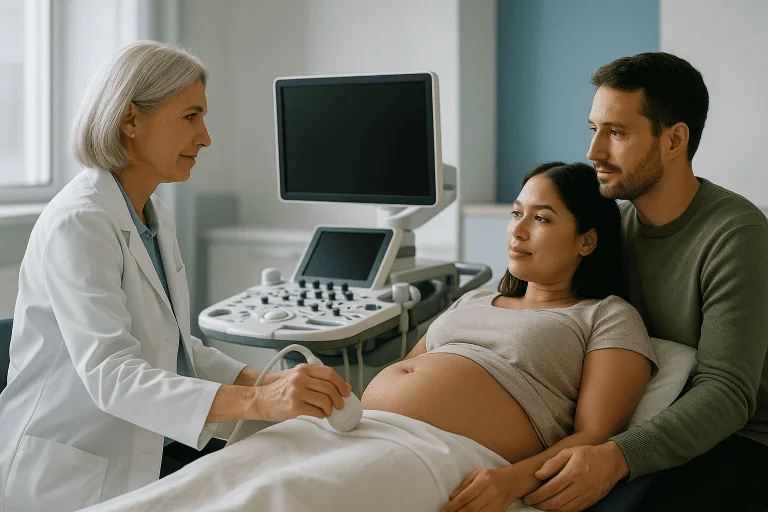
Pregnancy nephropathy treatment options depend on the cause, how far along the pregnancy is, how severe the kidney involvement is, and how the baby is doing. Treatment aims to protect the mother’s kidneys and overall health while allowing the pregnancy to continue safely for as long as reasonable. Care is usually provided by a team that includes an obstetrician, a nephrologist, and, where needed, a neonatologist (a doctor who cares for newborns).
Observation and closer monitoring
For mild cases, especially when blood pressure is only moderately raised and kidney tests are stable, doctors may recommend more frequent prenatal visits, home blood pressure monitoring, repeat urine and blood tests, and regular ultrasound scans of the baby. Rest and reduced activity are sometimes advised, although strict bed rest is no longer routinely recommended.
Medications
Several medicines are considered safe in pregnancy and are commonly used:
- Blood pressure medicines such as labetalol, nifedipine, or methyldopa help keep blood pressure in a safer range. Some blood pressure drugs used outside pregnancy, particularly ACE inhibitors and angiotensin receptor blockers, are avoided because they can harm the developing baby.
- Low-dose aspirin may be recommended from early pregnancy for women at higher risk of preeclampsia, to reduce the chance of developing it.
- Magnesium sulfate given through a vein in the hospital is used to prevent seizures when preeclampsia is severe.
- Corticosteroids may be given to help the baby’s lungs mature if early delivery is likely.
- Antibiotics are used when a kidney infection is the cause.
- For women with lupus nephritis, doctors may adjust immune-suppressing medicines to those considered compatible with pregnancy.
Planned delivery
When pregnancy nephropathy is caused by preeclampsia, the only definitive treatment is delivery of the baby and placenta, because the placenta is the source of the problem. The timing depends on the severity of the mother’s condition and the maturity of the baby. In milder cases, doctors often aim to reach 37 weeks. In severe cases, earlier delivery may be needed to protect the mother, even if the baby will be premature. Delivery may be by induced labor or cesarean section depending on the situation.
Procedures and dialysis
Procedures are rarely needed, but if the kidneys are blocked, for example by a stone, a small tube called a stent may be placed to allow urine to drain. If kidney function falls severely, dialysis (a machine that filters the blood) can be used during pregnancy or after delivery. Women who were already on dialysis before pregnancy usually need longer and more frequent sessions during pregnancy.
Recovery and follow-up
After delivery, blood pressure and kidney function are checked repeatedly, as problems can continue or even first appear in the days after birth. Most women with preeclampsia-related kidney involvement see their urine protein and creatinine return toward normal over weeks to a few months. Women with underlying kidney disease are usually followed by a nephrologist longer term.
Living with pregnancy nephropathy and outlook
The outlook for pregnancy nephropathy varies widely. When the cause is preeclampsia in a woman with previously healthy kidneys, kidney function often recovers fully after delivery, and many women go on to have uncomplicated pregnancies later. However, having had preeclampsia is associated with a higher long-term risk of high blood pressure, heart disease, and chronic kidney disease, so ongoing check-ups with a family doctor are generally advised even when everything seems to have settled.
For women who had kidney disease before pregnancy, the outlook depends largely on how well the kidneys were working beforehand and how well blood pressure was controlled. Those with mild disease and normal blood pressure often do well, while those with more advanced disease face higher risks of premature birth, small babies, and a lasting decline in kidney function. Honest discussion with a nephrologist before and during pregnancy helps set realistic expectations.
Day to day, women living with pregnancy nephropathy are usually encouraged to keep prenatal appointments, take prescribed medicines consistently, monitor blood pressure at home if asked, avoid over-the-counter anti-inflammatory painkillers such as ibuprofen unless a doctor approves, limit added salt, and report new symptoms promptly. Emotional support matters too, because a high-risk pregnancy can be stressful.
Frequently asked questions
What is pregnancy nephropathy in simple terms?
Pregnancy nephropathy is kidney trouble that starts or gets worse during pregnancy. Most often it refers to the kidney involvement seen in preeclampsia, where high blood pressure and protein in the urine appear after 20 weeks. It can also describe pregnancy affecting kidneys that were already weakened by conditions such as diabetes or lupus.
What are the first pregnancy nephropathy symptoms I might notice?
Many women notice nothing at first, which is why routine checks are important. Early pregnancy nephropathy symptoms that some women report include sudden swelling of the face or hands, rapid weight gain, foamy urine, persistent headaches, and blurred vision. These symptoms can have other causes, so a doctor’s assessment is needed to interpret them.
What are the main pregnancy nephropathy causes?
The most common cause is preeclampsia, in which substances released by an abnormally developed placenta injure blood vessels, including the kidney’s filters. Other pregnancy nephropathy causes include pre-existing chronic kidney disease, diabetic kidney disease, lupus nephritis, kidney infections, and rare severe complications such as HELLP syndrome.
How is pregnancy nephropathy diagnosis confirmed?
Doctors combine repeated blood pressure readings, urine tests for protein, and blood tests of kidney function, liver function, and platelets. A kidney ultrasound may be done to rule out blockage, and the baby’s growth is checked by ultrasound. A kidney biopsy is rarely performed during pregnancy. The diagnosis rests on the overall pattern rather than a single test.
What are the pregnancy nephropathy treatment options if I want to keep my pregnancy going?
Depending on severity, options include closer monitoring, blood pressure medicines that are safe in pregnancy, low-dose aspirin for prevention in at-risk women, and treatment of infections. In preeclampsia, delivery is the only definitive treatment, so doctors weigh the mother’s condition against the baby’s maturity when deciding on timing. Decisions are individualized.
Will my kidneys recover after the baby is born?
In many cases where the kidneys were healthy before pregnancy, function returns to normal within weeks to months after delivery. Recovery is less predictable when there was pre-existing kidney disease. Follow-up blood and urine tests after birth help confirm recovery and identify any lasting problems.
Can pregnancy nephropathy happen again in a future pregnancy?
It can. Women who have had preeclampsia have a higher chance of developing it again, although many later pregnancies are uncomplicated. Discussing plans with a doctor before conceiving allows risk factors to be addressed, low-dose aspirin to be considered, and monitoring to start early.
When to see a doctor
Any pregnant woman with new or worsening symptoms should contact her maternity care team, and routine prenatal visits should not be skipped, because pregnancy nephropathy is often silent in its early stages. Some warning signs need urgent, same-day medical attention because they may signal severe preeclampsia or rapidly worsening kidney function:
- A severe headache that does not go away with rest or usual measures
- Vision problems such as blurring, flashing lights, spots, or loss of vision
- Pain under the ribs or in the upper abdomen, especially on the right side
- Sudden swelling of the face, hands, or feet, or swelling that gets worse over hours
- Shortness of breath or difficulty breathing when lying down
- Passing very little urine, or no urine, for many hours
- Blood pressure at home of 160/110 mmHg or higher
- Nausea or vomiting that begins in the second half of pregnancy
- Confusion, extreme drowsiness, or a seizure, which are emergencies
- Reduced or absent movements of the baby, or vaginal bleeding
These signs do not always mean pregnancy nephropathy, but they should always be checked promptly. In an emergency, going directly to the nearest hospital emergency or labor and delivery unit is appropriate.
Medically reviewed by the Acıbadem International Medical Board September 9, 2026
See our medical review board →
Update history
- PublishedSeptember 9, 2026
- Medical review approvedSeptember 9, 2026
- Last content updateSeptember 9, 2026
References2
Treatments for This Condition
Care at Acibadem

Doctors Who Treat This Condition


Vitro Fertilization and Reproductive Medicine Center
Prof. Mehmet Cıncık, MD

Vitro Fertilization and Reproductive Medicine Center
Assoc. Prof. Burak Elmas, MD

Vitro Fertilization and Reproductive Medicine Center
Assoc. Prof. Eser Çolak, MD

Vitro Fertilization and Reproductive Medicine Center