Quick answer
Testicular cancer is a malignancy that starts in the testicles, most often in the cells that produce sperm, and it is typically managed with surgery followed by treatment based on the tumor type and stage. At Acibadem in Turkey, evaluation includes imaging, blood tumor markers, and pathology review to guide care such as testicle-sparing approaches in selected cases, chemotherapy, radiotherapy…
What is testicular cancer?
Testicular cancer is a disease in which abnormal cells grow out of control in one or both testicles. The testicles (also called testes) are the two small, egg-shaped glands inside the scrotum, the loose pouch of skin beneath the penis. They produce sperm and the hormone testosterone. When cells in a testicle begin to divide in an uncontrolled way, they can form a lump, or tumor, which may be cancerous (malignant) or non-cancerous (benign). Understanding what is testicular cancer, how it is found, and how it is treated can help you feel more prepared if you or someone close to you is facing this diagnosis.
Although testicular cancer is uncommon compared with many other cancers, it is one of the most frequently diagnosed cancers in younger men, most often affecting those between adolescence and their mid-forties. It can also occur in older men and, rarely, in boys. Most testicular cancers begin in the germ cells, which are the cells that make sperm. Germ cell tumors are usually divided into two main groups: seminomas, which tend to grow more slowly, and non-seminomas, which often grow and spread more quickly. Some tumors contain a mixture of both types. A smaller number of testicular tumors arise from other tissues in the testicle.
It is important to know that testicular cancer is generally considered one of the more treatable cancers, especially when it is found early. Many men diagnosed with this condition go on to live full lives after treatment, although outcomes vary from person to person and depend on the type and stage of the tumor.
Symptoms of testicular cancer
Testicular cancer symptoms are often subtle at first, and some men have no noticeable symptoms in the early stages. The most common first sign is a painless lump or swelling in one testicle, which a man may discover himself or which may be found during a routine medical examination. Because early tumors are often not painful, any new lump should be checked by a doctor even if it does not hurt.
Common testicular cancer symptoms include:
- A lump or swelling in one testicle, often painless
- A change in the size, shape, or firmness of a testicle
- A feeling of heaviness in the scrotum
- A dull ache or discomfort in the lower abdomen, groin, or scrotum
- A sudden collection of fluid in the scrotum
- Pain or tenderness in a testicle, in some cases
- Breast tenderness or enlargement (called gynecomastia), which can occur when certain tumors produce hormones
Symptoms can differ depending on the type of tumor and how far the disease has progressed. Slower-growing seminomas may cause a gradually enlarging, firm testicle over months, while faster-growing non-seminomas may cause more rapid changes. If the cancer has spread beyond the testicle (a process called metastasis), a man may notice symptoms in other parts of the body. These can include lower back pain, swelling in the abdomen, a persistent cough or shortness of breath if the lungs are affected, swollen lymph nodes (small glands that filter fluid in the body) in the neck or elsewhere, or unexplained weight loss and fatigue.
It is worth remembering that most lumps and changes in the testicles are not cancer. Conditions such as cysts, infections, injury, or a varicocele (enlarged veins in the scrotum) can cause similar symptoms. However, only a medical evaluation can tell the difference, so any new or persistent change should be examined by a doctor promptly.
Causes and risk factors
The exact testicular cancer causes are not fully understood. In most men, doctors cannot point to a single reason why the disease developed. What is known is that testicular cancer begins when cells in the testicle acquire changes in their DNA (the genetic instructions inside cells) that allow them to grow and divide abnormally. Researchers have identified several factors that appear to increase the risk of developing the disease, although having one or more risk factors does not mean a man will definitely develop testicular cancer, and many men who are diagnosed have no known risk factors at all.
- Undescended testicle (cryptorchidism): Men born with a testicle that did not move down into the scrotum before birth have a higher risk, even if the condition was corrected with surgery in childhood.
- Family history: Having a father or brother who had testicular cancer increases the risk, suggesting that inherited genetic factors may play a role.
- Personal history: Men who have had cancer in one testicle have a higher risk of developing it in the other testicle.
- Age: The disease most often affects young and middle-aged men, typically between about 15 and 45 years of age.
- Abnormal testicular development: Certain conditions that affect how the testicles develop can raise the risk.
- Race and ethnicity: In many populations studied, testicular cancer is more common in white men than in men of other backgrounds, although it can affect men of any background.
Importantly, everyday activities such as cycling, sports, or ordinary injuries to the testicles have not been shown to cause testicular cancer. Because the known risk factors generally cannot be changed, there is no proven way to prevent the disease. For this reason, being familiar with how your testicles normally look and feel, and reporting any changes to a doctor, is often recommended as a sensible habit, particularly for men with risk factors.
Diagnosis
Testicular cancer diagnosis usually begins when a man or his doctor notices a lump or another change in a testicle. The doctor will ask about symptoms and medical history and perform a physical examination of the testicles, abdomen, and lymph nodes. If cancer is suspected, several tests are used to confirm the diagnosis and to find out how far the disease may have spread.
Ultrasound of the scrotum
An ultrasound is usually the first imaging test. It uses sound waves to create pictures of the inside of the scrotum and can show whether a lump is solid (more likely to be a tumor) or filled with fluid (more likely to be a cyst). It is painless and does not use radiation.
Blood tests for tumor markers
Certain testicular cancers release substances into the blood called tumor markers. The most commonly measured markers are alpha-fetoprotein (AFP), beta-human chorionic gonadotropin (beta-hCG), and lactate dehydrogenase (LDH). Raised levels can support the diagnosis, help identify the tumor type, guide treatment decisions, and later help doctors monitor how well treatment is working. However, not all testicular cancers raise these markers, so normal results do not rule the disease out.
Surgery to remove the testicle
Unlike many other cancers, testicular cancer is usually not diagnosed with a needle biopsy (taking a small tissue sample through the skin), because this could risk spreading cancer cells. Instead, if the ultrasound and blood tests strongly suggest cancer, doctors typically recommend removing the entire affected testicle through a small cut in the groin. This operation is called a radical inguinal orchiectomy. A pathologist (a doctor who examines tissue under a microscope) then studies the removed testicle to confirm whether cancer is present and, if so, what type it is. In this way, the operation is both a diagnostic step and often the first part of treatment.
Staging tests
Once cancer is confirmed, further imaging is used to determine the stage, meaning how far the cancer has spread. A computed tomography (CT) scan of the abdomen, pelvis, and often the chest is commonly used to look for spread to lymph nodes or other organs. Stage I generally means the cancer is confined to the testicle, stage II means it has spread to nearby lymph nodes in the abdomen, and stage III means it has spread further, for example to the lungs or distant lymph nodes. Tumor marker levels after surgery are also part of the staging system. Accurate staging is essential because it strongly influences which testicular cancer treatment is recommended.
Treatment options for testicular cancer
Testicular cancer treatment depends on the type of tumor (seminoma or non-seminoma), the stage of the disease, tumor marker levels, and the patient’s overall health and preferences. Care is usually planned by a team that may include urologists (surgeons specializing in the urinary and male reproductive systems), medical oncologists (doctors who treat cancer with medicines), and radiation oncologists. In many hospitals, including within the Acibadem group, chemotherapy and ongoing cancer care are coordinated through a medical oncology department. More detailed information about how this condition is managed is also available on the dedicated testicular cancer treatment page.
Surgery
Removal of the affected testicle (radical inguinal orchiectomy) is the standard first step for nearly all testicular cancers. For many men with early-stage disease, this operation may be the only treatment needed, followed by careful monitoring. In some cases, particularly with non-seminomas, surgeons may also remove lymph nodes at the back of the abdomen in an operation called retroperitoneal lymph node dissection, either to check for spread or to remove tumor tissue that remains after chemotherapy. Losing one testicle does not usually affect a man’s ability to have erections or father children, provided the remaining testicle is healthy. An artificial (prosthetic) testicle can often be placed for cosmetic reasons if the patient wishes.
Surveillance (active monitoring)
For some men with stage I disease, doctors may recommend surveillance instead of immediate further treatment. This means regular follow-up visits with physical examinations, blood tests for tumor markers, and imaging scans over several years. The goal is to avoid unnecessary treatment while making sure that any return of the cancer is detected early, when it usually remains highly treatable. Surveillance requires commitment to a strict follow-up schedule, and your doctor will discuss whether it is appropriate in your situation.
Chemotherapy
Chemotherapy uses medicines that kill rapidly dividing cells throughout the body. It is often used when testicular cancer has spread beyond the testicle, or in some cases to reduce the risk of the cancer coming back after surgery. Testicular germ cell tumors are generally very sensitive to chemotherapy, which is one reason the outlook for this disease is often favorable even when it has spread. Chemotherapy is usually given in cycles over several weeks. Side effects can include fatigue, nausea, hair loss, increased risk of infection, and, in some cases, longer-term effects such as hearing changes or reduced fertility. Your care team will explain what to expect and how side effects are managed.
Radiation therapy
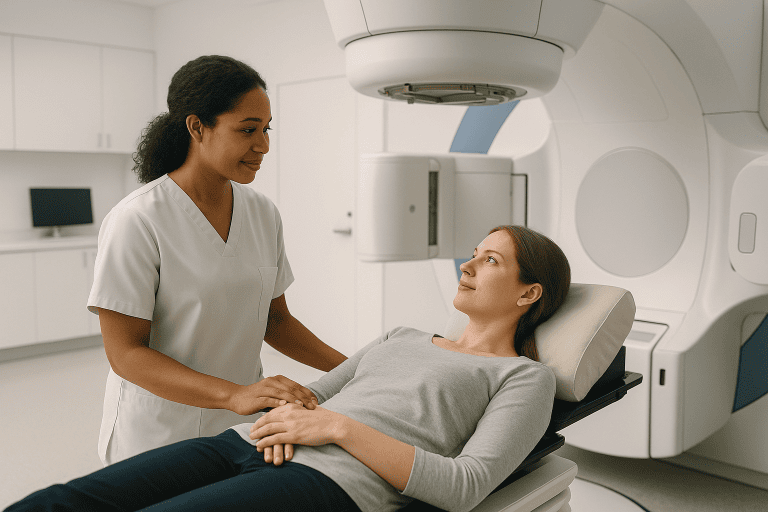
Radiation therapy uses carefully targeted high-energy rays to destroy cancer cells. It is used mainly for seminomas, which are particularly sensitive to radiation, and is sometimes directed at lymph nodes in the abdomen. Non-seminomas respond less well to radiation, so it is used less often for that type. Side effects may include tiredness, skin irritation in the treated area, and nausea.
Fertility considerations
Some treatments, especially chemotherapy, radiation, and certain lymph node operations, can affect fertility. Men who may want children in the future are usually offered sperm banking (freezing and storing sperm) before treatment begins. It is important to raise this topic with your doctor early, ideally before treatment starts.
Living with testicular cancer and outlook
The outlook for testicular cancer is, in general, among the most favorable of all cancers, particularly when the disease is diagnosed at an early stage. Even when the cancer has spread, many men respond well to chemotherapy and can be treated successfully. However, no doctor can guarantee a particular outcome for an individual patient, because prognosis depends on the tumor type, the stage at diagnosis, tumor marker levels, how the cancer responds to treatment, and overall health.
After treatment, regular follow-up care is essential. Follow-up typically includes physical examinations, blood tests for tumor markers, and periodic imaging scans, often continuing for several years. This monitoring allows any recurrence to be found and treated early. Men who have had cancer in one testicle have a somewhat higher chance of developing cancer in the other testicle, so ongoing self-awareness and check-ups are important.
Living with and beyond testicular cancer can also involve emotional and practical challenges. Concerns about body image, sexuality, fertility, and the fear of recurrence are common and understandable. Talking openly with your care team, partner, or a counselor can help. If one testicle has been removed, the remaining testicle usually produces enough testosterone and sperm for normal sexual function and fertility, although your doctor may check hormone levels over time. If both testicles are removed, which is uncommon, lifelong testosterone replacement therapy is needed, and fertility is affected; your doctor will discuss options in that situation.
Frequently asked questions
What is testicular cancer and how common is it?
Testicular cancer is a malignant growth that starts in a testicle, most often in the germ cells that produce sperm. It is relatively rare overall but is one of the most common cancers in younger men, typically affecting those between their teenage years and mid-forties. Despite this, it can occur at any age, so changes in the testicles should be checked regardless of age.
Can testicular cancer be cured?
In many cases, testicular cancer can be treated successfully, and it is often described as one of the most treatable solid cancers, especially when found early. Even disease that has spread frequently responds well to chemotherapy. That said, results vary between individuals, and no treatment outcome can be guaranteed. Your doctor can explain what the type and stage of your tumor mean for your particular situation.
How serious is testicular cancer if it has spread?
Cancer that has spread beyond the testicle is more serious and usually requires chemotherapy, sometimes followed by further surgery. However, testicular germ cell tumors are unusually responsive to treatment, and many men with advanced disease are still treated with the aim of long-term remission. The outlook depends on where the cancer has spread, tumor marker levels, and how the disease responds to therapy.
What are the first symptoms of testicular cancer?
The most common first symptom is a painless lump or swelling in one testicle. Other early signs can include a feeling of heaviness in the scrotum, a change in the size or firmness of a testicle, or a dull ache in the groin or lower abdomen. Because early tumors often do not hurt, a lack of pain should never be a reason to delay seeing a doctor.
Will I still be able to have children after treatment?
Many men remain fertile after treatment, particularly if only one testicle is removed and the other is healthy. However, chemotherapy, radiation, and some operations can reduce fertility, temporarily or permanently. Doctors usually recommend sperm banking before treatment for men who may want children later. Discussing fertility with your care team before treatment begins gives you the widest range of options.
Does an injury to the testicle cause testicular cancer?
No. Injuries, sports, and cycling have not been shown to cause testicular cancer. Sometimes an injury simply draws attention to a lump that was already there. The main known risk factors are an undescended testicle at birth, a family or personal history of the disease, and younger age, though many men diagnosed have no identifiable risk factors.
How long does recovery take after testicular cancer surgery?
Recovery after removal of a testicle is often relatively quick; many men return to light activities within a couple of weeks, although your doctor may advise avoiding heavy lifting or strenuous exercise for a longer period. If further treatment such as chemotherapy or lymph node surgery is needed, overall recovery takes longer and varies from person to person. Your care team will give guidance tailored to your treatment plan.
When to see a doctor
Any new or persistent change in a testicle deserves prompt medical attention, even if it is not painful. Early evaluation matters because testicular cancer is generally most treatable when found at an early stage. See a doctor without delay if you notice any of the following:
- A new lump, hardness, or swelling in either testicle
- A change in the size or shape of a testicle, or one testicle becoming noticeably firmer
- A feeling of heaviness or dragging in the scrotum
- A dull ache or pain in a testicle, the scrotum, the groin, or the lower abdomen that does not go away
- Sudden fluid buildup or swelling in the scrotum
- Breast tenderness or enlargement without another clear explanation
- Persistent lower back pain, cough, shortness of breath, or unexplained weight loss, especially together with any testicular change
Seek urgent medical care for sudden, severe testicular pain, which can also signal other emergencies such as testicular torsion (a twisted testicle that cuts off its blood supply). Most testicular changes turn out to have benign causes, but only a doctor can determine this. If you have risk factors such as a history of an undescended testicle or a family history of testicular cancer, tell your doctor so that appropriate checks can be arranged.
Medically reviewed by the Acıbadem International Medical Board September 2, 2026
See our medical review board →
Update history
- PublishedJune 14, 2026
- Medical review approvedSeptember 2, 2026
- Last content updateSeptember 2, 2026