39.5c to F: A Complete Medical Overview

39.5°C converts to 103.1°F using the formula °F = (°C × 9/5) + 32. A temperature of 39.5°C (103.1°F) is a high fever, not a diagnosis by itself.
Key Takeaways
- 39.5°C converts to 103.1°F using the formula °F = (°C × 9/5) + 32.
- A temperature of 39.5°C (103.1°F) is a high fever, not a diagnosis by itself.
- Infants, older adults, pregnant people and those with weakened immune systems may need medical advice sooner.
- Hydration, rest and correct temperature measurement can support safe home care when no warning signs are present.
- Urgent assessment is important when fever occurs with breathing difficulty, confusion, seizure, stiff neck, severe headache or signs of dehydration.
39.5C to F equals 103.1°F. This is generally considered a high fever, and its significance depends on the person’s age, symptoms, medical history and the cause of the raised temperature.
39.5C to F: the direct answer
39.5C to F equals 103.1°F. The calculation is: (39.5 × 9/5) + 32 = 103.1. In clinical practice, this is usually described as a high fever.
Fever is a temporary rise in body temperature, most often caused by the immune system responding to an infection. The number on a thermometer is important, but it should be considered together with the person’s age, overall condition, symptoms and the duration of the fever.
A high reading can feel worrying, but many fevers improve with time and supportive care. However, some situations require prompt medical assessment, particularly for young babies or when concerning symptoms are present.
What does a temperature of 39.5°C mean?
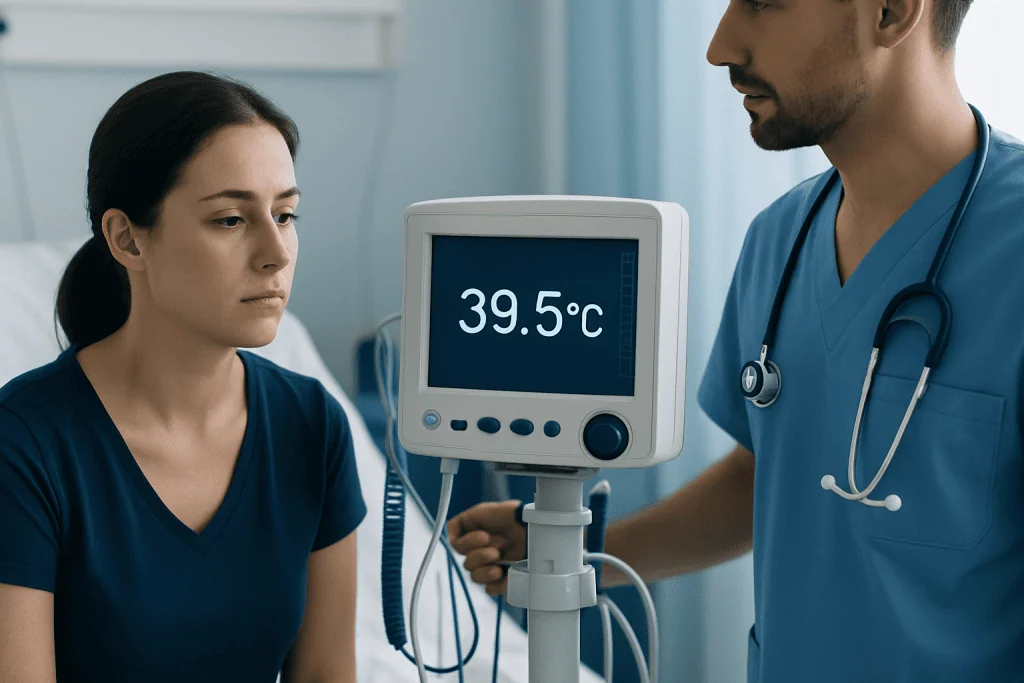
Normal body temperature varies from person to person and can change slightly during the day. It is also affected by exercise, warm surroundings, clothing, stress and the method used to take the temperature. In adults and children, a temperature of 38°C (100.4°F) or above is generally considered a fever.
At 39.5°C (103.1°F), the body is running a high temperature. Common accompanying symptoms include sweating, chills, headache, muscle aches, tiredness, reduced appetite and a faster heartbeat. The temperature itself does not identify the underlying illness.
Many viral illnesses can cause a high fever, especially during the first few days. Bacterial infections, inflammatory conditions, medication reactions and heat-related illness are other possible causes. A clinician can help determine whether testing or treatment is needed based on the full clinical picture.
How to measure temperature accurately

Accurate measurement helps people make informed decisions about fever. Digital thermometers are widely used and can measure temperature orally, under the arm, in the ear, on the forehead or rectally. Results can differ depending on the site and device, so it is useful to follow the manufacturer’s instructions and use the same method when monitoring changes.
Rectal measurements are often the most accurate reflection of core body temperature in infants, but they should be performed carefully and only when appropriate. Underarm measurements may read lower than internal temperature and can be less precise. Forehead and ear thermometers can be convenient, though technique, earwax and environmental temperature may affect the result.
For a more reliable reading, wait after strenuous activity, a hot bath, or hot and cold drinks before checking an oral temperature. Record the temperature, measurement method, time of day and associated symptoms. This information can be helpful if medical advice is needed.
- 39.0°C = 102.2°F
- 39.5°C = 103.1°F
- 40.0°C = 104.0°F
Common causes of high fever
Infections are the most frequent cause of fever. Respiratory viruses, influenza, COVID-19, stomach infections, urinary tract infections and throat infections can all raise body temperature. Symptoms such as cough, sore throat, diarrhea, vomiting, pain when urinating or a new rash may offer clues, but they do not confirm the cause on their own.
Some bacterial infections can also produce high fever and may require assessment for antibiotics or other treatment. Antibiotics do not treat viral infections and should only be used when prescribed by a qualified clinician. A persistent or worsening fever may need further evaluation.
Less commonly, fever can result from inflammatory or autoimmune conditions, certain medicines, recent immunizations or heat exposure. Heatstroke differs from infectious fever: it occurs when the body cannot cool itself effectively and is a medical emergency, especially if there is confusion, collapse, altered behavior or hot skin after heat exposure.
People with symptoms of respiratory infection can learn more about influenza and its potential complications, while a clinician can assess whether a different cause is more likely.
Managing a 39.5°C fever at home
If an otherwise healthy adult or older child is alert, drinking fluids and has no warning signs, supportive care may be appropriate while monitoring symptoms. Rest, light clothing, a comfortably cool room and regular fluids can help reduce discomfort and lower the risk of dehydration.
Fever-reducing medicines may be considered for comfort when they are safe for the individual. A doctor or pharmacist can advise on suitable options, particularly for children, people with liver or kidney disease, those taking regular medicines, or anyone who is pregnant. Aspirin should not be given to children or teenagers with a viral illness unless specifically advised by a clinician.
Do not use ice baths, very cold showers or alcohol rubs to treat fever. These measures can cause shivering or other problems and may make the person feel worse. Lukewarm comfort measures are usually sufficient if wanted, but the main goals are hydration, rest and observing for changes.
Caregivers should focus on how the person appears and behaves, not only on achieving a normal thermometer reading. A person who is difficult to wake, confused, unable to keep fluids down or breathing with difficulty needs medical assessment regardless of the exact temperature.
When to seek medical care
Seek emergency medical care immediately for fever with trouble breathing, blue or gray lips, chest pain, confusion, fainting, a seizure, severe weakness, a stiff neck, a severe or unusual headache, or a rapidly spreading purple or non-blanching rash. Emergency help is also needed if heatstroke is suspected.
For babies younger than 3 months, a rectal temperature of 38°C (100.4°F) or higher requires urgent medical evaluation. Young children should also be assessed promptly if they are unusually sleepy, inconsolable, have signs of dehydration, develop a seizure, have breathing difficulty, or are not interacting normally.
Adults should contact a clinician for a fever that remains high, lasts more than a few days, repeatedly returns, or occurs with significant pain, persistent vomiting, new rash, urinary symptoms or worsening cough. People who are pregnant, immunocompromised, receiving cancer treatment, recently had surgery, or have serious chronic illness should seek advice earlier.
Evaluation may include a clinical examination and, when indicated, laboratory tests or other investigations to identify the cause. The appropriate next step depends on symptoms and individual risk factors.
What to expect during medical assessment
A healthcare professional will ask about the temperature pattern, symptoms, recent travel, sick contacts, medicines, medical conditions and possible exposures. They may examine the ears, throat, chest, abdomen, skin and nervous system, depending on the symptoms described.
Testing is not necessary for every fever. When it is clinically appropriate, tests may include a throat swab, urine test, blood tests, viral testing or imaging. Results help the clinician distinguish between common self-limited illnesses and conditions that may need specific treatment.
Treatment targets the underlying cause whenever one is identified. This may involve supportive care for a viral infection, prescription medicine for certain bacterial infections, intravenous fluids for significant dehydration or hospital observation for people at higher risk of complications. Care should always be tailored to the individual.
Acibadem International’s multidisciplinary specialists and JCI-accredited hospitals diagnose and treat fever-related illnesses for international patients when assessment and coordinated care are needed.
Reducing the risk of fever-related illness
Not every fever can be prevented, but everyday measures can reduce the chance of many infections. Regular handwashing, covering coughs and sneezes, avoiding close contact when unwell and cleaning frequently touched surfaces are practical steps, especially during periods of circulating respiratory viruses.
Keeping recommended vaccinations up to date can protect against several infections that may cause serious fever-related illness. Individual vaccination needs vary by age, health conditions, pregnancy status, travel plans and local guidance, so a clinician can provide personalized recommendations.
Good hydration, balanced nutrition, adequate sleep and management of long-term conditions support overall health, although they cannot eliminate the risk of infection. During hot weather, prevent heat illness by drinking fluids regularly, limiting strenuous activity during peak heat and seeking cooler environments when possible.
For any high fever, recording symptoms and knowing when to seek help is more useful than relying on a temperature conversion alone. Early medical advice is appropriate whenever there is uncertainty or a person seems significantly unwell.
Frequently asked questions
What is 39.5C in Fahrenheit?
39.5°C is 103.1°F. This is generally considered a high fever and should be interpreted together with symptoms, age and overall health.
Is 39.5°C a dangerous fever?
A temperature of 39.5°C can occur with common infections, but it deserves close attention. It may be more concerning in infants, older adults, pregnant people, people with weakened immunity, or anyone with serious accompanying symptoms.
Should a fever of 103.1°F always be treated with medicine?
Fever medicine is not always required solely because of the number. It may help with discomfort, but hydration, rest and monitoring are also important; a clinician or pharmacist can advise on safe choices for the individual.
When should a child with 39.5°C fever see a doctor?
A baby under 3 months with a temperature of 38°C or higher needs urgent medical assessment. Older children should be assessed promptly if they have breathing problems, dehydration, a seizure, unusual sleepiness, a concerning rash or are not behaving normally.
How long can a 39.5°C fever last?
The duration depends on the cause. Many viral fevers start improving within several days, but medical advice is appropriate if fever persists, returns, worsens or is accompanied by concerning symptoms.
Can stress cause a temperature of 39.5°C?
Stress can cause temporary changes in body temperature, but it does not usually explain a true high fever of 39.5°C. A reading this high should prompt consideration of infection, heat illness or another medical cause, especially if symptoms are present.
This article is for general information only and is not a substitute for professional medical advice. Please consult a qualified doctor about your individual situation.
Explore treatments in Turkey — costs, top hospitals & a free quote
JCI-accredited · board-certified surgeons · reply within 24h
Add us as a Preferred Source to see more of our trusted health content across Google Search, AI Overviews and Discover.

More from the Health Library

Semenax: What Patients Need to Know

Phenylephrine: What Patients Need to Know

Diabetic Shock: A Complete Medical Overview

Thoracotomy: A Complete Medical Overview

Provigil: What Patients Need to Know