

Aaa Screening: An Evidence-Based Guide for Patients

AAA screening uses abdominal ultrasound to look for an enlarged section of the aorta. The test is usually offered to people with higher risk factors rather than to all adults.
Key Takeaways
- AAA screening uses abdominal ultrasound to look for an enlarged section of the aorta.
- The test is usually offered to people with higher risk factors rather than to all adults.
- Most abdominal aortic aneurysms cause no symptoms until they become large or rupture.
- Screening results guide follow-up, which may range from no further testing to regular monitoring or treatment.
- Stopping smoking and controlling blood pressure can help lower risk and slow aneurysm growth.
AAA screening is a quick, painless ultrasound used to find an abdominal aortic aneurysm before it causes symptoms. It is most often recommended for people at higher risk, especially older men with a history of smoking, because early detection can help prevent life-threatening complications.
What AAA Screening Is and Why It Matters
AAA screening is a preventive ultrasound test that looks for an abdominal aortic aneurysm, a widening or bulging in the main artery that carries blood from the heart through the abdomen. The purpose of screening is to find an aneurysm before it causes symptoms, because many people do not know they have one until it becomes large or ruptures.
This matters because a ruptured abdominal aortic aneurysm is a medical emergency. By finding aneurysms early, doctors can monitor them safely, recommend lifestyle changes, and plan treatment if the aneurysm reaches a size or growth rate that raises concern. In many cases, early detection helps reduce the risk of sudden complications.
Unlike tests done to investigate symptoms, screening is offered to people who feel well but may have higher risk based on age, sex, smoking history, and family history. It is not a blood test and does not involve surgery. Most people complete the exam in a short outpatient visit.
Who Should Consider AAA Screening
AAA screening is usually recommended for selected groups rather than the general population. In many guidelines, the clearest benefit is seen in men ages 65 to 75 who have ever smoked. Some people who have never smoked may still be considered for screening based on individual risk factors, especially if there is a strong family history of aneurysm.
Women are less likely than men to develop an abdominal aortic aneurysm, so routine screening is not commonly advised for all women. However, a doctor may consider screening for a woman with important risk factors such as smoking, a close relative with an aneurysm, or other vascular disease. Decisions are best made individually.
People with a first-degree relative who had an abdominal aortic aneurysm may need a discussion about earlier or targeted screening. Smoking is one of the strongest risk factors, and current or past smokers should mention this history during routine checkups. If there is uncertainty about whether screening is appropriate, a clinician can review age, health status, and family history to guide the decision.
For readers who want background on the condition itself, abdominal aortic aneurysm explains how the artery changes over time and why monitoring may be important.
How the Test Is Done and What to Expect

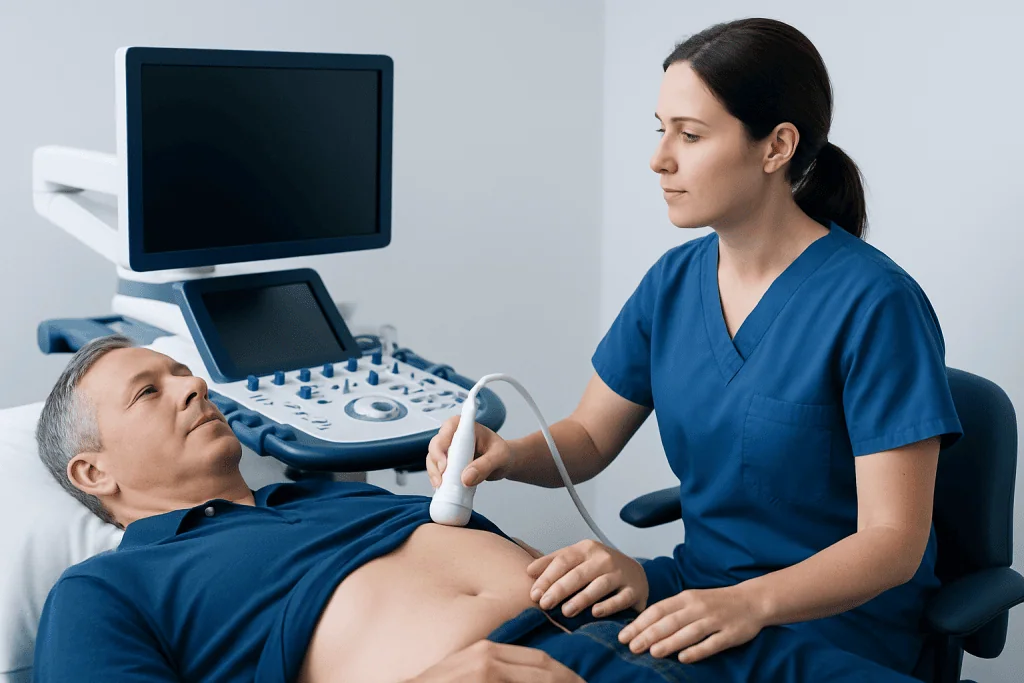
AAA screening is usually performed with abdominal ultrasound. During the test, a technologist places gel on the abdomen and moves a handheld device called a transducer over the skin. Sound waves create images of the aorta, allowing the care team to measure its width and check for an aneurysm.
The test is painless and does not use radiation. Most people do not need needles, sedation, or recovery time afterward. The appointment is often brief, and many people return to normal activities right away.
Some centers may ask patients not to eat for several hours before the ultrasound, because bowel gas can sometimes make the images less clear. Preparation instructions vary, so it is best to follow the advice given by the imaging center. If ultrasound images are limited, a doctor may occasionally recommend other imaging such as CT scan for a closer look, but ultrasound remains the usual screening tool.
Understanding the Results
The result of AAA screening is based mainly on the diameter of the abdominal aorta. If the aorta is not enlarged, no further action may be needed unless the person develops new symptoms or has a change in risk profile. A normal result can be reassuring, but it does not replace routine care for blood pressure, cholesterol, and smoking cessation.
If the aorta is mildly enlarged, doctors may recommend repeat ultrasound at intervals to watch for growth. This is called surveillance. Small aneurysms often do not need immediate treatment, but regular follow-up is important because the aneurysm can slowly enlarge over time.
If the aneurysm is larger, growing more quickly, or causing symptoms, referral to a vascular specialist is usually advised. Additional imaging may be used to plan management, including MRI in selected cases or CT-based evaluation when detailed anatomy is needed. The main goal is to balance the risk of rupture against the risks and benefits of intervention.
Symptoms, Risk Factors, and Why Screening Is Often Needed
Most abdominal aortic aneurysms do not cause symptoms when they are small. This is exactly why screening can be valuable in people at higher risk. Without screening, an aneurysm may go unnoticed for years.
When symptoms do occur, they may include deep, persistent pain in the abdomen, back, or side, or a pulsing sensation in the abdomen. These symptoms do not always mean there is an aneurysm, but they should be assessed by a doctor. Sudden severe pain, fainting, dizziness, or collapse may suggest rupture and requires emergency care.
Key risk factors include older age, male sex, current or past smoking, high blood pressure, atherosclerosis, and a family history of aneurysm. The condition is also related to overall vascular health, so people with other artery problems may be more likely to need evaluation. Some patients undergoing assessment for circulation problems may also be seen by teams that manage peripheral artery disease, since both conditions share risk factors such as smoking and atherosclerosis.
What Happens If an Aneurysm Is Found
If screening detects an aneurysm, treatment depends on its size, growth, symptoms, and the person’s general health. Small aneurysms are often managed with regular imaging, smoking cessation support, blood pressure control, and attention to heart and vascular risk factors. This careful follow-up helps identify the right time for intervention, if it becomes necessary.
When an aneurysm becomes large enough to carry a higher risk of rupture, a vascular surgeon may discuss repair. Repair can be done with open surgery or with a less invasive catheter-based technique in selected patients. One option may be endovascular treatment, which places a graft inside the artery to support the weakened area.
Not every aneurysm requires repair, and timing matters. A specialist will consider imaging findings, symptoms, anatomy, other medical conditions, and patient preferences. Near the end of the care pathway, some people seek evaluation at centers with multidisciplinary vascular expertise; Acibadem International’s JCI-accredited hospitals provide diagnosis and treatment for international patients with aneurysm-related conditions.
Reducing Risk and Taking Care of Vascular Health
AAA screening finds aneurysms, but long-term health also depends on reducing the factors that contribute to artery damage. Stopping smoking is one of the most important steps, as smoking strongly increases the risk of developing an aneurysm and can speed its growth. People who smoke can ask their doctor about evidence-based support programs and medications.
Managing blood pressure, cholesterol, diabetes, and body weight also supports aortic and heart health. Regular physical activity, a balanced eating pattern, and keeping follow-up appointments are practical ways to protect blood vessels. A doctor may also recommend medicines to lower cardiovascular risk, depending on the person’s overall health profile.
Family history should not be overlooked. If a close relative has had an abdominal aortic aneurysm, that information can help guide preventive care for other family members. Screening does not prevent aneurysms by itself, but combined with healthy lifestyle measures and appropriate medical follow-up, it can play an important role in safer long-term care.
When to Seek Medical Care
People should speak with a doctor about AAA screening if they are in a higher-risk group, especially older adults with a current or past smoking history or anyone with a close relative who had an aneurysm. A routine visit is a good time to ask whether screening is appropriate and whether an abdominal ultrasound is needed.
Medical attention is also important if there are symptoms such as ongoing abdominal, back, or flank pain, or a newly noticed pulsing feeling in the abdomen. These symptoms can have many causes, but they should not be ignored, particularly in someone with vascular risk factors.
Emergency care is needed for sudden severe abdominal or back pain, fainting, weakness, dizziness, or signs of shock. These may indicate a ruptured aneurysm or another urgent condition. Prompt assessment can be lifesaving, so it is important not to drive oneself if severe symptoms are present.
Frequently asked questions
What does AAA screening check for?
AAA screening checks for an abdominal aortic aneurysm, which is an enlarged or weakened area in the aorta inside the abdomen. The test usually uses ultrasound to measure the width of the artery and look for bulging.
Who is most likely to benefit from AAA screening?
The people most likely to benefit are older men, especially those ages 65 to 75 who have ever smoked. Others may also benefit depending on family history, vascular disease, and overall risk, so decisions should be individualized with a doctor.
Is AAA screening painful or dangerous?
No, the screening ultrasound is generally painless and very safe. It does not use radiation, usually takes only a short time, and most people can resume normal activities immediately afterward.
How often is AAA screening needed?
That depends on the result. If the aorta is normal, many people do not need repeated screening, while those with a small aneurysm may need periodic follow-up ultrasounds to monitor for growth.
Can an abdominal aortic aneurysm be treated if it is found early?
Yes. Small aneurysms are often monitored carefully, and larger or faster-growing aneurysms can often be treated with planned repair. Early detection gives doctors time to choose the safest and most appropriate approach.
Does a normal AAA screening mean there is no future risk?
A normal result is reassuring, but it does not remove all future vascular risk. Healthy habits such as not smoking, controlling blood pressure, and attending regular checkups remain important.
References
- U.S. Preventive Services Task Force
- Society for Vascular Surgery
- National Heart, Lung, and Blood Institute
- Centers for Disease Control and Prevention
- National Health Service
This article is for general information only and is not a substitute for professional medical advice. Please consult a qualified doctor about your individual situation.
Explore treatments in Turkey — costs, top hospitals & a free quote
JCI-accredited · board-certified surgeons · reply within 24h
Add us as a Preferred Source to see more of our trusted health content across Google Search, AI Overviews and Discover.
Check your numbers in seconds
BMI, calories, due date, blood pressure and 30+ more clinical calculators — free, instant, doctor-reviewed ranges.

More from the Health Library



Related Specialists

Prof. Dr. Umut Akgün
Orthopedic Surgery & Traumatology
Assoc. Prof. Dr. Eser Çolak
Vitro Fertilization and Reproductive Medicine Center
Dr. Salih Demir
Internal Medicine
Dr. Işıl Avcı
Physical Medicine & Rehabilitation