AI Symptom Checkers: What They Can Do and When to See a Doctor Instead

AI symptom checkers can help organize symptoms and suggest whether care may be urgent, routine, or self-managed. They cannot perform a physical exam, interpret body language, or fully understand a person’s medical history and context.
Key Takeaways
- AI symptom checkers can help organize symptoms and suggest whether care may be urgent, routine, or self-managed.
- They cannot perform a physical exam, interpret body language, or fully understand a person’s medical history and context.
- Red-flag symptoms such as chest pain, severe breathing difficulty, stroke signs, or heavy bleeding need immediate medical care rather than an app.
- These tools are most helpful as a starting point for common, mild symptoms and for preparing for a medical appointment.
- People should use trusted tools, protect personal data, and treat the results as guidance rather than a diagnosis.
AI symptom checkers are digital tools that ask about symptoms and suggest possible causes or levels of urgency. They can be useful for general guidance, but they do not replace a qualified clinician, especially when symptoms are severe, sudden, or persistent.
Overview: What AI Symptom Checkers Are
AI symptom checkers are digital health tools that ask users about symptoms, age, medical history, and sometimes medications or recent exposures. Based on the information entered, they generate possible explanations and may suggest what kind of care to seek, such as self-care, a routine doctor visit, urgent care, or emergency assessment.
These tools use algorithms that may include medical decision trees, pattern recognition, and increasingly artificial intelligence trained on large sets of health information. Their main purpose is not to diagnose with certainty, but to support decision-making and help people think more clearly about what to do next.
For many people, AI symptom checkers are appealing because they are available at any time and can provide quick, easy-to-understand guidance. They may reduce uncertainty for minor symptoms and help users describe their concerns more clearly when they later speak to a clinician.
Even so, an AI symptom checker is only one source of information. It does not replace a doctor, nurse, or other qualified healthcare professional who can take a full history, perform an examination, order tests, and interpret findings in context.
What AI Symptom Checkers Can Do Well
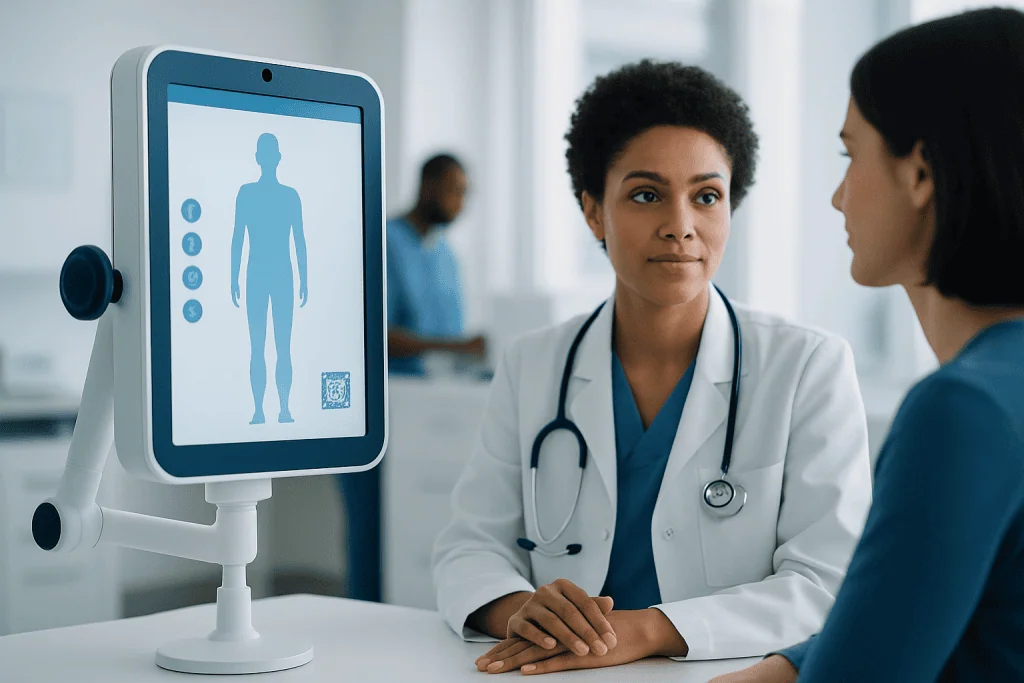
When used appropriately, AI symptom checkers can be helpful for common, non-emergency concerns. They often guide users through structured questions that many people might forget to ask themselves, such as when symptoms started, whether they are getting worse, and whether there are related signs like fever, rash, nausea, or swelling.
They can also help users prepare for a medical appointment by organizing symptom details in a more complete way. This may make it easier to explain a problem to a doctor and can support more focused conversations during a consultation.
In some cases, these tools can offer sensible next-step advice for mild symptoms, such as monitoring, hydration, rest, or booking a routine visit. They may also encourage users to seek timely care for problems that should not be ignored, including possible infections, worsening pain, or symptoms related to chronic conditions.
Useful functions may include:
- Prompting users to notice patterns, triggers, and duration of symptoms
- Suggesting the level of care that may be appropriate
- Providing general educational information about common conditions
- Helping users prepare questions for a healthcare professional
Their Limits: Why They Cannot Replace a Doctor

AI symptom checkers have important limitations. They depend entirely on the accuracy and completeness of the information entered. If a person misunderstands a question, leaves out a symptom, or cannot describe what they are feeling clearly, the result may be misleading.
They also cannot perform a physical examination. A clinician may notice important findings that an app cannot capture, such as skin color changes, abdominal tenderness, abnormal heart or lung sounds, dehydration, weakness, confusion, or difficulty walking. These observations can change the meaning of symptoms significantly.
Another limitation is context. The same symptom can mean very different things in different people. For example, fatigue in a healthy young adult may have a different significance than fatigue in an older person with heart disease, pregnancy, cancer treatment, or diabetes. Medical decision-making depends on age, personal history, family history, medications, travel, lifestyle, and many other details.
AI symptom checkers can also produce results that are too broad, too cautious, or occasionally too reassuring. They may list many possible causes without helping the user understand which ones are most likely, or they may not recognize when subtle symptoms could signal a more serious problem. This is why they should be used as support tools, not as a final answer.
When to See a Doctor Instead of Using an App
Certain situations need direct medical advice rather than online symptom assessment alone. A doctor should be consulted when symptoms are severe, persistent, recurrent, or unusual for that person. This is especially important if symptoms are affecting daily activities, sleep, eating, hydration, mobility, or mental clarity.
People should seek urgent medical care right away for red-flag symptoms such as chest pain, severe shortness of breath, fainting, signs of stroke, seizures, severe allergic reactions, uncontrolled bleeding, sudden confusion, serious burns, or major injuries. In these situations, it is safer to contact emergency services or go to the nearest emergency department than to spend time using an app.
Medical review is also important for symptoms in higher-risk groups, including infants, older adults, pregnant people, and those with weakened immune systems or multiple chronic conditions. In these groups, even common symptoms can develop differently and may need earlier evaluation.
A doctor should also be seen if a symptom checker’s advice does not match how unwell the person feels, or if symptoms continue despite self-care. Trusting one’s own sense that something is wrong is important. Digital tools can support judgment, but they should not override it.
How Doctors Reach a Diagnosis More Reliably
Diagnosis is more than matching symptoms to a list of conditions. Clinicians combine several types of information: a detailed history, the timing and pattern of symptoms, a physical examination, vital signs, and when needed, laboratory tests or imaging. This process helps narrow down possibilities and identify the most likely cause.
For example, abdominal pain may require examination to look for tenderness, guarding, bloating, dehydration, or signs of infection. Headache may need blood pressure measurement and a neurological examination. Shortness of breath may require listening to the lungs, checking oxygen levels, or arranging a chest X-ray. These are steps that symptom checkers cannot do.
Doctors also interpret findings over time. They may ask a patient to monitor symptoms, return for review, or complete tests to see whether a pattern becomes clearer. This follow-up is especially important when early symptoms are vague or when more than one condition could explain them.
If symptoms are concerning, healthcare teams may recommend further evaluation through a medical check-up and screening, laboratory testing, or MR imaging when clinically appropriate. For urgent unexplained symptoms, a physician may also coordinate emergency care to rule out serious causes quickly.
How to Use AI Symptom Checkers Safely and Wisely
AI symptom checkers are most useful when people use them thoughtfully. It helps to enter information carefully, including when symptoms started, whether they are changing, any measured temperature, current medications, chronic illnesses, allergies, and recent travel or exposures. More complete information generally leads to more useful guidance.
Users should choose symptom checkers from reputable health organizations, established healthcare systems, or well-known digital health companies with transparent medical review processes. It is wise to read the tool’s disclaimers so it is clear whether the information is educational, triage-focused, or intended to support clinical care.
Privacy matters too. Because symptom entries may include sensitive health information, users should check how data are stored, used, and shared. Public devices and unsecured networks may not be ideal for discussing private medical details.
Practical tips include:
- Use the tool as a guide, not a diagnosis
- Compare the advice with how severe and unusual the symptoms feel
- Seek medical care sooner if symptoms worsen or new symptoms appear
- Bring the summary to a doctor visit if it helps explain the problem
- Avoid repeatedly checking the same symptom if it increases worry without leading to action
The Future of AI in Health and When Professional Care Still Matters
AI is likely to play a growing role in healthcare, including symptom assessment, appointment navigation, patient education, and support for clinicians. Over time, some tools may become better at recognizing patterns, incorporating personal medical history, and directing people to the right level of care more efficiently.
However, healthcare is not only about data. Human clinicians provide judgment, communication, empathy, and the ability to notice subtle changes that may not fit neatly into a digital questionnaire. For many symptoms, reassurance is more meaningful when it comes from a trusted professional who has assessed the person directly.
The best approach is usually to see AI symptom checkers as one part of a wider care pathway. They can be a practical first step for mild concerns, but direct medical assessment remains essential for diagnosis, treatment planning, and any symptom that is severe, unclear, or ongoing. Related evaluations may overlap with conditions such as migraine or heart attack when specific warning signs are present, which is why clinical context matters so much.
For people seeking in-person evaluation, Acibadem International’s multidisciplinary specialists and JCI-accredited hospitals diagnose and treat a wide range of acute and chronic health concerns for international patients. The safest rule remains simple: when symptoms are worrying, worsening, or do not seem to fit the app’s advice, a qualified doctor should make the final assessment.
Frequently asked questions
Are AI symptom checkers accurate?
They can be helpful for general guidance, but their accuracy varies by tool, symptom type, and the quality of information entered. They are not reliable enough to replace a doctor’s diagnosis, especially for serious, complex, or unusual symptoms.
Can an AI symptom checker diagnose a disease?
No. An AI symptom checker may suggest possible causes, but it cannot confirm a diagnosis because it cannot examine the patient, check vital signs, or order and interpret tests. A qualified healthcare professional is needed for diagnosis and treatment decisions.
When should someone skip the app and seek urgent care?
Urgent care should be sought for chest pain, severe breathing difficulty, stroke warning signs, seizures, fainting, heavy bleeding, severe allergic reactions, or sudden confusion. In emergencies, contacting local emergency services or going directly to the emergency department is safer than using a symptom checker first.
Are AI symptom checkers useful for children?
They may offer general guidance, but children can become unwell more quickly and may show symptoms differently from adults. Parents and caregivers should have a low threshold for contacting a pediatric clinician, especially for breathing problems, dehydration, lethargy, high fever, or a child who seems unusually difficult to wake or comfort.
Should someone trust an AI symptom checker if it says self-care is enough?
Self-care advice may be reasonable for mild, short-lived symptoms, but it should be used with caution. If symptoms worsen, last longer than expected, or feel more serious than the app suggests, medical advice should be sought.
How can a person choose a better symptom checker?
It is best to use tools from reputable health organizations or healthcare providers that explain how the content is medically reviewed. Clear privacy policies, transparent limitations, and advice that encourages medical review when needed are also important signs of a safer tool.
References
- World Health Organization
- National Institutes of Health
- U.S. Food and Drug Administration
- National Health Service
- American Medical Association
This article is for general information only and is not a substitute for professional medical advice. Please consult a qualified doctor about your individual situation.
Explore treatments in Turkey — costs, top hospitals & a free quote
JCI-accredited · board-certified surgeons · reply within 24h
Add us as a Preferred Source to see more of our trusted health content across Google Search, AI Overviews and Discover.