Antiseptic: A Complete Medical Overview

An antiseptic is designed for use on living tissue, while disinfectants are used on non-living surfaces. Antiseptics can help lower infection risk in minor wounds, before injections, and during some medical procedures.
Key Takeaways
- An antiseptic is designed for use on living tissue, while disinfectants are used on non-living surfaces.
- Antiseptics can help lower infection risk in minor wounds, before injections, and during some medical procedures.
- Different antiseptics work in different ways and are not all suitable for every age group, body area, or wound type.
- Proper cleaning, correct product choice, and avoiding overuse are important for safe and effective use.
- Deep, heavily contaminated, or non-healing wounds need medical assessment rather than self-treatment alone.
Antiseptic is a product applied to living tissue, such as skin, to reduce microorganisms and lower the risk of infection. It is commonly used for hand hygiene, skin preparation before medical procedures, and care of minor cuts and scrapes, but it should be used correctly to avoid irritation or delayed healing.
Overview: what antiseptic means and when it is used
An antiseptic is a substance used on living tissue, such as the skin or mucous membranes, to reduce or slow the growth of germs. In everyday care, antiseptics are most often used for hand hygiene, cleaning the skin before injections or procedures, and helping prevent infection in minor cuts, scrapes, or superficial burns.
This topic is often confused with disinfectants, but the difference is important. Antiseptics are formulated for use on the body, while disinfectants are meant for objects and surfaces such as countertops, medical equipment, or bathroom fixtures. A product that is safe for a table or floor may not be safe for skin.
Antiseptics do not replace the body’s natural healing process, and they are not a cure for every infection. Their main role is prevention or reduction of microbial contamination. When used appropriately, they can be a useful part of first aid and routine medical care.
Because many products are sold over the counter, people may assume they are all interchangeable. In reality, the best choice depends on the area being treated, the person’s age, the type of wound or procedure, and whether there is a known allergy, sensitivity, or underlying skin condition.
How antiseptics work and the main types
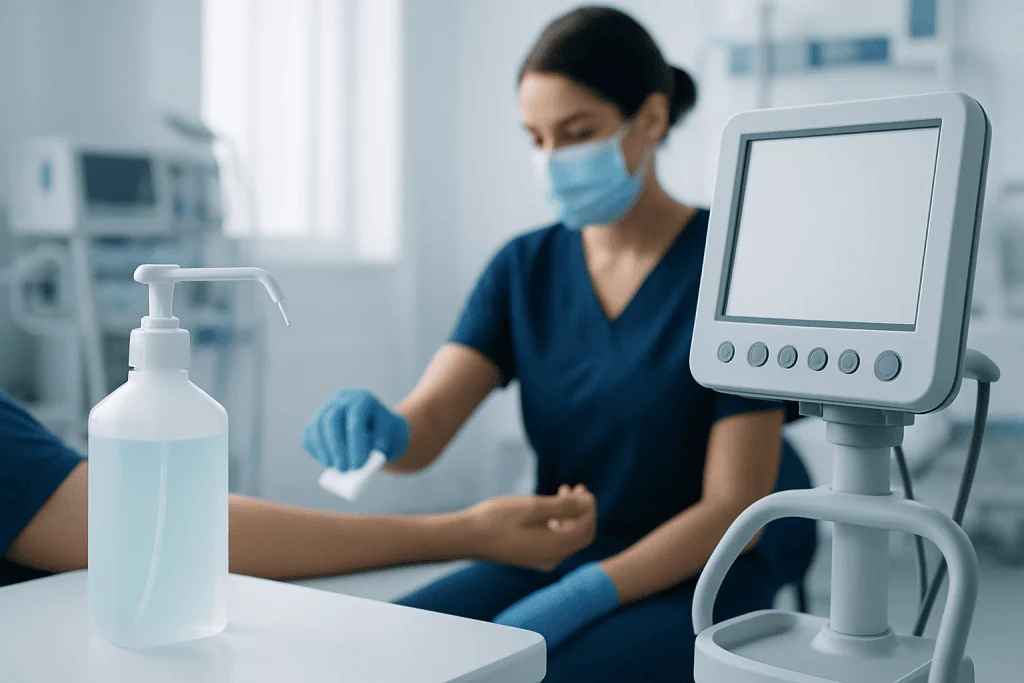
Antiseptics work by damaging or suppressing bacteria, viruses, fungi, or other microorganisms on tissue. Some break down cell membranes, some interfere with proteins, and others alter the local environment so germs are less able to survive. No single antiseptic is ideal for every purpose, which is why hospitals and clinics use different agents for different situations.
Common categories include alcohol-based antiseptics, chlorhexidine, povidone-iodine, hydrogen peroxide, and quaternary ammonium compounds in selected formulations. Some are preferred for rapid skin preparation before injections or surgery, while others are used in mouth rinses, hand rubs, or limited first-aid applications.
- Alcohols: often used in hand rubs and skin preparation because they act quickly.
- Chlorhexidine: commonly used in healthcare settings for skin cleansing before procedures.
- Povidone-iodine: a broad-spectrum option used on skin and sometimes mucosal areas, depending on the formulation.
- Hydrogen peroxide: has mild antiseptic action but may also irritate tissue if overused.
- Other specialty antiseptics: may be used in oral care, eye care, or wound care under professional guidance.
The choice of antiseptic matters because some products can sting, dry the skin, trigger allergic reactions, or be unsuitable for deep wounds, large burns, or delicate areas such as the eyes. Reading the label and following medical advice are important, especially for infants, pregnant patients, and people with thyroid disease, eczema, or a history of skin sensitivity.
Common uses in daily life and medical care

In daily life, antiseptics are most often used in first aid for small cuts, abrasions, and minor superficial burns after the area has been gently cleaned. They are also widely used as hand antiseptics, especially when soap and water are not readily available. In these situations, antiseptics can lower the number of germs on the skin and reduce the chance of contamination.
In medical care, antiseptics play a larger role. They are used to prepare the skin before blood tests, injections, intravenous line placement, wound suturing, and surgery. This helps reduce the number of organisms on the skin that could otherwise enter the body during a procedure.
Some antiseptic products are intended for the mouth or throat, while others are made for vaginal, urinary, or dermatologic use under supervision. Not all of these uses are interchangeable, and products should only be used as directed for the specific body site.
Antiseptics can also be part of care for skin problems that increase infection risk, although they are not the main treatment for every skin disease. If there is concern about ongoing redness, drainage, or an inflamed rash, a clinician may also assess for conditions such as dermatitis or more significant skin infection rather than relying on repeated antiseptic use alone.
Antiseptic vs disinfectant, antibiotic, and sterilization
Many people use these terms as if they mean the same thing, but they describe different approaches. An antiseptic is used on living tissue. A disinfectant is used on non-living surfaces. Sterilization is a more intensive process that destroys all forms of microbial life on instruments or equipment.
Antibiotics are different again. They are medicines used to treat bacterial infections in or on the body and may be taken by mouth, applied topically, or given by injection depending on the infection. Antiseptics can help prevent infection or reduce local contamination, but they do not replace antibiotics when a true infection is present.
This distinction matters in home care. Applying a strong surface disinfectant to a cut can injure tissue, while using a skin antiseptic on a countertop may not adequately disinfect the surface. Safe use depends on matching the product to the purpose.
For wounds that are deeper, more painful, or showing signs of established infection, medical evaluation may be needed. In some cases, treatment goes beyond first aid and may involve wound cleaning, drainage, dressing changes, or a targeted wound care plan.
Safe use on minor wounds and skin
For a minor cut or scrape, the first step is usually gentle cleaning with clean running water to remove dirt and debris. Mild soap can be used on the surrounding skin. After the area is cleaned, a suitable antiseptic may be applied if recommended by the product instructions or a clinician, followed by a clean dressing when appropriate.
More antiseptic is not necessarily better. Repeated application, harsh scrubbing, or combining several products can irritate tissue and may slow healing. Some modern wound-care approaches place more emphasis on gentle cleansing and moisture-balanced dressings than on frequent use of strong antiseptic solutions for every minor injury.
Special care is needed around the eyes, inside the ears, and on large areas of damaged skin. Products intended for intact skin may be unsuitable for mucous membranes, deep punctures, animal bites, or heavily contaminated wounds. People should also avoid using products past their expiry date or transferring them into unlabelled containers.
If there is significant bleeding, spreading redness, pus, fever, severe pain, or concern about a deeper injury, self-treatment should stop and medical advice should be sought. Ongoing symptoms may also warrant evaluation for a skin or soft tissue infection that needs specific treatment.
Risks, side effects, and who should be cautious
Although antiseptics are widely used, they can cause side effects. The most common are skin dryness, stinging, irritation, redness, and contact dermatitis. Less commonly, some people may have a true allergic reaction. If a rash worsens, swelling develops, or breathing symptoms occur after use, urgent medical attention is needed.
Certain ingredients require extra caution. Iodine-based products may not be suitable for everyone, particularly when used repeatedly or over large areas. Alcohol-based preparations are flammable and should be kept away from heat or open flames until fully dry. Hydrogen peroxide can damage healthy tissue if used excessively.
Children, older adults, and people with chronic skin disease may be more prone to irritation. Those with eczema, fragile skin, poor circulation, diabetes, or reduced sensation should be especially careful with self-care of wounds because small injuries can become more complicated without obvious warning signs.
People with recurring sores, delayed healing, or wounds on the feet or lower legs may benefit from professional assessment rather than repeated trial-and-error with over-the-counter products. Depending on the situation, a doctor may recommend dressings, prescription therapy, or input from specialists in dermatology or wound management.
When to seek medical care
Medical care is advisable if a wound is deep, gaping, caused by a bite, contaminated with dirt or metal, or associated with heavy bleeding that does not settle with pressure. Help is also important for burns larger than a small superficial area, puncture wounds, injuries near the eyes, or cuts that may need stitches.
A doctor should also assess signs that suggest infection may already be developing. These include increasing redness, warmth, swelling, pus, bad odor, worsening pain, red streaking, or fever. In such situations, antiseptic alone may not be enough.
People with diabetes, poor blood flow, weakened immunity, or ongoing skin disease should have a lower threshold for seeking care because healing can be slower and complications can develop more easily. Persistent wounds deserve timely review, especially on the feet, lower legs, or pressure-prone areas.
In more complex cases, assessment may include cleaning and dressing the wound, checking tetanus status, and deciding whether imaging, antibiotics, or minor procedures are necessary. If specialist treatment is needed, Acibadem International’s multidisciplinary teams in JCI-accredited hospitals evaluate and treat international patients, including support from services such as infectious diseases when infection is a concern.
Frequently asked questions
What is an antiseptic?
An antiseptic is a substance applied to living tissue, such as skin, to reduce germs and help prevent infection. It is commonly used for minor wounds, hand hygiene, and skin preparation before medical procedures.
What is the difference between an antiseptic and a disinfectant?
An antiseptic is made for use on the body, while a disinfectant is designed for non-living surfaces and objects. Because disinfectants can be too harsh for skin, they should not be used as a substitute for antiseptics.
Should every minor cut be treated with an antiseptic?
Not always. Gentle cleaning with running water is the first step for most minor cuts and scrapes, and some wounds may heal well with simple cleaning and a clean dressing. An antiseptic may be helpful in selected cases, but overuse can irritate tissue.
Can antiseptics treat an existing infection?
Antiseptics can reduce the number of germs on the skin or in a superficial wound, but they do not replace medical treatment for a true infection. If there is spreading redness, pus, fever, or worsening pain, a doctor should evaluate the area.
Are antiseptics safe for children?
Some antiseptics can be used in children, but the choice depends on the child’s age, the body area, and the product’s instructions. Because children’s skin can be more sensitive, it is best to use age-appropriate products and ask a healthcare professional when unsure.
Can antiseptics slow wound healing?
Yes, some antiseptics may irritate healthy tissue if used too often or in high concentration. That is why modern wound care usually focuses on gentle cleaning, appropriate dressings, and selective use of antiseptics rather than repeated heavy application.
This article is for general information only and is not a substitute for professional medical advice. Please consult a qualified doctor about your individual situation.
Explore treatments in Turkey — costs, top hospitals & a free quote
JCI-accredited · board-certified surgeons · reply within 24h
Add us as a Preferred Source to see more of our trusted health content across Google Search, AI Overviews and Discover.

More from the Health Library

Refined Carbs — Explained by Medical Evidence, Not Myths

Slap Tear Shoulder: What Patients Need to Know

C4 Pre Workout — Explained by Medical Evidence, Not Myths

Cefazolin: What Patients Need to Know

L-tyrosine — Explained by Medical Evidence, Not Myths