Aqualyx — Explained by Medical Evidence, Not Myths

Aqualyx is intended for small, stubborn fat pockets, not general weight loss. Results are usually gradual and may require more than one session.
Key Takeaways
- Aqualyx is intended for small, stubborn fat pockets, not general weight loss.
- Results are usually gradual and may require more than one session.
- Temporary swelling, tenderness, bruising, and firmness in the treated area are common.
- Suitability depends on body area, skin quality, health history, and realistic expectations.
- Assessment by a qualified clinician is important to reduce risks and choose the right treatment.
Aqualyx is an injectable product used to treat selected, localized fat deposits rather than overall obesity. Medical evidence suggests it may help contour certain areas in carefully chosen patients, but results vary and side effects, limitations, and aftercare need to be understood clearly.
What Aqualyx Is and What It Is Not
Aqualyx is an injectable treatment designed to reduce localized fat deposits in selected body areas. In simple terms, it is used for body contouring rather than for weight loss. The goal is usually to improve the shape of an area that has not responded as hoped to diet and exercise, such as under the chin or around small pockets of body fat.
Many online discussions describe Aqualyx as a quick or simple way to “melt fat,” but the medical view is more measured. It is not a substitute for healthy lifestyle measures, and it does not treat the broader health risks associated with excess body weight. People looking for treatment of obesity may need a different approach, including structured lifestyle care or, in some cases, bariatric surgery.
Aqualyx is best understood as one option within non-surgical body contouring. Whether it is appropriate depends on the body area, the amount of fat present, skin elasticity, and a person’s medical history. A careful consultation helps distinguish who may benefit from Aqualyx and who may be better suited to another treatment plan.
How Aqualyx Works
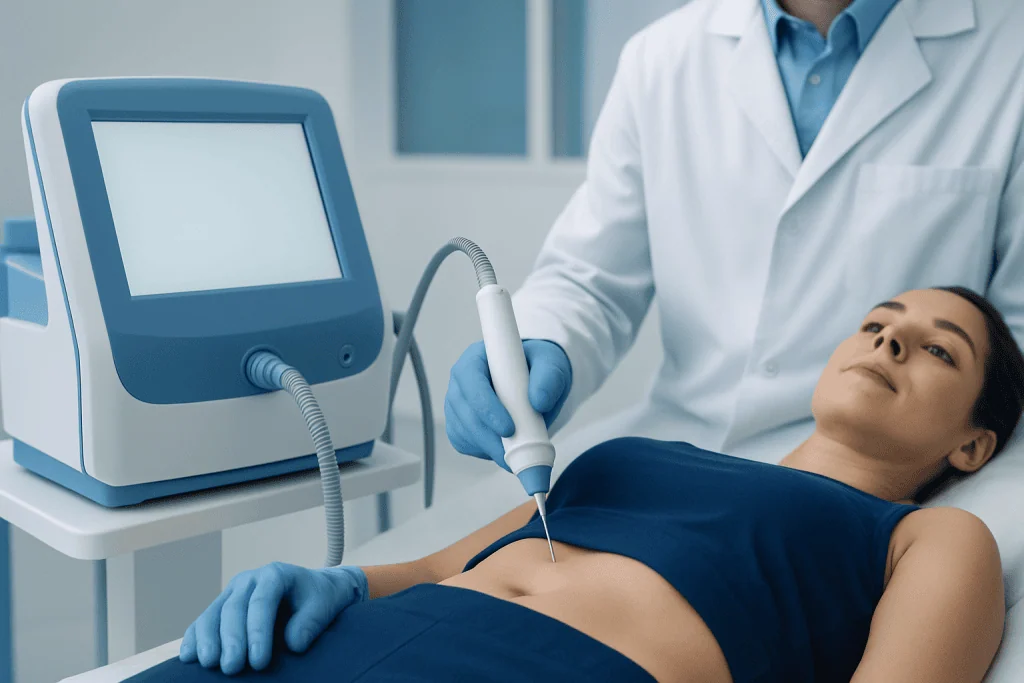
Aqualyx is used with the intention of breaking down fat cells in a targeted area. After injection into the fatty tissue, the treated fat is gradually processed by the body over time. This is why results are not immediate; changes usually develop progressively over weeks rather than days.
In clinical practice, the treatment is commonly used for small, well-defined areas. Examples may include the chin, jawline region, abdomen, flanks, inner knees, or other limited pockets of fat. However, not every area is appropriate in every person, and the technique used can influence both results and side effects.
Because body contour depends on more than fat alone, Aqualyx cannot correct loose skin, muscle separation, or major changes in body shape. For some people, the main concern may be excess skin or a more complex contour issue, in which case a different procedure may be more suitable. A personalized assessment is important before deciding on treatment.
Who May Be a Good Candidate

The most suitable candidates are usually adults near a stable weight who have small, stubborn fat deposits and realistic expectations. Aqualyx is generally considered when a person wants modest contour improvement without surgery and understands that multiple sessions may be needed.
Good skin quality can matter as much as the amount of fat. If the skin is already loose or the area lacks tone, reducing fat alone may not create the desired appearance. In that situation, a clinician may discuss other options, including non-surgical treatments, surgery, or simply lifestyle-based management depending on the goal.
People may be less suitable if they are pregnant, breastfeeding, have certain active skin problems, significant uncontrolled medical conditions, or allergies relevant to the product or treatment plan. A detailed medical history is essential. Individuals with concerns related to excess weight as a health condition may need evaluation for obesity rather than a purely cosmetic fat-reduction approach.
What the Evidence Says About Results
Evidence for Aqualyx and similar fat-dissolving injections suggests that some patients can achieve visible improvement in localized fat reduction, especially when the treated area is small and carefully selected. However, the quality of evidence is not the same as for many long-established medical treatments, and results can vary widely between individuals.
From a practical perspective, this means Aqualyx should be approached with realistic expectations. It may provide a modest contour change rather than a dramatic transformation. The number of sessions needed depends on the treatment area, baseline fat thickness, and how the body responds. Final outcomes usually become clearer only after swelling has settled and the body has had time to process the treated tissue.
Photographs, measurements, and clinical examination are often more helpful than relying on myths or social media claims. If a person is seeking more substantial change in areas such as the abdomen after major weight fluctuation, options like abdominoplasty may sometimes be discussed instead, depending on the problem being treated and the person’s goals.
Possible Side Effects, Risks, and Limitations
Common side effects after Aqualyx include swelling, redness, tenderness, bruising, warmth, temporary numbness, and firmness in the treated area. These effects are usually expected and often settle gradually. Discomfort level varies by body area and by individual sensitivity.
As with any injection-based procedure, there are also less common but important risks. These may include infection, prolonged inflammation, asymmetry, contour irregularity, skin changes, or an unsatisfactory cosmetic result. Rarely, damage to nearby structures can occur if the treatment is not correctly planned or delivered. This is one reason why proper training, anatomy knowledge, and patient selection matter.
Aqualyx also has clear limitations. It is not designed to treat obesity, cellulite, or loose skin, and it cannot replace lifestyle measures. If a person’s concern is primarily excess skin or a larger volume of fat, another treatment may be more appropriate, including liposuction in selected cases after specialist assessment.
Assessment, Treatment Process, and Aftercare
Before treatment, a clinician typically reviews medical history, current medications, allergies, previous procedures, and the person’s goals. The area is examined to assess fat thickness, skin quality, symmetry, and whether Aqualyx is likely to provide meaningful benefit. This step is important because a careful “no” can be safer and more helpful than proceeding with an unsuitable treatment.
The treatment itself involves marking the area and delivering injections into the fatty layer using an appropriate technique. The exact method depends on the body area and clinician preference. More than one treatment session is often recommended, spaced over time so the area can recover and the response can be judged.
Aftercare advice usually includes protecting the treated area, following activity guidance, and monitoring expected swelling and bruising. Patients are generally advised to contact their clinician if symptoms seem excessive, worsening, or unusual. Near the end of the care journey, international patients may value support from experienced teams; Acibadem International’s multidisciplinary specialists and JCI-accredited hospitals diagnose and treat body contour concerns for international patients when further assessment is needed.
When to Seek Medical Care
Most post-treatment effects are mild to moderate and improve with time, but certain symptoms should prompt medical advice. A person should seek medical care if there is severe pain, rapidly increasing swelling, spreading redness, fever, drainage from the injection site, significant skin color change, or symptoms that are not improving as expected.
Medical review is also sensible if there is marked asymmetry, a persistent hard lump, prolonged numbness, or concern about an allergic reaction. Early assessment can help identify whether symptoms are part of normal recovery or whether treatment is needed for a complication.
Even before having Aqualyx, medical input is important when there is uncertainty about what is causing the body contour change. For example, a swelling or lump should not automatically be assumed to be fat. A clinician can help rule out other causes and recommend the most appropriate next step.
Frequently asked questions
Is Aqualyx a weight-loss treatment?
No. Aqualyx is used for localized fat reduction and body contouring, not for overall weight loss or treatment of obesity. People with broader weight-related health concerns usually need a more comprehensive medical approach.
How long does it take to see results from Aqualyx?
Results are usually gradual rather than immediate. Changes often become more noticeable over several weeks as swelling settles and the body processes the treated fat. Some people need multiple sessions for the desired effect.
Are Aqualyx injections painful?
Discomfort varies by person and by treatment area. Tenderness, swelling, and a stinging or sore feeling afterward are commonly reported. A qualified clinician can explain what to expect and how recovery is usually managed.
What areas can Aqualyx be used for?
It is generally used for small, localized fat deposits in selected areas such as under the chin or limited body fat pockets. Suitability depends on anatomy, skin quality, and the amount of fat present. Not every area is appropriate for every person.
Is Aqualyx permanent?
Treated fat cells may be reduced, but long-term appearance still depends on body weight, lifestyle, and natural body changes over time. If weight increases, remaining fat cells in the area or elsewhere can enlarge. For this reason, stable habits are important after treatment.
Who should avoid Aqualyx?
Aqualyx may not be suitable during pregnancy or breastfeeding, in some active skin conditions, or when certain medical issues are not well controlled. It may also be inappropriate if the main concern is loose skin rather than fat. A full medical consultation is the safest way to decide.
References
- National Health Service
- American Society of Plastic Surgeons
- British Association of Aesthetic Plastic Surgeons
- National Institute for Health and Care Excellence
- U.S. Food and Drug Administration
This article is for general information only and is not a substitute for professional medical advice. Please consult a qualified doctor about your individual situation.
Medical weight-loss options in Turkey — costs & eligibility
JCI-accredited · board-certified surgeons · reply within 24h
Add us as a Preferred Source to see more of our trusted health content across Google Search, AI Overviews and Discover.
Check your numbers in seconds
BMI, calories, due date, blood pressure and 30+ more clinical calculators — free, instant, doctor-reviewed ranges.

More from the Health Library

Red streaks in the back of throat: Symptoms, Causes, and Treatment — Complete Patient Guide

Popping Blisters: What Patients Need to Know

Prebiotic Fiber: What Patients Need to Know

Butterfly Stretch: A Complete Medical Overview

Mais Syrup: An Evidence-Based Guide for Patients