Arm Sling: What Patients Need to Know

An arm sling helps support the arm and reduce movement while tissues heal. A sling should hold the elbow at about a right angle and keep the hand slightly elevated above the elbow.
Key Takeaways
- An arm sling helps support the arm and reduce movement while tissues heal.
- A sling should hold the elbow at about a right angle and keep the hand slightly elevated above the elbow.
- Too much sling use can contribute to stiffness, so follow a clinician’s advice on timing and exercises.
- Worsening pain, numbness, swelling, skin color changes, or trouble moving the fingers should be assessed promptly.
- A sling treats symptoms and protects healing, but it does not replace evaluation of the underlying injury.
An arm sling is a simple support device that helps protect the arm, shoulder, or collarbone after injury, surgery, or strain. It can reduce pain and limit movement, but it works best when it fits properly and is used for the right reason and length of time.
Overview: What an Arm Sling Does
An arm sling is a fabric support worn around the neck to hold the arm close to the body. It is commonly used after sprains, fractures, shoulder injuries, elbow injuries, and some surgeries. The main goals are to reduce strain on injured tissues, improve comfort, and help prevent movements that may delay healing.
For many patients, an arm sling provides short-term support while a clinician determines the extent of the injury or while recovery is underway. It can be used alone for minor injuries or as part of a broader treatment plan that may include imaging, medication, splinting, physical therapy, or surgery.
Although slings are widely available, they are not one-size-fits-all in a medical sense. The best type and duration depend on the injury, age, activity level, and whether nerves, blood vessels, bones, or soft tissues are involved. This is why a sling should be viewed as a helpful tool rather than a complete diagnosis or treatment by itself.
When an Arm Sling May Be Used
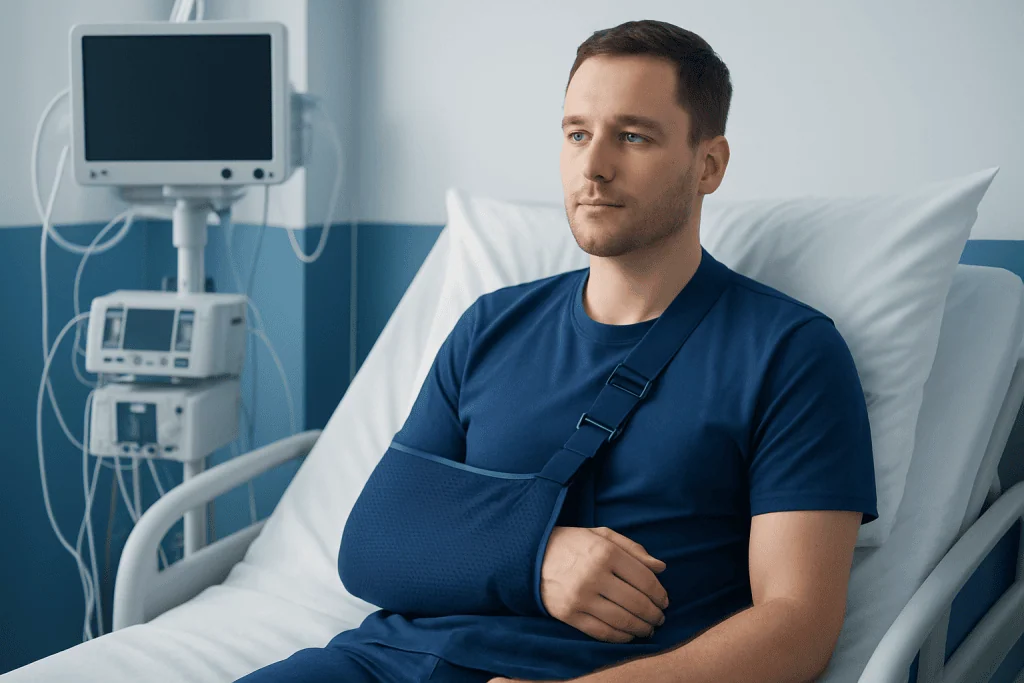
An arm sling may be recommended for injuries involving the shoulder, upper arm, elbow, forearm, wrist, or collarbone. Common examples include strains, sprains, simple fractures, shoulder instability, and recovery after orthopedic procedures. It may also be used temporarily after a fall or sports injury until a doctor confirms what has been damaged.
Some conditions need more than a basic sling. For example, a significant shoulder injury may require structured assessment and treatment, especially if there is loss of function or repeat dislocation. In these situations, the underlying problem may relate to shoulder dislocation or another joint injury rather than a simple soft-tissue strain.
Doctors may also use a sling after procedures to protect repairs while early healing takes place. Depending on the operation, additional immobilizers or braces may be chosen instead of a standard sling. Patients recovering from a fracture or joint surgery may eventually transition from support to guided motion and strengthening under specialist supervision.
- Common reasons for use include fractures, sprains, strains, shoulder injuries, and postoperative recovery.
- A sling may be temporary while tests such as X-rays clarify the diagnosis.
- Not every arm injury should be immobilized for the same length of time.
How an Arm Sling Should Fit

A properly fitted arm sling should support the forearm from wrist to elbow while keeping the elbow bent at roughly 90 degrees, unless a clinician advises otherwise. The hand should usually sit slightly higher than the elbow. This position helps limit swelling and reduces pull on the shoulder and upper arm.
The neck strap should be snug enough to hold the arm securely but not so tight that it causes neck pain or pulls the shoulder upward. The arm should rest comfortably against the body, and the fingers should remain visible so circulation can be monitored. If the hand hangs low, the sling may not provide enough support.
Patients should be able to move their fingers freely. A sling that causes numbness, tingling, coldness, increasing swelling, or skin color changes may be too tight or may signal a more serious problem. Padding the strap at the neck and adjusting the sling while standing upright can improve comfort, but persistent discomfort should be reviewed by a healthcare professional.
Common Mistakes and Everyday Tips
One of the most common mistakes is wearing an arm sling for longer than advised. While rest is important, prolonged immobilization can lead to stiffness in the shoulder, elbow, wrist, or hand. This is particularly important for older adults and for patients with shoulder injuries, because joints can become difficult to move if they remain still for too long.
Another mistake is using a sling without checking for hidden injury. A person may feel only moderate pain at first, yet still have a fracture, tendon injury, or joint displacement. Persistent pain after a fall, inability to lift the arm, or obvious deformity should not be dismissed. Evaluation may include examination and imaging, such as MRI when soft-tissue damage is suspected or X-ray when a fracture is possible.
Day-to-day comfort also matters. Clothing with loose sleeves can make dressing easier. Some people benefit from sleeping partly upright for the first few days, especially after shoulder injury or surgery. It is also helpful to keep the skin clean and dry under the sling and to check the neck, elbow, and wrist for pressure areas.
- Do not let the hand hang lower than the elbow unless instructed otherwise.
- Move the fingers regularly if the clinician says this is safe.
- Remove the sling only as advised for washing or exercises.
- Avoid driving until a doctor confirms it is safe.
Diagnosis: Why the Underlying Cause Matters
An arm sling can make an injury feel better, but the next step is understanding why the pain or weakness happened. Diagnosis starts with a medical history and physical examination. A doctor may ask how the injury occurred, whether there was a popping sensation, whether the arm can be moved, and whether there is numbness or tingling.
Imaging is often used when a fracture, dislocation, or internal soft-tissue injury is possible. X-rays are commonly the first test for suspected bone injury or joint displacement. Ultrasound or MRI may help assess muscles, tendons, ligaments, and related structures if symptoms continue or if surgery is being considered.
Some patients with severe pain, instability, or repeated injuries may need orthopedic review. Conditions affecting the shoulder joint sometimes overlap with rotator cuff tears or other structural problems, and management differs depending on the diagnosis. In complex cases, specialists may recommend shoulder surgery or a structured rehabilitation plan instead of sling use alone.
Treatment and Recovery After Sling Use
Treatment depends on the injury that led to the sling. Minor strains may improve with rest, ice, short-term support, and gradual return to movement. Fractures or dislocations may need reduction, casting, bracing, or surgery. After an operation, sling use is usually part of a step-by-step recovery plan rather than the entire treatment.
Pain relief may include simple measures such as cold packs and doctor-recommended medication. Patients should use medicine only as directed by a qualified clinician, especially if they have stomach, kidney, liver, or heart conditions. If the injury affects strength or mobility, physiotherapy is often important to restore range of motion, posture, and muscle control after the initial healing period.
Recovery times vary widely. A mild soft-tissue injury may improve within days to weeks, while fractures, tendon injuries, or surgical recovery can take much longer. What matters most is following individual advice on when to rest, when to start motion, and when to progress to strengthening. Near the end of treatment, some patients may benefit from physical therapy and rehabilitation to regain comfortable daily function.
Prevention and Self-care
Not every injury can be prevented, but some practical steps can lower risk. Good posture, safe lifting technique, regular exercise, and appropriate protective equipment during sports can reduce strain on the shoulder and arm. For older adults, fall prevention is especially important and may include supportive footwear, home safety adjustments, and vision checks.
Self-care with a sling should balance protection with safe movement. Many clinicians recommend gentle finger, wrist, or elbow movement, depending on the injury, to reduce swelling and stiffness. However, exercises should only be done if they have been specifically permitted, because some fractures and repairs require stricter protection in the early phase.
Patients should also watch for signs that the sling itself is causing problems. Rubbing at the neck, skin breakdown, increasing hand swelling, or posture strain can often be improved by refitting the sling, using padding, or reviewing the technique with a healthcare professional. If there is uncertainty, it is safer to ask than to continue using an ill-fitting support.
When to Seek Medical Care
Medical assessment is advisable if arm or shoulder pain follows a fall, blow, twisting injury, or sudden pull and does not improve quickly. Prompt care is also important when there is visible deformity, marked swelling, inability to move the arm, or severe tenderness over a bone or joint. These features can suggest a fracture, dislocation, or significant soft-tissue injury.
Urgent medical care is needed if the hand becomes cold, pale, blue, numb, or increasingly swollen, or if the person cannot move the fingers normally. These signs may indicate problems with circulation or nerve function. Fever, worsening redness, or drainage after surgery should also be evaluated without delay.
Even when symptoms seem mild, persistent pain or repeated instability deserves review, especially in active adults, children, and older patients. A careful diagnosis can help prevent long-term stiffness or recurrent injury. For international patients who need coordinated assessment and recovery planning, Acibadem International’s multidisciplinary specialists in JCI-accredited hospitals diagnose and treat upper-limb injuries and related conditions.
Frequently asked questions
What is an arm sling used for?
An arm sling is used to support the arm and reduce movement after injury or surgery. It can help relieve pain and protect healing tissues while the underlying problem is being treated.
How tight should an arm sling be?
It should feel secure but not restrictive. The elbow is usually bent, the forearm is supported, and the fingers remain warm, pink, and easy to move. If there is numbness, tingling, or increasing swelling, the fit may need adjustment and medical review.
Can a person sleep with an arm sling on?
Many patients are told to sleep with the sling on, especially during the early phase after injury or surgery. The exact advice depends on the diagnosis, so it is best to follow the treating clinician’s instructions. Sleeping partly upright may improve comfort for some shoulder injuries.
How long should an arm sling be worn?
The correct length of use varies a great deal. Some minor injuries need only short-term support, while fractures or surgery may require longer protection. Wearing a sling for too long without guidance can contribute to stiffness.
Is it normal to have hand swelling while using an arm sling?
Mild swelling can happen, especially soon after an injury. However, the hand should not become increasingly swollen, cold, pale, blue, or numb. If those changes occur, the sling fit and the injury itself should be assessed promptly.
Can an arm sling heal an injury by itself?
A sling does not heal the injury on its own. It supports the arm and helps protect the area while the body heals and while other treatment, such as rest, medication, physiotherapy, or surgery, is considered if needed.
This article is for general information only and is not a substitute for professional medical advice. Please consult a qualified doctor about your individual situation.
Joint and spine care in Turkey — expert assessment & treatment
JCI-accredited · board-certified surgeons · reply within 24h
Add us as a Preferred Source to see more of our trusted health content across Google Search, AI Overviews and Discover.

More from the Health Library

Hernia: A Complete Medical Overview

Topamax — Explained by Medical Evidence, Not Myths

White Pimple on Tonsil: An Evidence-Based Guide for Patients

Pacemaker: What Patients Need to Know

Inattentional Blindness — Explained by Medical Evidence, Not Myths