Auditory Processing Delay Treatment: How It Works, Results and What to Expect

Auditory processing difficulties affect how the brain interprets sound, not simply how loudly a person hears. Treatment is tailored to the person’s age, symptoms, hearing results and school, work or home needs.
Key Takeaways
- Auditory processing difficulties affect how the brain interprets sound, not simply how loudly a person hears.
- Treatment is tailored to the person’s age, symptoms, hearing results and school, work or home needs.
- Auditory training, communication strategies and noise-reduction supports can improve daily listening function.
- A standard hearing test is important because hearing loss and middle-ear problems can cause similar symptoms.
- Progress is usually gradual and is measured by practical improvements in communication, learning and participation.
- Sudden hearing changes, one-sided symptoms, severe dizziness or neurological symptoms need prompt medical assessment.
Auditory processing delay treatment is individualized support for people who hear sounds but have difficulty interpreting speech, especially in noisy settings. It commonly combines a detailed hearing evaluation, environmental changes, targeted listening strategies and care for any related learning, language or attention needs.
Overview: What Is Auditory Processing Delay Treatment?
Auditory processing delay treatment helps a person understand and use sound more effectively when the ears may detect sound normally but the brain has difficulty organizing, distinguishing or interpreting it. Treatment does not involve a single procedure or a universal cure. Instead, an audiologist and other relevant professionals identify the person’s listening challenges and build a practical plan to reduce their effect at school, work and everyday life.
The term “auditory processing delay” is often used to describe difficulties linked to central auditory processing disorder (CAPD), also called auditory processing disorder. A person may struggle to follow rapid speech, understand conversations in background noise, tell similar sounds apart, remember spoken instructions or locate where a sound is coming from. These difficulties can overlap with hearing loss, language differences, attention conditions and learning challenges, so careful assessment is essential.
Effective care usually combines three approaches: improving the listening environment, teaching compensatory communication strategies and using targeted auditory or language-based therapy where appropriate. The goal is not to make someone “try harder” to listen; it is to make communication more accessible and support meaningful daily participation.
How Treatment Works
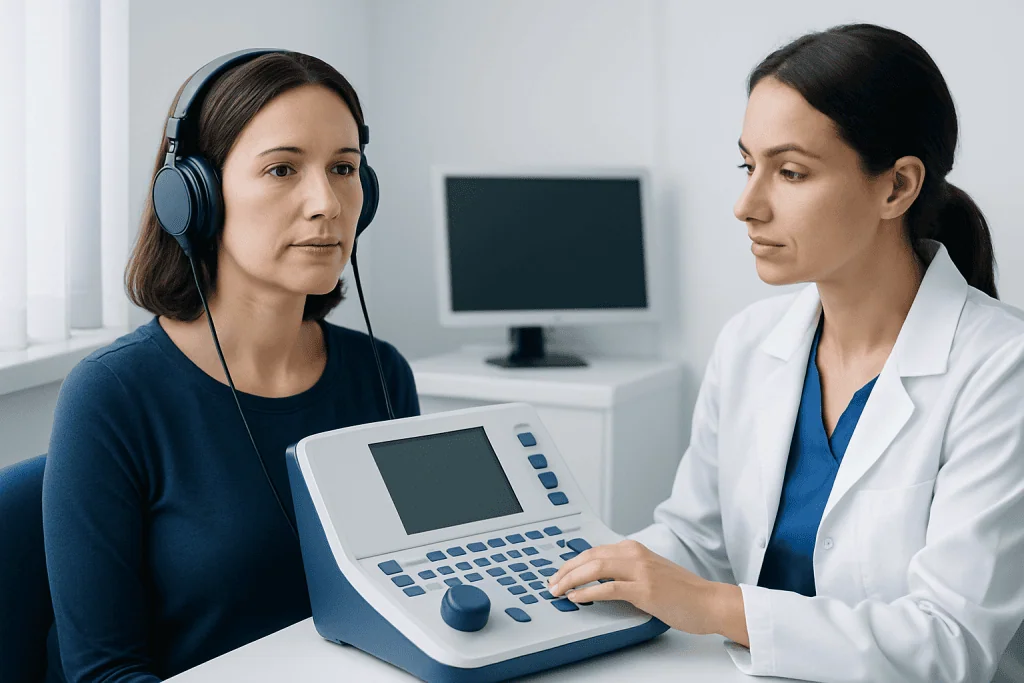
Auditory processing delay treatment works by addressing the real-world situations in which listening breaks down. For some people, the most useful intervention is reducing competing noise and improving the clarity of speech. For others, structured activities that practice sound discrimination, listening in noise, auditory memory or following spoken directions may be included as part of a broader therapy plan.
Environmental support is often a central part of treatment. Examples include sitting near the speaker, facing the person who is speaking, limiting background television or music, choosing quieter meeting places and receiving written follow-up to spoken instructions. In classrooms, helpful measures may include preferential seating, visual teaching materials, short instructions given in steps and extra time to process verbal information.
Some people benefit from hearing-assistive technology, such as a remote microphone system that sends a teacher’s or speaker’s voice more directly to a listener. An audiologist can advise whether this is appropriate after assessing hearing, listening needs and the environments where difficulties occur. Hearing aids may be considered when a coexisting hearing loss is found, but they are not a routine treatment for auditory processing difficulties in people with normal hearing.
Therapy may involve an audiologist, speech-language therapist, psychologist, educator or occupational therapist, depending on the person’s needs. Evidence for specific auditory training programs varies, and professionals should select approaches based on a clear assessment, functional goals and regular review rather than relying on one method alone.
Who May Benefit and How Assessment Is Done

Assessment may be helpful for children, teenagers or adults who consistently have difficulty understanding speech despite apparently normal hearing, particularly in noisy or fast-paced settings. Concerns may emerge as trouble following classroom discussion, frequent requests for repetition, misunderstanding spoken directions, fatigue after listening or poorer performance when information is delivered verbally rather than in writing.
Before diagnosing an auditory processing disorder, clinicians need to consider other explanations. Wax buildup, middle-ear fluid, recurrent ear infections, hearing loss, sleep difficulties, anxiety, language differences, developmental stage, attention problems and learning disorders can all affect listening performance. Auditory processing concerns can coexist with these conditions, but one should not be assumed to explain the other without a full evaluation.
The process commonly begins with a medical and hearing history, examination of the ears and standard audiological testing. If suitable for the person’s age and abilities, an audiologist may then perform specialized listening tests that assess skills such as hearing speech in noise, recognizing timing patterns or distinguishing between sounds. Testing is interpreted together with reports from family members, teachers and the individual.
Young children may not yet have the developmental maturity for reliable formal central auditory tests. In those cases, clinicians may focus on hearing health, speech and language development, classroom observations and practical support, then review as the child grows. A diagnosis should guide care, not become a label that overlooks the person’s wider strengths and needs.
What to Expect: Step by Step
Step 1: Identify the listening problem. The clinician asks where and when communication is difficult, such as in busy classrooms, restaurants, group meetings or telephone calls. Clear examples help set meaningful goals, for instance following multi-step instructions or participating more confidently in group discussion.
Step 2: Check ear and hearing health. An ear examination and hearing tests help rule out or identify conditions requiring separate treatment. If hearing loss, ear disease or another concern is found, it is addressed or referred appropriately before conclusions are drawn about auditory processing.
Step 3: Create an individualized support plan. The team may recommend environmental modifications, assistive listening technology, auditory training, speech-language support, educational accommodations or strategies for attention and organization. For children, collaboration with parents and school staff is important so that support is consistent across settings.
Step 4: Practice, review and adjust. Treatment is typically delivered over weeks to months, depending on the goals and interventions used. Follow-up reviews consider whether the person understands speech more easily, needs fewer repetitions, manages noise better or participates more fully. If progress is limited, the plan should be reconsidered and other contributing factors explored.
Benefits, Limits and Possible Risks
The potential benefits of auditory processing delay treatment are practical rather than instant. With the right combination of supports, a person may better understand spoken information, feel less exhausted after listening, communicate more effectively and participate with greater confidence in education, work and social settings. Families and teachers may also find that clearer communication routines reduce frustration.
Results vary because auditory processing difficulties are not identical from one person to another. Improvement may come mainly from changing the environment and using communication strategies, while others benefit from structured therapy or assistive technology. Treatment is most useful when goals are specific, such as improving comprehension in a classroom or reducing misunderstandings during meetings.
Most noninvasive interventions carry little physical risk. However, poorly matched technology can be uncomfortable or unhelpful, and time-intensive programs may create stress if expectations are unrealistic. Some commercial programs make broad claims that are not supported for every individual, so it is sensible to discuss the evidence, cost, time commitment and how success will be measured with a qualified clinician.
A careful plan also avoids delaying treatment for other conditions. If testing suggests hearing loss, language disorder, attention difficulties, sleep problems or emotional distress, these should be assessed and managed alongside listening concerns. Coordinated care is often more helpful than treating auditory processing in isolation.
Recovery Timeline and Everyday Self-Care
There is no recovery period in the usual surgical sense because auditory processing delay treatment is generally noninvasive. After an assessment, some environmental adjustments can be started immediately, such as reducing background noise, gaining the listener’s attention before speaking and providing key instructions in writing. The person may notice early benefits when communication becomes clearer and more predictable.
Skill-based therapy and school or workplace adjustments take longer to evaluate. Many people need repeated practice and feedback over time before strategies become routine. Progress is best judged by changes in everyday function rather than by one test result alone: fewer missed instructions, greater ease in conversations, less listening fatigue or improved participation may all be meaningful signs.
At home, supportive communication includes speaking clearly at a natural pace, using short segments for important information, pausing for questions and confirming understanding without blame. Visual supports such as written lists, calendars, captions and diagrams can reduce the amount of information that must be held in auditory memory.
Good sleep, regular routines and attention to stress can also support listening because fatigue and overload make speech harder to process. These measures do not replace professional assessment, but they can make day-to-day communication easier while a treatment plan is being developed or reviewed.
When to Seek Medical Care
Arrange a hearing or medical assessment if listening difficulties are persistent, affect school, work or relationships, or occur alongside speech and language concerns. Parents may wish to seek advice when a child often seems not to listen, struggles markedly in noisy environments, cannot follow age-appropriate spoken directions or has recurring ear problems. Adults should also be assessed if communication becomes increasingly difficult or interferes with daily activities.
Prompt medical care is important for sudden hearing loss, a rapid change in hearing, severe ear pain, ear discharge, new one-sided hearing symptoms, intense dizziness, facial weakness, severe headache or other neurological symptoms. These signs may have causes that need urgent evaluation and should not be attributed to auditory processing difficulties alone.
An ear, nose and throat specialist, audiologist or primary care clinician can help determine the right starting point. Acibadem International’s multidisciplinary specialists and JCI-accredited hospitals can assess hearing and related communication concerns for international patients, coordinating referrals when speech-language, neurological, developmental or educational input is needed.
Frequently asked questions
Can auditory processing delay be cured?
Auditory processing delay does not usually have a single cure or one treatment that works for everyone. Many people improve their everyday listening through individualized strategies, environmental supports, therapy and management of related conditions. The focus is on reducing communication barriers and improving function.
Is auditory processing delay the same as hearing loss?
No. Hearing loss involves reduced ability to detect sound, while auditory processing difficulties involve how the brain interprets sound information. The two can occur together, which is why a complete hearing assessment is an important first step.
What professional treats auditory processing difficulties?
An audiologist commonly leads specialized auditory assessment. Depending on the findings, care may also involve an ear, nose and throat specialist, speech-language therapist, psychologist, pediatrician, neurologist, educator or occupational therapist. Collaboration helps address all factors affecting communication.
Do auditory training programs work?
Some targeted training may help selected listening skills, especially when it is matched to assessed needs and used alongside practical support. Evidence differs between programs and individuals, so it is important to ask how progress will be measured. A clinician can help determine whether a particular program is appropriate.
Can adults receive auditory processing delay treatment?
Yes. Adults can be assessed when they have ongoing difficulty understanding speech, particularly in noise, despite normal or near-normal basic hearing tests. Treatment may focus on workplace strategies, communication techniques, assistive listening options and management of coexisting hearing or health issues.
How can schools support a child with auditory processing difficulties?
Helpful supports may include seating near the teacher, reducing background noise, providing written instructions, breaking tasks into smaller steps and checking understanding. A remote microphone system may be considered for some children after audiological assessment. Support plans should be individualized and reviewed as the child’s needs change.
References
- American Speech-Language-Hearing Association
- American Academy of Audiology
- National Institute on Deafness and Other Communication Disorders
- American Academy of Pediatrics
This article is for general information only and is not a substitute for professional medical advice. Please consult a qualified doctor about your individual situation.
Explore treatments in Turkey — costs, top hospitals & a free quote
JCI-accredited · board-certified surgeons · reply within 24h
Add us as a Preferred Source to see more of our trusted health content across Google Search, AI Overviews and Discover.