Baby Botox: What Patients Need to Know

Baby Botox refers to a low-dose, customized botulinum toxin treatment rather than a separate product. It may soften dynamic lines while retaining more natural facial expression.
Key Takeaways
- Baby Botox refers to a low-dose, customized botulinum toxin treatment rather than a separate product.
- It may soften dynamic lines while retaining more natural facial expression.
- Results are temporary and commonly develop gradually over several days to two weeks.
- Suitable candidates need a clinical assessment, including a review of medical history, goals and facial anatomy.
- Botulinum toxin injections should be performed by a trained, licensed healthcare professional in an appropriate medical setting.
Baby Botox is an informal term for a conservative approach to botulinum toxin injections, using lower doses and targeted placement to soften early expression lines without aiming to eliminate facial movement. It is not a different medication or a permanent procedure, and safe results depend on an individualized assessment by a qualified medical professional.
What Is Baby Botox?
Baby Botox is a non-medical, commonly used term for a subtle approach to cosmetic botulinum toxin treatment. It generally involves using smaller doses than might be used for stronger wrinkle reduction, with injections placed selectively in muscles that create expression lines. The aim is usually to soften lines and prevent them from becoming more noticeable while allowing the face to retain a natural range of movement.
Despite its name, Baby Botox is not intended for babies or children. It does not describe a unique formulation, and it may involve products containing botulinum toxin type A that have been approved for cosmetic or medical uses in a given country. “Botox” is a brand name, but the term is often used broadly when people refer to botulinum toxin injections.
The best treatment plan is not defined only by the number of units used. Facial muscle strength, anatomy, skin quality, previous treatments and the person’s desired degree of movement all matter. A low dose in one person may have little effect in another, so treatment should be individualized rather than based on a standard social-media trend.
How Baby Botox Works and What It Can Treat
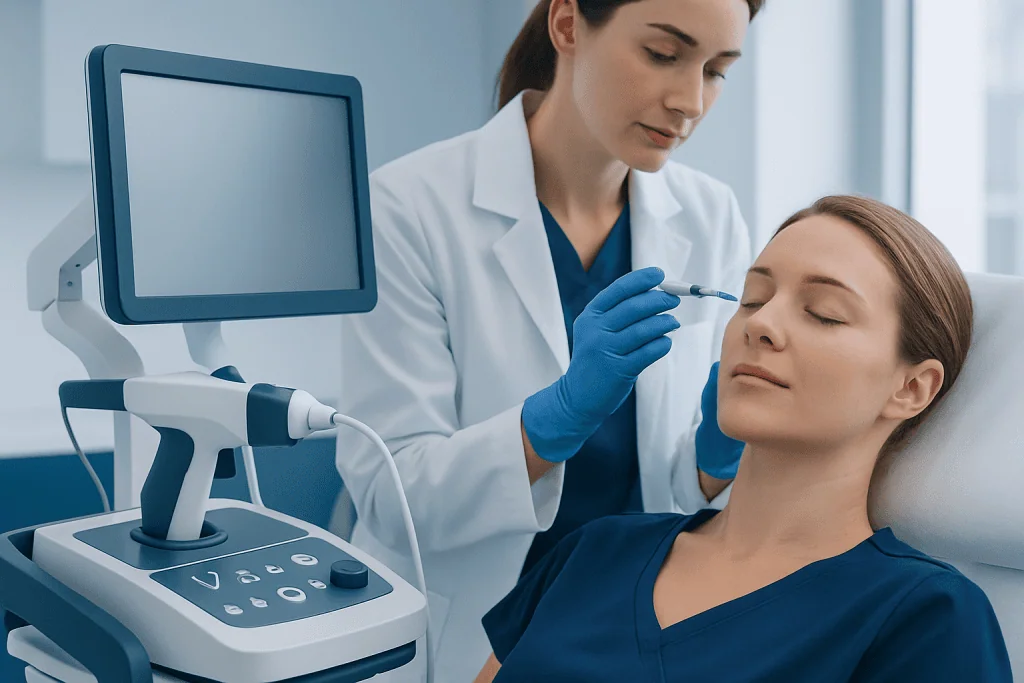
Botulinum toxin works by temporarily reducing signals between a nerve and the injected muscle. When a treated muscle contracts less strongly, the overlying skin may crease less during facial expressions. This is why it is most effective for dynamic lines: lines that appear or deepen with frowning, smiling, squinting or raising the eyebrows.
In a conservative treatment plan, clinicians may use small, precise doses for early forehead lines, the vertical lines between the eyebrows, or lines at the outer corners of the eyes. Depending on the individual, it may also be considered for subtle concerns involving the nose, chin, jaw muscles or neck. However, these areas require detailed knowledge of anatomy because overly broad treatment can affect normal movement or expression.
Baby Botox does not replace treatments designed to restore lost facial volume, improve skin texture, reduce pigmentation or correct loose skin. Lines that remain visible when the face is at rest may be less responsive to botulinum toxin alone. A clinician can explain whether skin care, sun protection, resurfacing procedures, fillers, or another approach may be more appropriate for a particular concern.
What Results to Expect

Most people do not see the full effect immediately. Some change may be noticed within a few days, while the result usually becomes clearer over one to two weeks. With Baby Botox, the intended outcome is typically a softened, refreshed appearance rather than a completely smooth or still forehead. Some movement is expected and may be a desired part of the result.
The effect is temporary. For many people, results gradually wear off over several months as nerve-muscle signaling recovers. The duration varies with the product used, injection area, dose, muscle activity, metabolism and prior treatment history. A lower-dose approach may create a subtler effect and, for some people, may not last as long as a higher-dose treatment.
It is useful to have realistic expectations before treatment. Baby Botox cannot stop skin aging, erase every line or guarantee symmetry. Faces naturally have minor differences between sides, and clinicians often assess results after the treatment has fully taken effect before deciding whether a small adjustment is appropriate.
Repeated treatment should be planned thoughtfully. More frequent injections are not necessarily better, and treatment intervals should be guided by the clinician’s assessment, product instructions and the person’s response. Trying to maintain an overly frozen result can increase the likelihood of an unnatural appearance or unwanted muscle weakness.
Who May Be a Suitable Candidate?
Adults who would like a subtle reduction in expression-related lines may consider Baby Botox after a medical consultation. It can appeal to people receiving botulinum toxin for the first time, those who prefer a conservative change, or those who have previously found standard treatment too strong for their preferences. Age alone does not determine suitability; facial muscle activity and skin characteristics are often more relevant.
A qualified clinician should ask about previous cosmetic procedures, allergies, current medications and supplements, bleeding concerns, neurological conditions and any history of reactions to botulinum toxin products. They should also examine facial movement at rest and during expression. This assessment helps identify appropriate injection points and supports safer, more balanced results.
Botulinum toxin treatment is generally avoided during pregnancy and breastfeeding because adequate safety data are limited. It may also be unsuitable for people with an infection or inflammation at the planned injection site, a known allergy to an ingredient in the product, or certain neuromuscular disorders. People taking medicines that affect neuromuscular transmission or blood clotting should discuss this with their treating clinician before any procedure.
A consultation is also an opportunity to discuss motivation and expectations. Cosmetic treatment should be a personal decision made without pressure. A responsible provider may recommend waiting, choosing another option or declining treatment if it is not medically appropriate or if the desired outcome cannot be achieved safely.
Safety, Side Effects and Reducing Risks
When administered by an appropriately trained and licensed healthcare professional, botulinum toxin injections are widely used and are generally well tolerated. Common short-term effects can include mild discomfort during injection, temporary redness, swelling, tenderness, bruising or headache. These effects often settle without treatment within a short period.
Less common effects depend on the injection area and can include temporary unevenness, an eyebrow that appears lower or higher than expected, eyelid drooping, or unwanted weakness in a nearby muscle. These effects are usually temporary but can last for weeks. Careful assessment, correct dosing and precise placement are important because botulinum toxin effects cannot be immediately reversed once injected.
Rarely, botulinum toxin can cause more serious symptoms, including generalized muscle weakness, trouble speaking, swallowing or breathing, or visual changes. These require urgent medical assessment. The risk may be higher in people with certain underlying neuromuscular conditions, which is one reason a full medical history is essential.
To reduce avoidable risks, individuals should avoid injections from unlicensed providers or non-medical environments. They should ensure the product is obtained and handled through legitimate medical channels and follow aftercare instructions from their clinician. Advice may differ by provider, but it commonly includes avoiding rubbing or pressing firmly on the treated area immediately after treatment and reporting concerning symptoms promptly.
Preparing for Treatment and Caring for the Skin
Before an appointment, patients should provide a complete and accurate health history. This includes prescription medicines, non-prescription products, vitamins and herbal supplements. A clinician may advise on medicines or supplements that can increase bruising risk, but people should never stop prescribed medication without first consulting the healthcare professional who manages it.
It can be helpful to arrive with a clear idea of the desired result, such as softer frown lines while still being able to raise the eyebrows. Photographs can support discussion, but treatment should be based on the individual’s own anatomy rather than another person’s appearance. The clinician may take baseline photographs and ask the patient to make several facial expressions to plan the injections.
After treatment, normal daily activities can often be resumed unless the clinician gives different instructions. Mild redness or small raised areas at injection sites may occur temporarily. Makeup, exercise, alcohol use, facial treatments and other activities may need to be timed according to the provider’s guidance, particularly on the day of injection.
For longer-term skin health, consistent sun protection, gentle skin care, adequate sleep and avoidance of tobacco can support the skin’s appearance. These measures do not replace botulinum toxin, but they can help address factors that contribute to premature skin aging and may complement a broader, medically appropriate cosmetic plan.
When to Seek Medical Care
Contact the treating clinic if there is increasing pain, substantial swelling, signs of infection, a rash, or a result that seems unexpectedly uneven after the normal settling period. The clinician can advise whether reassurance, review or further assessment is needed. It is best not to seek correction injections from another provider without first discussing the original treatment and medical history.
Urgent medical care is needed for difficulty breathing, swallowing or speaking; widespread muscle weakness; fainting; significant vision changes; or symptoms of a severe allergic reaction such as swelling of the face or throat, widespread hives, or breathing difficulty. Although these reactions are uncommon, they should be assessed without delay.
People considering Baby Botox benefit from choosing a provider who can discuss both cosmetic goals and safety considerations in detail. Acibadem International’s multidisciplinary specialists and JCI-accredited hospitals can assess and provide appropriate aesthetic care for international patients where treatment is suitable.
Frequently asked questions
Is Baby Botox different from regular Botox?
Baby Botox is not a separate medicine or brand. It generally refers to using a smaller or more selectively placed dose of botulinum toxin to produce a subtler effect. The appropriate dose varies between individuals and should be determined during a clinical assessment.
How long does Baby Botox last?
The results usually fade gradually over several months, but the exact duration varies. Muscle strength, treatment area, dose, metabolism and the product used can all affect how long the result lasts. A clinician can give a more individualized estimate after assessing the patient.
Will Baby Botox make the face look frozen?
The purpose of Baby Botox is generally to preserve more facial movement while softening selected expression lines. However, any botulinum toxin injection can affect movement if the dose or placement is not appropriate. Clear discussion of desired movement before treatment is important.
Does Baby Botox hurt?
Most people describe the injections as brief pinches or small stings. The procedure is usually quick, and a clinician may use methods to improve comfort when needed. Mild tenderness, redness or bruising can occur afterward.
Can Baby Botox prevent wrinkles?
By reducing repetitive muscle contraction, botulinum toxin may help limit the deepening of some dynamic lines over time. It cannot prevent all types of wrinkles or stop skin aging. Sun protection and a suitable skin-care routine remain important for overall skin health.
Who should avoid Baby Botox?
It is generally avoided during pregnancy and breastfeeding, with infection at the injection site, and in people with a known allergy to the product or certain neuromuscular conditions. A person’s medication list and medical history also need review. A qualified clinician should determine whether treatment is appropriate.
References
- U.S. Food and Drug Administration
- American Academy of Dermatology Association
- American Society of Plastic Surgeons
- National Health Service
- Mayo Clinic
This article is for general information only and is not a substitute for professional medical advice. Please consult a qualified doctor about your individual situation.
Explore treatments in Turkey — costs, top hospitals & a free quote
JCI-accredited · board-certified surgeons · reply within 24h
Add us as a Preferred Source to see more of our trusted health content across Google Search, AI Overviews and Discover.