Baby Hives — Explained by Medical Evidence, Not Myths

Baby hives, medically called urticaria, are temporary raised welts that usually move, change shape, or disappear within 24 hours in one spot. Viral infections are a common cause of short-term hives in babies; hives do not automatically mean a food allergy.
Key Takeaways
- Baby hives, medically called urticaria, are temporary raised welts that usually move, change shape, or disappear within 24 hours in one spot.
- Viral infections are a common cause of short-term hives in babies; hives do not automatically mean a food allergy.
- A pattern that starts soon after a particular food, medicine, or insect sting should be discussed with a clinician, especially if it happens again.
- Emergency care is needed for breathing difficulty, swelling of the lips or tongue, faintness, repeated vomiting, or a baby who seems very unwell.
- Avoid giving over-the-counter allergy medicines to a baby unless a doctor or pharmacist has advised the appropriate product and dose.
Baby hives are raised areas of skin swelling, often called welts, that may appear suddenly, itch, change shape, and fade within hours. Although they can look concerning, most short-lived episodes are not dangerous; prompt medical assessment is important when hives occur with breathing problems, facial swelling, repeated vomiting, or unusual sleepiness.
Baby hives: what parents should know first
Baby hives are raised, swollen patches of skin that can be pink, red, pale, or skin-coloured depending on the baby’s natural skin tone. They often itch, but babies may instead seem unsettled, rub at their skin, or cry more than usual. Individual welts may become larger, join together, or appear in a new area as older ones fade.
Hives are also called urticaria. A key feature is that a single welt generally resolves or noticeably changes within 24 hours, even if new welts continue to appear elsewhere. This shifting pattern helps distinguish hives from many other rashes. In most babies, acute hives last from hours to several days and settle without causing lasting skin damage.
The appearance of hives can be worrying, particularly when they begin suddenly. However, hives alone are usually not an emergency. The important question is whether there are symptoms beyond the skin, such as breathing changes, swelling in the mouth or throat, repeated vomiting, marked drowsiness, or limpness. These signs need urgent medical attention.
How baby hives can look and feel
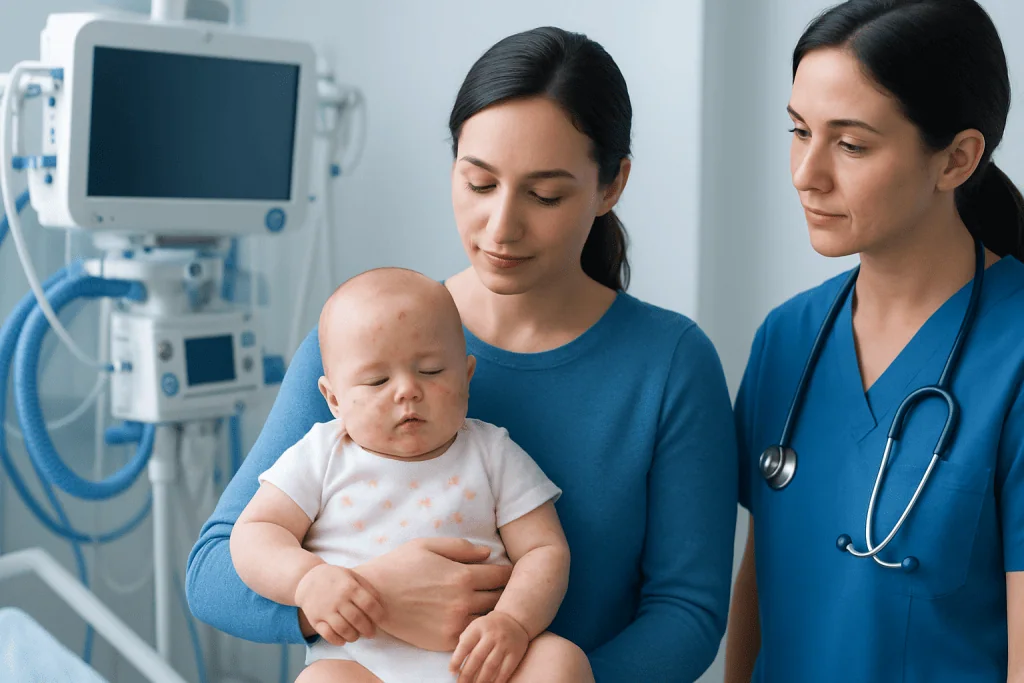
Hives may look like small round bumps, broad irregular patches, or large areas of swelling with paler centres. On lighter skin, they may appear red or pink. On darker skin, they can be subtle and may look slightly lighter, darker, purple-toned, or simply raised compared with surrounding skin. Feeling the skin gently may help a parent notice the elevated, soft welts.
The rash can occur anywhere, including the face, trunk, arms, legs, hands, feet, or diaper area. Welts often itch, although very young babies cannot describe itching. They may rub against bedding, seem irritable, or have trouble settling. Hives themselves should not leave bruising, scaling, blisters, or fixed marks once they disappear.
Some babies also develop deeper swelling called angioedema. This commonly affects the eyelids, lips, cheeks, hands, feet, or genital area. Mild isolated swelling should be assessed by a clinician, especially in a young infant. Swelling of the tongue, inside the mouth, or throat is an emergency because it can affect breathing.
- Welts that move or fade within a day are typical of hives.
- A rash that stays in exactly the same place for more than 24 hours, bruises, blisters, peels, or causes significant pain needs medical review.
- Fever may occur with an infection, but fever plus a baby who appears very unwell should not be attributed to hives alone.
What causes hives in babies?

Hives develop when skin mast cells release histamine and other natural chemicals, causing temporary fluid leakage and swelling in the skin. This process can be triggered by several things. In babies and young children, viral infections are among the most common contributors to acute hives, sometimes appearing during a cold, fever, stomach illness, or shortly after the child otherwise seems better.
Food allergy is possible, but it is not the explanation for every episode. An allergic reaction to a food typically begins soon after the food is eaten, often within minutes to two hours, and may recur with exposure. Cow’s milk, egg, peanut, tree nuts, wheat, soy, sesame, fish, and shellfish are among foods that can cause allergy, but a parent should not remove multiple foods from a baby’s diet without clinical advice. Unnecessary restriction can affect nutrition and may make it harder to identify the true cause.
Medicines, insect stings, contact with latex, and occasionally heat, cold, pressure, or friction may also trigger hives. A medicine may be suspected when hives begin soon after it is given, but infections can cause both the symptoms that led to treatment and the hives themselves. A clinician can help determine whether the medicine should be avoided in the future.
In many cases, no definite trigger is found. This does not mean that a serious disease has been missed. Most acute episodes resolve, and extensive allergy testing is not routinely useful when there is no clear, repeatable connection to a suspected trigger.
Myths and evidence: interpreting a hive outbreak
Myth: Hives always mean an allergy. Evidence shows that infections are a frequent cause of short-term hives in children. Allergy becomes more likely when the rash starts reliably soon after the same food, medicine, or sting, particularly if there are symptoms involving breathing, digestion, or circulation.
Myth: A baby can pass hives to another person. Hives are not contagious. If a virus is contributing to the hives, the virus itself may spread in the usual way, but another child would not “catch” the welts. Good hand hygiene and keeping a baby comfortable are sensible measures when there are cold or stomach symptoms.
Myth: Every new food should be stopped after hives appear. It is safer to pause a food only when there is a plausible immediate relationship and then discuss the event with a clinician. If a severe allergic reaction is suspected, the food should not be given again until medical advice is received. For less clear episodes, a careful history is more useful than broad dietary avoidance.
Myth: Long-lasting hives always signal a dangerous allergy. Hives lasting most days for more than six weeks are termed chronic urticaria and deserve assessment, but they are often not caused by a specific food allergy. Chronic hives are less common in babies than brief, acute episodes.
How clinicians assess and diagnose baby hives
Diagnosis is usually based on the appearance and timing of the welts, along with the baby’s overall condition. Parents can help by taking clear photographs, noting when the rash began, recording how long individual spots remain, and listing foods, medicines, illnesses, insect exposures, and new skin products from the preceding hours or days.
A clinician will ask about symptoms that could indicate anaphylaxis, including cough, wheeze, noisy breathing, voice changes, lip or tongue swelling, vomiting, pallor, faintness, or unusual limpness. The baby may be examined for signs of infection and for rashes that have features unlike hives. In infants, age and feeding history are also important.
Allergy testing, such as skin-prick testing or blood testing for specific immunoglobulin E, is most useful when the history suggests an immediate reaction to a particular allergen. Testing without a clear clinical history may find sensitisation that does not represent a meaningful allergy and can lead to avoidable food restrictions. Testing is not generally needed for a single uncomplicated hive episode linked to a viral illness.
Parents should seek a prompt review if hives recur frequently, last more than a few days without improvement, occur most days for six weeks or longer, or are accompanied by poor feeding, poor growth, persistent fever, joint swelling, or unusual bruising. These features may require evaluation beyond uncomplicated urticaria.
Comfort measures and medical treatment
For a baby who is otherwise well and has hives only, comfort measures may be enough while a clinician is contacted for advice. Keeping the room comfortably cool, dressing the baby in loose soft cotton clothing, and avoiding overheating can reduce irritation. Brief lukewarm baths may be soothing; hot water, vigorous rubbing, and fragranced skin products may make itching worse.
Parents should avoid applying strong creams, herbal preparations, or topical antihistamines unless a healthcare professional recommends them. These products may irritate delicate skin or complicate assessment of the rash. It is also best not to give an infant an over-the-counter antihistamine, cough-and-cold product, or other medicine without specific professional guidance about whether it is appropriate for the child’s age and circumstances.
When treatment is needed, a clinician may recommend a non-sedating oral antihistamine suitable for the baby’s age and weight. Antihistamines can reduce itch and new welt formation, but they do not treat anaphylaxis. If hives occur as part of a severe allergic reaction, emergency treatment is required and should not be delayed while waiting to see whether an antihistamine works.
When a medication, food, or other trigger is strongly suspected, families should receive individual advice on avoidance and follow-up. A written record of the event, including photos and the timing of symptoms, supports safer decisions at future appointments.
When to seek medical care
Call emergency services immediately if a baby has hives together with trouble breathing, wheezing, repetitive coughing, noisy breathing, swelling of the tongue or throat, a weak or unusual cry, blue or grey lips, repeated vomiting, sudden limpness, collapse, or marked sleepiness that is out of character. These can be signs of anaphylaxis, a serious allergic reaction that needs urgent treatment.
Contact a doctor urgently or seek same-day assessment if the baby is very young, looks unwell, has facial or lip swelling, has a fever and is difficult to wake or console, is feeding poorly, has fewer wet diapers, or develops a rash that is painful, blistering, purple, or does not fade when pressed. Parents should also seek advice after hives that begin soon after a new food, medicine, or insect sting.
For a well baby with mild hives only, a non-urgent appointment or telephone advice may be appropriate, especially if the rash continues, returns, or a trigger is uncertain. Acibadem International’s multidisciplinary specialists and JCI-accredited hospitals can assess allergic and skin symptoms and coordinate care for international patients when needed.
Frequently asked questions
How long do baby hives usually last?
Individual hives usually fade or change location within 24 hours. A short-lived outbreak may last hours to several days because new welts can appear while older ones resolve. If hives are present on most days for more than six weeks, the baby should be assessed for chronic urticaria.
Can teething cause hives in babies?
Teething is not considered a proven direct cause of hives. Babies often develop minor illnesses and encounter new foods around the age when teething occurs, which can make the timing seem connected. A clinician can help review other possible causes if the rash recurs.
Should a parent stop breastfeeding if a breastfed baby has hives?
Breastfeeding should generally continue unless a clinician gives different advice. Hives in a breastfed baby are not usually caused by something in breast milk. If there is a consistent pattern after a parent eats a particular food or if the baby has other allergy symptoms, medical guidance is appropriate before changing the parent’s diet.
Can a baby have hives without itching?
Yes. Hives commonly itch, but some babies cannot show this clearly, and some welts cause little apparent discomfort. The shifting, raised nature of the rash is often more informative than whether itching is obvious.
Are hives after a vaccine normal in a baby?
Hives after vaccination should be reported to the baby’s healthcare professional, particularly if they start soon after the vaccine or occur with other symptoms. Most rashes after vaccination are not severe, but the timing and the baby’s overall condition help determine whether an allergy evaluation is needed before future doses.
What is the difference between hives and eczema in a baby?
Hives are raised, temporary welts that move or disappear within a day in a particular spot. Eczema usually causes persistent dry, rough, itchy, or inflamed patches that remain in the same area and may flare repeatedly. A clinician can help distinguish them when the rash is unclear.
References
- American Academy of Pediatrics
- American Academy of Allergy, Asthma & Immunology
- National Institute of Allergy and Infectious Diseases
- National Health Service
- World Allergy Organization
This article is for general information only and is not a substitute for professional medical advice. Please consult a qualified doctor about your individual situation.
Hives in Turkey — costs, top hospitals & a free quote
JCI-accredited · board-certified surgeons · reply within 24h
Add us as a Preferred Source to see more of our trusted health content across Google Search, AI Overviews and Discover.