Bacterial Infection Skin: Diagnosis, Outlook, and Modern Treatment Approaches

Bacterial skin infections range from superficial conditions, such as impetigo, to deeper infections, such as cellulitis and abscesses. Increasing redness, pain, warmth, swelling, pus, fever, or red streaks should be assessed promptly by a clinician.
Key Takeaways
- Bacterial skin infections range from superficial conditions, such as impetigo, to deeper infections, such as cellulitis and abscesses.
- Increasing redness, pain, warmth, swelling, pus, fever, or red streaks should be assessed promptly by a clinician.
- Treatment may include cleansing, topical antibiotics, oral or intravenous antibiotics, and drainage of an abscess when necessary.
- Antibiotics should be used exactly as prescribed; leftover or shared antibiotics should not be used.
- Good hand hygiene, wound care, and avoiding the sharing of personal items can reduce the risk of transmission and recurrence.
A bacterial infection of the skin occurs when bacteria enter through a break in the skin and multiply, causing symptoms such as redness, warmth, tenderness, swelling, crusting, or drainage. Most bacterial skin infections improve with timely medical assessment, appropriate treatment, and careful skin care, although the outlook depends on the infection type, location, and a person’s general health.
Overview: What Is a Bacterial Infection of the Skin?
A bacterial infection skin problem develops when bacteria enter through a cut, insect bite, cracked skin, surgical wound, hair follicle, or another break in the skin’s protective barrier. Common bacteria include Staphylococcus aureus and group A Streptococcus. Some infections remain close to the surface, while others extend into deeper layers of skin and soft tissue.
These infections are common and often manageable, particularly when they are recognized early. The most suitable treatment depends on the appearance, depth, body location, possible bacterial cause, and whether there are signs that infection is spreading. A clinician can distinguish bacterial skin infections from problems with similar symptoms, including eczema, contact dermatitis, fungal infections, viral rashes, insect reactions, and inflammatory skin conditions.
Examples include impetigo, folliculitis, boils, abscesses, erysipelas, and cellulitis. Although these conditions can overlap, they do not all require the same approach. For example, a small superficial infection may respond to local treatment, whereas an abscess may need a drainage procedure in addition to antibiotic treatment.
Common Types and Symptoms
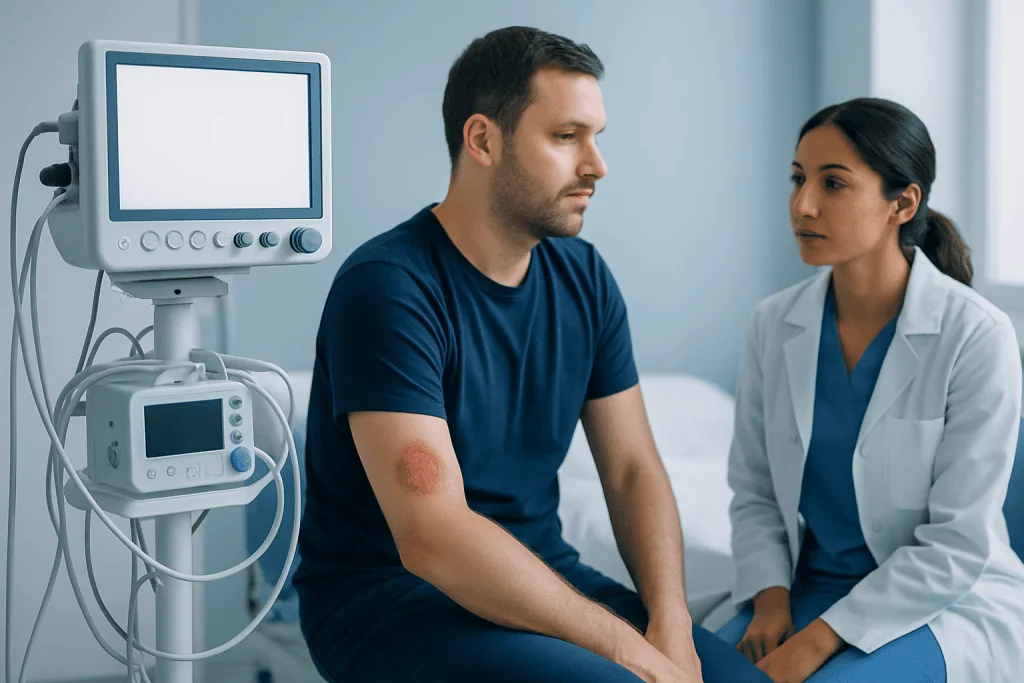
Symptoms of a bacterial skin infection vary according to the affected area and how deeply bacteria have entered the tissues. Inflamed skin may look red, pink, purple, brown, or grey depending on a person’s natural skin tone. It may feel warmer than nearby skin and become tender, swollen, itchy, or painful. New or worsening symptoms should not be ignored, especially when the area is expanding.
Impetigo is a contagious superficial infection that often affects children but can occur at any age. It may cause small blisters or sores that break and form honey-colored crusts, commonly around the nose and mouth or on exposed limbs. Folliculitis affects hair follicles and can appear as small red or pus-filled bumps, sometimes after shaving, sweating, or friction.
Boils and abscesses are deeper collections of pus that may begin as painful, firm lumps and become soft or drain. Cellulitis is an infection of deeper skin layers that typically causes an enlarging area of warmth, tenderness, swelling, and discoloration. Erysipelas is a related infection that can produce a more sharply defined, raised area of inflamed skin, often on the face or lower leg.
- Crusting, blisters, pustules, or weeping fluid
- A painful lump, pus, or a spreading patch of inflamed skin
- Warmth and swelling around a wound, ulcer, or incision
- Fever, chills, fatigue, or swollen nearby lymph nodes in more significant infections
Causes and Factors That Increase Risk

Bacteria are present on many people’s skin without causing illness. Infection becomes more likely when the skin barrier is damaged. Even a small break can provide an entry point, including scratches, cracked skin between the toes, eczema-related scratching, burns, shaving cuts, piercings, tattoos, surgical wounds, or wounds from sports and outdoor activities.
Close skin-to-skin contact, crowded living environments, and sharing towels, razors, clothing, sports equipment, or bedding can increase transmission of some infections. Poorly covered draining wounds may also spread bacteria to others. However, not every bacterial skin infection is contagious; cellulitis, for example, is generally not passed from person to person through ordinary contact.
Some health conditions increase the chance of infection or of a more complicated course. These include diabetes, poor circulation, chronic swelling of the legs, obesity, immune suppression, chronic skin disorders, and a history of prior cellulitis. People with reduced sensation in their feet may not notice small injuries promptly, making regular skin checks particularly important.
Some strains of bacteria are resistant to certain antibiotics, including community-associated methicillin-resistant Staphylococcus aureus (MRSA). Resistance cannot be confirmed by appearance alone. If an infection is recurrent, severe, produces pus, or does not improve as expected, a clinician may take a sample to guide antibiotic selection.
How Bacterial Skin Infections Are Diagnosed
Diagnosis is often based on a careful history and skin examination. A clinician may ask when symptoms started, whether redness is spreading, whether there has been injury or exposure, and whether there are fevers, drainage, previous infections, allergies, medical conditions, or recent antibiotic use. They will assess the size, borders, warmth, tenderness, and depth of the affected area.
Many uncomplicated infections do not require laboratory testing. When drainage or an open wound is present, a swab or sample of pus may be sent for culture and antibiotic susceptibility testing. This can identify the bacteria and help select an antibiotic that is likely to work, especially when resistant bacteria are a concern or initial treatment has not been effective.
Blood tests may be considered when a person is systemically unwell, has significant fever, has a weakened immune system, or may have a deeper infection. Ultrasound can be useful when it is unclear whether a swollen, painful area contains an abscess that needs drainage. In selected cases, further imaging may be needed to assess infection near bones, joints, surgical sites, or deeper tissues.
Modern Treatment Approaches and Expected Outlook
Treatment is tailored to the infection rather than based on symptoms alone. For minor superficial infections, clinicians may recommend gentle cleansing, keeping the area covered where appropriate, and a topical antibiotic. More extensive infections may require oral antibiotics. If a person is seriously unwell, has a rapidly spreading infection, cannot take oral medication, or has important underlying health concerns, intravenous antibiotics and hospital monitoring may be advised.
An abscess often requires incision and drainage, a procedure in which a clinician releases the trapped pus under appropriate sterile conditions. Antibiotics may be used as well, depending on the abscess size, location, surrounding cellulitis, fever, immune status, and culture results. Squeezing, piercing, or attempting to drain a boil at home can push infection deeper or spread bacteria, so it is best avoided.
When prescribed, antibiotics should be taken exactly as directed and completed unless the treating clinician advises otherwise. Symptoms may begin to improve within a few days, but skin color changes and swelling can take longer to settle. A clinician should be contacted if symptoms worsen, new fever develops, drainage increases, or there is no improvement within the timeframe they advised.
The outlook is generally good with correct treatment. Repeated infections may require an assessment for contributing factors such as chronic swelling, fungal infection between the toes, eczema, diabetes, nasal carriage of certain bacteria, or recurring skin trauma. In complex cases, coordinated care from dermatology, infectious disease, surgery, wound care, or other specialists can be helpful.
Prevention and Safe Self-Care
Daily skin care can lower the likelihood of bacterial infection. Hands should be washed regularly with soap and water, especially before and after touching wounds. Small cuts and grazes should be rinsed with clean running water, gently dried, and protected with a clean dressing if they are likely to become dirty or rub against clothing.
A person should avoid sharing towels, washcloths, razors, cosmetics, clothing, or sports equipment that touches the skin. Towels, bedding, and clothing used by someone with a draining infection should be washed according to their care instructions. Covering wounds and avoiding close contact sports until a clinician advises it is safe can help reduce spread.
It is important not to pick at scabs, scratch inflamed skin, or use leftover antibiotics. Moisturizing dry or cracked skin may help maintain its barrier function, while treating conditions such as athlete’s foot or eczema can reduce entry points for bacteria. People with diabetes or reduced foot sensation should inspect their feet regularly and seek advice for blisters, cracks, ulcers, or wounds that do not heal.
Home care can support recovery but does not replace assessment for a potentially spreading infection. Warm compresses may soothe a small tender area if recommended by a clinician, but heat should not delay medical evaluation of a painful lump, rapidly enlarging redness, or fever.
When to Seek Medical Care
Medical care should be sought promptly for a painful, hot, swollen, or expanding area of skin; a boil or wound producing pus; or a rash with crusting that may be impetigo. Same-day assessment is particularly important for infections on the face, around the eyes, hands, genitals, or near a surgical wound, as these areas may need specialized evaluation.
Urgent medical attention is needed if there is fever, chills, confusion, severe or rapidly worsening pain, red streaks extending from the affected area, extensive blistering, skin that appears dusky or black, dizziness, or difficulty breathing. These symptoms can indicate a more serious infection or complication and should be assessed without delay.
People who are pregnant, have diabetes, poor circulation, immune suppression, cancer treatment, chronic kidney disease, or a recent operation should contact a clinician early when they suspect an infection. Acibadem International’s multidisciplinary specialists and JCI-accredited hospitals can assess and treat bacterial skin infections for international patients when specialist or hospital-based care is needed.
Frequently asked questions
What does a bacterial infection of the skin look like?
It may appear as an area of redness or darker discoloration, warmth, swelling, tenderness, crusting, blisters, pustules, or drainage. On darker skin tones, changes in warmth, swelling, pain, texture, or spread may be easier to notice than redness. A clinician can determine whether the appearance is due to bacteria or another skin condition.
Can a bacterial skin infection go away without antibiotics?
Very minor skin problems may improve with careful cleansing and appropriate wound care, but many bacterial infections need prescription treatment. Abscesses may need drainage, and cellulitis often requires oral antibiotics. It is safest to seek medical advice when symptoms are spreading, painful, producing pus, or accompanied by fever.
Is cellulitis contagious?
Cellulitis itself is not usually contagious through ordinary skin contact because the infection occurs in deeper layers of the skin. However, the bacteria that cause skin infections can sometimes spread through contact with pus or an uncovered wound. Good hand hygiene and keeping draining wounds covered are sensible precautions.
How long does it take for a bacterial skin infection to heal?
With effective treatment, pain, warmth, and spreading redness often begin to improve within several days, although complete healing can take longer. An abscess or larger wound may need additional time and follow-up care. A person should contact their clinician if symptoms worsen or do not improve as expected.
Should a boil be squeezed or popped?
No. Squeezing or puncturing a boil can spread bacteria into surrounding tissue and may worsen the infection. A clinician can decide whether it needs safe drainage and whether antibiotics are appropriate.
Can bacterial skin infections come back?
Yes, recurrence can happen, especially when there is eczema, chronic swelling, diabetes, frequent skin injury, or ongoing exposure to bacteria through shared personal items. A clinician may look for underlying causes and recommend prevention steps. Recurrent boils or abscesses may also require culture testing to guide treatment.
References
- Centers for Disease Control and Prevention
- American Academy of Dermatology Association
- National Health Service
- Infectious Diseases Society of America
- World Health Organization
This article is for general information only and is not a substitute for professional medical advice. Please consult a qualified doctor about your individual situation.
Hair transplant in Turkey — costs, graft counts & a free assessment
JCI-accredited · board-certified surgeons · reply within 24h
Add us as a Preferred Source to see more of our trusted health content across Google Search, AI Overviews and Discover.