Bezoar: A Complete Medical Overview

A bezoar is a lump of material that the digestive system cannot break down normally. Bezoars most often form in the stomach, but they can move into the intestines and cause blockage.
Key Takeaways
- A bezoar is a lump of material that the digestive system cannot break down normally.
- Bezoars most often form in the stomach, but they can move into the intestines and cause blockage.
- Symptoms may include fullness, nausea, vomiting, abdominal pain, and trouble eating.
- Risk is higher after stomach surgery, in people with reduced stomach movement, and with certain eating habits.
- Diagnosis commonly involves imaging tests and upper endoscopy.
- Treatment depends on the type, size, and location of the bezoar and may include endoscopic removal or surgery.
A bezoar is a collection of swallowed, undigested material that gathers in the stomach or intestines. It may cause no symptoms at first, but larger bezoars can lead to nausea, abdominal discomfort, vomiting, poor appetite, or bowel blockage and usually need medical evaluation.
What is a bezoar?
A bezoar is a compact mass of material that collects in the digestive tract, most often in the stomach. It forms when substances that are difficult to digest do not move through the gut as expected and gradually stick together. Depending on its size and location, a bezoar may remain silent or begin to interfere with normal digestion.
Several types of bezoars exist. Phytobezoars are made from indigestible plant fibers, such as fruit or vegetable skins. Trichobezoars are made of swallowed hair. Pharmacobezoars form from medications that do not dissolve properly, while lactobezoars can occur in infants from thickened milk material. The type matters because it affects both symptoms and treatment.
Many people think of a bezoar as a rare curiosity, but in clinical practice it is mainly important because it can mimic other digestive problems. A bezoar may cause vague symptoms like bloating and early fullness, or it may lead to more urgent problems such as stomach outlet obstruction or small bowel obstruction. For that reason, ongoing digestive symptoms should not be ignored.
How a bezoar affects digestion
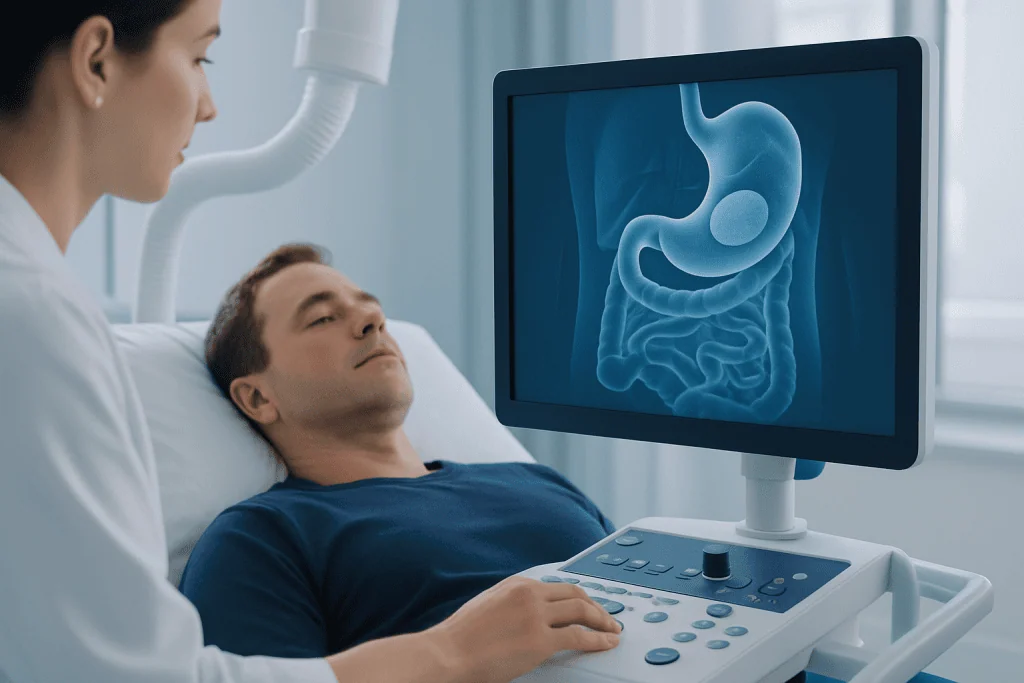
The stomach normally churns food and mixes it with digestive juices before gradually passing it into the small intestine. When stomach emptying is slow, or when a person swallows material that the body cannot break down, particles can collect instead of moving forward. Over time, these particles can compact into a firm mass.
A bezoar can interfere with digestion in several ways. It may take up space in the stomach and create a constant feeling of fullness. It can irritate the stomach lining, sometimes leading to inflammation, ulcer formation, or bleeding. If it moves into a narrower part of the intestine, it may block the passage of food and fluid.
This is one reason doctors may evaluate a bezoar alongside other digestive conditions that affect movement through the gut, such as gastroparesis. When symptoms suggest a blockage, clinicians may also need to rule out other causes, including bowel obstruction.
Symptoms and possible complications
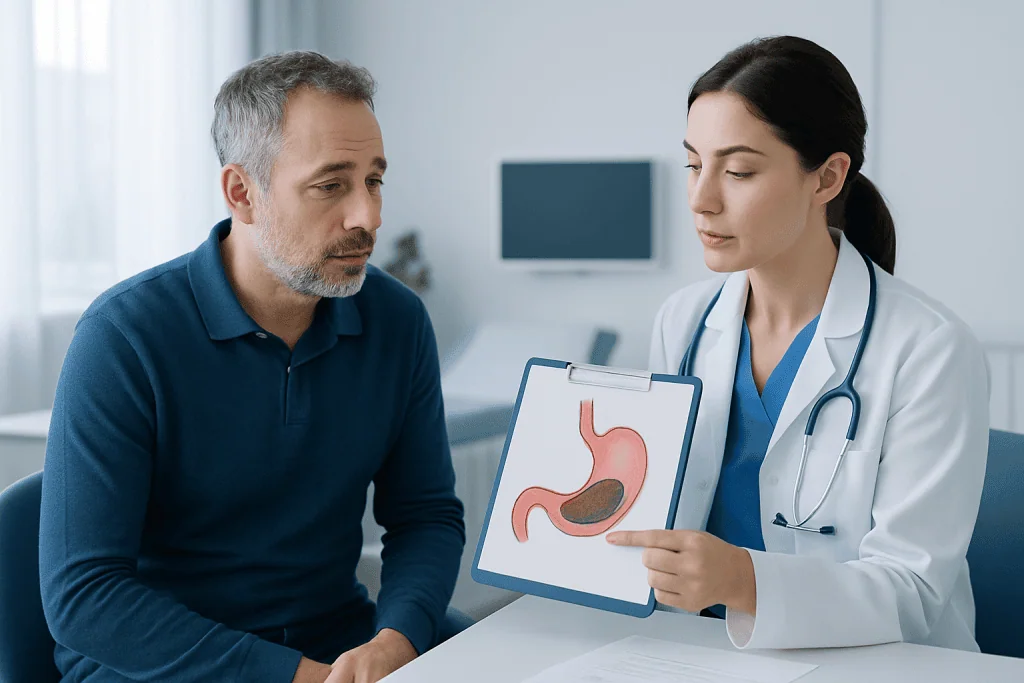
Symptoms of a bezoar can be mild at first and may come and go. Some people have no symptoms and learn about the problem only during testing for another reason. When symptoms are present, they often reflect delayed stomach emptying or a physical blockage.
Common symptoms may include:
- Feeling full quickly after starting a meal
- Bloating or upper abdominal discomfort
- Nausea or repeated vomiting
- Loss of appetite
- Unintended weight loss
- Bad breath or a sour taste
- Abdominal pain
If a bezoar causes significant blockage, symptoms may become more intense. A person may have persistent vomiting, worsening abdominal swelling, dehydration, constipation, or inability to pass stool or gas. In some cases, a bezoar can cause ulceration, bleeding, or even perforation, though these are less common and require urgent care.
Because these symptoms overlap with many digestive disorders, self-diagnosis is difficult. A careful medical evaluation is the safest way to identify whether a bezoar is the true cause.
Causes and risk factors
Bezoars develop when indigestible material builds up faster than the digestive tract can move it along. The most common setting is a combination of difficult-to-digest material and reduced stomach motility. This may happen after surgery, with certain medical conditions, or because of the texture and amount of food eaten.
Important risk factors include:
- Previous stomach surgery, especially operations that change stomach size or emptying
- Delayed stomach emptying from diabetes or nerve-related digestive disorders
- Poor chewing, missing teeth, or fast eating
- High intake of fibrous foods such as persimmons, celery, pumpkin, or citrus membranes
- Use of medications that reduce gut movement
- Swallowing hair or non-food substances
People who have had bariatric or gastric surgery can be especially vulnerable because the stomach may process food differently afterward. In some cases, bezoars are found during evaluation of persistent symptoms after gastroscopy or other upper digestive testing. Trichobezoars are more likely when a person repeatedly pulls out and swallows hair, which may be linked with an underlying behavioral or mental health condition.
Not everyone with these risk factors develops a bezoar. However, the chance rises when several factors occur together, such as reduced stomach motility combined with frequent consumption of high-fiber foods that are hard to digest.
How doctors diagnose a bezoar
Diagnosis starts with a medical history and physical examination. The doctor asks about symptoms, prior surgery, diet, vomiting, weight loss, medications, and any history of swallowing hair or non-food items. These details help guide which tests are most useful.
Upper endoscopy is one of the most valuable tools because it allows direct visualization of the inside of the esophagus, stomach, and upper small intestine. During this procedure, a flexible camera is passed through the mouth to look for a bezoar and assess whether it is causing irritation, an ulcer, or obstruction. In many cases, endoscopy not only confirms the diagnosis but also helps guide treatment.
Imaging tests may also be needed, especially if a blockage farther down in the intestine is suspected. Abdominal X-rays, ultrasound, or cross-sectional imaging can help show where the mass is located and whether the bowel is obstructed. If symptoms are severe, doctors may use CT scan imaging to look for complications or to distinguish a bezoar from other causes of abdominal pain and vomiting.
Because a bezoar can resemble other digestive disorders, clinicians sometimes investigate conditions such as ulcers, motility disorders, or structural narrowing. The goal is not only to find the bezoar but also to understand why it formed so recurrence can be reduced.
Treatment options for a bezoar
Treatment depends on the bezoar’s type, size, location, and whether it is causing obstruction or complications. Small bezoars may sometimes be managed with careful medical treatment, while larger or more solid masses often require an endoscopic or surgical approach. The safest plan is individualized by a gastroenterologist or surgeon.
For some phytobezoars, doctors may recommend measures intended to soften or break down the mass. In selected cases, medicines or specific digestive solutions are used to help dissolve the material, although success varies. Endoscopy is often a key treatment because instruments can be passed through the scope to fragment and remove the bezoar. This is commonly done during endoscopy when the mass is reachable and the patient’s condition is stable.
Surgery may be needed if the bezoar is very large, very hard, causes complete obstruction, or cannot be removed endoscopically. Surgical treatment may also be necessary when there are complications such as perforation or tissue damage. In these cases, the care team also looks for the underlying reason the bezoar formed in the first place.
Recovery and follow-up are important. A patient may need dietary adjustments, treatment for delayed stomach emptying, dental support for chewing problems, or mental health care if hair swallowing is involved. Near the end of the care pathway, multidisciplinary teams may coordinate gastroenterology, surgery, nutrition, and behavioral support; Acibadem International’s multidisciplinary specialists and JCI-accredited hospitals provide diagnosis and treatment for international patients when this type of coordinated care is needed.
Prevention and self-care after treatment
Prevention focuses on lowering the chance that indigestible material will collect again. The best strategy depends on the type of bezoar and any underlying digestive problem. After treatment, patients are often advised to eat slowly, chew thoroughly, stay hydrated, and follow any food guidance given by their doctor or dietitian.
For people prone to phytobezoars, reducing very fibrous or stringy foods may help, especially if they have delayed stomach emptying or a history of stomach surgery. A doctor may recommend avoiding large amounts of foods that are difficult to digest and choosing softer, well-cooked alternatives instead. If a medication contributes to slow gut movement, the treatment plan may be reviewed.
People with conditions that affect stomach motility should keep regular follow-up visits and report ongoing nausea, vomiting, or early fullness. If hair swallowing or pica is part of the picture, behavioral and mental health support is an important part of prevention. Self-care alone is usually not enough without addressing the cause.
When to seek medical care
Medical care should be sought if symptoms such as nausea, vomiting, abdominal pain, poor appetite, unexplained weight loss, or feeling full after very small meals continue for more than a short period. These symptoms do not always mean a bezoar is present, but they do justify an assessment by a qualified doctor.
Urgent medical attention is important if there is repeated vomiting, inability to keep fluids down, severe abdominal pain, abdominal swelling, blood in vomit or stool, fainting, fever, or inability to pass stool or gas. These signs may suggest obstruction, bleeding, dehydration, or another complication that should be evaluated promptly.
Anyone with a history of stomach surgery, delayed gastric emptying, or repeated bezoars should be especially attentive to new digestive symptoms. Early evaluation often makes treatment simpler and can help prevent more serious problems.
Frequently asked questions
Is a bezoar always dangerous?
No. Some bezoars are small and may cause few or no symptoms. However, larger bezoars can irritate the stomach or block the intestines, so a doctor should assess persistent digestive symptoms.
Can a bezoar go away on its own?
Sometimes a small bezoar may pass or respond to medical treatment, but many do not clear without help. The best approach depends on the bezoar type, where it is located, and whether it is causing blockage.
What foods can cause a bezoar?
Foods high in indigestible fiber can contribute, especially when eaten in large amounts or not chewed well. Common examples include persimmons and some fibrous fruits or vegetables, but risk is much higher when stomach emptying is reduced.
How is a bezoar confirmed?
Doctors often confirm a bezoar with upper endoscopy, which lets them see the mass directly. Imaging tests such as X-rays or CT scans may also be used, especially if an intestinal blockage is suspected.
Can children get bezoars?
Yes, although the type may differ from adults. Some infants can develop lactobezoars, and older children may develop bezoars if they swallow hair or non-food materials or have an underlying digestive problem.
Can a bezoar come back after treatment?
Yes, recurrence is possible if the underlying cause is not addressed. Prevention may involve diet changes, treatment of delayed stomach emptying, and follow-up care for habits such as hair swallowing.
References
- National Institute of Diabetes and Digestive and Kidney Diseases
- American College of Gastroenterology
- National Library of Medicine
- Merck Manual Professional Edition
This article is for general information only and is not a substitute for professional medical advice. Please consult a qualified doctor about your individual situation.
Persistent digestive symptoms? Get evaluated in Turkey
JCI-accredited · board-certified surgeons · reply within 24h
Add us as a Preferred Source to see more of our trusted health content across Google Search, AI Overviews and Discover.

More from the Health Library

Auditory Nerve: An Evidence-Based Guide for Patients

Benadryl Allergy: An Evidence-Based Guide for Patients

Best Posture Correctors: A Complete Medical Overview

Tapping As: A Complete Medical Overview

Red Face: An Evidence-Based Guide for Patients