Blina Chemo: How It Works, Results and What to Expect

Blinatumomab is an immunotherapy, not traditional cytotoxic chemotherapy, although it may be used alongside or after chemotherapy in a leukemia treatment plan. It helps a patient’s own T cells recognize and destroy CD19-positive B-cell leukemia cells.
Key Takeaways
- Blinatumomab is an immunotherapy, not traditional cytotoxic chemotherapy, although it may be used alongside or after chemotherapy in a leukemia treatment plan.
- It helps a patient’s own T cells recognize and destroy CD19-positive B-cell leukemia cells.
- Treatment is delivered continuously through a portable infusion pump in cycles, with planned breaks between cycles.
- Early monitoring is important because cytokine release syndrome and neurological side effects can occur, especially near the start of treatment.
- The expected benefit depends on the leukemia setting, prior treatment, disease burden, overall health, and response monitoring results.
Blina chemo is a common informal name for blinatumomab, a targeted immunotherapy used for certain forms of B-cell <a href="https://acibademinternational.com/diseases/acute-lymphoblastic-leukemia/”>acute lymphoblastic leukemia (ALL). It is given as a continuous intravenous infusion and requires close monitoring because it can cause immune-related, neurological, and infection-related side effects.
Overview: What Is Blina Chemo?
Blina chemo usually refers to blinatumomab, a prescription cancer medicine used to treat certain CD19-positive B-cell acute lymphoblastic leukemia (ALL). Although people may call it “blina chemotherapy” or “blinatumomab chemocare,” it works differently from conventional chemotherapy. It is a type of immunotherapy called a bispecific T-cell engager, designed to bring immune cells into contact with leukemia cells.
Blinatumomab may be considered for adults and children with specific forms of B-cell precursor ALL, including disease that has returned after treatment, has not responded adequately to earlier treatment, or remains detectable at a very low level after treatment. This low-level disease is often called minimal residual disease (MRD). The exact indication depends on local approval, the patient’s age, leukemia features, and the treating hematology team’s assessment.
The medicine is given through a vein as an uninterrupted infusion over several weeks rather than as a short infusion on one treatment day. This approach allows ongoing immune activity against leukemia cells, but it also means patients need clear training, reliable follow-up, and prompt access to their care team if concerning symptoms develop.
How Blinatumomab Works
To understand blinatumomab how it works, it helps to know that T cells are immune cells capable of attacking abnormal cells. Blinatumomab has two binding sites: one attaches to CD3 on T cells, and the other attaches to CD19, a protein found on many B-cell leukemia cells. By linking the two cells, the medicine helps activate T cells to identify and kill the leukemia cell.
This is why the answer to “blinatumomab how does it work?” is more specific than simply saying it boosts immunity. It redirects a patient’s T cells toward CD19-positive leukemia cells. Because normal B cells can also carry CD19, blinatumomab can reduce normal B-cell levels as well, which may affect immune protection and requires clinical monitoring.
Traditional chemotherapy generally damages rapidly dividing cells directly. Blinatumomab instead relies on immune-cell engagement. It may be part of a broader treatment plan that includes chemotherapy, targeted medicines, stem cell transplantation, or other therapies, depending on the type and stage of ALL. Acute lymphoblastic leukemia requires individualized planning by a specialist hematology-oncology team.
Who May Be a Candidate for Blinatumomab?

Candidacy is determined by a hematologist or oncologist after confirming the leukemia type and whether the cancer cells express CD19. Testing may include blood tests, bone marrow examination, flow cytometry, chromosome and gene testing, and assessments for MRD. These results help clarify whether blinatumomab is appropriate and how it fits with other treatment options.
Doctors also consider prior leukemia treatments, the amount of leukemia present, symptoms, organ function, infection status, neurological history, pregnancy status, medications, and a patient’s ability to attend monitoring visits. People with active infections, significant neurological conditions, or certain other health concerns may need treatment of those issues first or more intensive observation during therapy.
Blinatumomab is not appropriate for every person with ALL. The expected benefits and risks should be reviewed in the context of the individual’s treatment goals. For some patients, response to blinatumomab may also influence whether a bone marrow transplant is discussed as a next step.
Before treatment, the care team typically explains the infusion schedule, central-line care, pump management, emergency contact arrangements, and symptoms that require urgent assessment. Patients should share all prescription medicines, over-the-counter products, supplements, allergies, and vaccination history with the team.
What Happens During Blinatumomab Treatment?
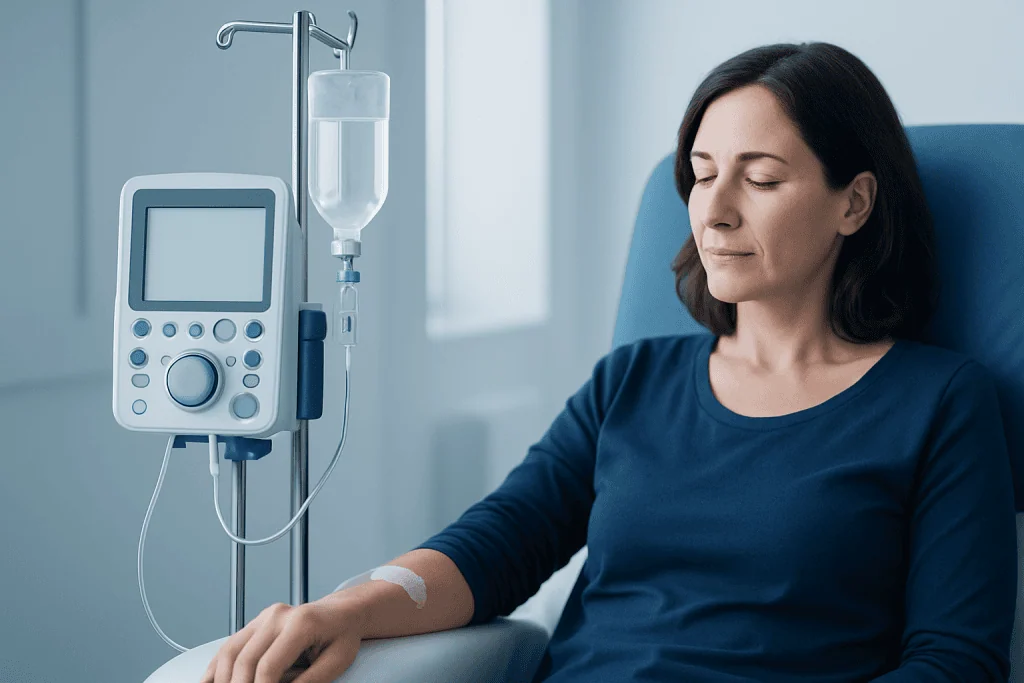
Blinatumomab is usually delivered through a central venous catheter connected to a portable infusion pump. A treatment cycle commonly includes a continuous infusion for several weeks followed by a planned treatment-free interval. The number of cycles and the schedule vary according to the treatment setting and the patient’s response.
Many patients are admitted to hospital for observation at the beginning of the first cycle and sometimes after dose changes or treatment interruptions. This allows the team to watch closely for early reactions, particularly cytokine release syndrome and neurological changes. Premedication with a corticosteroid may be used to help reduce the chance or severity of some reactions.
Once a patient is stable and the clinical team considers outpatient infusion appropriate, treatment may continue at home with scheduled clinic appointments and pump or infusion-bag changes. The patient and caregivers receive instructions on protecting the line, keeping the pump functioning, avoiding accidental interruption, and contacting the clinic immediately if there is leakage, an alarm, fever, new symptoms, or a pump problem.
During and between cycles, clinicians use blood tests and, when indicated, bone marrow testing to assess blood counts, infection risk, treatment response, and MRD. The plan can be adjusted if side effects occur or if the leukemia does not respond as expected.
Benefits, Results and Success Expectations
Blinatumomab can lead to deep remissions in some people with CD19-positive B-cell ALL, including people with relapsed or refractory disease and those with MRD after prior therapy. Clearing MRD is clinically important because it is generally associated with a lower risk of leukemia returning than persistent MRD. However, a response is not the same as a cure, and further treatment may still be recommended.
What is the success rate of blinatumomab? There is no single success rate that applies to everyone. Clinical outcomes vary substantially according to whether it is used for MRD-positive disease or relapsed/refractory leukemia, how much leukemia is present, prior therapies, biological features of the leukemia, age, general health, and whether the disease remains CD19-positive.
For this reason, an oncologist should interpret published study results carefully in relation to the individual patient. Response may be assessed through symptoms, blood counts, bone marrow findings, and highly sensitive MRD testing. The team can explain what remission, MRD negativity, durable response, and transplant eligibility mean in that person’s care plan.
The potential advantage of blinatumomab is its targeted immune mechanism and its ability to treat leukemia that may be difficult to detect with standard testing. Its limitations include the need for continuous infusion, close follow-up, and the possibility that the leukemia may not respond or may return after treatment.
Risks and Blina Chemotherapy Side Effects
Like all effective cancer therapies, blinatumomab can cause side effects. Commonly reported effects can include fever, chills, headache, fatigue, nausea, constipation or diarrhea, low blood counts, swelling, rash, tremor, and changes in liver blood tests. Low blood counts can increase the risk of infection, anemia-related tiredness, or bleeding, so regular laboratory monitoring is essential.
A potentially serious early reaction is cytokine release syndrome (CRS), in which immune activation causes symptoms such as fever, low blood pressure, breathing difficulty, or a fast heart rate. The risk and severity vary. Hospital observation, prompt reporting of symptoms, and treatments such as corticosteroids or other supportive care can help the clinical team manage CRS when it occurs.
What are the most common neurological side effects of blinatumomab? Headache, tremor, dizziness, confusion, difficulty speaking, impaired coordination, sleepiness, and seizures can occur. Not every neurological symptom is severe, but any new or worsening neurological change needs immediate medical attention because treatment may need to be paused or adjusted.
Serious side effects can also include severe infection, infusion-related complications, pancreatitis, and tumor lysis syndrome, particularly when there is a high leukemia burden. The care team may take preventive measures and will advise on symptoms that should prompt an urgent call. Patients should not stop or restart an infusion without direct instructions from their oncology team.
What Should I Avoid While Taking Blinatumomab?
What should I avoid while taking blinatumomab? Patients should avoid starting, stopping, or changing any medicine, supplement, or herbal product without first checking with their oncology team. They should also avoid close contact with people who have contagious infections when possible, follow food-safety and hand-hygiene guidance, and report a fever or signs of infection without delay.
Live vaccines are generally avoided during immunosuppressive cancer treatment and for a period afterward, but vaccine decisions should always be made with the treating specialist. Inactivated vaccines may sometimes be recommended, yet their timing and effectiveness can vary. Household members may also need vaccine guidance from a healthcare professional.
Because blinatumomab may cause dizziness, confusion, seizures, or coordination problems, patients should avoid driving, operating machinery, and other potentially hazardous activities if they feel unwell or until their team confirms it is safe. Alcohol use should be discussed with the clinician, especially where liver abnormalities, dehydration, medication interactions, or neurological symptoms are concerns.
Patients should protect the infusion line and pump from water damage, pulling, contamination, and interruption. Any pump alarm, disconnected tubing, leak, redness or pain around the catheter, or unexpected pause in infusion should be reported immediately. The oncology team provides specific written instructions for each infusion system.
Recovery, Follow-Up and When to Seek Medical Care
Recovery during blinatumomab treatment is individual. Some people can continue selected daily activities between visits, while others need more rest and practical support because of fatigue, blood-count changes, hospital monitoring, or the demands of managing a continuous infusion. Energy levels and appetite may fluctuate, and the treatment team can help with symptom control, nutrition support, and safe activity planning.
Follow-up includes clinical reviews, blood tests, monitoring of the infusion device, and bone marrow or MRD testing when appropriate. After a cycle ends, the team discusses response findings and the next phase of care. This may involve another cycle, consolidation therapy, transplantation assessment, observation, or another leukemia-directed treatment.
When to seek medical care: Patients should contact their cancer team urgently for fever, chills, shortness of breath, chest pain, severe weakness, persistent vomiting, unusual bleeding or bruising, severe abdominal pain, or signs of infection around the catheter. Emergency evaluation is needed for confusion, new trouble speaking, loss of balance, fainting, seizure, severe headache, or sudden neurological changes.
Acibadem International’s multidisciplinary specialists and JCI-accredited hospitals support international patients who need evaluation and treatment planning for leukemia. Care should always be coordinated with a qualified hematology-oncology team familiar with the patient’s full medical history and infusion protocol.
Frequently asked questions
Is blinatumomab considered chemotherapy?
Blinatumomab is not conventional chemotherapy. It is an immunotherapy that brings T cells into contact with CD19-positive B-cell leukemia cells. It may still be used within a broader treatment plan that includes chemotherapy or other cancer therapies.
What is the success rate of blinatumomab?
There is no single success rate because results differ by the treatment setting and the person’s leukemia characteristics. It can produce remission and MRD-negative results in some patients, but response duration and long-term outcomes vary. The treating hematologist can explain expected outcomes using the patient’s specific test results and treatment history.
What should I avoid while taking blinatumomab?
Avoid changing medicines or supplements without oncology approval, and take steps to reduce exposure to infections. Do not receive vaccines, especially live vaccines, without discussing timing with the treatment team. If dizziness, confusion, tremor, or other neurological symptoms occur, avoid driving and seek medical advice promptly.
What are the most common neurological side effects of blinatumomab?
Neurological side effects may include headache, tremor, dizziness, confusion, sleepiness, coordination problems, and difficulty speaking. Seizures are less common but can occur. Any new neurological symptom should be reported promptly because early assessment is important.
How is blinatumomab given?
Blinatumomab is given as a continuous intravenous infusion through a pump, usually via a central venous catheter. Treatment is organized in cycles with weeks of infusion followed by a planned break. Some patients begin therapy in hospital for close monitoring before continuing outpatient treatment when appropriate.
Can blinatumomab cause infections?
Yes. Blinatumomab and the underlying leukemia can lower normal immune defenses, and low blood counts may further increase infection risk. Fever, chills, cough, painful urination, or redness around a catheter should be reported to the cancer team promptly. The team monitors blood counts and may recommend preventive measures based on individual risk.
References
- National Cancer Institute
- U.S. Food and Drug Administration
- European Medicines Agency
- Leukemia & Lymphoma Society
- American Cancer Society
This article is for general information only and is not a substitute for professional medical advice. Please consult a qualified doctor about your individual situation.
Oncology care in Turkey — second opinion and treatment plan
JCI-accredited · board-certified surgeons · reply within 24h
Add us as a Preferred Source to see more of our trusted health content across Google Search, AI Overviews and Discover.