Bloodwork PCOS: What Is Normal, What Is Not, and When to Seek Care

Bloodwork can support a PCOS diagnosis, but no single blood test confirms or rules it out on its own. Normal bloodwork does not always exclude PCOS, especially if symptoms such as irregular periods, acne, or excess hair growth are present.
Key Takeaways
- Bloodwork can support a PCOS diagnosis, but no single blood test confirms or rules it out on its own.
- Normal bloodwork does not always exclude PCOS, especially if symptoms such as irregular periods, acne, or excess hair growth are present.
- Doctors often check androgens, blood sugar, lipids, thyroid function, and prolactin to understand symptoms and exclude similar conditions.
- Abnormal results may point to insulin resistance, higher androgen levels, or another hormone disorder that needs different treatment.
- Medical review is important if periods are very irregular, fertility is a concern, or symptoms are worsening.
Bloodwork PCOS usually looks at hormones, blood sugar, cholesterol, and other conditions that can mimic polycystic ovary syndrome. Some people with PCOS have clearly abnormal lab results, while others have bloodwork that appears near normal, so results must be interpreted together with symptoms and medical history.
Overview: what bloodwork means in PCOS
Bloodwork PCOS refers to the group of laboratory tests used to evaluate symptoms that may be caused by polycystic ovary syndrome. These tests do not work like a single yes-or-no screening tool. Instead, they help show whether hormone patterns, blood sugar regulation, or cholesterol levels fit with PCOS and whether another condition may be responsible.
A person can have PCOS even when some blood test results fall within the laboratory reference range. This is one reason diagnosis usually combines symptoms, menstrual history, physical findings, and sometimes pelvic ultrasound. In many cases, bloodwork is most useful for identifying patterns rather than providing one definitive answer.
PCOS is commonly associated with irregular ovulation, signs of higher androgen activity, and metabolic changes such as insulin resistance. Because these features vary from person to person, bloodwork may look different across patients. One person may mainly show elevated androgens, while another may have normal hormone levels but abnormal glucose or lipid results.
What blood tests are usually checked
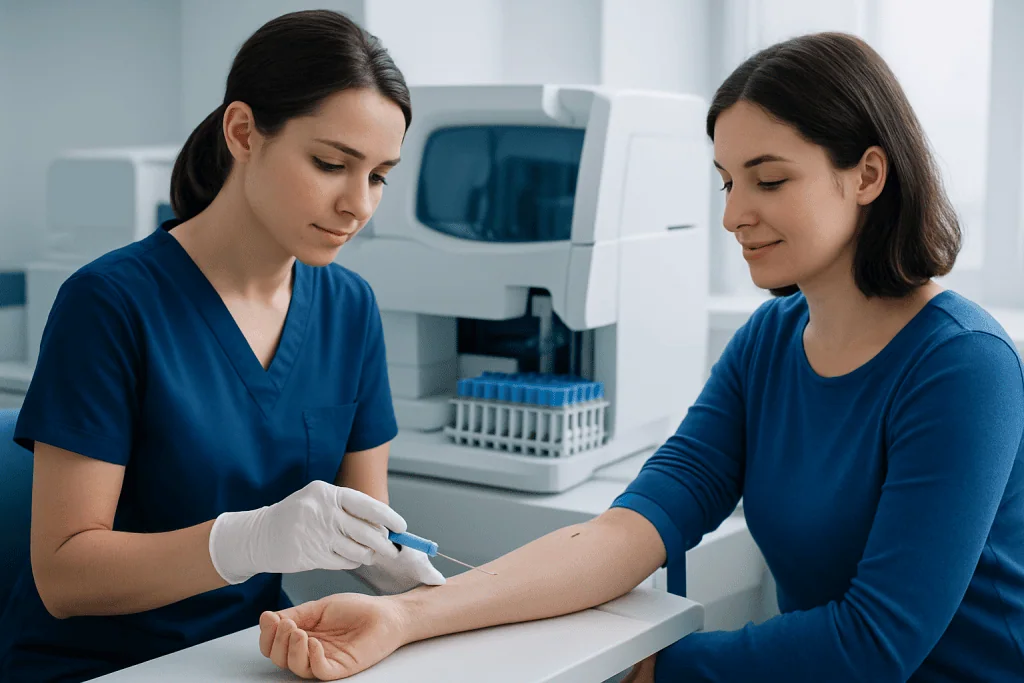
Doctors commonly order several tests when PCOS is suspected. These may include total and free testosterone, DHEAS, sex hormone-binding globulin, LH, FSH, prolactin, and thyroid-stimulating hormone. Depending on the symptoms, a clinician may also check 17-hydroxyprogesterone to help exclude nonclassic congenital adrenal hyperplasia and may consider other endocrine tests when needed.
Metabolic testing is also an important part of bloodwork PCOS. A clinician may request fasting glucose, hemoglobin A1c, or an oral glucose tolerance test, as well as a cholesterol panel. These tests help assess insulin resistance, prediabetes, diabetes risk, and cardiovascular risk factors that can accompany PCOS.
Test timing can matter. Some hormone levels are best checked at specific points in the menstrual cycle, although this can be difficult when periods are infrequent. A clinician interprets results in context, including age, medications, body weight, symptoms, and whether hormonal contraception is being used, because birth control pills can change several hormone measurements.
- Hormone tests help assess androgen excess and rule out similar disorders.
- Metabolic tests help evaluate blood sugar and cholesterol changes linked to PCOS.
- Not every person needs every test; testing is tailored to symptoms and history.
What is normal, and what is not

In practical terms, “normal” means a test falls within that laboratory’s reference range, but this does not always mean everything is typical for that individual. In bloodwork PCOS, some people have mild elevations in testosterone or DHEAS, lower sex hormone-binding globulin, or signs of insulin resistance. Others may have completely normal androgen levels yet still meet diagnostic criteria because of irregular ovulation and ultrasound findings.
Results more suggestive of PCOS can include higher total or free testosterone, changes in LH and FSH patterns, elevated fasting insulin in some settings, impaired fasting glucose, abnormal hemoglobin A1c, or an unfavorable lipid profile such as higher triglycerides or lower HDL cholesterol. Still, these findings are not unique to PCOS and should not be interpreted in isolation.
What is “not normal” also includes results that point away from PCOS. For example, significantly high prolactin, abnormal thyroid tests, or lab patterns suggesting adrenal or ovarian disorders may indicate a different cause of irregular periods or androgen-related symptoms. Very marked androgen elevations, rapidly worsening symptoms, or virilization deserve prompt specialist evaluation because they may suggest a condition other than routine PCOS.
Why bloodwork can be normal even when PCOS is present
PCOS is a syndrome, which means it is diagnosed based on a group of features rather than a single abnormality. Some people mainly have irregular ovulation and polycystic ovarian morphology, while others mainly have excess androgen symptoms. Because the syndrome is broad, routine bloodwork may not capture every feature clearly.
Hormone levels can fluctuate over time and may vary with the menstrual cycle, stress, sleep, weight changes, and medication use. Hormonal contraception in particular can suppress or mask biochemical signs of androgen excess. This may make bloodwork look closer to normal even when symptoms remain consistent with PCOS.
Laboratory reference ranges also have limits. A value can be technically normal but still be relatively high or low for that person’s age and clinical picture. For this reason, diagnosis should be made by a qualified clinician who reviews symptoms such as irregular periods, acne, thinning scalp hair, excess facial or body hair, and difficulty conceiving alongside test results. In some cases, pelvic ultrasound helps complete the picture, especially when clinicians are evaluating polycystic ovary syndrome.
How doctors diagnose PCOS beyond the lab report
Bloodwork is one part of a broader assessment. A doctor usually asks about menstrual cycle patterns, weight changes, acne, hair growth, hair thinning, fertility goals, sleep, family history, and metabolic health. Physical examination may include blood pressure, body mass index, waist measurement, and signs of androgen excess or insulin resistance.
Common diagnostic frameworks look for at least two of the following after excluding other causes: irregular or absent ovulation, clinical or biochemical hyperandrogenism, and polycystic ovaries on ultrasound. This is why a person can have symptoms strongly suggestive of PCOS even if some blood tests are normal. The purpose of testing is partly to support the diagnosis and partly to rule out other disorders.
Depending on the case, imaging and specialist input may be useful. Pelvic ultrasound may help assess ovarian appearance, although it is not always necessary in every adult patient. Some people may also benefit from evaluation in a center experienced in gynecology and hormonal conditions, especially when symptoms are complex, fertility is a concern, or another endocrine disorder is possible.
Treatment options after abnormal or borderline results
Treatment depends on symptoms, reproductive plans, and associated metabolic findings rather than on a single lab value. If irregular periods are the main concern, treatment may focus on cycle regulation and endometrial protection. If acne or excess hair growth is more troublesome, management may include therapies that reduce androgen effects. When insulin resistance or prediabetes is present, lifestyle treatment and sometimes medication may be discussed.
Nutrition, regular physical activity, sleep, and gradual weight management when appropriate can improve both symptoms and metabolic markers. Even modest changes may support more regular ovulation and better blood sugar control in some people. Care plans are individualized, and there is no one “PCOS diet” or universal treatment that fits everyone.
For patients trying to conceive, treatment may shift toward restoring ovulation and improving fertility outcomes. In that setting, timely assessment is especially helpful. Some patients may be referred for fertility evaluation and treatment if ovulation problems persist or if there are additional factors affecting conception. If blood sugar issues are prominent, support from endocrinology care may also be helpful.
Because PCOS can overlap with obesity, fatty liver disease, sleep apnea, or mood symptoms, some patients benefit from coordinated multidisciplinary care. Near the end of the diagnostic process, international patients may also seek consultation at Acibadem International, where multidisciplinary specialists in JCI-accredited hospitals assess and treat PCOS-related concerns.
Self-care and follow-up after PCOS bloodwork
After testing, follow-up is important even if the results are described as mild or borderline. A clinician may repeat certain blood tests, especially when symptoms change or when previous testing was done while using hormonal medication. Follow-up also helps monitor long-term risks linked to PCOS, including glucose intolerance, cholesterol abnormalities, and high blood pressure.
Helpful self-care steps often include regular meals with balanced nutrition, consistent exercise, attention to sleep, and avoiding smoking. These measures support overall hormone and metabolic health and may improve energy, menstrual regularity, and insulin sensitivity over time. Mental well-being matters too, as PCOS can affect self-image and stress levels.
Keeping a symptom record can make appointments more productive. Tracking menstrual cycles, acne flares, hair growth changes, weight changes, and any new medications gives the doctor better context for interpreting bloodwork. If fertility is a goal, noting ovulation signs or cycle length can also guide next steps.
When to seek medical care
Medical review is appropriate when periods become infrequent, absent, or very unpredictable; when acne, hair growth, or scalp hair thinning is increasing; or when bloodwork raises questions about hormones, blood sugar, or cholesterol. A clinician should also assess symptoms such as unexplained weight gain, difficulty becoming pregnant, or signs of insulin resistance.
Prompt evaluation is especially important if symptoms appear suddenly or become severe. Examples include rapidly worsening excess hair growth, deepening of the voice, new muscle increase without training, or very high blood sugar symptoms such as unusual thirst and frequent urination. These patterns are less typical of routine PCOS and may need faster investigation.
Anyone with ongoing cycle irregularity should avoid self-diagnosing based only on online information or one laboratory report. Conditions affecting the thyroid, pituitary, adrenal glands, or ovaries can overlap with PCOS. If there is uncertainty, a specialist in obstetrics and gynecology can help clarify the cause and plan the most appropriate care.
Frequently asked questions
Can someone have PCOS with normal bloodwork?
Yes. Some people with PCOS have blood tests that fall within normal laboratory ranges, especially if symptoms are mild or if they are using hormonal contraception. Diagnosis is based on the overall clinical picture, not one lab result alone.
Which blood tests are most commonly used for PCOS?
Doctors often check androgen-related hormones such as testosterone and DHEAS, along with thyroid function and prolactin to rule out other causes of symptoms. Glucose testing and a lipid panel are also common because PCOS can affect metabolism.
Does high testosterone always mean PCOS?
No. Higher testosterone can be seen in PCOS, but it can also occur with other endocrine or ovarian conditions. A doctor interprets the degree of elevation, associated symptoms, and other test results before making a diagnosis.
Can birth control affect bloodwork for PCOS?
Yes. Hormonal birth control can change androgen levels and other hormone measurements, which may make PCOS-related patterns less obvious. A clinician may consider medication use when deciding when to test or how to interpret results.
What if glucose and cholesterol are abnormal in PCOS?
Abnormal glucose or lipid results may suggest insulin resistance or increased cardiometabolic risk, both of which can occur with PCOS. These findings do not confirm PCOS by themselves, but they are important because they can guide treatment and follow-up.
When should a person see a doctor about possible PCOS?
A medical appointment is a good idea if periods are irregular, acne or excess hair growth is worsening, scalp hair is thinning, or pregnancy is not happening as expected. Earlier review is especially important if symptoms start suddenly or become severe.
References
- American College of Obstetricians and Gynecologists
- Endocrine Society
- National Institute of Child Health and Human Development
- Office on Women's Health
- Centers for Disease Control and Prevention
This article is for general information only and is not a substitute for professional medical advice. Please consult a qualified doctor about your individual situation.
Explore treatments in Turkey — costs, top hospitals & a free quote
JCI-accredited · board-certified surgeons · reply within 24h
Add us as a Preferred Source to see more of our trusted health content across Google Search, AI Overviews and Discover.
Check your numbers in seconds
BMI, calories, due date, blood pressure and 30+ more clinical calculators — free, instant, doctor-reviewed ranges.