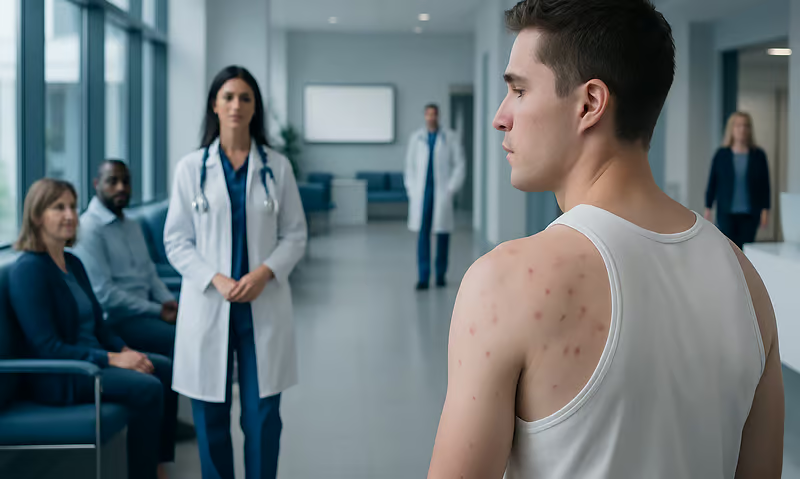
Blueberry Muffin Rash Explained: Common Triggers and Red Flags

Blueberry muffin rash usually refers to widespread blue-purple papules or nodules in a newborn, not to a reaction to blueberries or food. The appearance can result from blood-cell production in the skin, known as extramedullary hematopoiesis.
Key Takeaways
- Blueberry muffin rash usually refers to widespread blue-purple papules or nodules in a newborn, not to a reaction to blueberries or food.
- The appearance can result from blood-cell production in the skin, known as extramedullary hematopoiesis.
- Congenital infections are important possible causes, but blood conditions, cancers and benign skin disorders may also be considered.
- A newborn with this rash should be assessed promptly by a pediatric clinician, especially if there is fever, poor feeding, jaundice, breathing difficulty or unusual sleepiness.
- Treatment depends entirely on the cause and may range from monitoring to treatment for an infection, blood disorder or another medical condition.
Blueberry muffin rash describes blue, purple, red-brown or bruise-like raised spots seen most often at birth or during the first weeks of life. It is not a diagnosis itself; it is a clinical sign that requires timely pediatric assessment to find and treat the underlying cause.
What is a blueberry muffin rash?
A blueberry muffin rash is a descriptive term for multiple blue-purple, red-brown or dark pink spots, bumps or nodules on a newborn’s skin. The spots can resemble the color and texture of a blueberry muffin, which is how the term developed. It is most often noticed at birth or shortly afterward, and may occur on the trunk, face, scalp, arms and legs.
Although it is called a rash, blueberry muffin rash is not usually a simple irritation, allergy or contagious skin condition. It may occur when blood cells are produced outside the bone marrow and collect in the skin. This process, called extramedullary hematopoiesis, can happen before birth when the body is responding to certain illnesses or blood-related problems.
The finding should be evaluated promptly by a pediatrician or neonatal specialist. Some causes are treatable infections acquired before birth, while others involve the blood, immune system, liver or, less commonly, tumors. In a small number of babies, the lesions are due to a benign skin condition, but that conclusion should only be made after appropriate medical assessment.
What do the spots look like and what symptoms may occur?
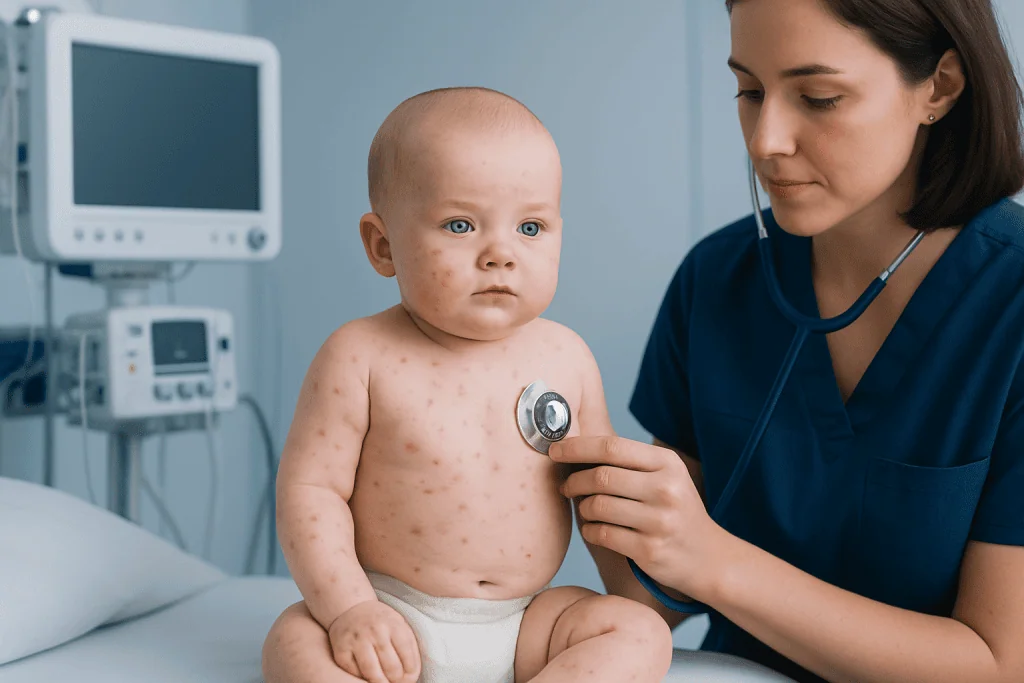
Lesions are typically round or oval and may be flat, slightly raised or firm to the touch. Their color may range from blue-gray and violaceous to red-purple or brown. Unlike many common newborn rashes, they generally do not blanch completely when gentle pressure is applied. The number and size of spots can vary from a few isolated lesions to a widespread eruption.
Some babies have only skin findings and otherwise appear well. However, the rash may occur alongside signs related to the underlying condition. These can include jaundice, paleness, enlarged liver or spleen, a small head size, poor feeding, low birth weight, bruising, pinpoint red-purple spots called petechiae, or unusual sleepiness.
Not every purple mark on a newborn is a blueberry muffin lesion. Birth-related bruising, vascular birthmarks, benign newborn rashes and bleeding under the skin can have a similar appearance. A clinician considers the pattern, timing, whether lesions fade with pressure, and the baby’s general health to distinguish among these possibilities.
Common causes and risk factors
Historically, blueberry muffin rash has been associated with congenital infections, meaning infections passed to a baby during pregnancy. These may include cytomegalovirus, rubella, toxoplasmosis, syphilis, herpes simplex virus and parvovirus B19. Depending on the infection, a baby may also have changes involving the eyes, hearing, brain, liver, bones or blood cells. Maternal infection does not always cause symptoms during pregnancy, so careful newborn evaluation is important when this rash is present.
Blood-related conditions are another important group of causes. Severe anemia, red blood cell breakdown, platelet disorders and incompatibility between maternal and fetal blood groups can stimulate blood-cell production outside the bone marrow. Liver disease and some inherited metabolic or storage disorders may also be considered in selected cases.
Less commonly, blueberry muffin-like lesions can reflect cancer or abnormal cell growth, such as congenital leukemia, neuroblastoma that has spread to the skin, or Langerhans cell histiocytosis. These conditions are uncommon, but clinicians evaluate for them because early recognition can make a meaningful difference. Benign causes, including certain vascular or skin-cell conditions, are possible as well.
Risk factors depend on the cause. They can include a known infection during pregnancy, incomplete immunity to vaccine-preventable infections before pregnancy, maternal-fetal blood group incompatibility, a family history of inherited blood disorders, or abnormal findings on prenatal scans. In many cases, there is no obvious risk factor before the baby is examined.
How clinicians evaluate blueberry muffin lesions
Assessment begins with a prompt examination of the newborn’s overall condition. The clinician will ask about the pregnancy, prenatal test results, maternal illnesses, medications, travel and possible infection exposures. They will examine the skin closely and check growth, temperature, feeding, alertness, the liver and spleen, and the eyes and nervous system where appropriate.
Testing is tailored to the baby’s presentation. It may include a complete blood count, platelet count, blood film, liver-function tests and tests that look for anemia or red blood cell destruction. Specific blood, urine or saliva tests may be used to assess for congenital infections. Imaging, hearing tests or an eye examination may be advised if symptoms or test results suggest involvement beyond the skin.
If the cause remains uncertain, specialists may recommend a skin biopsy. A small sample of a lesion can show whether the skin contains developing blood cells, inflammatory cells, abnormal vascular tissue or tumor cells. This result can help distinguish a blueberry muffin rash caused by extramedullary hematopoiesis from other conditions with a similar appearance.
Evaluation can involve neonatology, pediatrics, infectious diseases, hematology, dermatology, genetics or oncology, depending on the findings. Families should understand that testing is not intended to assume the most serious diagnosis; it is a structured way to identify the cause safely and avoid missing conditions that need early treatment.
Treatment options and outlook
There is no single treatment for blueberry muffin rash because the spots are a sign rather than a disease. Care focuses on the condition causing them. For example, a confirmed congenital infection may require antiviral, antibiotic or other infection-specific treatment, while anemia or platelet problems may need close monitoring and treatment directed by a neonatal or hematology team.
When lesions are linked to a blood disorder, treatment may address the source of anemia, excessive red blood cell breakdown or low platelets. When cancer or an infiltrative disorder is identified, specialist-led care is required. A benign diagnosis may need only observation, but follow-up is still important to make sure the lesions fade as expected and the baby remains well.
The outlook varies considerably. In some babies, lesions resolve as the underlying problem improves. In others, the long-term outlook depends more on effects of the underlying infection or condition on organs such as the hearing system, eyes, brain, liver or blood. Early evaluation helps clinicians provide appropriate treatment and monitoring.
Acibadem International’s multidisciplinary specialists and JCI-accredited hospitals can assess newborn skin findings and coordinate care for international patients when pediatric, infectious disease, hematology or dermatology expertise is needed.
Prevention and practical steps for parents
Not all causes of blueberry muffin rash can be prevented. However, pre-pregnancy and prenatal care can reduce the risk of some congenital infections and identify certain blood-related concerns early. This includes discussing recommended vaccinations before pregnancy, attending prenatal appointments, completing advised screening tests, and seeking medical advice after a significant illness or possible infection exposure during pregnancy.
During pregnancy, food safety and infection-prevention measures can be helpful. These include washing hands regularly, avoiding unpasteurized dairy products and undercooked meat, washing produce, using gloves when handling soil or cat litter, and discussing travel-related infection risks with a clinician. Recommendations may vary by location, health history and stage of pregnancy.
After birth, parents should not apply creams, herbal products or home remedies to unexplained purple lesions unless a clinician recommends them. Taking clear photographs in natural light, noting when lesions first appeared, and bringing prenatal records to the appointment can help the medical team. Parents should also share any changes in feeding, breathing, urine output, stool color, behavior or temperature.
When to seek medical care
A newborn with new blue-purple, bruise-like or raised spots should be assessed by a pediatric clinician urgently, ideally on the same day. This is especially important when lesions are widespread, appear soon after birth, increase in number, or are accompanied by petechiae, jaundice, paleness or an enlarged-looking abdomen.
Emergency medical care is needed if a baby has difficulty breathing, blue lips or skin, fever or an unusually low temperature, poor feeding, repeated vomiting, marked sleepiness, limpness, seizures, persistent crying that cannot be soothed, or fewer wet diapers than expected. These symptoms do not identify one particular cause, but they can signal that a newborn needs immediate assessment.
Parents should trust their observations. Even when a baby seems comfortable, a clinician should examine suspected blueberry muffin lesions rather than assuming they are harmless birthmarks or bruising. Prompt evaluation is a precaution that supports timely diagnosis, reassurance and appropriate care.
Frequently asked questions
Is blueberry muffin rash caused by eating blueberries?
No. The name only describes the blue-purple, bumpy appearance of the lesions. It is not a food allergy and is not caused by a mother or baby eating blueberries.
Can blueberry muffin rash be harmless?
Some newborn skin conditions that resemble blueberry muffin lesions are benign and may fade without treatment. However, true blueberry muffin rash can be associated with important medical conditions, so a clinician should determine the cause before it is considered harmless.
Is blueberry muffin rash contagious?
The skin lesions themselves are not contagious through touch. If the underlying cause is a congenital infection, the infection was typically acquired before birth, and the medical team can explain any relevant precautions for the baby and family.
How long does blueberry muffin rash last?
Duration depends on the underlying cause. Lesions may improve over days to weeks when a temporary blood-related trigger resolves, while other causes can persist until the associated condition is treated or monitored.
Can ultrasound detect the cause before birth?
Prenatal ultrasound may identify some findings associated with congenital infections, anemia or growth concerns, but it cannot diagnose every cause of blueberry muffin rash. Blood tests, detailed pregnancy history and newborn examination remain important.
What tests may a baby need for this rash?
Testing may include blood counts, platelet levels, liver tests and targeted tests for congenital infections. Depending on the examination, clinicians may also recommend imaging, hearing or eye assessments, or occasionally a skin biopsy.
References
- American Academy of Pediatrics
- Centers for Disease Control and Prevention
- Merck Manual Professional Edition
- World Health Organization
- National Institutes of Health
This article is for general information only and is not a substitute for professional medical advice. Please consult a qualified doctor about your individual situation.
Hair transplant in Turkey — costs, graft counts & a free assessment
JCI-accredited · board-certified surgeons · reply within 24h
Add us as a Preferred Source to see more of our trusted health content across Google Search, AI Overviews and Discover.