Boil on Inner Thigh: A Complete Medical Overview

A boil on inner thigh often starts as a red, painful bump that becomes larger and may fill with pus. Friction, sweating, shaving, and bacteria on the skin can increase the chance of developing a boil.
Key Takeaways
- A boil on inner thigh often starts as a red, painful bump that becomes larger and may fill with pus.
- Friction, sweating, shaving, and bacteria on the skin can increase the chance of developing a boil.
- Boils should not be squeezed or punctured at home because this can worsen infection and scarring.
- Warm compresses may help a small boil drain naturally, but some cases need antibiotics or drainage by a doctor.
- Medical care is important if there is fever, spreading redness, severe pain, frequent recurrence, or no improvement.
A boil on inner thigh is usually a tender, swollen lump caused by a bacterial infection in a hair follicle or nearby skin. Many boils improve with warm compresses and good hygiene, but larger, recurrent, or very painful boils may need medical evaluation and treatment.
Overview: What a Boil on the Inner Thigh Means
A boil on inner thigh is a localized skin infection that usually begins in or around a hair follicle. It often appears as a sore, red lump and may gradually become larger, softer in the center, and filled with pus. Because the inner thighs are exposed to friction, sweat, and skin-to-skin contact, this area is especially prone to irritation and bacterial overgrowth.
Most boils are caused by bacteria, commonly Staphylococcus aureus, entering the skin through a tiny break such as shaving irritation, chafing, or an inflamed hair follicle. The body responds by sending infection-fighting cells to the area, which creates swelling, warmth, pain, and the collection of pus. This can feel alarming, but many boils are manageable and heal without long-term problems when treated appropriately.
It is also important to understand that not every painful bump on the inner thigh is a boil. Ingrown hairs, folliculitis, cysts, or chronic inflammatory conditions can look similar. If the problem keeps returning, involves multiple nodules, or causes tunnels or scarring, a doctor may also consider conditions such as hidradenitis suppurativa.
How to Recognize the Symptoms
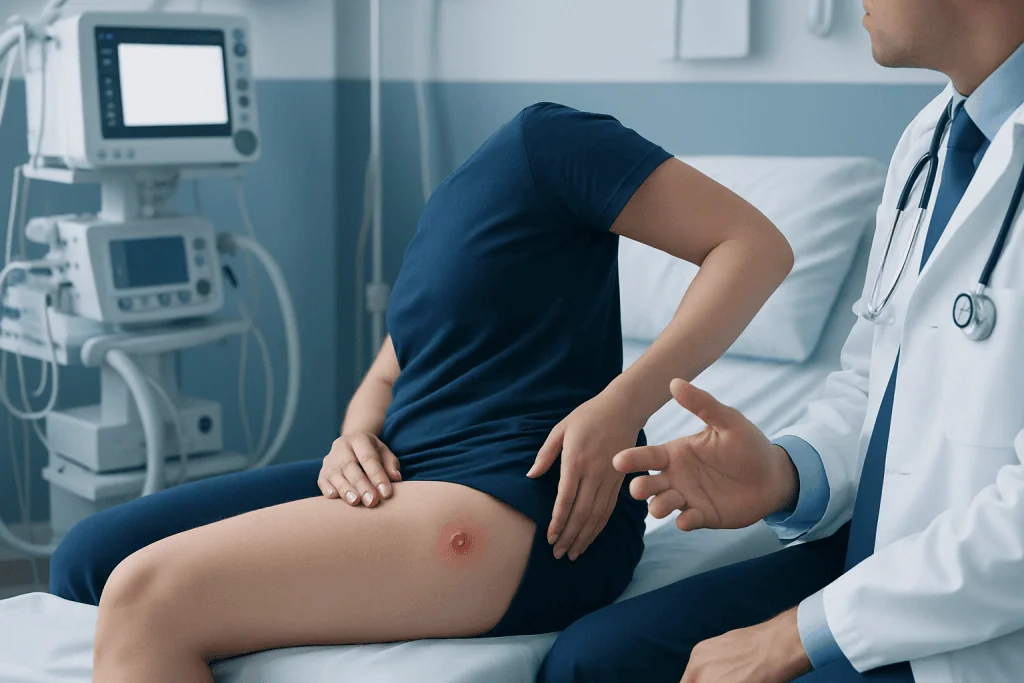
A boil often starts as a small, firm, red bump that is tender to the touch. Over several days, it may enlarge and become more painful, especially when walking, exercising, or sitting because the inner thigh is a high-friction area. The skin over the lump may feel warm, and the center may turn white or yellow as pus collects.
As the boil matures, some people notice throbbing discomfort, swelling in the surrounding skin, or a sensation of pressure. Eventually, the boil may open and drain thick fluid. After drainage, pain usually begins to improve, although the area can remain sensitive for a short time while it heals.
Symptoms that suggest a more significant infection include:
- Rapid increase in size
- Severe pain or difficulty walking
- Redness spreading beyond the lump
- Fever or chills
- Several boils appearing together
- Swollen lymph nodes in the groin
When a cluster of boils joins under the skin, this may form a deeper infection called a carbuncle. A painful lump that looks like a boil can also sometimes be a skin abscess, which may need medical drainage rather than home care alone.
Why Boils Develop on the Inner Thigh

The inner thigh is a common place for boils because the skin there experiences repeated rubbing, moisture, and warmth. These conditions can irritate hair follicles and make it easier for bacteria to enter the skin. Even tiny, barely visible breaks in the skin can create an entry point for infection.
Several everyday factors can increase the chance of getting a boil on inner thigh. These include tight clothing, prolonged sweating, shaving or waxing, obesity, sports activity, and limited airflow in the groin area. People who share towels, razors, or sports equipment may also be more exposed to bacteria that can cause skin infections.
Some medical conditions can make boils more likely or harder to clear. These include diabetes, eczema, weakened immune function, and recurring skin infections. Recurrent boils may also be linked to bacterial colonization of the skin or nose, meaning the bacteria are present even when there is no active infection.
Not all bumps are infectious. Friction-related rashes, inflamed cysts, and acne-like disorders can mimic boils. If lesions are frequent, unusually deep, or leave scars, a dermatologist may need to evaluate for a chronic skin condition rather than a simple one-time infection.
How Doctors Diagnose a Boil
Doctors usually diagnose a boil by examining the skin and asking about symptoms such as pain, drainage, fever, recurrence, and recent shaving or friction. In many straightforward cases, no special test is needed. The appearance and location are often enough to identify a boil or another superficial skin infection.
If the lesion is large, repeatedly returns, or does not improve as expected, the doctor may take a sample of the drainage for culture. This can help identify which bacteria are causing the infection and which antibiotics are more likely to work if medicine is needed. This is particularly helpful when there is concern for antibiotic-resistant bacteria.
The doctor may also look for underlying reasons why the boil developed. Depending on the person and the pattern of recurrence, this might include checking for diabetes, skin disorders, or ongoing irritation from clothing and sweat. If the lump is unusually deep or not clearly a boil, imaging such as ultrasound may occasionally help show whether there is a fluid pocket that requires drainage.
Treatment Options and What to Avoid
Small boils may improve with conservative care. A warm, clean compress applied several times a day can increase circulation to the area and encourage the boil to come to a head and drain on its own. Keeping the skin clean, wearing loose breathable clothing, and covering any drainage with a clean bandage can help reduce discomfort and limit spread.
It is important not to squeeze, puncture, or cut a boil at home. Doing so can push infection deeper into the skin, increase pain, spread bacteria to nearby tissue, and raise the risk of scarring. Home care should focus on comfort, hygiene, and observing whether the area is improving or worsening over a few days.
If the boil is large, very painful, recurrent, or associated with fever or spreading redness, medical treatment may be needed. A doctor may recommend antibiotics in selected cases, especially if there is surrounding cellulitis, multiple lesions, or higher risk due to other health conditions. When pus is trapped under the skin, professional drainage may be the most effective treatment. This is generally handled through abscess drainage or another minor office-based procedure, depending on the size and depth of the infection.
People with repeated episodes may benefit from a broader evaluation of skin health and triggers. In some situations, referral to dermatology care can help distinguish recurrent boils from chronic inflammatory skin disease and guide longer-term prevention strategies.
Prevention and Self-care for Recurrence
Preventing a boil on inner thigh often comes down to reducing friction, moisture, and bacterial irritation. Showering after exercise, drying the groin area well, and changing out of sweaty clothing promptly can help. Loose, breathable fabrics may reduce rubbing and trapped heat, especially in hot weather or during physical activity.
People who shave the inner thigh should use gentle techniques and avoid shaving over irritated or infected skin. Using a clean razor, shaving in the direction of hair growth, and not sharing personal items such as towels or razors can lower the risk of infection. If shaving repeatedly triggers bumps or infection, trimming rather than close shaving may be worth discussing with a clinician.
If boils keep coming back, it may help to review lifestyle and medical factors with a doctor. Weight management, blood sugar control, and treatment of eczema or other skin conditions can reduce recurrence in some people. For persistent or severe patterns, specialist support such as infectious diseases evaluation may be considered to assess recurrent bacterial infection and prevention measures.
Near the end of the care pathway, some patients seek coordinated international evaluation for complex or recurrent skin problems. Acibadem International’s multidisciplinary specialists in JCI-accredited hospitals diagnose and treat skin infections and related conditions for international patients when advanced assessment is needed.
When to Seek Medical Care
Many small boils improve with warm compresses and basic self-care, but a doctor should evaluate symptoms that suggest the infection is more serious or unlikely to resolve without treatment. Early assessment can reduce discomfort and help prevent complications such as a deeper abscess, spreading skin infection, or recurrence.
Medical attention is recommended if a boil on inner thigh is very painful, larger than expected, keeps growing, or has not improved within several days. Care is also important if there is fever, worsening redness, a red streak on the skin, foul-smelling drainage, or repeated boils in the same area.
People with diabetes, immune system problems, cancer treatment, or other conditions that affect healing should be especially cautious and seek advice sooner. Children, older adults, and anyone with a rapidly worsening skin infection should also be assessed promptly.
Emergency care may be needed if there are signs of severe infection, such as high fever, confusion, extreme weakness, or rapidly spreading redness. When in doubt, it is safest to consult a qualified healthcare professional rather than trying to manage a worsening boil at home.
Possible Complications and Long-term Outlook
Most uncomplicated boils heal fully, especially when they are kept clean and allowed to drain naturally or treated properly when needed. After healing, there may be temporary discoloration of the skin or a small scar, particularly if the boil was large or repeatedly irritated.
Complications are more likely when a boil is squeezed, left untreated despite worsening symptoms, or occurs in someone with underlying health conditions. Infection can spread to the surrounding skin, forming cellulitis, or deepen into a larger abscess. Recurrent episodes may affect quality of life because of pain, walking discomfort, and concern about hygiene or scarring.
The long-term outlook is generally good. The key is to recognize the problem early, avoid home squeezing, and seek care when signs point to a larger or recurrent infection. If episodes happen often, medical evaluation can help identify whether the cause is repeated bacterial exposure, friction, or another skin condition that needs a different treatment plan.
Frequently asked questions
How do we know if a boil on the inner thigh is serious?
A boil may need medical attention if it becomes very painful, grows quickly, causes fever, or is surrounded by spreading redness. Recurrent boils, multiple boils, or a boil that does not improve after several days should also be evaluated by a doctor.
Can a boil on the inner thigh go away on its own?
Yes, some small boils can drain and heal on their own with warm compresses and careful hygiene. However, not all do, and worsening pain, swelling, or fever means professional treatment may be needed.
Should a boil be popped or squeezed at home?
No. Squeezing or puncturing a boil at home can push bacteria deeper into the skin, worsen infection, and increase the chance of scarring. It is safer to let it drain naturally or have it treated by a healthcare professional if needed.
What is the difference between a boil and an ingrown hair?
An ingrown hair usually causes a smaller bump related to a trapped hair under the skin and may be less painful. A boil is typically larger, more inflamed, and often develops a pus-filled center because it is a deeper bacterial infection.
Why do boils keep coming back on the inner thigh?
Repeated boils can be related to friction, sweating, shaving, bacterial colonization, or medical conditions such as diabetes or chronic inflammatory skin disease. A doctor can help identify triggers and decide whether tests or preventive treatment are needed.
Are antibiotics always needed for an inner thigh boil?
No. Small boils may improve without antibiotics, especially if they drain naturally and there are no signs of spreading infection. Antibiotics are more likely to be used when there is cellulitis, fever, multiple lesions, recurrence, or increased risk from other health conditions.
References
- American Academy of Dermatology
- National Health Service
- Mayo Clinic
- Centers for Disease Control and Prevention
- Merck Manual Consumer Version
This article is for general information only and is not a substitute for professional medical advice. Please consult a qualified doctor about your individual situation.
Hair transplant in Turkey — costs, graft counts & a free assessment
JCI-accredited · board-certified surgeons · reply within 24h
Add us as a Preferred Source to see more of our trusted health content across Google Search, AI Overviews and Discover.

More from the Health Library

Cosmetic Eyelid: Procedure, Recovery and Results

Pee Sweet Smell: An Evidence-Based Guide for Patients

Contractures: A Complete Medical Overview

Idiopathic Hypersomnia — Explained by Medical Evidence, Not Myths

Half Creamer — Explained by Medical Evidence, Not Myths