Bone Bruise Heel of Foot: An Evidence-Based Guide for Patients

A bone bruise in the heel is deeper than a skin bruise and affects bone tissue, often after impact, repeated stress, or a twisting injury. Common symptoms include localized heel pain, tenderness, swelling, and pain that worsens with walking or standing.
Key Takeaways
- A bone bruise in the heel is deeper than a skin bruise and affects bone tissue, often after impact, repeated stress, or a twisting injury.
- Common symptoms include localized heel pain, tenderness, swelling, and pain that worsens with walking or standing.
- X-rays may be normal, so a doctor may use MRI when symptoms suggest a bone bruise or another hidden injury.
- Treatment usually involves activity modification, supportive footwear, ice, elevation, and gradual return to activity.
- Medical review is important if a person cannot bear weight, has severe swelling, numbness, or pain that does not improve.
A bone bruise heel of foot is an injury inside the heel bone or nearby bone tissue that can cause deep, aching pain, tenderness, and discomfort when standing or walking. It is usually less severe than a fracture, but it can still take weeks to months to settle and should be assessed if pain is strong, persistent, or linked to a significant injury.
Overview
A bone bruise heel of foot means there has been injury to the internal structure of the bone, most often the heel bone, also called the calcaneus. Unlike a bruise on the skin, a bone bruise is not always visible from the outside. It can cause deep, sore, throbbing, or sharp pain in the bottom or back of the heel, especially after an impact, fall, sports injury, or repeated strain.
This injury is less serious than a full fracture, but it is still meaningful because bone tissue needs time to recover. Many people continue to walk on a heel bone bruise, which can prolong symptoms if the heel is repeatedly stressed before it has healed. Recovery time varies depending on the severity of the injury, daily activity level, and whether there are other foot problems at the same time.
Heel pain is common and does not always mean there is a bone bruise. Conditions such as plantar fasciitis and tendon irritation may feel similar at first. A careful medical assessment helps identify the true cause so treatment can be directed appropriately.
Symptoms of a Heel Bone Bruise

The symptoms of a bruised heel bone often develop after a clear injury, but they can also come on more gradually after repeated stress. Pain is usually felt in one specific area of the heel and may be described as deep, aching, or unusually tender. Some people notice discomfort mainly when they first stand up, while others feel it most during longer periods of walking or exercise.
Common signs and symptoms can include:
- Localized heel pain, especially when bearing weight
- Tenderness when pressing on the heel
- Mild swelling around the heel or ankle
- Pain after jumping, running, or landing hard on the foot
- Limping or avoiding pressure on the painful side
- Reduced ability to exercise or stand for long periods
Symptoms can overlap with other causes of heel pain. For example, a stress injury, ligament injury, or even a small fracture can cause similar complaints. If pain is severe or a person is unable to walk comfortably, it is important not to assume it is “just a bruise.”
Causes and Risk Factors
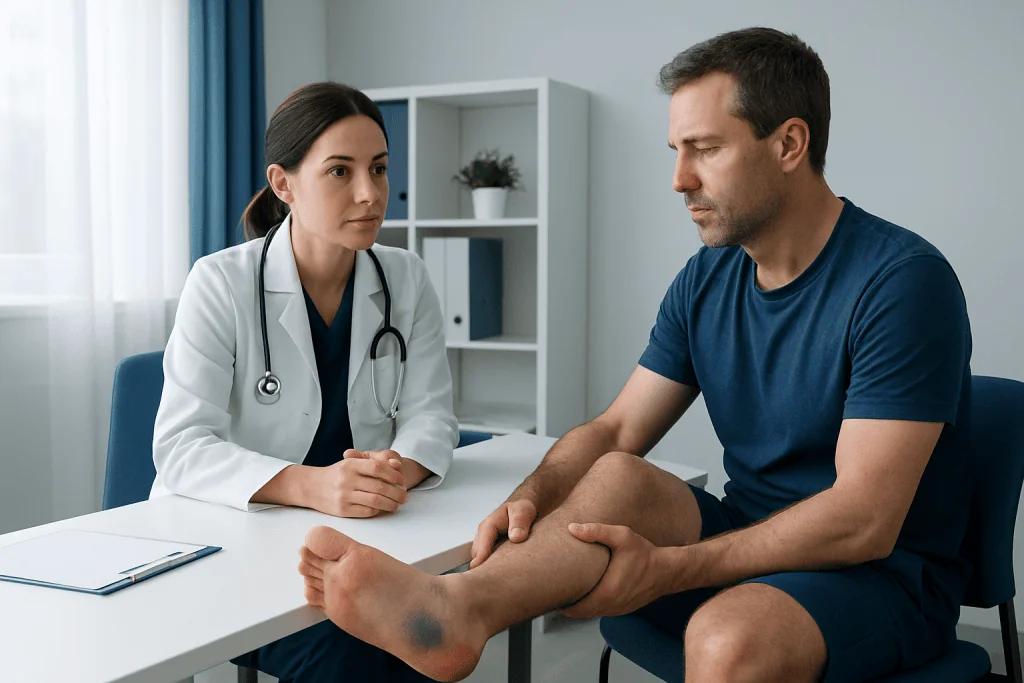
A bone bruise in the heel usually happens when the heel absorbs more force than it can comfortably handle. This may occur after a fall from a height, landing awkwardly during sports, a sudden increase in running or jumping, or direct impact in contact sports. Repetitive loading can also irritate the heel bone over time, particularly if training intensity rises too quickly.
Several factors can increase the likelihood of this injury. Hard surfaces, worn-out shoes, poor cushioning, and long periods of standing or walking may all contribute. People who play basketball, football, tennis, or run regularly may be more exposed to repeated impact through the heel.
Foot shape and biomechanics can matter as well. High arches, altered gait, previous heel injuries, or poor shock absorption can place extra stress on the calcaneus. In some cases, doctors also consider whether symptoms could reflect a stress fracture rather than a bone bruise, especially if pain began with overuse rather than one single accident.
How Doctors Diagnose It
Diagnosis starts with a medical history and physical examination. A doctor will usually ask when the pain started, whether there was a fall or sports injury, where the pain is felt, and whether weight-bearing is possible. During the examination, the heel is checked for point tenderness, swelling, range of motion, walking pattern, and signs of associated ankle or foot injury.
X-rays are often the first imaging test when injury-related heel pain is present. They are useful for detecting many fractures and helping rule out other causes of pain. However, a bone bruise may not appear on a plain X-ray, so normal X-ray results do not always explain ongoing heel pain.
If symptoms are strong, persistent, or not consistent with X-ray findings, MRI may be recommended because it can show bone marrow edema and soft tissue injuries more clearly. In some cases, a specialist may also evaluate for nearby tendon, ligament, or cartilage problems, or for structural issues that benefit from orthopedic assessment.
Treatment and Recovery
Treatment for a bone bruise heel of foot is usually conservative, meaning it focuses on protecting the area while the body heals. The main goals are to reduce pain, avoid further impact, and gradually restore normal walking and activity. Rest from aggravating activities is often the most important step, especially avoiding running, jumping, and prolonged standing if these increase symptoms.
Supportive care commonly includes ice, elevation, and footwear with good cushioning. Some people benefit from heel cups, shock-absorbing insoles, or temporary use of a walking boot if advised by a doctor. Nonprescription pain relief may help, but any medication should be used according to medical guidance and with attention to a person’s overall health history.
Recovery is not always quick because bone tissue heals more slowly than a simple soft-tissue strain. A gradual return to activity is usually recommended once walking becomes more comfortable and tenderness begins to settle. If gait changes, stiffness, or weakness develop, structured physical therapy and rehabilitation may help improve mechanics and reduce the risk of reinjury.
Surgery is not a standard treatment for an isolated bone bruise. If imaging shows a more serious injury, such as a displaced fracture or major structural damage, the treatment plan may change. In those situations, specialist care, which may include foot and ankle surgery, is directed at the underlying problem rather than the bruise itself.
Self-care and Prevention
Self-care is aimed at limiting repeated stress on the heel while symptoms improve. Wearing well-cushioned, properly fitted shoes can make a meaningful difference, especially for people who spend much of the day on their feet. Athletes may need to pause high-impact training and switch temporarily to lower-impact exercise, such as cycling or swimming, depending on medical advice.
Helpful preventive measures include:
- Increasing exercise intensity gradually rather than suddenly
- Replacing worn athletic shoes regularly
- Using shock-absorbing insoles or heel supports when appropriate
- Warming up before sports and allowing time for recovery
- Addressing gait or balance issues if they contribute to repeated stress
- Maintaining bone health with a balanced diet and general medical care
Persistent heel pain should not be ignored, even if it seems mild at first. Repeated impact on a healing heel can slow recovery and may increase the chance of a more significant overuse injury. If symptoms keep returning, a clinician may assess for underlying conditions affecting the heel, ankle, or walking pattern.
When to Seek Medical Care
Medical care is recommended if heel pain follows a fall, jump, twist, or sports collision and does not improve quickly with rest. A person should also seek assessment if the heel is very tender, walking is difficult, or symptoms continue for more than several days despite activity reduction. Persistent pain deserves attention because a hidden fracture or another injury may need different treatment.
Urgent evaluation is especially important if there is inability to bear weight, marked swelling, visible deformity, numbness, color change in the foot, or pain that is rapidly worsening. These signs do not always mean a serious injury, but they should be checked promptly. Children, older adults, and people with diabetes, circulation problems, or reduced bone strength should be particularly cautious with new foot injuries.
If specialist input is needed, multidisciplinary teams can assess both the bone injury and other possible causes of heel pain. Acibadem International’s multidisciplinary specialists in JCI-accredited hospitals diagnose and treat foot and heel conditions for international patients when further evaluation is required.
Frequently asked questions
What does a bone bruise heel of foot feel like?
It often feels like deep, localized heel pain rather than a surface bruise. The heel may be tender to touch and more painful when standing, walking, running, or landing on the foot.
Can a heel bone bruise show up on an X-ray?
Often it does not show clearly on a standard X-ray. X-rays are still useful because they can help rule out many fractures, while MRI may be used if a bone bruise or hidden injury is suspected.
How long does a bruised heel bone take to heal?
Healing time varies depending on the severity of the injury and how much the heel is stressed during recovery. Some people improve within a few weeks, while others may need several weeks to a few months before impact activities feel comfortable again.
Is a bone bruise the same as a fracture?
No. A bone bruise means the bone has been injured internally without a complete break, while a fracture involves a crack or break in the bone. Even so, the symptoms can overlap, so persistent or severe heel pain should be assessed by a doctor.
Should a person keep walking on a heel bone bruise?
Light walking may still be possible, but pushing through pain can delay healing. It is usually best to reduce activities that worsen symptoms and follow medical advice about rest, supportive footwear, or temporary offloading.
When is heel pain more likely to need urgent medical attention?
Prompt assessment is important if a person cannot bear weight, has major swelling, visible deformity, numbness, or rapidly worsening pain after an injury. These symptoms can suggest a more serious problem that needs timely evaluation.
References
- American Academy of Orthopaedic Surgeons
- American College of Foot and Ankle Surgeons
- National Institute of Arthritis and Musculoskeletal and Skin Diseases
- MedlinePlus
- NHS
This article is for general information only and is not a substitute for professional medical advice. Please consult a qualified doctor about your individual situation.
Joint and spine care in Turkey — expert assessment & treatment
JCI-accredited · board-certified surgeons · reply within 24h
Add us as a Preferred Source to see more of our trusted health content across Google Search, AI Overviews and Discover.