

Breast Cancer: Diagnosis, Staging, and Personalized Treatment
Breast cancer diagnosis usually involves clinical examination, imaging, and a biopsy to confirm the type of cancer. Staging describes how far the cancer has spread, while tumor biology helps predict which treatments may work best.
Key Takeaways
- Breast cancer diagnosis usually involves clinical examination, imaging, and a biopsy to confirm the type of cancer.
- Staging describes how far the cancer has spread, while tumor biology helps predict which treatments may work best.
- Treatment may include surgery, radiation therapy, chemotherapy, hormone therapy, targeted therapy, immunotherapy, or a combination.
- Personalized treatment considers tumor receptors, genetic features, cancer stage, menopausal status, general health, and patient preferences.
- Regular screening and prompt medical assessment of breast changes can support earlier detection.
Breast cancer care has become increasingly personalized, using imaging, biopsy results, tumor biology, and genetic information to guide treatment. Early evaluation and a coordinated care team can help patients understand their options and make informed decisions.
Overview
Breast cancer begins when cells in the breast grow in an uncontrolled way and form a tumor. It can start in different parts of the breast, most often in the milk ducts or lobules. Some breast cancers remain localized for a long time, while others can spread to lymph nodes or other organs if not diagnosed and treated.
Modern breast cancer care is not based on one single approach. Doctors evaluate the size and location of the tumor, whether lymph nodes are involved, and whether the cancer cells have certain receptors such as estrogen receptor, progesterone receptor, or HER2. These details help define the subtype of breast cancer and guide treatment decisions.
Many people diagnosed with breast cancer can receive effective treatment, especially when the disease is found early. Even when breast cancer is more advanced, personalized therapies can help control the disease, relieve symptoms, and support quality of life. A multidisciplinary team usually includes breast surgeons, medical oncologists, radiation oncologists, radiologists, pathologists, genetic counselors, nurses, and rehabilitation specialists.
Symptoms and Early Warning Signs
Breast cancer may not cause symptoms in its early stages, which is why screening is important. When symptoms do occur, the most common sign is a new lump or thickening in the breast or underarm area. Not every lump is cancer, but any new breast change should be assessed by a qualified doctor.
Other possible signs include changes in breast size or shape, skin dimpling, redness, scaling, nipple inversion, nipple discharge, or persistent pain in one area of the breast. Some people notice swelling in the armpit or around the collarbone, which may suggest lymph node involvement. Inflammatory breast cancer, a less common form, can cause breast swelling, warmth, redness, or a peau d’orange texture of the skin.
Symptoms can also be caused by benign conditions such as cysts, fibroadenomas, infections, hormonal changes, or injury. However, it is safest not to wait and see if a new symptom disappears on its own, especially if it persists for more than a short time or appears only on one side.
Causes and Risk Factors
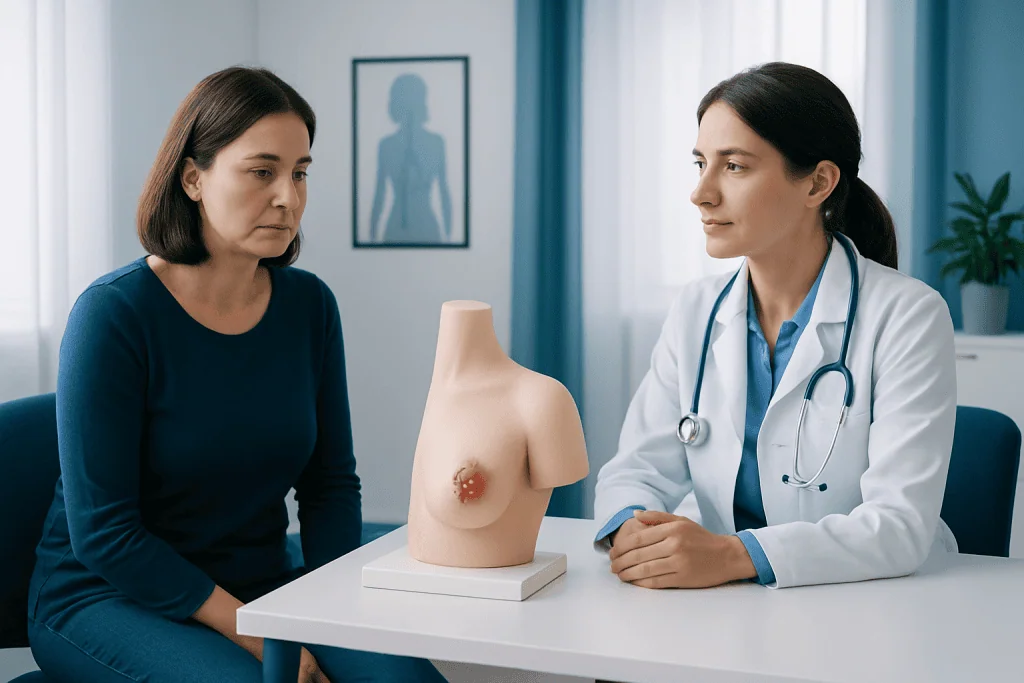
Breast cancer develops due to changes in the DNA of breast cells. In many cases, there is no single clear cause. The risk may be influenced by a combination of age, hormones, inherited genetic variants, reproductive history, breast tissue density, lifestyle factors, and environmental exposures.
Risk factors can include increasing age, a personal or family history of breast or ovarian cancer, inherited variants in genes such as BRCA1 or BRCA2, previous chest radiation, dense breast tissue, early first menstrual period, later menopause, and certain hormone therapy use after menopause. Not having children, having a first full-term pregnancy later in life, and some benign breast conditions may also affect risk.
Lifestyle-related factors may include alcohol use, excess body weight after menopause, and low physical activity. Having risk factors does not mean a person will develop breast cancer, and many people diagnosed have no strong family history. Conversely, people with inherited genetic risk can benefit from tailored screening and prevention strategies.
- Non-modifiable risks: age, family history, inherited gene variants, breast density, and reproductive history.
- Potentially modifiable risks: alcohol intake, physical activity, weight management after menopause, and decisions about hormone therapy made with a doctor.
- Protective steps: attending recommended screening and seeking genetic counseling when family history suggests increased risk.
Diagnosis: From Imaging to Biopsy
Diagnosis usually begins with a clinical breast examination and imaging. Mammography is commonly used to detect suspicious areas, including masses and microcalcifications. Breast ultrasound can help distinguish solid lumps from fluid-filled cysts and is often used for younger patients, dense breasts, or targeted evaluation of a specific area.
Breast MRI may be recommended in selected situations, such as evaluating the extent of known cancer, screening people at high genetic risk, or assessing response to treatment before surgery. Imaging can suggest whether a finding is suspicious, but it cannot confirm cancer on its own. A biopsy is needed to make a definite diagnosis.
During a biopsy, a small tissue sample is removed and examined by a pathologist. Core needle biopsy is commonly performed with imaging guidance. The pathology report usually identifies the cancer type, tumor grade, and receptor status. Important tests include estrogen receptor, progesterone receptor, and HER2 status. In some cases, additional molecular or genomic tests are used to estimate recurrence risk and help decide whether chemotherapy is likely to add benefit.
Blood tests and additional imaging may be used depending on symptoms, tumor features, and clinical stage. These may include CT, bone scan, PET-CT, or other tests when doctors need to check whether cancer has spread beyond the breast and nearby lymph nodes.
Staging and Tumor Biology
Breast cancer staging describes the extent of disease at diagnosis. Doctors assess the tumor size, whether nearby lymph nodes contain cancer cells, and whether cancer has spread to distant organs. This is often called the TNM system, where T refers to the primary tumor, N refers to lymph nodes, and M refers to metastasis.
Stage is usually grouped from stage 0 to stage IV. Stage 0 refers to non-invasive disease such as ductal carcinoma in situ, where abnormal cells are confined to the milk ducts. Stages I to III describe invasive breast cancer that is localized or regionally advanced. Stage IV means the cancer has spread to distant areas of the body, such as bone, liver, lung, or brain.
Staging is only one part of treatment planning. Tumor biology is equally important. Hormone receptor-positive cancers may respond well to endocrine therapy. HER2-positive cancers can be treated with HER2-targeted medicines. Triple-negative breast cancer does not have estrogen receptor, progesterone receptor, or HER2 overexpression, so chemotherapy and, in selected cases, immunotherapy or other targeted approaches may be used.
Doctors may also consider tumor grade, proliferation markers, genetic mutations, menopausal status, overall health, fertility goals, and the patient’s preferences. This combined assessment helps personalize care rather than relying on stage alone.
Personalized Treatment Options
Treatment is planned according to the cancer stage and subtype, as well as the patient’s health and priorities. Surgery is a common treatment for early and locally advanced breast cancer. Breast-conserving surgery removes the tumor with a margin of healthy tissue, while mastectomy removes the breast tissue. Some patients may also have sentinel lymph node biopsy or axillary lymph node surgery to evaluate or treat lymph node involvement.
Radiation therapy is often recommended after breast-conserving surgery and may also be used after mastectomy in certain higher-risk situations. It uses carefully planned beams of radiation to reduce the risk of cancer returning in the breast, chest wall, or regional lymph nodes. Treatment plans aim to target the necessary area while protecting surrounding healthy tissues as much as possible.
Systemic therapies treat cancer cells throughout the body. Chemotherapy may be used before surgery to shrink a tumor or after surgery to reduce recurrence risk. Hormone therapy is used for hormone receptor-positive cancers and may continue for several years. HER2-targeted therapy is used for HER2-positive disease, and immunotherapy may be appropriate for some triple-negative breast cancers. Other targeted medicines may be considered when specific genetic or molecular changes are present.
For metastatic breast cancer, treatment focuses on controlling the disease, relieving symptoms, and maintaining daily function for as long as possible. The plan may change over time based on response, side effects, and new test results. Supportive care, nutrition guidance, pain management, psychological support, and rehabilitation are important parts of comprehensive treatment.
Prevention, Screening, and Self-care
Not all breast cancer can be prevented, but risk can often be reduced and early detection improved. Screening mammography can identify cancer before symptoms appear. The age to start screening and the frequency of mammograms depend on national guidelines, individual risk, breast density, and medical history. People at high inherited risk may need earlier or additional screening, such as breast MRI.
Breast self-awareness is also helpful. This means being familiar with the usual look and feel of the breasts and reporting new changes promptly. Self-awareness does not replace screening, but it can help people notice symptoms between appointments.
General risk-reduction steps include maintaining a healthy weight, being physically active, limiting alcohol, avoiding tobacco, and discussing the risks and benefits of menopausal hormone therapy with a doctor. Breastfeeding may modestly reduce risk for some people. Those with a strong family history may benefit from genetic counseling to discuss testing and personalized prevention options.
- Follow the screening schedule recommended for personal risk level.
- Report new lumps, nipple changes, skin changes, or persistent one-sided breast pain.
- Ask about genetic counseling if several close relatives had breast, ovarian, pancreatic, or prostate cancer.
- Keep a record of previous breast imaging to help radiologists compare changes over time.
When to See a Doctor
A doctor should be consulted for any new breast lump, underarm swelling, nipple discharge that is bloody or occurs without squeezing, nipple inversion, skin dimpling, redness, scaling, or a breast change that persists. People who have missed routine screening should also speak with a healthcare professional about when to restart and which test is appropriate.
Patients already diagnosed with breast cancer should seek prompt medical advice if they develop new pain, shortness of breath, unexplained weight loss, severe fatigue, neurological symptoms, or swelling in the arm on the treated side. These symptoms do not always mean cancer has spread, but they deserve careful evaluation.
It is reasonable to ask questions and, when needed, seek a second opinion before starting treatment. Important questions include the cancer subtype, stage, treatment goal, expected benefits, possible side effects, fertility considerations, and how treatment may affect daily life. Acibadem International’s multidisciplinary specialists and JCI-accredited hospitals diagnose and treat breast cancer for international patients, with care plans coordinated across relevant specialties.
Frequently asked questions
How is breast cancer confirmed?
Breast cancer is confirmed with a biopsy, in which a small tissue sample is examined by a pathologist. Imaging tests such as mammography, ultrasound, or MRI can identify suspicious areas, but they cannot provide a final diagnosis without tissue analysis.
What does breast cancer stage mean?
Stage describes how far the cancer has spread at the time of diagnosis. It considers tumor size, lymph node involvement, and whether cancer is present in distant organs. Stage helps guide treatment, but tumor biology and receptor status are also very important.
Is every breast cancer treated with chemotherapy?
No. Some breast cancers can be treated with surgery, radiation therapy, and hormone therapy without chemotherapy. The decision depends on the stage, tumor grade, receptor status, genomic test results when appropriate, and the patient’s overall health.
What is personalized breast cancer treatment?
Personalized treatment means the care plan is matched to the specific features of the cancer and the individual patient. Doctors consider receptor status, HER2 status, genetic findings, stage, menopausal status, other medical conditions, and patient preferences.
Can breast cancer occur in men?
Yes, breast cancer can occur in men, although it is much less common than in women. Men should seek medical advice for a breast lump, nipple discharge, nipple retraction, or skin changes on the chest.
What should someone bring to a breast cancer appointment?
It is helpful to bring previous mammograms or imaging reports, biopsy results, pathology reports, a medication list, and details of family cancer history. Bringing a trusted person can also help with note-taking and remembering questions.
References
- World Health Organization
- National Cancer Institute
- American Cancer Society
- European Society for Medical Oncology
- National Comprehensive Cancer Network
This article is for general information only and is not a substitute for professional medical advice. Please consult a qualified doctor about your individual situation.
Breast Cancer in Turkey — costs, top hospitals & a free quote
JCI-accredited · board-certified surgeons · reply within 24h
Add us as a Preferred Source to see more of our trusted health content across Google Search, AI Overviews and Discover.

Medical Oncology Department
Medical treatment of cancer with chemotherapy, immunotherapy and targeted therapies under a multidisciplinary tumor board.
60 specialists in this unitMore from the Health Library


Related Specialists

Prof. Dr. Ahmet Kaya Bilge
Cardiology
Assoc. Prof. Dr. Hasan Aldinç
Emergency Service
Dr. Mehmet Hancioğlu
Psychiatry
Prof. Dr. Ferda Özdemir
Physical Medicine & Rehabilitation