Broken Growth Plate in Ankle Recovery: A Week-by-Week Timeline
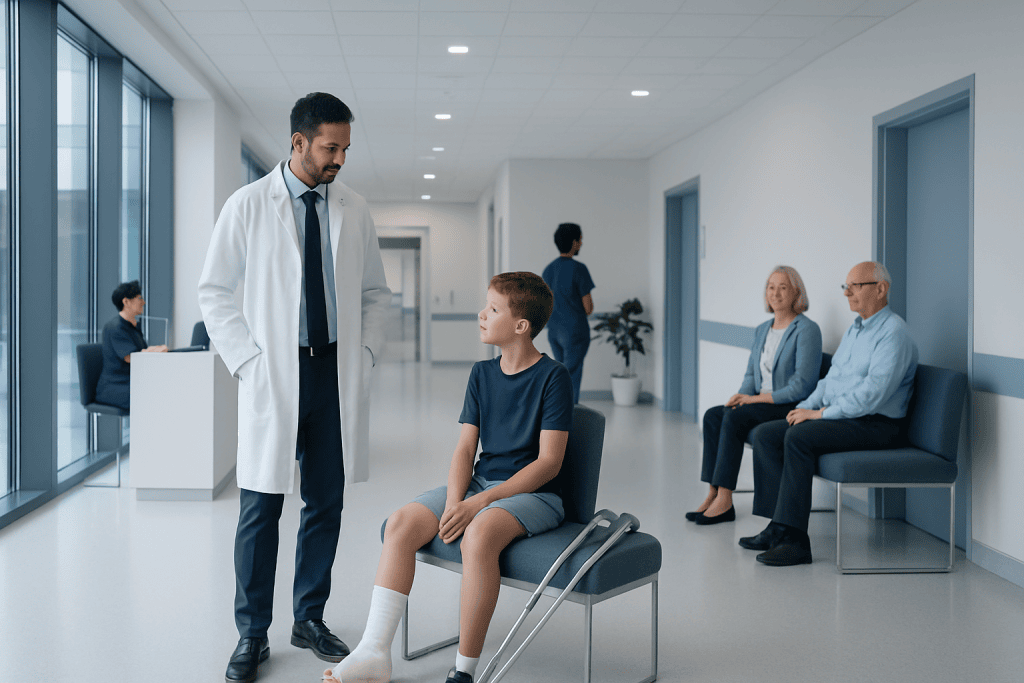
Many ankle growth plate fractures heal in 4–8 weeks, but recovery milestones vary by fracture type and the child’s age. Children should not walk on the injured ankle until a clinician confirms that weight-bearing is safe.
Key Takeaways
- Many ankle growth plate fractures heal in 4–8 weeks, but recovery milestones vary by fracture type and the child’s age.
- Children should not walk on the injured ankle until a clinician confirms that weight-bearing is safe.
- X-rays and follow-up visits help confirm alignment and monitor for uncommon growth-related complications.
- A cast or walking boot is often enough for stable injuries; displaced fractures may need reduction or surgery.
- Returning to running, jumping and sport should be gradual and based on healing, movement and strength rather than a fixed date.
A broken growth plate in the ankle commonly needs about 4–8 weeks for initial bone healing, although return to full sport can take longer depending on the fracture, treatment, pain, strength and imaging results. Careful early assessment and follow-up are important because growth plates are areas of developing bone that can occasionally heal unevenly or stop growing normally.
Overview: broken growth plate in ankle recovery time
Broken growth plate in ankle recovery time is usually about 4–8 weeks for the bone to unite, but complete recovery can extend beyond this period. A child may need additional time to restore ankle movement, strength, balance and confidence before returning to running, jumping or contact sports.
Growth plates, also called physes, are softer areas of developing tissue near the ends of children’s bones. In the ankle, they are found near the lower ends of the tibia (shinbone) and fibula (outer lower-leg bone). Because these areas are less resistant to force than mature bone and nearby ligaments, a twist or impact that might cause a sprain in an adult can cause a growth plate fracture in a child.
Most growth plate ankle injuries heal well when they are assessed promptly and protected appropriately. The treatment plan depends on whether the fracture is stable and well aligned, whether it extends into the joint, and how much growing the child has left.
What happens if you fracture your growth plate in your ankle?
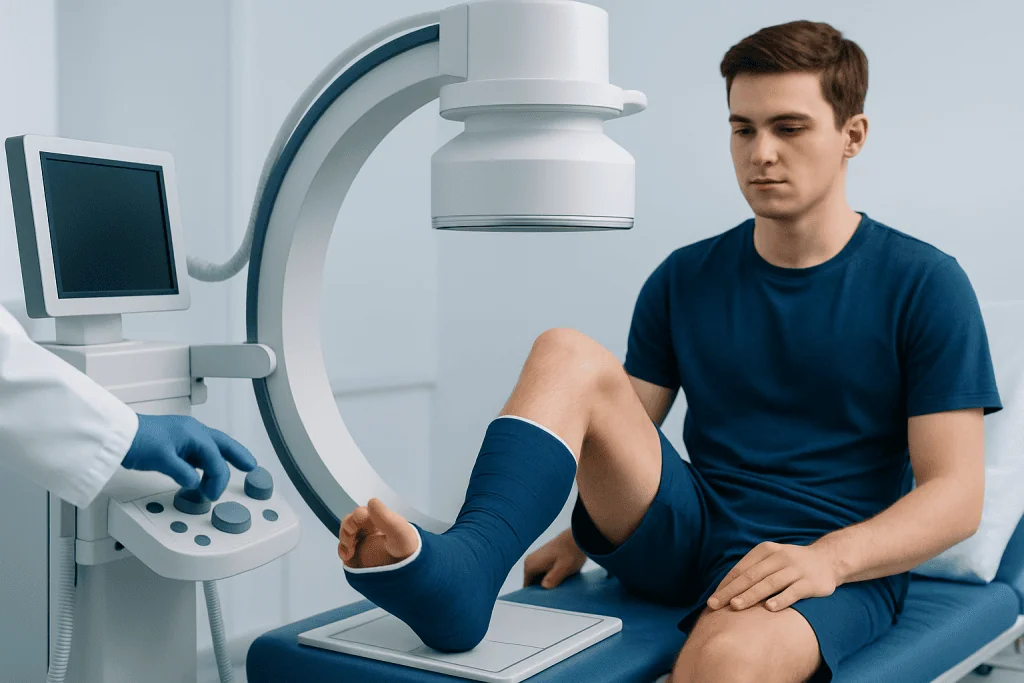
An ankle growth plate fracture causes pain, swelling and tenderness near the end of the tibia or fibula. It may happen after a fall, an awkward landing, a sports injury or a twisting event. The child may limp, avoid putting weight through the foot, or be unable to walk.
Doctors commonly describe these injuries using the Salter-Harris classification. Some fractures pass only through the growth plate, while others also involve the bone above or below it. Fractures that reach the ankle joint or are displaced require especially careful assessment because restoring joint alignment supports normal movement and may reduce later problems.
The main concern is not simply the initial break. Although uncommon, an injured growth plate can develop a partial or complete growth arrest, meaning part of the bone stops growing as expected. This can lead to angular change or a difference in leg length, particularly in younger children or in more severe injuries. Follow-up examinations and imaging help identify this early.
Not every childhood ankle injury is a fracture. Ligament sprains, tendon injuries and bruises can cause similar symptoms. A clinician uses the injury history, examination and imaging to distinguish among these possibilities and plan appropriate care.
How long does it take for a broken ankle growth plate to heal?

For many children, a stable ankle growth plate fracture shows sufficient bone healing in approximately 4–6 weeks. More complex, displaced or surgically treated fractures may require 6–8 weeks or longer before the ankle can safely take full loads. Healing is individual, so the treating clinician’s examination and imaging findings are more reliable than a calendar alone.
Even after a cast or boot is removed, stiffness, reduced calf strength and altered balance are common for a short period. Walking may normalize over several days to weeks. Return to sports is often delayed until the child can walk and jog without pain or limp, has near-normal movement and strength, and has been cleared by the clinical team.
Follow-up may continue after the fracture itself has healed, particularly when the distal tibial growth plate was involved. Repeat X-rays may be recommended months later to check that growth remains symmetrical. This is a precautionary part of care and does not mean a complication is expected.
How fast do growth plates heal?
Growth plates do not heal at one fixed speed. Children generally form new bone efficiently, but the recovery rate depends on the fracture pattern, degree of displacement, blood supply, treatment, age, nutrition and whether the child can protect the ankle from further injury. A simple, well-aligned injury may settle relatively quickly, while an injury involving the joint surface can need closer supervision.
The growth plate itself is vulnerable during healing because it is not fully mature bone. The goal is to keep the injured area in a stable position so that new tissue and bone can repair without unwanted movement. This is why a cast, splint or boot may be used even when pain begins improving within a few days.
Good general health supports healing. Children should follow their usual balanced diet, attend planned reviews and avoid nicotine exposure. Families should not use pain reduction as the only sign that the fracture is healed; early activity can disrupt recovery even when discomfort has decreased.
Assessment and treatment: how ankle growth plate fracture care works
Assessment begins with the injury details and an examination of swelling, skin condition, tenderness, circulation, sensation and ankle movement. X-rays are usually the first imaging test. Some fractures are difficult to see early on, so the clinician may treat the ankle as a suspected growth plate injury based on examination findings, or arrange repeat imaging. CT scanning may be considered when detailed views of a joint-involving fracture are needed for treatment planning.
Children with stable, non-displaced fractures are often candidates for non-surgical care. This may involve a splint initially, followed by a cast or removable walking boot. The clinician specifies whether the child must avoid weight-bearing completely, may touch the foot down for balance, or may gradually walk in the device.
If the bones are out of position, a doctor may perform a reduction, which means gently realigning the fracture. This can be done with pain relief, sedation or anesthesia depending on the situation. The ankle is then immobilized and checked with X-rays. Fractures that cannot be held in a safe position, or that have significant joint involvement, may need an operation using pins, screws or other fixation to maintain alignment while healing occurs.
The benefit of appropriate treatment is a stable, aligned ankle that can heal and return to function. Possible risks include stiffness, skin irritation from immobilization, temporary weakness, incomplete alignment and, less commonly, growth disturbance or joint surface problems. The orthopedic team weighs these risks against the risks of leaving an unstable fracture untreated.
Can you walk on a broken growth plate in the ankle?
A child should not walk on a suspected or confirmed broken growth plate in the ankle unless a clinician has specifically said that it is safe. Some stable fractures can progress to protected weight-bearing in a boot or cast, but others need a period of complete non-weight-bearing with crutches, a wheelchair or other support.
Walking too early can increase pain, move an unstable fracture out of alignment or delay recovery. Families should follow the instructions for the particular injury rather than comparing the child’s progress with another child’s fracture. A clinician may change weight-bearing guidance after reviewing repeat X-rays and symptoms.
While the ankle is protected, children can usually keep their toes moving if comfortable and maintain activity in safe ways recommended by their care team. Any cast or boot should be kept dry and used exactly as instructed. New pressure pain, numbness, a cold or pale foot, or a device that feels excessively tight needs urgent clinical advice.
Week-by-week ankle growth plate fracture recovery timeline
First week: The priority is diagnosis, swelling control and protection. A splint, cast or boot may be applied, and the child may be advised to keep the leg elevated and avoid weight-bearing. Pain and swelling often begin to improve, but the ankle is not healed. Families should follow prescribed pain-management advice and attend any early imaging review.
Weeks 2–3: The fracture remains vulnerable. The child continues using the immobilization device and follows the assigned weight-bearing limits. A follow-up appointment may check comfort, skin condition and fracture alignment. If the cast becomes wet, broken, too loose or uncomfortably tight, the care team should be contacted.
Weeks 4–6: Many uncomplicated fractures are reassessed for healing during this period. Depending on imaging and examination, the cast or boot may be removed or weight-bearing may be advanced gradually. Mild stiffness, dry skin and a temporary limp are frequent after immobilization. Gentle movement exercises or physiotherapy may be recommended.
Weeks 6–12 and beyond: The focus shifts to regaining normal walking, ankle range of motion, strength and balance. Higher-impact activities are reintroduced only with clinical clearance. Children with a distal tibial growth plate injury, a displaced fracture or ongoing symptoms may need longer follow-up to monitor growth and ankle alignment.
When to seek medical care
Prompt medical assessment is appropriate for a child with ankle pain after an injury who cannot take a few steps, has marked swelling, localized tenderness over the ankle bones, visible deformity, or pain that does not improve. Because growth plate fractures can resemble sprains, it is safer to have a painful child’s ankle assessed rather than assuming it is a minor soft-tissue injury.
Urgent care is needed if the foot becomes pale, blue, cold, numb or weak; if pain is severe or rapidly worsening; if there is an open wound or bone visible; or if a casted foot develops concerning circulation symptoms. These signs need prompt evaluation.
After treatment, families should contact the clinician about fever with worsening cast-related discomfort, a wet or damaged cast, increasing swelling, new numbness, persistent inability to bear weight when weight-bearing has been permitted, or pain that returns after a new injury. Acibadem International’s multidisciplinary specialists and JCI-accredited hospitals provide assessment and treatment for pediatric orthopedic injuries for international patients.
Frequently asked questions
How long does it take for a broken ankle growth plate to heal?
Many ankle growth plate fractures heal enough for immobilization to end in about 4–6 weeks. More severe, displaced or joint-involving fractures may need 6–8 weeks or longer, followed by time to regain strength and normal activity. The clinician confirms progress with examination and, when needed, X-rays.
How fast do growth plates heal?
Growth plates can heal efficiently in children, but the exact pace depends on the fracture type, alignment, treatment and the child’s age. Pain may improve before the fracture is stable enough for normal walking or sport. Following protection and follow-up instructions is important for safe healing.
Can you walk on a broken growth plate in the ankle?
A child should not walk on the ankle unless the treating clinician has allowed it. Some stable injuries can later tolerate protected weight-bearing in a boot or cast, while others require complete non-weight-bearing at first. Walking too soon may worsen pain or affect fracture alignment.
What happens if you fracture your growth plate in your ankle?
The ankle can become painful, swollen and difficult to bear weight on. Most injuries heal well with immobilization and appropriate follow-up, but some need reduction or surgery if the fracture is displaced. A small number can affect future bone growth, which is why follow-up is important.
Will my child need surgery for an ankle growth plate fracture?
No. Many stable, well-aligned growth plate fractures are treated successfully with a cast or boot. Surgery is more likely when the fracture is displaced, unstable, cannot be aligned without an operation, or extends significantly into the ankle joint.
When can a child return to sport after an ankle growth plate fracture?
Return to sport should be based on medical clearance, not only elapsed time. The child generally needs to be pain-free, walking and running without a limp, and to have restored ankle movement, strength and balance. This often takes longer than the period in a cast or boot.
References
- American Academy of Orthopaedic Surgeons
- American Academy of Pediatrics
- OrthoInfo
- Royal College of Paediatrics and Child Health
This article is for general information only and is not a substitute for professional medical advice. Please consult a qualified doctor about your individual situation.
Joint and spine care in Turkey — expert assessment & treatment
JCI-accredited · board-certified surgeons · reply within 24h
Add us as a Preferred Source to see more of our trusted health content across Google Search, AI Overviews and Discover.