Broken Radial Head Treatment: How It Works, Results and What to Expect

A radial head fracture affects the rounded upper end of the radius bone at the outside of the elbow. Stable fractures may be managed without surgery using brief support, pain control and early rehabilitation.
Key Takeaways
- A radial head fracture affects the rounded upper end of the radius bone at the outside of the elbow.
- Stable fractures may be managed without surgery using brief support, pain control and early rehabilitation.
- Surgery may be considered when fragments are displaced, block elbow movement or occur with ligament or other bone injuries.
- Recovery often takes several weeks to months, and regaining full elbow straightening can take time.
- Follow-up and prescribed exercises help reduce stiffness and support a safe return to daily activities.
Broken radial head treatment is tailored to the fracture pattern, elbow stability and the person’s ability to move the joint. Many small, stable fractures heal with early guided movement, while displaced or complex fractures may need surgical repair, replacement or removal of damaged fragments.
Overview: how broken radial head treatment works
Broken radial head treatment aims to restore a stable, comfortable elbow that can bend, straighten and rotate the forearm. The radial head is the rounded top of the radius, one of the two forearm bones. It helps the elbow handle force and allows the palm to turn up and down.
Falling onto an outstretched hand is a common cause. Treatment depends less on the word “fracture” alone and more on whether the broken pieces remain aligned, whether the joint is stable, and whether the injury prevents movement. A clinician may recommend a sling and early exercises for a minor stable break, or surgery for a displaced, blocked or complex injury.
Care also includes checking for injuries that can occur at the same time, such as elbow dislocation, ligament damage, wrist injury or fractures elsewhere in the forearm. Identifying these problems early helps the team choose treatment that protects long-term elbow function.
Symptoms, assessment and candidacy for surgery
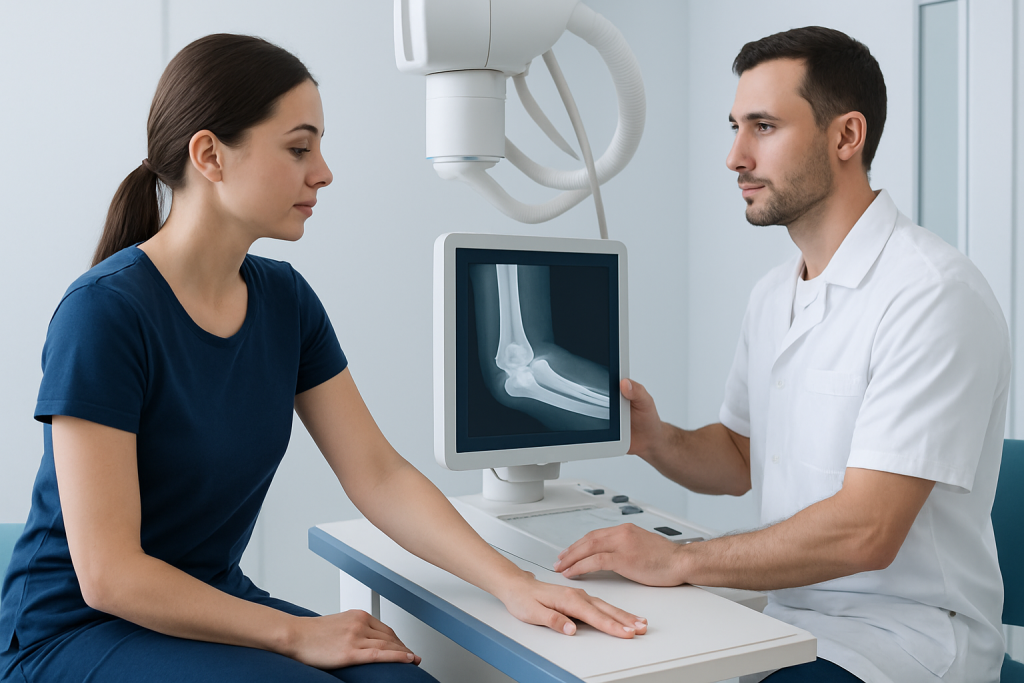
A radial head fracture commonly causes pain and tenderness on the outer side of the elbow, swelling, bruising and difficulty bending or straightening the arm. Turning the palm upward or downward may be especially uncomfortable. Some people notice a catching sensation or feel unable to fully move the joint.
An orthopaedic clinician examines the elbow, forearm and wrist, including circulation, feeling and hand movement. X-rays are usually the first test. A CT scan may be useful when the fracture is complex or when surgical planning is needed, because it shows the size, number and position of bone fragments in greater detail.
Surgery is more likely to be discussed if fracture fragments are substantially out of position, physically block elbow rotation or extension, make the joint unstable, or occur with a dislocation or ligament injury. Non-surgical care is often appropriate when the fracture is small, well aligned and the elbow remains stable. The decision is individualized; imaging findings are considered alongside pain, movement needs, activity level and associated injuries.
Treatment options and the step-by-step surgical process

For a stable fracture, treatment may involve a sling or splint for comfort for a short period, ice as advised, elevation and suitable pain relief. Prolonged immobilization is generally avoided when it is safe to begin movement, because the elbow can become stiff. A clinician or physiotherapist provides guidance on when and how to start gentle range-of-motion exercises.
When surgery is needed, the operation is usually performed under anesthesia. The surgeon makes an incision around the outer elbow, examines the joint and treats any associated injury. If the fragments can be reconstructed, they may be realigned and secured with small screws, pins or a plate; this is called open reduction and internal fixation. Very small fragments that cannot be repaired may sometimes be removed.
When the radial head is too fragmented to rebuild and is important for elbow stability, replacement with a prosthetic radial head may be recommended. The surgical plan may also include repair of injured ligaments or treatment of other fractures. The arm is protected after surgery, but supervised movement is commonly introduced according to the repair and the surgeon’s instructions.
The potential benefits of surgery include improving alignment, removing a mechanical block to movement and restoring stability in appropriate injuries. Risks include infection, bleeding, nerve or blood-vessel injury, stiffness, persistent pain, problems with bone healing, hardware irritation, joint instability and later arthritis. Replacement implants can also have longer-term issues such as loosening or wear, although not every patient experiences these complications.
Recovery timeline and rehabilitation
Recovery timelines vary with fracture severity, treatment type, other injuries and individual healing. Simple non-surgical fractures may become substantially more comfortable over several weeks, although strength and confidence with loading the arm can take longer to return. Complex fractures and surgical repairs often require rehabilitation over several months.
Early recovery focuses on protecting the healing tissues while limiting stiffness. The team may advise finger, wrist and shoulder movement right away, followed by carefully timed elbow bending, straightening and forearm rotation. Lifting, pushing, pulling and weight-bearing through the hand are restricted until the clinician confirms that these activities are safe.
Physiotherapy or hand therapy can help restore motion, strength and everyday arm use. Appointments and follow-up X-rays allow the care team to monitor healing and adjust the plan. Exercises should be done as instructed: forcing a painful movement or returning to contact sports, heavy work or falls-risk activities too soon can delay recovery.
At Acibadem International, multidisciplinary orthopaedic, radiology, rehabilitation and anaesthesia teams in JCI-accredited hospitals assess and treat elbow injuries for international patients. A treatment plan can be coordinated around the fracture pattern, associated injuries and rehabilitation needs.
Can you fully recover from a radial head fracture?
Many people recover good, useful elbow function after a radial head fracture, especially when the fracture is stable and rehabilitation begins at the appropriate time. “Full recovery” can mean different things: some people regain their previous daily function but continue to notice mild stiffness, discomfort with heavy activity or a small loss of motion.
The outlook is influenced by the degree of displacement, the number of fracture fragments, joint stability, cartilage injury and damage to ligaments or other bones. Prompt assessment, following restrictions and attending rehabilitation can improve the chance of a strong functional result.
More complex injuries may leave some ongoing limitation despite careful treatment. If pain, catching, instability or reduced movement persists, follow-up with an orthopaedic clinician is important because further assessment may identify a treatable cause.
How painful is radial head surgery?
It is expected to have pain and swelling after radial head surgery, particularly during the first days. The care team uses anesthesia during the procedure and develops a post-operative pain-control plan that may include prescribed medicines, cold therapy, elevation and protection of the arm.
Pain should gradually improve as tissues heal, although discomfort during early exercises can occur. The aim of rehabilitation is controlled movement rather than pushing through severe pain. Patients should contact their surgical team if pain is worsening rather than improving, is not controlled by the agreed plan, or occurs with concerning symptoms such as fever, wound drainage, increasing redness, numbness or color changes in the hand.
Each person’s experience differs according to the extent of surgery, associated injuries and general health. Discussing pain concerns before the procedure helps the team tailor safe options and provide clear instructions for recovery at home.
How long does it take to straighten your arm after a radial head fracture?
Elbow straightening may begin to improve within the first weeks when early movement is appropriate, but full extension can take weeks to months to return. Some fractures produce swelling and muscle guarding that temporarily limit movement, while more severe fractures or surgery can require a longer rehabilitation period.
The elbow is particularly prone to stiffness after injury. A clinician or physiotherapist may prescribe gradual extension exercises and other range-of-motion work once the fracture and any repaired ligaments can safely tolerate it. The schedule differs between non-surgical treatment, fixation and radial head replacement.
Trying to force the elbow straight can aggravate pain and irritate healing tissues. Steady, guided rehabilitation is generally more effective than aggressive stretching. A persistent inability to straighten the arm, locking or a sudden decline in movement should be reviewed by the treating clinician.
What are the long-term effects of a radial head fracture?
After a simple, well-aligned fracture, long-term effects may be minimal. However, some people have lingering loss of full extension or rotation, occasional pain with heavy use, reduced strength or sensitivity around the outer elbow. These symptoms do not always prevent normal daily activities.
Complex injuries have a higher likelihood of persistent stiffness, instability, altered joint mechanics or post-traumatic arthritis. Risk may be greater when there is joint surface damage, elbow dislocation, ligament injury, delayed treatment or difficulty restoring normal alignment. Surgery can improve stability and movement in selected cases, but it cannot remove every long-term risk from a severe injury.
Regular follow-up is useful when symptoms continue. A clinician may assess movement, strength and imaging findings, then recommend rehabilitation changes, activity modifications or further treatment if needed. Maintaining prescribed exercises and gradually rebuilding strength can support lasting function.
When to seek medical care: Medical assessment is needed promptly after an elbow injury that causes significant pain, swelling, deformity, inability to move the elbow or difficulty turning the forearm. Urgent care is especially important if the hand is numb, weak, pale, blue, cold, or if there is an open wound. During recovery, seek advice for worsening pain, fever, wound problems, new numbness, loss of motion or a feeling that the elbow is unstable.
Frequently asked questions
What is the usual first treatment for a broken radial head?
The first treatment usually includes an assessment to confirm the fracture and check elbow stability, followed by comfort measures such as a sling or splint, ice and appropriate pain relief. For many stable fractures, gentle movement is started relatively early to reduce stiffness. The exact plan should be based on imaging and a clinician’s examination.
Does every radial head fracture need surgery?
No. Many radial head fractures are small, stable and well aligned, and they can heal without surgery. Surgery is generally considered when fragments are displaced, block movement, make the elbow unstable or occur with important ligament, bone or dislocation injuries.
Can a radial head fracture heal without a cast?
Yes, some stable fractures are treated with a sling or brief splinting rather than a full cast. This approach can permit earlier safe movement, which is important because elbows stiffen easily. The need for immobilization and its duration must be determined by the treating clinician.
When can someone return to work after a radial head fracture?
Return to work depends on pain, movement, healing progress and the physical demands of the job. Desk-based tasks may sometimes be resumed sooner than work requiring lifting, repetitive arm use, climbing or a risk of falling. A clinician can provide individualized restrictions and clearance.
How painful is radial head surgery?
Pain and swelling are expected after surgery, especially in the first several days, but they are managed with an individualized post-operative plan. Discomfort should generally lessen over time. Worsening pain, fever, drainage from the incision, increasing redness or numbness should be reported to the surgical team.
How long does it take to straighten your arm after a radial head fracture?
Improvement may start in the first weeks when movement is safe, but restoring elbow straightening often takes weeks to months. Recovery can be longer after a complex fracture, dislocation or surgery. Guided exercises are safer than forcing the elbow into extension.
References
- American Academy of Orthopaedic Surgeons
- American Society for Surgery of the Hand
- National Institute of Arthritis and Musculoskeletal and Skin Diseases
- OrthoInfo
This article is for general information only and is not a substitute for professional medical advice. Please consult a qualified doctor about your individual situation.
Joint and spine care in Turkey — expert assessment & treatment
JCI-accredited · board-certified surgeons · reply within 24h
Add us as a Preferred Source to see more of our trusted health content across Google Search, AI Overviews and Discover.