Butterfly Stretch: A Complete Medical Overview

The butterfly stretch mainly targets the inner thighs and hip muscles. It should create a mild stretching sensation, not sharp or worsening pain.
Key Takeaways
- The butterfly stretch mainly targets the inner thighs and hip muscles.
- It should create a mild stretching sensation, not sharp or worsening pain.
- Good form includes an upright spine, relaxed knees, and gradual movement.
- People with hip, groin, knee, or lower back pain may need modifications or medical advice.
- Regular gentle stretching may support mobility, especially when combined with warming up and strength work.
The butterfly stretch is a seated flexibility exercise that targets the inner thighs, groin, and hips. When performed gently and with proper alignment, it can support mobility and comfort, but it should not be forced or used to stretch through pain.
Overview: What the butterfly stretch is
The butterfly stretch is a simple seated stretch used to improve flexibility in the inner thighs, groin, and hips. It is usually done by sitting with the soles of the feet together and allowing the knees to fall outward to the sides. Many people use it before or after exercise, during mobility routines, or as part of general self-care for stiffness.
Unlike more intense flexibility exercises, the butterfly stretch is meant to be controlled and comfortable. A person should feel a gentle pull along the inner thighs or around the hips, but not pain, pinching, or strain. The stretch can be adjusted for different ages, activity levels, and physical limitations, which is one reason it is widely used in sports, rehabilitation, and everyday fitness.
From a medical perspective, the butterfly stretch is not a treatment for every cause of hip or groin discomfort. However, it can be a useful movement for maintaining range of motion when it matches a person’s body mechanics and health status. If pain is persistent or linked to injury, an evaluation may be needed to rule out issues such as hip pain or soft tissue strain.
Which muscles and joints it affects
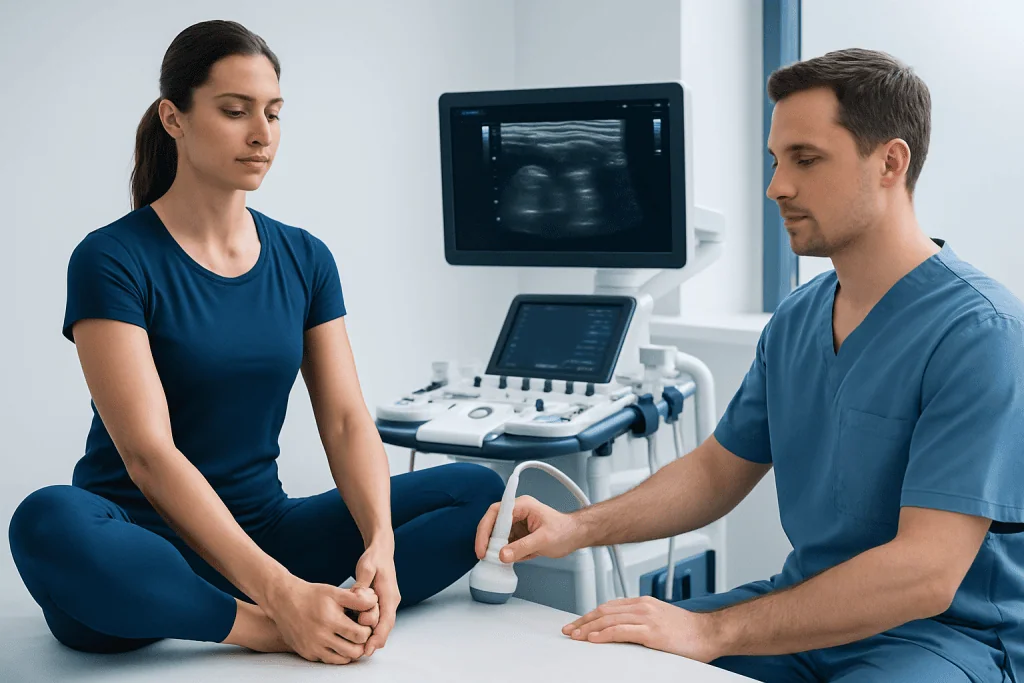
The butterfly stretch primarily lengthens the adductor muscles, often called the inner thigh muscles. These muscles help bring the legs toward the center of the body and support movements such as walking, running, turning, and changing direction. The stretch also gently affects the hip joint and nearby soft tissues.
Depending on body position, a person may also feel the stretch around the groin, the front of the hips, and sometimes the lower back. This does not mean the exercise should place direct pressure on those areas. Instead, it should create a broad, mild sensation of lengthening while the pelvis stays stable and the spine remains comfortably upright.
For some people, tightness in the hips is related not only to flexibility but also to weakness or movement patterns. In those cases, stretching alone may not fully address symptoms. A broader program that includes posture, strengthening, and mobility work may be more helpful, especially when guided through physical therapy and rehabilitation.
Potential benefits of the butterfly stretch

When practiced regularly and safely, the butterfly stretch may help maintain or improve flexibility in the inner thighs and hips. Better flexibility can support daily movements such as sitting, standing, bending, and getting in and out of a car. Athletes and active adults may also use it to complement training that involves running, cycling, dance, martial arts, or strength work.
Another possible benefit is improved body awareness. Because the butterfly stretch is slow and controlled, it can help a person notice whether one hip feels tighter than the other, whether the back is rounding, or whether the knees are being forced downward. This awareness can support safer movement habits and encourage a more balanced mobility routine.
It is important to keep expectations realistic. A butterfly stretch is not a cure for chronic pain, arthritis, or structural hip disorders. It may support comfort and motion in some people, but when stiffness is significant or pain limits activity, a clinician may evaluate whether there is an underlying orthopedic or soft tissue problem that needs targeted care such as orthopedic rehabilitation.
How to do the butterfly stretch correctly
To perform the butterfly stretch, a person usually sits on the floor or a firm surface with the knees bent and the soles of the feet touching. The feet can be placed closer to or farther from the body depending on comfort. The hands may hold the feet or ankles lightly while the chest stays open and the spine remains tall rather than slumped.
Next, the knees are allowed to relax toward the floor without pushing them down. Some people feel enough of a stretch by simply sitting upright in this position. Others may gently hinge forward from the hips while keeping the back long. The movement should be slow and controlled, with steady breathing and no bouncing.
Helpful form points include:
- Keep the shoulders relaxed and away from the ears.
- Avoid rounding the back aggressively to “go deeper.”
- Do not press on the knees with the hands or elbows.
- Stop if there is sharp pain, pinching in the hip, or numbness.
- Use a cushion or folded towel under the hips if sitting upright is difficult.
Most people hold the position briefly and repeat it as comfortable rather than forcing a long, intense stretch. Gentle consistency matters more than trying to gain maximum flexibility in one session.
Risks, common mistakes, and who may need caution
The butterfly stretch is generally low risk when it is done gently, but problems can occur when a person stretches too aggressively or ignores pain. One common mistake is pressing the knees downward to force a deeper position. Another is rounding the lower back and straining forward, which may shift stress away from the hips and toward the spine.
Caution may be needed for people with recent groin strains, hip labral problems, severe arthritis, knee injuries, or ongoing lower back pain. Individuals recovering from surgery or dealing with major mobility limits should ask a qualified clinician which stretches are appropriate for them. In some cases, a modified sitting position or another type of mobility exercise may be safer.
Pain in the groin or hip during stretching should not be dismissed as normal. While temporary muscle tightness is common, repeated or intense symptoms may point to an underlying issue such as tendon irritation, joint inflammation, or a movement disorder. If symptoms continue, doctors may recommend assessment through orthopedics and traumatology to identify the cause and guide safe activity.
How to make it safer and more effective
The butterfly stretch tends to work best when it is part of a balanced routine rather than an isolated exercise. Light activity first, such as walking or a short warm-up, can help tissues feel more prepared to move. After warming up, the stretch can be added alongside other hip and leg mobility exercises and, when suitable, strengthening work for the gluteal and core muscles.
Modifications can also improve comfort. Sitting on a folded blanket may reduce tension in the hips and lower back. Placing yoga blocks, cushions, or rolled towels under the knees can support the legs if the position feels too demanding. People who cannot sit comfortably on the floor may perform a gentler hip-opening variation while seated on a chair or lying on the back.
Consistency is often more helpful than intensity. A mild stretch practiced regularly is usually safer than trying to force a dramatic range of motion. If one side feels much tighter or symptoms are limited to one hip or groin, this may be a sign that professional assessment would be useful rather than simply stretching more.
When to seek medical care
Medical advice is appropriate if the butterfly stretch causes sharp pain, catching, popping with pain, swelling, or symptoms that persist after stopping the exercise. Care is also important if a person has trouble bearing weight, has pain after a fall or sports injury, or notices weakness, numbness, fever, or a visible deformity. These features suggest that simple muscle tightness may not be the only issue.
A doctor or physical therapist may ask about the exact location of pain, recent activity, prior injuries, and whether symptoms occur only during stretching or also during walking, squatting, or sitting. The goal is to distinguish normal stiffness from injury, joint disease, nerve-related symptoms, or overuse. Sometimes imaging or a structured rehabilitation plan is recommended.
For international patients who need evaluation, Acibadem International’s multidisciplinary specialists in JCI-accredited hospitals diagnose and treat hip, groin, knee, and spine-related causes of movement pain. Seeking care early can help clarify whether a stretch routine is appropriate or whether a different treatment approach is needed.
Frequently asked questions
What does the butterfly stretch help with?
The butterfly stretch mainly helps improve flexibility in the inner thighs, groin, and hips. For some people, it may also support easier movement during exercise and daily activities when done regularly and gently.
Should the butterfly stretch hurt?
No. It should create a mild stretching feeling, not sharp pain, pinching, or a pulling sensation that keeps getting worse. Pain during the stretch is a sign to stop and reassess form or seek medical advice if symptoms continue.
How long should a person hold a butterfly stretch?
There is no single correct time for everyone. In general, a brief, comfortable hold repeated a few times is more appropriate than forcing a long, intense stretch. Quality of movement and comfort matter more than duration.
Can the butterfly stretch help hip stiffness?
It may help some types of mild hip stiffness, especially when tight inner thigh muscles contribute to reduced mobility. However, stiffness caused by arthritis, injury, or joint problems may not improve with stretching alone and should be assessed by a clinician.
Who should avoid the butterfly stretch?
People with a recent groin tear, acute hip or knee injury, severe pain, or recent surgery should be cautious and may need medical guidance first. It may also need modification in those with significant lower back pain or limited hip mobility.
Is it better to do the butterfly stretch before or after exercise?
It can be used either before or after activity depending on the goal and the individual’s routine. Before exercise, it is often best performed gently after a short warm-up; after exercise, it may be included in a cool-down if it feels comfortable.
This article is for general information only and is not a substitute for professional medical advice. Please consult a qualified doctor about your individual situation.
Explore treatments in Turkey — costs, top hospitals & a free quote
JCI-accredited · board-certified surgeons · reply within 24h
Add us as a Preferred Source to see more of our trusted health content across Google Search, AI Overviews and Discover.

More from the Health Library

Karezza: A Complete Medical Overview

Bleeding While Making Love: A Complete Medical Overview

Aripiprazole: A Complete Medical Overview

Bacillus Coagulans: A Complete Medical Overview

Turmeric for Weight Loss: What Patients Need to Know