Calories in Cherry Tomatoes: What the Clinical Research Actually Says

Cherry tomatoes are low in calories, with about 3 calories per tomato and around 25 to 30 calories per cup depending on size and variety. They provide water, fiber, vitamin C, potassium, and carotenoids such as lycopene, which are linked with general health benefits in dietary research.
Key Takeaways
- Cherry tomatoes are low in calories, with about 3 calories per tomato and around 25 to 30 calories per cup depending on size and variety.
- They provide water, fiber, vitamin C, potassium, and carotenoids such as lycopene, which are linked with general health benefits in dietary research.
- Clinical evidence supports eating more vegetables overall, but research does not show that cherry tomatoes alone treat obesity, heart disease, diabetes, or cancer.
- Portion size, added ingredients, and overall diet matter more than any single food when managing weight or blood sugar.
- Some people may need caution, especially if acidic foods worsen reflux, if they have tomato allergy, or if a clinician has advised a low-potassium diet.
Calories in cherry tomatoes are low, making them an easy food to include in many eating patterns. Clinical evidence supports their role as a nutrient-dense vegetable, but no single food by itself causes weight loss, prevents disease, or replaces medical care.
Overview: how many calories are in cherry tomatoes?
Calories in cherry tomatoes are low. A typical cherry tomato contains about 3 calories, and 1 cup usually provides roughly 25 to 30 calories, depending on the exact size, variety, and how tightly the cup is filled. They are mostly water, with small amounts of carbohydrate and fiber, and very little fat.
From a clinical nutrition perspective, cherry tomatoes are best understood as a low-energy-density vegetable. That means they provide relatively few calories for their volume, which can help people feel satisfied when they are used as part of balanced meals and snacks. This is one reason vegetables are commonly recommended in dietary patterns for weight management and cardiometabolic health.
Research supports including tomatoes and other non-starchy vegetables in a healthy diet, but evidence does not support exaggerated claims. Cherry tomatoes are nutritious, yet they do not “burn fat,” “detox” the body, or act as a treatment on their own. Their value comes from fitting into an overall eating pattern that is rich in vegetables, fruits, legumes, whole grains, and appropriate protein sources.
Nutrition profile and what it means clinically
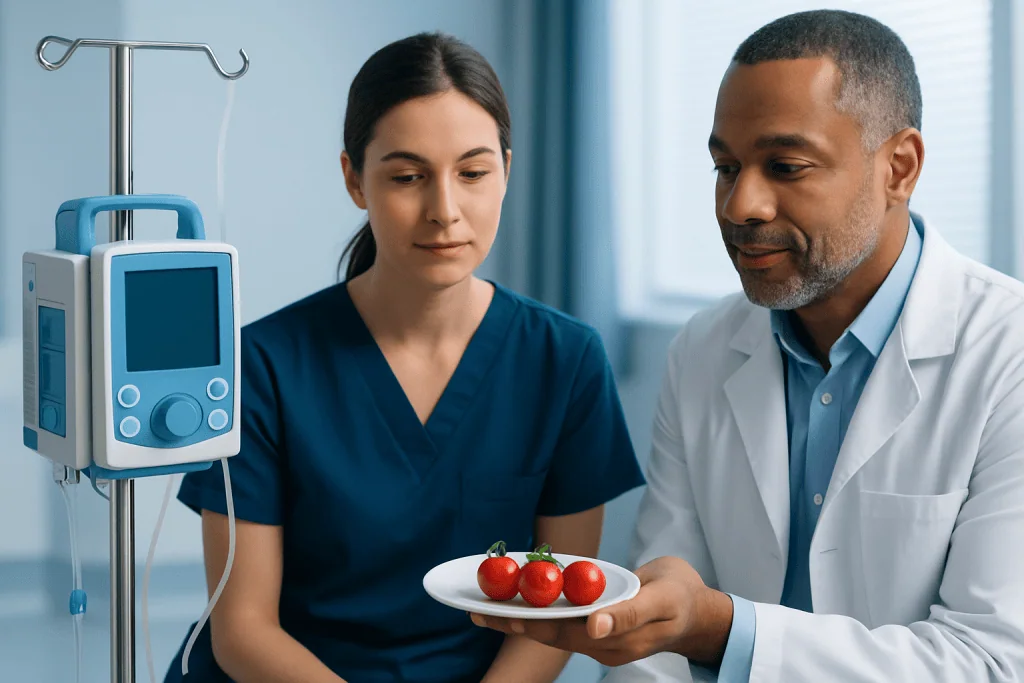
Cherry tomatoes contain more than just low calories. They provide vitamin C, small amounts of fiber, potassium, folate, and carotenoids, including lycopene and beta-carotene. These compounds have antioxidant properties, and diets rich in them are associated with better overall health. Because cherry tomatoes are commonly eaten raw, some heat-sensitive nutrients such as vitamin C may be well preserved.
However, nutrient content is not fixed. The exact amount varies with ripeness, cultivar, growing conditions, and storage. Cooking or pairing tomatoes with a small amount of healthy fat can improve absorption of some carotenoids, especially lycopene, although raw cherry tomatoes still contribute useful nutrients.
Clinical research usually examines dietary patterns or total tomato intake rather than cherry tomatoes alone. This distinction matters. The strongest evidence supports eating a variety of vegetables regularly, not relying on one specific form of tomato as a medical intervention. People looking for a fuller dietary approach to weight control may also explore clinician-guided care such as obesity treatment options when appropriate.
- Approximate calories per cherry tomato: about 3
- Approximate calories per cup: about 25 to 30
- Main nutritional features: water, vitamin C, carotenoids, potassium, fiber
- Best clinical interpretation: nutrient-dense, low-calorie vegetable
What the clinical research supports—and what it does not

Evidence-based nutrition guidance supports the use of cherry tomatoes as part of a vegetable-rich diet. Low-energy-density foods can help with satiety and calorie control, especially when they replace more calorie-dense snack foods or side dishes. Higher vegetable intake is also linked with better long-term health outcomes in many observational studies.
There is also scientific interest in tomato compounds such as lycopene. Research has explored possible associations with heart health, oxidative stress, and some cancer-related outcomes. But these findings should be interpreted carefully. Associations do not prove cause and effect, and the effects of whole diets are more reliable than claims about one food.
What research does not support is the idea that cherry tomatoes alone can cure chronic disease, reverse obesity, control diabetes without broader diet changes, or meaningfully lower cholesterol on their own. For people living with conditions such as obesity or diabetes, cherry tomatoes can be a reasonable food choice, but medical management should remain individualized and supervised by a qualified clinician.
Consumption context: weight, blood sugar, and meal planning
For weight management, the main advantage of cherry tomatoes is simple: they add volume and flavor for very few calories. They can be used in salads, lunch boxes, grain bowls, omelets, or as a snack with yogurt-based dips or hummus. In practice, they often work best when they replace higher-calorie processed snacks rather than being added on top of an already calorie-dense diet.
For blood sugar, cherry tomatoes are generally considered a low-glycemic, low-carbohydrate vegetable. Most people with diabetes can include them without concern when portions are reasonable and they are eaten as part of balanced meals. What matters more is the entire plate, including refined carbohydrates, sweetened dressings, and portion size. If diabetes care includes specialized evaluation, diabetes treatment may be relevant alongside nutrition counseling.
Preparation changes the nutrition picture. Fresh cherry tomatoes on their own are low in calories, but oil-heavy roasting, creamy sauces, cheese, or sugary glazes can substantially raise total calorie intake. Tomato-based packaged products may also contain added sodium or sugar, so labels are worth checking.
Possible side effects, interactions, and who may need caution
Cherry tomatoes are well tolerated by most people, but they are not ideal for everyone in every situation. Because tomatoes are acidic, they may worsen symptoms in some people with gastroesophageal reflux, indigestion, or sensitive stomachs. This does not mean everyone with reflux must avoid them, but symptom patterns can be useful to track.
Tomato allergy is uncommon but possible. Reactions may include itching in the mouth, hives, swelling, or gastrointestinal discomfort. Anyone who develops breathing difficulty, throat swelling, or a widespread reaction after eating tomatoes should seek urgent medical attention. People with chronic digestive symptoms may need evaluation for conditions such as reflux disease or other gastrointestinal problems.
Potassium is another consideration. Although cherry tomatoes are not extremely high in potassium compared with some foods, people with advanced kidney disease or others on medically supervised potassium restriction should ask their clinician or dietitian how much is appropriate. Those taking blood thinners do not usually need to avoid tomatoes specifically, since tomatoes are not a major vitamin K food, but overall diet consistency still matters.
How to include cherry tomatoes in a balanced diet
Cherry tomatoes fit easily into a balanced eating pattern because they are practical, portable, and versatile. They can help increase vegetable intake at meals that might otherwise be low in produce. Their mild sweetness may also make them more acceptable to children and to adults who are trying to eat more vegetables.
Useful strategies include pairing cherry tomatoes with protein and fiber, such as eggs, beans, lentils, yogurt dips, or whole-grain meals. This can improve fullness and create a more balanced snack or lunch. Roasting can intensify flavor, while eating them raw preserves crunch and convenience.
They should not be framed as a “superfood” or a substitute for individualized treatment. Instead, they are one helpful ingredient within an evidence-based dietary pattern. Near the end of the care pathway, if a person needs specialist support for digestive, metabolic, or weight-related concerns, Acibadem International’s multidisciplinary specialists and JCI-accredited hospitals diagnose and treat these conditions for international patients.
When to seek medical care
Cherry tomatoes themselves rarely require medical attention, but persistent symptoms after eating them should not be ignored. Medical review is reasonable if tomato-containing foods consistently trigger significant heartburn, chest discomfort, vomiting, difficulty swallowing, chronic abdominal pain, or diarrhea.
Urgent care is needed for possible allergic reactions, including lip or tongue swelling, wheezing, shortness of breath, faintness, or widespread hives. People with kidney disease, complex diabetes, unexplained weight loss, or medically restricted diets should also ask a clinician or registered dietitian for individualized advice before making major dietary changes.
Nutrition questions are especially important when symptoms overlap with a diagnosed condition, when eating becomes limited, or when unintentional weight change occurs. In those situations, food choices should be assessed in the context of overall health rather than judged by calorie count alone.
Frequently asked questions
How many calories are in one cherry tomato?
One cherry tomato usually contains about 3 calories, although this can vary slightly with size and variety. Larger grape- or cherry-type tomatoes may contain a little more.
How many calories are in a cup of cherry tomatoes?
A cup of cherry tomatoes generally contains about 25 to 30 calories. The exact amount depends on how large the tomatoes are and how the cup is measured.
Are cherry tomatoes good for weight loss?
They can be helpful in a weight-loss eating plan because they are low in calories and high in water content. Still, weight loss depends on overall energy balance, food quality, activity, sleep, and medical factors—not on one food alone.
Do cherry tomatoes raise blood sugar?
Cherry tomatoes are low in carbohydrate and usually have only a modest effect on blood sugar when eaten in normal portions. The bigger impact often comes from what they are eaten with, such as refined starches, sweet sauces, or large meals.
Are cherry tomatoes healthier raw or cooked?
Both forms can be part of a healthy diet. Raw cherry tomatoes may retain more vitamin C, while cooking can improve the availability of some carotenoids such as lycopene, especially when paired with a little fat.
Can cherry tomatoes cause side effects?
Yes, in some people they may worsen reflux or stomach irritation because of their acidity. Rarely, they can trigger allergy symptoms such as itching, hives, swelling, or digestive discomfort.
Who should limit or avoid cherry tomatoes?
People who notice consistent reflux symptoms after eating tomatoes, those with tomato allergy, and people on medically supervised potassium restriction may need to limit them. The right amount depends on the person's health history and advice from a clinician or dietitian.
References
- World Health Organization
- U.S. Department of Agriculture
- Academy of Nutrition and Dietetics
- National Institute of Diabetes and Digestive and Kidney Diseases
- American Heart Association
This article is for general information only and is not a substitute for professional medical advice. Please consult a qualified doctor about your individual situation.
Medical weight-loss options in Turkey — costs & eligibility
JCI-accredited · board-certified surgeons · reply within 24h
Add us as a Preferred Source to see more of our trusted health content across Google Search, AI Overviews and Discover.
Check your numbers in seconds
BMI, calories, due date, blood pressure and 30+ more clinical calculators — free, instant, doctor-reviewed ranges.

More from the Health Library

Watermelon Diet: What the Clinical Research Actually Says

High Protein Low Calorie Foods: Benefits, Risks, and Safe Use
Grapefruit Diet: Evidence-Based Benefits, Risks, and Practical Guidance

Veg Low Carb Diet: What the Clinical Research Actually Says

Aphrodisiac Foods: Benefits, Risks, and Safe Use