Can Diabetes Have Banana? Here Is What the Evidence Says

Bananas are not automatically off-limits for people with diabetes. A small or medium banana can fit into many diabetes meal plans, with portions tailored individually.
Key Takeaways
- Bananas are not automatically off-limits for people with diabetes.
- A small or medium banana can fit into many diabetes meal plans, with portions tailored individually.
- Less-ripe bananas generally contain more resistant starch and may raise blood glucose more gradually than very ripe bananas.
- Pairing banana with protein, fiber, or healthy fat can help make a snack more balanced.
- Repeated unexpected high or low glucose readings should be discussed with a diabetes care professional.
Most people with diabetes can eat bananas as part of a balanced eating pattern. Portion size, banana ripeness, meal context, medicines, and individual blood glucose responses matter more than avoiding this fruit altogether.
Can diabetes have banana? The short answer
Yes. Most people living with diabetes can have banana in sensible portions as part of an overall eating plan. Bananas provide carbohydrate, so they can raise blood glucose, but they also provide fiber, potassium, vitamin B6, and other nutrients. Diabetes care does not usually require avoiding whole fruit; it focuses on understanding carbohydrate intake and choosing foods that support steady glucose management.
For many people, a small banana or about half of a large banana is a practical serving, although the right amount depends on the person’s meal plan, body size, activity, glucose targets, and treatment. Eating banana with a source of protein or healthy fat—such as plain yogurt, unsweetened nut butter, or a handful of nuts—may help create a more satisfying, balanced snack.
Having a banana is commonly harmless when glucose is otherwise well managed. Medical review is appropriate if a person repeatedly sees unusually high glucose after eating fruit, has frequent low-glucose episodes, is losing weight without trying, feels very thirsty or urinates much more than usual, or is unsure how food fits with insulin or glucose-lowering medicines. A clinician can review glucose records, eating patterns, medicines, and tests such as HbA1c to provide individualized guidance.
Why bananas affect blood glucose
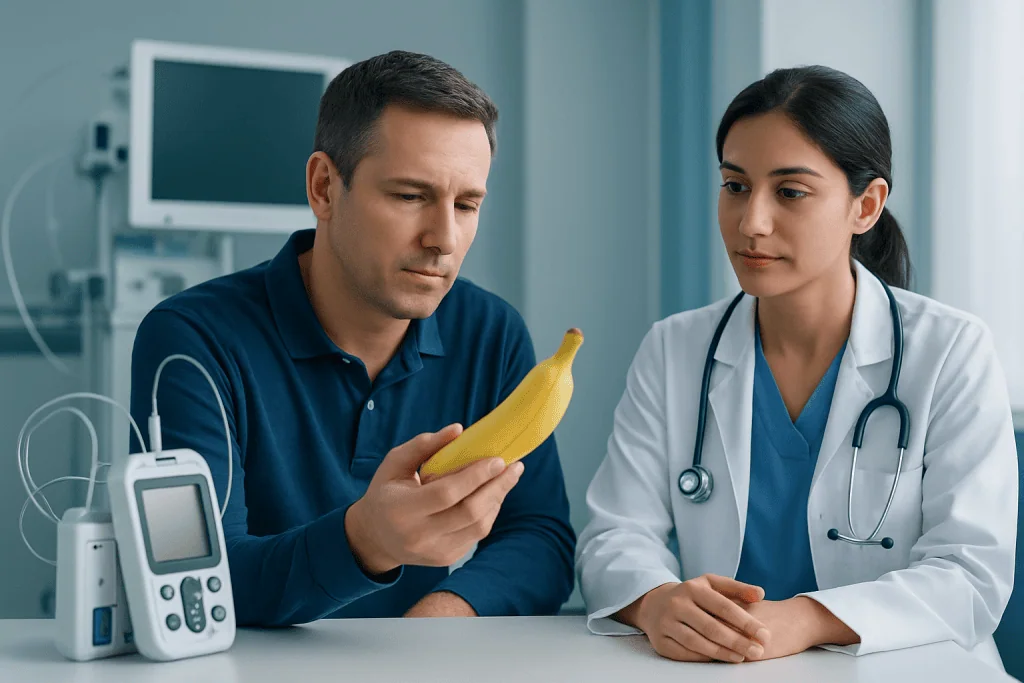
Bananas contain natural sugars and starch, both of which are carbohydrates. During digestion, carbohydrates are broken down into glucose and absorbed into the bloodstream. In people without diabetes, insulin helps move this glucose into cells efficiently. In diabetes, the body may not make enough insulin, may not use insulin effectively, or both, so glucose can rise higher or remain elevated for longer.
The effect of a banana is not determined by its sugar content alone. Its size, ripeness, what else is eaten at the same time, recent physical activity, sleep, stress, illness, and diabetes medicines can all influence the glucose response. A very large banana provides substantially more carbohydrate than a small one, which is why portion awareness is often more useful than labeling any fruit as “good” or “bad.”
Whole bananas contain fiber, which slows digestion compared with fruit juice or many refined sweet foods. Blending a banana into a smoothie still retains much of its fiber, but smoothies can be easier to consume quickly and may include other carbohydrate-rich ingredients. Juice, dried banana products, sweetened banana chips, and desserts made with banana often have a different effect than a whole fresh banana because portions can be larger and added sugars or fats may be present.
Ripeness, glycemic index, and portion size

As bananas ripen, some of their starch changes into sugars. Greener, firmer bananas tend to contain more resistant starch, a type of carbohydrate that is not fully digested in the small intestine. Very ripe bananas are softer and sweeter, and some people may find that they raise blood glucose more quickly. However, ripeness is only one factor; the amount eaten remains especially important.
The glycemic index (GI) estimates how rapidly a carbohydrate-containing food may raise blood glucose compared with a reference food. Bananas are generally considered to have a low-to-moderate GI, but GI values can vary according to ripeness, variety, preparation, and the individual. Glycemic load, which accounts for both GI and the amount of carbohydrate in a serving, can be more relevant in everyday eating.
Rather than relying on a single GI number, people can use practical portions and observe their own response. One approach is to choose a smaller banana, eat half a larger one, or include banana within a meal that also contains vegetables, protein, and minimally processed carbohydrate. People who monitor glucose may wish to discuss with their clinician whether checking before and after a familiar meal could help identify a suitable amount.
- Choose whole fresh banana rather than sweetened banana products when possible.
- Consider a small banana or half a large banana as a starting portion.
- Choose a firmer, less-ripe banana if it is preferred and tolerated.
- Keep the total carbohydrate content of the meal or snack in mind.
How to include banana in a diabetes-friendly eating pattern
Banana can be included at breakfast, as a snack, or as part of a meal. The aim is not to eliminate carbohydrate but to distribute it in a way that works with the person’s diabetes plan. Pairing fruit with protein, unsaturated fat, or additional fiber may slow digestion and can reduce hunger afterward.
Examples include banana slices with unsweetened peanut or almond butter, plain Greek yogurt with a few banana slices and seeds, or a small banana alongside eggs and whole-grain toast at breakfast. A banana can also be used in oatmeal, but the total carbohydrate in the meal should be considered. Adding sugar, honey, syrups, sweetened yogurt, or large amounts of granola can turn a modest snack into a much higher-carbohydrate meal.
People using rapid-acting insulin or medicines that can cause hypoglycemia may receive specific advice on carbohydrate counting and meal timing. They should not make major changes to usual carbohydrate intake without considering their prescribed treatment plan. A registered dietitian or diabetes educator can help translate carbohydrate goals into familiar meals, cultural food preferences, and realistic portions.
Individual factors that may change the advice
Diabetes is not one-size-fits-all. A person with type 1 diabetes, for example, may need to match insulin to the carbohydrate content of a banana and the rest of the meal. Someone with type 2 diabetes who does not use insulin may focus more on overall carbohydrate distribution, weight goals if relevant, activity, and glucose patterns. Gestational diabetes also requires individualized meal planning because glucose targets in pregnancy are often tighter.
Kidney disease is another reason to seek personalized nutritional advice. Bananas are rich in potassium, which is beneficial for many people but may need to be limited in some individuals with advanced kidney disease or high blood potassium levels. This restriction should be based on medical and laboratory guidance, not assumed simply because a person has diabetes.
Digestive symptoms can also matter. Some people find that less-ripe bananas cause bloating or discomfort, while others tolerate them well. Food choices should be both nutritionally appropriate and comfortable. If a person has been advised to follow a specific carbohydrate, potassium, calorie, or texture-modified diet, that advice takes priority over general guidance.
When to seek medical care
A single higher-than-expected glucose reading after a banana is usually not an emergency, particularly if the portion was larger than usual or eaten with other carbohydrate-rich foods. It can be useful to note the meal, activity, medicine timing, and glucose reading, then look for patterns over several days. Repeated patterns are more informative than one isolated result.
A person should contact their diabetes clinician if glucose is repeatedly above their agreed target, if they are having frequent lows, or if they need help adjusting meals around insulin or other medicines. They should also arrange medical review for new symptoms that may suggest glucose is not well controlled, including persistent thirst, frequent urination, blurred vision, unusual fatigue, recurrent infections, or unexplained weight loss.
Urgent medical assessment is needed for severe symptoms such as confusion, fainting, inability to keep fluids down, severe weakness, rapid or deep breathing, or signs of a serious low blood glucose episode that does not improve with usual treatment. During assessment, a doctor may review home glucose data, HbA1c, medicines, diet, kidney function, and other health conditions. This helps identify whether the issue is meal composition, treatment timing, progression of diabetes, or another cause.
Acibadem International’s multidisciplinary specialists and JCI-accredited hospitals support international patients who need assessment and ongoing management of diabetes and related nutritional concerns.
A practical way to test what works
For people who already use a blood glucose meter or continuous glucose monitor, personal patterns can be helpful. With advice from their diabetes team, they may compare a usual, consistent portion of banana eaten as part of a balanced meal or snack with their typical glucose response. The goal is not to repeatedly restrict foods, but to gather useful information for meal planning.
It is important to interpret readings in context. A rise in glucose can reflect more than fruit: a poor night’s sleep, infection, emotional stress, reduced activity, skipped medication, or a high-carbohydrate meal may all contribute. Continuous glucose monitors can show trends, but readings should be understood alongside symptoms and individualized targets.
Long-term diabetes management is best supported by regular meals, vegetables and fiber-rich foods, adequate protein, physical activity suited to the person, prescribed medicines, and routine medical follow-up. Fruit, including bananas, can often be part of that pattern. A sustainable plan is generally more helpful than strict food rules that are difficult to maintain.
Frequently asked questions
Can a person with type 2 diabetes eat a banana every day?
Many people with type 2 diabetes can eat a banana regularly, provided the portion fits their overall carbohydrate plan and glucose goals. A small banana or half of a large one may be appropriate for some people. Individual responses vary, so a clinician or dietitian can offer more personalized advice.
Is green banana better than ripe banana for diabetes?
A greener banana generally has more resistant starch and less readily available sugar than a very ripe banana. It may therefore produce a more gradual glucose rise for some people. Portion size and the rest of the meal still have a major effect, so greener bananas are not automatically necessary or better for everyone.
Should banana be eaten on an empty stomach with diabetes?
A banana can be eaten on its own, but some people find their glucose response is steadier and their hunger is better controlled when it is paired with protein or healthy fat. Examples include plain yogurt, nuts, or unsweetened nut butter. The best choice depends on the person's glucose records, medication plan, and preferences.
How much banana is safe for a person with diabetes?
There is no single safe amount that applies to everyone. A small banana or half a large banana is often a reasonable starting point within a balanced meal plan. People using insulin or medicines that can lower glucose should follow their individualized carbohydrate and medication instructions.
Do bananas raise blood sugar more than apples?
Both bananas and apples contain carbohydrate and can raise blood glucose. The effect depends on portion size, ripeness, fiber, preparation, and what is eaten with the fruit. Comparing equal carbohydrate portions is more useful than deciding that one whole fruit is always better than another.
Can banana help treat low blood sugar?
Banana contains carbohydrate, but it is not usually the preferred first treatment for a significant low blood glucose episode because it may work less predictably than fast-acting glucose. People at risk of hypoglycemia should follow their clinician’s recommended treatment plan, which commonly uses a measured source of rapid-acting carbohydrate. Once the low is treated, a more sustaining snack may be needed depending on the situation and medication.
This article is for general information only and is not a substitute for professional medical advice. Please consult a qualified doctor about your individual situation.
Explore treatments in Turkey — costs, top hospitals & a free quote
JCI-accredited · board-certified surgeons · reply within 24h
Add us as a Preferred Source to see more of our trusted health content across Google Search, AI Overviews and Discover.

Endocrinology Specialists at Acibadem





More from the Health Library

Why Do I Feel Sick Every Time I Eat? Causes, Explanations, and Next Steps

Is Pulse Rate Same As Heart Beat? Causes, Explanations, and Next Steps

Can You Get Cervical Cancer Without HPV? Here Is What the Evidence Says

What Is Amoxicillin Used for? A Doctor-Reviewed Answer

Can Shingles Kill You? Causes, Explanations, and Next Steps