Can Spinal Stenosis Kill You? Here Is What the Evidence Says

Spinal stenosis itself rarely causes death and many people manage symptoms successfully with conservative care. Emergency assessment is needed for new bladder or bowel control problems, numbness around the groin, or rapidly worsening leg weakness.
Key Takeaways
- Spinal stenosis itself rarely causes death and many people manage symptoms successfully with conservative care.
- Emergency assessment is needed for new bladder or bowel control problems, numbness around the groin, or rapidly worsening leg weakness.
- Pain that spreads into the legs, walking difficulty, numbness, and balance changes should be medically evaluated, especially if they are new or progressive.
- Doctors use the symptom pattern, neurological examination, and sometimes MRI or CT imaging to confirm stenosis and rule out other conditions.
- Treatment is individualized and may include activity changes, physical therapy, medication, injections, or surgery when nerve compression is severe or persistent.
Spinal stenosis is usually not life-threatening, although it can cause substantial pain, reduced mobility, and nerve-related symptoms. Rare complications involving severe nerve compression require prompt medical care to help protect function and identify other serious causes of similar symptoms.
Can spinal stenosis kill you?
Spinal stenosis is rarely life-threatening. It refers to narrowing of spaces in the spine that can place pressure on the spinal cord or nerves, most often gradually over time. While it may cause pain, numbness, weakness, or difficulty walking, these symptoms do not usually mean that a person is in immediate danger.
However, certain symptoms need urgent assessment because they can indicate severe compression of the nerves at the lower end of the spinal canal or, less commonly, spinal cord compression. New loss of bladder or bowel control, numbness in the area around the genitals or buttocks, and sudden or rapidly worsening weakness are important warning signs. They may be caused by a condition called cauda equina syndrome or by another neurological problem that needs prompt treatment.
It is also important not to assume that every back, leg, or balance symptom is due to stenosis. A clinician can assess whether spinal narrowing is responsible and check for other causes, including infection, fracture, inflammatory disease, circulation problems, or conditions affecting the brain and nerves.
What spinal stenosis means and where it occurs
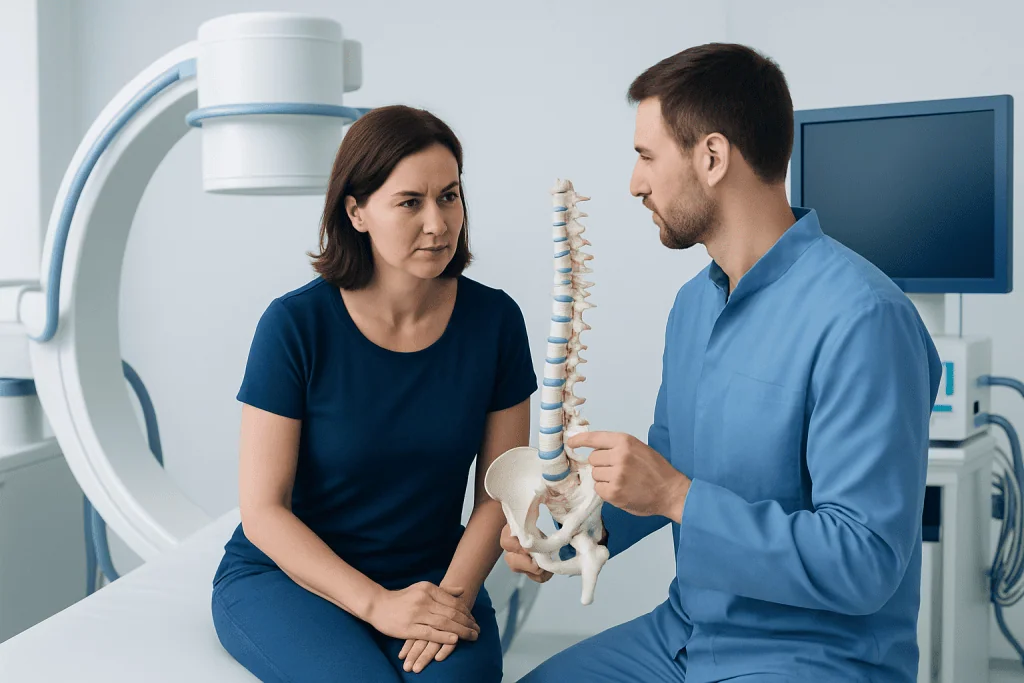
The spine contains a central canal for the spinal cord and branching spaces for nerve roots. Spinal stenosis occurs when one or more of these spaces becomes narrower. Age-related changes are a common reason: discs can lose height, joints can enlarge from osteoarthritis, and supporting ligaments can thicken. These changes may reduce room for nearby nerves.
Lumbar spinal stenosis affects the lower back and is the most common form. It may compress nerves traveling to the buttocks and legs. Cervical spinal stenosis affects the neck; when it presses on the spinal cord, it can affect hand function, balance, walking, and, in severe cases, leg strength. Thoracic stenosis, in the middle back, is less common.
Imaging may show narrowing in people who have no symptoms at all. For this reason, a scan result alone does not determine how serious stenosis is. Doctors interpret imaging alongside a person’s symptoms, physical examination, daily function, and any evidence of nerve or spinal cord impairment.
Symptoms that are common and symptoms that are urgent
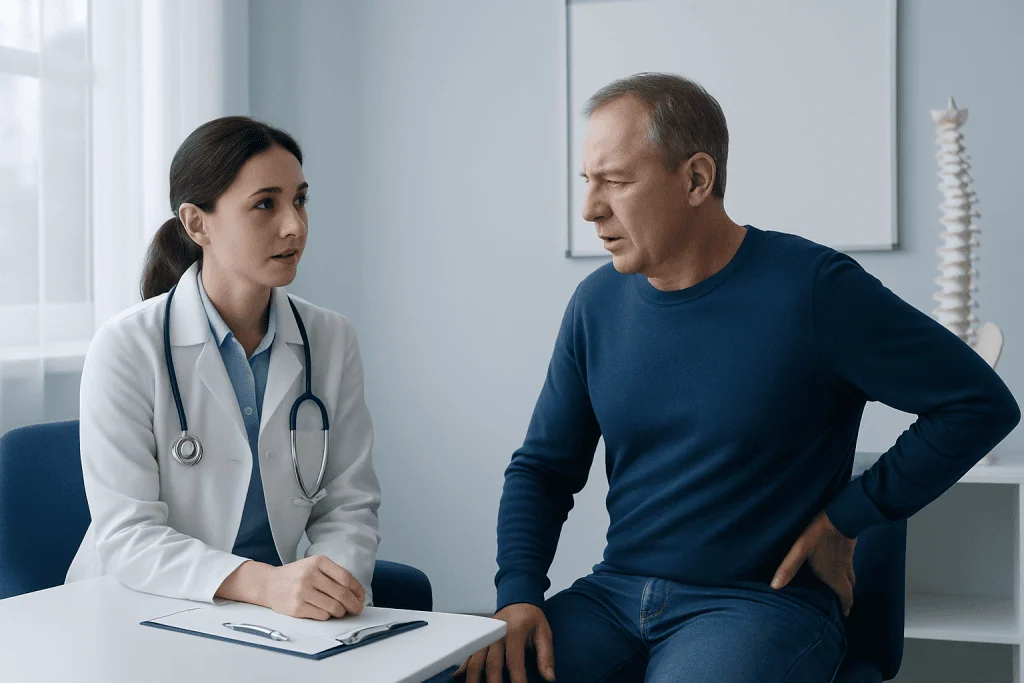
Lumbar stenosis often causes aching, heaviness, tingling, numbness, or pain in one or both legs during standing or walking. Symptoms may improve with sitting or bending forward, because these positions can temporarily create more space around the nerves. Some people notice reduced walking distance or need to lean on a shopping trolley for comfort.
In the neck, stenosis can cause neck pain, arm pain, tingling in the hands, clumsiness with buttons or handwriting, stiffness, or unsteadiness. Symptoms can develop gradually, but progression should be discussed with a doctor. Not everyone experiences pain; some people first notice altered balance or declining hand coordination.
Seek emergency medical attention for symptoms such as:
- new inability to pass urine, loss of bladder or bowel control, or loss of awareness of the need to urinate;
- new numbness around the inner thighs, buttocks, genitals, or anus;
- rapidly progressing leg weakness, inability to walk, or a sudden major decline in balance;
- new weakness or loss of coordination in the arms and legs, particularly with neck symptoms;
- back pain with fever, unexplained weight loss, recent significant trauma, or a history of cancer, especially when symptoms are severe or worsening.
These signs do not always mean spinal stenosis is the cause, but they should not be managed by waiting at home. Prompt assessment helps clinicians identify potentially time-sensitive conditions.
Why complications are uncommon but important
Most spinal stenosis develops slowly and does not affect vital organs. Narrowing in the lower back generally involves nerve roots rather than the spinal cord itself, so it does not directly affect breathing or heart function. Its greater impact is often on comfort, sleep, independence, physical activity, and quality of life.
Rarely, substantial pressure on the bundle of lower spinal nerves can lead to cauda equina syndrome. Without timely assessment and treatment, this may result in persistent bladder, bowel, sexual, or leg-function problems. Severe cervical spinal cord compression can also cause a condition known as myelopathy, which may lead to worsening gait, falls, weakness, and loss of hand dexterity if not addressed.
These complications explain why symptom changes matter more than the word “stenosis” on its own. A stable, mild narrowing found on a scan is very different from new neurological loss of function. Early medical review can clarify the level of concern and guide the most appropriate next step.
How doctors assess possible spinal stenosis
A doctor usually begins by asking where symptoms occur, what brings them on, whether they improve with rest or bending, and how they affect walking, work, sleep, and everyday activities. They will ask specifically about falls, hand clumsiness, leg weakness, saddle-area numbness, and bladder or bowel changes.
The physical examination may include checking posture, range of movement, muscle strength, sensation, reflexes, balance, walking pattern, and circulation in the legs. These findings can help distinguish nerve compression from problems involving the hips, peripheral nerves, blood vessels, or other parts of the musculoskeletal system.
MRI is commonly used when symptoms suggest significant nerve or spinal cord compression, when symptoms persist despite initial care, or when surgery is being considered. CT scans or X-rays may also be useful in selected situations. Imaging is not always needed immediately for uncomplicated back pain, but urgent symptoms usually require rapid clinical assessment and appropriate imaging.
Treatment options and day-to-day care
Treatment depends on the location of stenosis, symptom severity, examination findings, imaging results, overall health, and personal goals. For mild to moderate symptoms without progressive neurological deficits, initial care often includes guided exercise or physical therapy, pacing activities, and education about positions and movements that reduce symptoms. A clinician may recommend pain-relieving or anti-inflammatory medicines when appropriate for the individual’s health needs.
Exercise plans commonly focus on maintaining mobility, strengthening the trunk and hip muscles, improving balance, and supporting safe walking. Low-impact activities such as walking in tolerable intervals, cycling, or water-based exercise may suit some people. It is generally better to remain gently active than to rely on extended bed rest, unless a clinician advises otherwise.
Some patients may be offered spinal injections to reduce inflammation-related pain for a limited period. Surgery to create more space for compressed nerves may be considered when symptoms remain disabling despite non-surgical care, or when there is progressive weakness or spinal cord involvement. The potential benefits, risks, recovery, and alternatives should be discussed with a spine specialist.
Acibadem International’s multidisciplinary specialists and JCI-accredited hospitals assess and treat spinal conditions for international patients, with care plans based on each person’s symptoms and clinical findings.
When to seek medical care
Arrange a routine medical appointment for persistent back or neck pain that spreads into an arm or leg, numbness or tingling that does not settle, reduced walking tolerance, recurrent falls, or symptoms that interfere with sleep and daily activities. Assessment is also sensible if over-the-counter measures and activity adjustments have not helped, or if symptoms are gradually becoming more limiting.
Seek urgent or emergency care for new bladder or bowel dysfunction, numbness around the groin or buttocks, rapidly worsening weakness, inability to walk safely, or major new loss of coordination. These symptoms can occur with serious nerve compression and other urgent conditions; they should be assessed promptly rather than monitored at home.
People with known spinal stenosis can help clinicians by noting when symptoms began, which activities trigger them, how far they can walk, and whether strength or sensation has changed. Avoiding smoking, staying as physically active as symptoms allow, maintaining a comfortable body weight, and following a tailored rehabilitation plan may support overall spine health, but they do not replace medical review for red-flag symptoms.
Frequently asked questions
Is spinal stenosis usually fatal?
No. Spinal stenosis is usually not fatal and commonly develops gradually as part of age-related changes in the spine. It can still be painful or disabling, so ongoing symptoms deserve medical assessment and an individualized treatment plan.
Can lumbar spinal stenosis cause paralysis?
Paralysis from lumbar spinal stenosis is uncommon. Severe compression can, rarely, cause major weakness and cauda equina syndrome, which requires urgent evaluation because delays may increase the chance of lasting nerve problems.
What are the first warning signs of severe spinal stenosis?
Warning signs may include worsening leg weakness, increasing trouble walking, frequent falls, numbness that spreads, or new loss of hand coordination in cervical stenosis. Bladder or bowel changes and numbness around the groin or buttocks require emergency assessment.
Can spinal stenosis symptoms come and go?
Yes. Symptoms can vary with posture and activity, particularly in lumbar stenosis, where standing and walking may worsen leg symptoms while sitting or bending forward may provide relief. Even intermittent symptoms should be discussed with a clinician if they are recurring, progressive, or limiting daily life.
Does everyone with spinal stenosis need surgery?
No. Many people improve or remain stable with education, activity modification, exercise-based rehabilitation, and appropriate symptom relief. Surgery is generally considered when symptoms remain significantly limiting, neurological deficits progress, or spinal cord or severe nerve compression is suspected.
How quickly should bladder problems be assessed with back pain?
New difficulty starting urination, inability to empty the bladder, loss of bladder or bowel control, or reduced sensation in the saddle area should be assessed immediately in an emergency setting. These symptoms can have several causes, but urgent evaluation is important to rule out serious nerve compression.
This article is for general information only and is not a substitute for professional medical advice. Please consult a qualified doctor about your individual situation.
Persistent digestive symptoms? Get evaluated in Turkey
JCI-accredited · board-certified surgeons · reply within 24h
Add us as a Preferred Source to see more of our trusted health content across Google Search, AI Overviews and Discover.

Physical Medicine & Rehabilitation Specialists at Acibadem

Fzt. Alperen Mustafa Oğuz
Physical Medicine & Rehabilitation
Assoc. Prof. Dr. Altuğ Yücekul
Orthopedic Surgery & Traumatology
Prof. Dr. Arel Gereli
Orthopedic Surgery & Traumatology
Fzt. Asım Sakallı
Physical Medicine & Rehabilitation
Fzt. Aslı Hacıoğlu
Physical Medicine & RehabilitationMore from the Health Library

How to Get Rid of Canker Sores? A Doctor-Reviewed Answer
Is Mayo Gluten Free? A Doctor-Reviewed Answer

Why Does My Scalp Smell? Here Is What the Evidence Says

Famotidine vs Omeprazole: Key Differences and How Doctors Tell Them Apart

What Is the Fear of Clowns Called? A Doctor-Reviewed Answer