

Cavity Between Molar Teeth: What Patients Need to Know
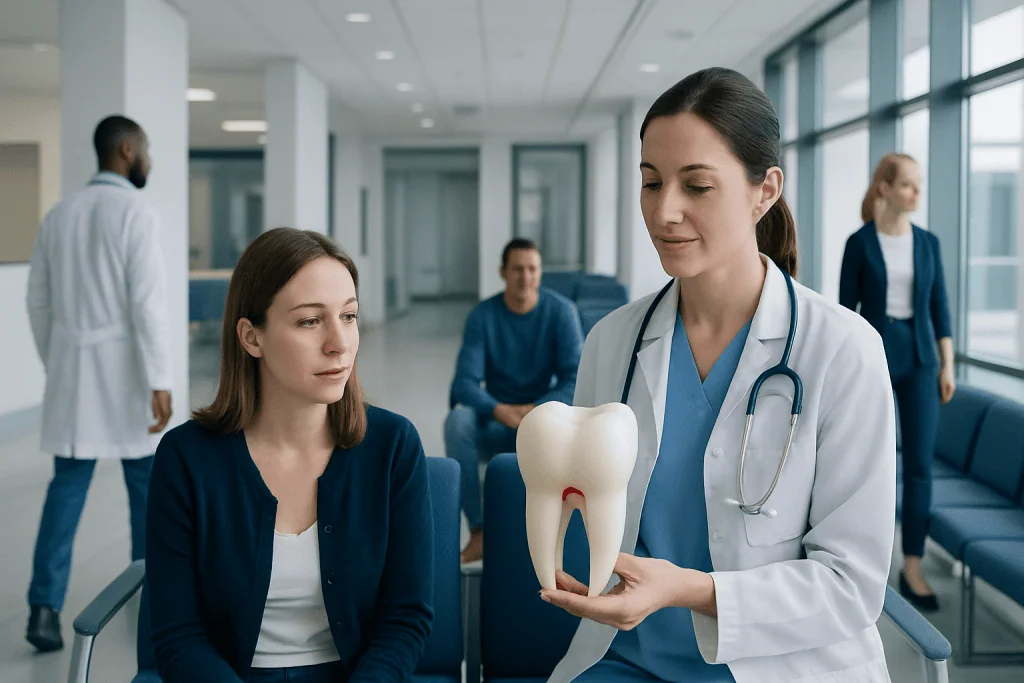
A cavity between molars often starts silently because it forms in a hidden contact area. Early signs may include sensitivity to cold, sweets, pressure, floss tearing, or food getting stuck.
Key Takeaways
- A cavity between molars often starts silently because it forms in a hidden contact area.
- Early signs may include sensitivity to cold, sweets, pressure, floss tearing, or food getting stuck.
- Dentists usually diagnose these cavities with an exam and dental X-rays because they are not always visible.
- Treatment depends on how deep the decay is and may range from a filling to root canal treatment or a crown.
- Daily flossing, fluoride toothpaste, and limiting frequent sugar exposure help prevent decay between teeth.
A cavity between molar teeth is a type of tooth decay that develops in the narrow space where back teeth touch. Because these areas are hard to see and clean, the problem may grow quietly until sensitivity, pain, or food trapping leads a person to seek dental care.
Overview: What a Cavity Between Molar Teeth Means
A cavity between molar teeth is tooth decay that forms on the side surfaces of the back teeth, in the tight space where one tooth touches another. Dentists often call this an interproximal cavity. It can begin when plaque and bacteria remain trapped in an area that a toothbrush cannot fully reach.
This type of decay is common because molars have broad surfaces, deep grooves, and close contact points. Even people who brush regularly may miss these spaces if they do not floss or use another tool to clean between teeth. Over time, acids produced by oral bacteria can weaken the enamel and create a small lesion that gradually becomes a cavity.
One reason these cavities matter is that they may not be obvious in the mirror. A cavity between molars can hide under the contact point and spread before a visible hole appears. That is why routine dental checkups are important even when there is no strong pain.
Why Cavities Between Molars Are Easy to Miss

Decay between molars often develops quietly. The enamel on the outer surface of a tooth has no nerves, so a person may feel nothing during the early stage. Since the cavity sits on the side of the tooth rather than on the chewing surface, it may not be seen during routine brushing at home.
The contact area between molars is narrow and shaded. Food debris and plaque can collect there, especially if teeth are crowded, restorations do not fit well, or flossing is irregular. Saliva and the tongue naturally help clean some parts of the mouth, but they do not remove plaque effectively from these tight spaces.
As the decay progresses deeper into dentin, symptoms may begin. At that point, the cavity may already require more than a very small filling. Recognizing subtle warning signs and keeping regular dental visits can help catch the problem earlier.
Symptoms and Early Warning Signs
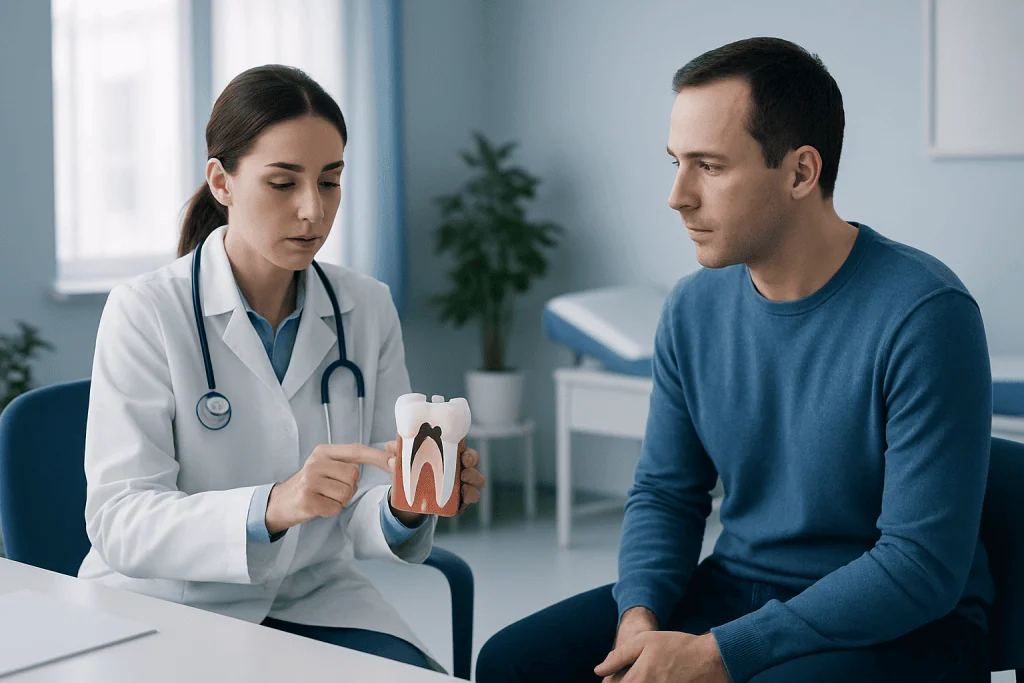
A cavity between molar teeth may cause no symptoms at first. When symptoms do appear, they are often mild and easy to overlook. A person may notice brief sensitivity to cold drinks, sweets, or biting on one side.
Other signs can include food repeatedly getting stuck between two back teeth, floss shredding or catching in the same spot, bad breath, or a rough feeling when the tongue touches the area. Some people feel a dull ache after eating, while others notice discomfort only when the cavity has become larger.
If the decay reaches the inner part of the tooth, symptoms may become more persistent. Pain may last longer after eating or drinking, chewing may become uncomfortable, and gum irritation may occur around the affected teeth. In advanced cases, swelling, throbbing pain, or sensitivity to heat can suggest that the nerve is involved.
- Cold or sweet sensitivity
- Food trapping between molars
- Floss tearing or snagging
- Pain with chewing
- Persistent toothache or gum tenderness
Causes and Risk Factors
The direct cause of a cavity is acid damage from bacteria in dental plaque. These bacteria feed on sugars and starches from food and drinks, then produce acids that soften and dissolve tooth enamel. When this process happens repeatedly, especially in hard-to-clean areas, a cavity can develop between molars.
Several factors can make interproximal cavities more likely. Irregular flossing is a major one because brushing alone does not remove plaque from between teeth. Frequent snacking, sugary beverages, dry mouth, poor-fitting dental work, crowded teeth, and weakened enamel can also increase risk.
Some people are more prone to decay because of medical or lifestyle factors. Reduced saliva from certain medications, mouth breathing, reflux, orthodontic appliances, and a history of previous cavities can all contribute. If a person has broader oral health concerns related to dental caries, a dentist may recommend a more tailored prevention plan.
How Dentists Diagnose a Cavity Between Molars
Diagnosis usually begins with a dental history and clinical examination. The dentist looks for visible discoloration, weakened enamel, plaque buildup, gum irritation, and signs that food is catching between the teeth. However, many cavities between molars cannot be fully seen during the visual exam alone.
Dental X-rays are often the most useful way to confirm the problem. Bitewing X-rays can show areas of decay between the teeth and help the dentist estimate how far the cavity has spread. This is especially important because treatment depends on whether the decay is still in enamel or has extended into dentin or the tooth pulp.
Sometimes the dentist may also assess the contact area with floss or special instruments, or monitor a very early lesion over time. If symptoms are severe, the evaluation may include testing how the tooth responds to temperature or pressure to check whether deeper treatment is needed.
Treatment Options and What Recovery Usually Involves
Treatment depends on the size and depth of the cavity. If the decay is very early and limited to enamel, a dentist may recommend fluoride-based measures and close monitoring rather than immediate drilling. Once a true cavity has formed, the damaged tissue usually needs to be removed and restored.
For many patients, the standard treatment is a dental filling. The dentist removes the decayed portion and places a material that restores the tooth’s shape and contact with the neighboring molar. If the cavity is larger or has weakened the tooth significantly, a crown may be advised after the decay is treated.
If decay reaches the pulp, the tooth may need root canal treatment to remove infected tissue and relieve pain. In cases where the tooth cannot be saved, dental implant care or another replacement option may be discussed. Some patients with severe damage or advanced gum and tooth support problems may also need an assessment related to periodontal disease.
Recovery after a filling is usually straightforward, with mild sensitivity for a short time in some cases. A person should follow the dentist’s instructions, keep the area clean, and return if the bite feels uneven, pain increases, or sensitivity does not improve.
Prevention and Self-Care for the Spaces Between Teeth
Preventing a cavity between molar teeth mainly depends on cleaning the areas a toothbrush misses. Daily flossing is one of the most effective habits because it removes plaque and food debris from contact points between teeth. For some people, interdental brushes, water flossers, or floss picks may make regular cleaning easier, although a dentist can advise which tool fits best.
Fluoride toothpaste helps strengthen enamel and lower the risk of decay. Limiting frequent sugary snacks and sweet drinks is also important because repeated acid attacks are more harmful than an occasional treat taken with a meal. Drinking water, especially after eating, can help rinse the mouth.
Routine dental checkups allow hidden cavities to be found before they become more complex. A dentist may recommend professional fluoride, sealants on susceptible teeth, or individualized advice if there is dry mouth, braces, or a history of repeated cavities. Near the end of care planning, some patients may wish to know that Acibadem International’s multidisciplinary specialists and JCI-accredited hospitals diagnose and treat dental conditions for international patients.
When to Seek Medical Care
A person should arrange a dental appointment if there is ongoing sensitivity between molars, repeated food trapping, floss catching in one spot, pain while chewing, or bad breath that does not improve with cleaning. These signs do not always mean a cavity, but they do deserve professional evaluation.
More urgent care is appropriate if there is significant toothache, facial or gum swelling, fever, pus, a bad taste in the mouth, or pain that keeps a person awake. These symptoms can suggest deeper infection and should not be ignored.
Even without symptoms, regular checkups remain important because cavities between molars may be found only on X-rays. Early treatment is usually simpler and helps preserve more of the natural tooth.
Frequently asked questions
Can a cavity between molars heal on its own?
A true cavity with a physical hole in the tooth does not heal on its own. Very early enamel changes may sometimes be stabilized with fluoride and improved oral care, but a dentist needs to assess whether the damage is reversible.
How do dentists find cavities that cannot be seen?
Dentists often use bitewing X-rays to detect decay between teeth. These images can reveal hidden areas of damage and help show how deep the cavity is, which guides treatment.
Does a cavity between molar teeth always hurt?
No. Many cavities between molars cause no pain in the early stages because the decay starts in enamel. Pain or sensitivity often appears only after the cavity reaches deeper tooth layers.
Is flossing really necessary if someone brushes well?
Yes. A toothbrush cleans the outer, inner, and chewing surfaces but usually cannot clean the tight contact points between teeth. Flossing or another suitable interdental cleaner helps remove plaque where many interproximal cavities begin.
What is the usual treatment for a cavity between molars?
Many are treated with a filling after the dentist removes the decayed tissue. Larger cavities may require a crown, and deep decay involving the pulp may require root canal treatment.
Can food getting stuck between molars mean there is a cavity?
It can. Food trapping may happen when decay changes the tooth shape or when the contact point between teeth is not ideal. It can also occur for other reasons, so a dental exam is the best way to find the cause.
References
- American Dental Association
- National Institute of Dental and Craniofacial Research
- Centers for Disease Control and Prevention
- World Health Organization
This article is for general information only and is not a substitute for professional medical advice. Please consult a qualified doctor about your individual situation.
Explore treatments in Turkey — costs, top hospitals & a free quote
JCI-accredited · board-certified surgeons · reply within 24h
Add us as a Preferred Source to see more of our trusted health content across Google Search, AI Overviews and Discover.

More from the Health Library



Related Specialists

Prof. Dr. Bünyamin Kaplan
Radiation Oncology
Prof. Dr. Beril Akman
Internal Medicine
Dr. Siyavuş Muhammedrezai
Neurosurgery
Ferît Pekgöz
Physical Medicine & Rehabilitation