Cerebral Atrophy — Explained by Medical Evidence, Not Myths

Cerebral atrophy describes loss of brain volume and is not automatically a sign of dementia. Some gradual brain volume loss occurs with normal ageing, but more extensive or focal change may need assessment.
Key Takeaways
- Cerebral atrophy describes loss of brain volume and is not automatically a sign of dementia.
- Some gradual brain volume loss occurs with normal ageing, but more extensive or focal change may need assessment.
- Possible causes include neurodegenerative disorders, stroke, brain injury, infections, long-term alcohol misuse, and some inflammatory conditions.
- MRI and CT scans can identify atrophy, while clinical assessment helps determine whether it is affecting thinking, movement, speech, or daily function.
- Treatment focuses on the underlying cause, rehabilitation, symptom management, and reducing modifiable vascular risks.
Cerebral atrophy means a reduction in brain volume caused by loss of brain cells, their connections, or both. It is an imaging finding rather than a diagnosis by itself, and its significance depends on a person’s age, symptoms, medical history, and the pattern seen on brain imaging.
What cerebral atrophy means
Cerebral atrophy, sometimes called brain atrophy, refers to a decrease in the size or volume of brain tissue. It can happen when nerve cells, called neurons, are lost or when the connections between them become reduced. The term may appear in a CT or MRI report, but it does not by itself explain why the change has occurred or whether it is causing symptoms.
Brain volume changes gradually across adulthood, and a degree of shrinkage can be part of normal ageing. However, atrophy may be more pronounced than expected for age, may affect particular regions of the brain, or may occur alongside problems with memory, language, balance, movement, mood, or independence. These details help clinicians decide whether the finding is likely to be clinically important.
Cerebral atrophy can be generalized, meaning it affects many areas of the brain, or focal, meaning it is more apparent in a specific area. For example, changes in the hippocampus and temporal lobes may be considered when evaluating certain memory disorders, whereas changes after a stroke often follow the damaged blood vessel territory. Imaging patterns provide clues but are interpreted together with the person’s overall assessment.
Evidence-based facts and common myths
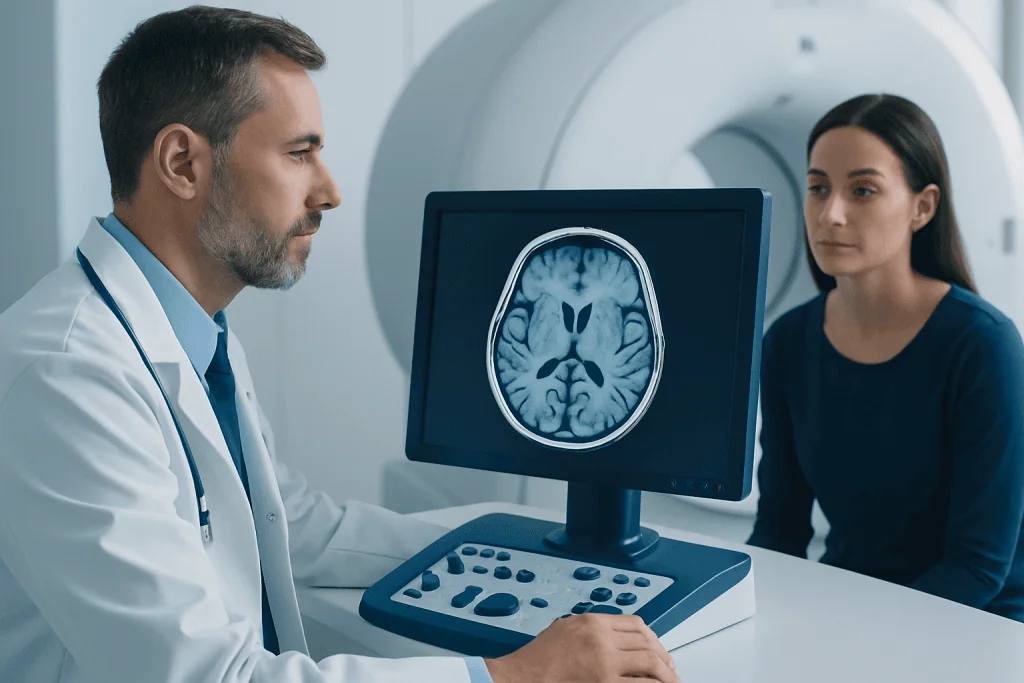
A common misconception is that cerebral atrophy always means dementia. This is not accurate. Some people have imaging changes without noticeable cognitive difficulties, while others have symptoms related to a condition that requires further investigation. Dementia is a clinical syndrome involving a persistent decline in cognitive abilities that interferes with daily life; it cannot be diagnosed from a scan alone.
Another myth is that brain shrinkage can be reversed quickly with a supplement, detox, or brain-training product. There is no proven supplement or commercial programme that reliably reverses established cerebral atrophy. Some causes can be treated, and healthy habits may support brain and vascular health, but recommendations should be tailored to the underlying condition.
It is also important not to assume that a radiology phrase such as “mild cerebral volume loss” predicts a person’s future. Radiology reports use descriptive language, often based on comparison with expected appearances for age. A doctor can place the result in context by considering symptoms, neurological examination findings, medications, laboratory results, and changes over time.
Possible symptoms and effects
Cerebral atrophy itself may not cause obvious symptoms, particularly when changes are mild, gradual, or related to normal ageing. When symptoms occur, they depend largely on which brain networks are affected and on the condition causing the tissue loss. Symptoms can develop slowly or, in some situations such as stroke or traumatic brain injury, become apparent after an acute event.
Possible concerns include increasing forgetfulness, difficulty finding words, reduced attention, trouble planning tasks, changes in judgment, or getting lost in familiar places. Other people may experience changes in walking, coordination, muscle control, swallowing, vision, behaviour, mood, or personality. Seizures may occur in some underlying neurological conditions but are not a universal feature of cerebral atrophy.
Symptoms should be assessed in a practical context. Forgetting an occasional name is different from repeatedly missing medications, struggling to manage finances, or having progressive problems at work or home. Family members or close friends may notice gradual changes that the affected person does not recognize, so their observations can be valuable during a medical consultation.
- Memory or thinking changes that interfere with everyday tasks
- New difficulty speaking, understanding language, walking, or using one side of the body
- Repeated falls, worsening balance, or unexplained coordination problems
- Significant personality, behaviour, or mood changes
Causes and factors linked with brain volume loss
Cerebral atrophy has many possible causes. Ageing is one contributor, but clinicians also consider neurodegenerative disorders, including Alzheimer’s disease and other forms of dementia, when there is progressive cognitive or functional decline. The location and pattern of atrophy may help guide further evaluation, although no single scan feature confirms a diagnosis on its own.
Vascular disease is another important contributor. Strokes, repeated small vessel damage, long-standing high blood pressure, diabetes, high cholesterol, and smoking can affect blood flow to brain tissue over time. Brain injury, severe or recurrent seizures, certain infections affecting the brain, autoimmune or inflammatory diseases, and some inherited neurological disorders may also be associated with atrophy.
Long-term heavy alcohol use and nutritional deficiencies can contribute to brain and nerve damage in some people. Medication effects, depression, sleep disorders, thyroid disease, vitamin deficiencies, and other treatable conditions can sometimes mimic or worsen cognitive symptoms, even if they do not directly explain all imaging findings. This is why a broad medical assessment is often helpful rather than assuming a scan result has one cause.
Risk cannot always be prevented, particularly where genetics or age-related processes play a role. Still, controlling blood pressure and diabetes, avoiding tobacco, limiting alcohol, staying physically active, and treating hearing loss, sleep problems, and depression where present may support long-term brain health.
How cerebral atrophy is evaluated
Assessment begins with a detailed history. A clinician may ask when symptoms began, whether they are stable or worsening, how they affect daily activities, and whether there has been a stroke, head injury, seizure, infection, substance use, or family history of neurological disease. Information from a family member may help identify changes in memory, behaviour, driving, medication management, or personal safety.
A neurological examination evaluates functions such as strength, reflexes, coordination, eye movements, sensation, gait, and speech. Brief cognitive screening tests may assess memory, attention, language, and problem-solving. More detailed neuropsychological testing can clarify a person’s cognitive strengths and difficulties and may help distinguish among potential causes.
MRI is often the most detailed imaging method for assessing brain structure and patterns of volume loss. CT can also show atrophy and may be used when MRI is unavailable, unsuitable, or needed urgently. Depending on the clinical situation, blood tests may check for potentially reversible contributors such as thyroid disorders, vitamin deficiencies, metabolic problems, infection, or inflammation. Additional testing is selected carefully rather than routinely for everyone.
Treatment, rehabilitation and daily support
There is no single treatment for cerebral atrophy because treatment is directed at its cause and its effects. If testing identifies a potentially reversible or manageable condition, such as a vitamin deficiency, thyroid disorder, infection, sleep problem, medication-related issue, or vascular risk factor, addressing it may improve symptoms or help prevent further injury. A specialist may also recommend treatment for an identified neurological disorder.
For people affected by stroke, movement problems, speech difficulties, or loss of independence, rehabilitation can be an important part of care. Physiotherapy may support mobility and balance, occupational therapy can help make everyday activities safer and more manageable, and speech and language therapy may address communication or swallowing concerns. Cognitive rehabilitation and practical routines can also help some people manage attention and memory difficulties.
Supportive measures are meaningful even when an underlying neurodegenerative condition cannot be cured. Regular physical activity suited to the individual, a balanced eating pattern, social connection, mentally engaging activities, adequate sleep, and management of hearing or vision problems can support overall wellbeing. People should discuss major lifestyle changes, supplements, or complementary therapies with a clinician, especially if they take regular medicines.
Acibadem International’s multidisciplinary specialists and JCI-accredited hospitals assess and treat neurological conditions for international patients, with care plans based on clinical findings and individual needs.
When to seek medical care
A non-urgent medical appointment is appropriate for new or gradually worsening memory problems, changes in personality or behaviour, difficulties with planning or language, recurrent falls, or a brain imaging report that mentions atrophy and has not yet been discussed with a clinician. Early assessment can identify treatable contributors and help a person and family plan appropriate support.
Emergency medical care is needed for sudden symptoms that could indicate a stroke or another acute neurological problem. These include sudden facial drooping, weakness or numbness on one side of the body, difficulty speaking or understanding speech, sudden severe imbalance, abrupt vision loss, a new seizure, loss of consciousness, or a sudden severe headache. Prompt treatment can be important in these situations.
People who have been told they have cerebral atrophy should avoid interpreting the result alone. A follow-up appointment with a primary care doctor, neurologist, or memory specialist can clarify what the imaging means in their circumstances, whether additional tests are needed, and what steps may help protect function and quality of life.
Frequently asked questions
Is cerebral atrophy the same as dementia?
No. Cerebral atrophy is a descriptive term for reduced brain volume seen on imaging, while dementia is a clinical syndrome involving cognitive decline that affects daily functioning. Atrophy can occur in some forms of dementia, but it can also be seen with ageing and many other conditions.
Can cerebral atrophy be reversed?
Established loss of brain tissue is generally not considered reversible. However, some causes of symptoms associated with atrophy may be treatable, and managing vascular risks, sleep disorders, nutritional problems, or other medical conditions may help preserve function and reduce further harm.
Does mild cerebral atrophy always cause symptoms?
No. Mild volume loss is often found incidentally on imaging, especially in older adults, and may not cause noticeable symptoms. Its importance depends on age, the pattern of change, symptoms, and the results of a clinical assessment.
What test is best for detecting cerebral atrophy?
MRI usually provides more detailed information about brain structure and patterns of volume loss than CT. However, the most appropriate test depends on the clinical situation, urgency, medical history, and whether MRI is safe and available for the individual.
Can lifestyle changes help with cerebral atrophy?
Lifestyle measures cannot guarantee prevention or reverse established atrophy, but they can support brain and blood vessel health. Helpful steps may include controlling blood pressure and diabetes, avoiding smoking, limiting alcohol, being physically active, sleeping well, and staying socially and mentally engaged.
When is cerebral atrophy an emergency?
Cerebral atrophy itself is usually not an emergency finding. However, sudden neurological symptoms such as one-sided weakness, facial drooping, speech difficulty, sudden vision changes, a seizure, collapse, or a severe sudden headache require urgent medical assessment.
References
- World Health Organization
- National Institute on Aging
- National Institute of Neurological Disorders and Stroke
- Alzheimer's Association
- American Academy of Neurology
This article is for general information only and is not a substitute for professional medical advice. Please consult a qualified doctor about your individual situation.
Explore treatments in Turkey — costs, top hospitals & a free quote
JCI-accredited · board-certified surgeons · reply within 24h
Add us as a Preferred Source to see more of our trusted health content across Google Search, AI Overviews and Discover.

More from the Health Library

Cructures: An Evidence-Based Guide for Patients

Flight of Ideas: What Patients Need to Know

Salt Lamps: An Evidence-Based Guide for Patients

Vibration Plate Benefits: An Evidence-Based Guide for Patients

Hernia at the umbilicus: A Complete Medical Guide for Patients