Childhood Sleep Disorders With Neurological Causes: When a Sleep Specialist Is Needed

Not all childhood sleep disorders are behavioral; some have neurological causes. Warning signs include unusual movements, breathing pauses, excessive daytime sleepiness, and developmental or learning changes.
Key Takeaways
- Not all childhood sleep disorders are behavioral; some have neurological causes.
- Warning signs include unusual movements, breathing pauses, excessive daytime sleepiness, and developmental or learning changes.
- Diagnosis may involve a detailed sleep history, neurological assessment, and sometimes overnight sleep studies.
- Treatment depends on the cause and may include sleep routines, medication review, breathing support, or specialist care.
- Persistent, worsening, or unusual sleep symptoms should be assessed by a qualified doctor.
Childhood sleep disorders are common, but some sleep problems can be linked to the brain and nervous system rather than habits alone. Recognizing warning signs can help families know when a pediatrician, neurologist, or sleep specialist should evaluate a child.
Overview
Childhood sleep disorders can affect mood, learning, behavior, growth, and family life. Many sleep difficulties in children are related to bedtime habits, anxiety, illness, or environmental factors. However, in some cases, the underlying issue involves the brain, nerves, or the way sleep is regulated in the body.
Neurological sleep disorders in children may appear as unusual movements during sleep, repeated awakenings, excessive daytime sleepiness, or breathing changes linked to the nervous system. These problems can overlap with other childhood conditions, which is why careful evaluation is important. A child may seem restless, difficult to wake, inattentive at school, or unusually tired despite spending enough time in bed.
Parents do not need to identify the exact cause on their own. What matters most is recognizing patterns that seem persistent, disruptive, or unusual for the child’s age. Early assessment can help clarify whether the problem is a common sleep issue, a seizure-related condition, a breathing disorder, or another neurological concern that needs specialist care.
Symptoms That May Suggest a Neurological Cause
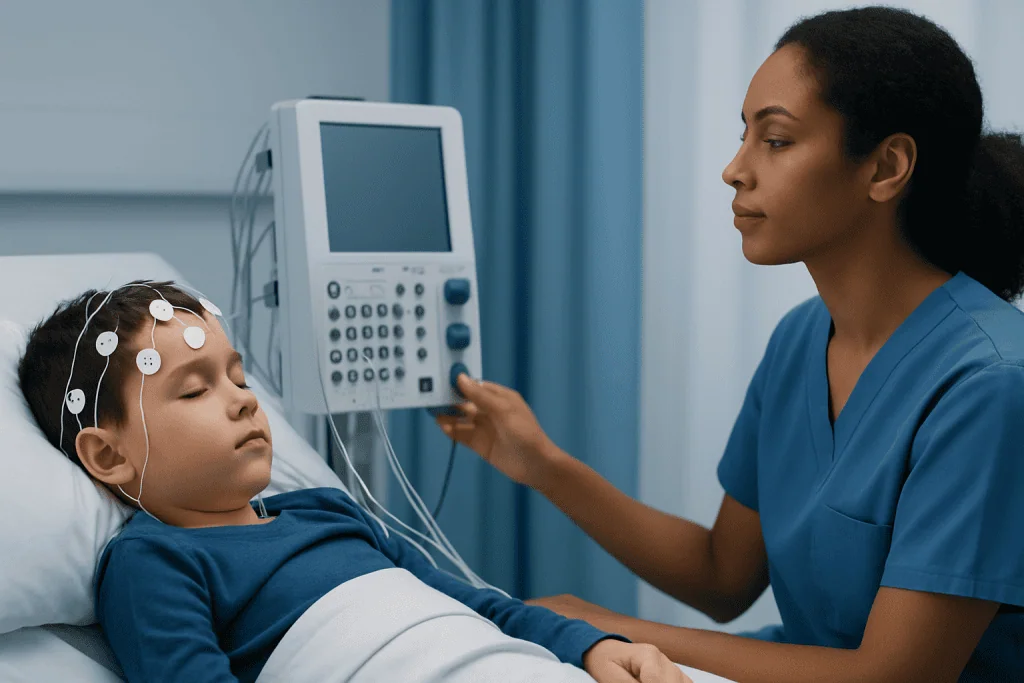
Some sleep symptoms are more suggestive of a neurological issue than a simple bedtime struggle. These can include episodes of stiffening, jerking, staring, unusual repetitive movements, confusion on waking, or events that happen in the same way night after night. Sleepwalking, night terrors, and talking during sleep are often harmless, but frequent or intense episodes may need a closer look.
Daytime symptoms can also offer important clues. A child with a neurologically related sleep problem may have marked daytime sleepiness, morning headaches, poor concentration, sudden sleep attacks, mood changes, or declining school performance. Infants and younger children may show irritability, feeding difficulties, or developmental concerns rather than clearly describing tiredness.
Other signs that deserve medical attention include:
- Pauses in breathing, choking, or gasping during sleep
- Loud, regular snoring with restless sleep
- Sudden loss of muscle tone or unexplained collapses
- Repeated bedwetting after being dry at night, especially with other symptoms
- Abnormal movements that may raise concern for epilepsy
- Symptoms of weakness, headache, or changes in behavior along with poor sleep
These symptoms do not always mean a serious neurological disease is present. Still, they can signal the need for structured assessment by a pediatrician and, in some cases, a pediatric sleep specialist or neurologist.
Possible Neurological Causes and Risk Factors
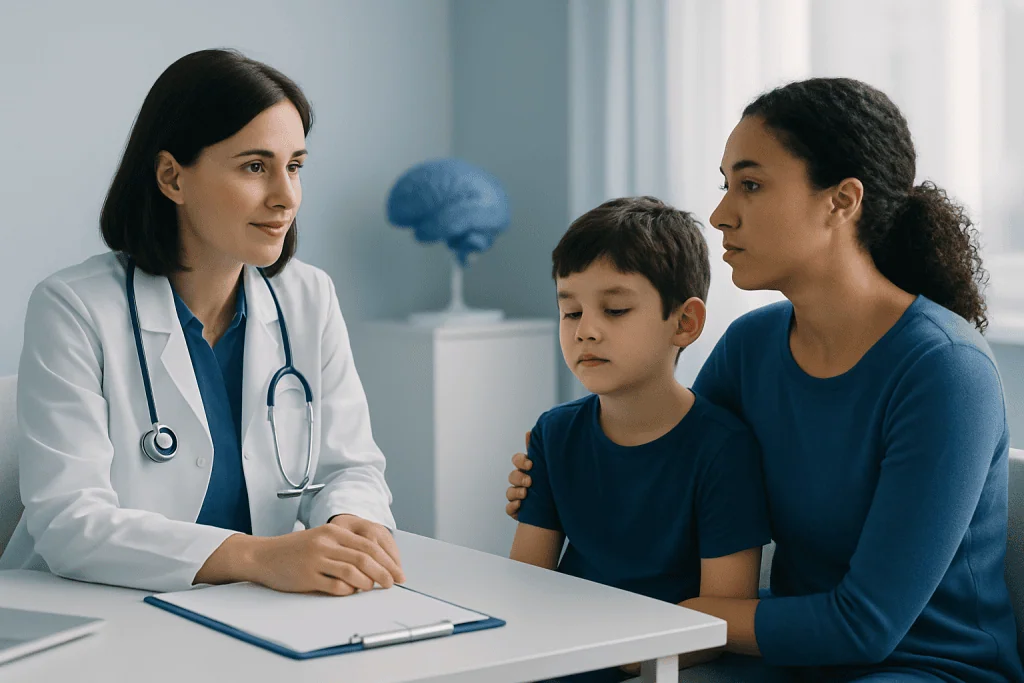
Sleep is controlled by complex pathways in the brain. When these systems are affected, a child may develop sleep problems even with a good bedtime routine. Neurological causes can include seizure disorders, disorders of arousal, circadian rhythm disturbances, movement disorders during sleep, narcolepsy, and sleep-disordered breathing influenced by neuromuscular conditions.
Children with developmental or neurological conditions may be more likely to have sleep difficulties. This can include children with autism spectrum disorder, cerebral palsy, genetic syndromes, attention or behavior disorders, traumatic brain injury, or conditions that affect muscle tone and breathing. Headaches, especially if linked to poor sleep or early morning symptoms, can also contribute to disrupted rest and may overlap with migraine or other neurological concerns.
Risk factors vary by condition but may include a family history of sleep disorders, a history of seizures, enlarged tonsils or airway issues, prematurity, obesity, certain medications, and chronic medical conditions. In some children, more than one factor is present at the same time. For example, a child may have both poor sleep habits and an underlying neurological or breathing-related sleep disorder.
Because symptoms can overlap, it is important not to assume that all nighttime events are behavioral. A careful medical evaluation helps distinguish between common childhood sleep issues and conditions that require targeted treatment.
How Childhood Sleep Disorders Are Diagnosed
Diagnosis usually begins with a detailed history. The doctor may ask when the sleep problem started, how often it happens, what the child does during an episode, and how the child seems during the day. Parents may be asked to keep a sleep diary or record a video of concerning nighttime events if this can be done safely.
A physical examination and developmental review are often part of the evaluation. The clinician may look for signs of enlarged tonsils, breathing difficulties, muscle weakness, abnormal movements, or neurological changes. Questions about school performance, behavior, medications, caffeine use, and family sleep history can also help.
Some children benefit from additional testing. An overnight sleep study, or sleep study (polysomnography), can monitor breathing, oxygen levels, heart rhythm, sleep stages, and movements. In cases where seizures are possible, the child may need an electroencephalogram (EEG) or combined sleep and brain-wave monitoring. If structural neurological concerns are suspected, imaging such as MRI may be recommended by the specialist.
The goal of testing is not simply to label the problem, but to identify the cause accurately. This helps avoid unnecessary treatments and allows the child to receive the most appropriate support.
Treatment Options
Treatment depends on the diagnosis. For some children, improving sleep routines, reducing stimulating screen use before bed, and treating anxiety or reflux may be enough. For others, the sleep problem will not improve until the underlying neurological or breathing disorder is addressed.
If seizures are affecting sleep, treatment usually focuses on seizure management under specialist guidance. If sleep-disordered breathing is present, care may involve evaluating the airway, managing allergies, or using breathing support. Children with movement disorders, narcolepsy, circadian rhythm disorders, or medication-related sleep disruption may need tailored treatment plans and follow-up over time.
Behavioral sleep strategies still play an important role, even when the cause is neurological. A regular bedtime, a calm sleep environment, and a predictable wake time can support better sleep quality. Parents should not start supplements or medicines without medical advice, especially if unusual nighttime movements, daytime sleepiness, or neurological symptoms are present.
In more complex cases, care may involve more than one specialist. Pediatricians, neurologists, ENT doctors, pulmonologists, psychologists, and sleep medicine physicians may work together to address the child’s symptoms and overall development.
Prevention and Self-care at Home
Not every neurological sleep disorder can be prevented, but healthy sleep habits can reduce strain on the sleep system and make symptoms easier to recognize. Children generally benefit from a consistent bedtime and wake time, a dark and quiet room, and a relaxing bedtime routine. Limiting caffeine, late naps, and screens before bed can also help.
Parents may find it useful to track when symptoms occur, what they look like, and how the child acts the next day. This information can help a doctor identify patterns. Videos of unusual nighttime events may also be useful if obtained safely and respectfully. Children should not be restrained during episodes unless immediate safety is at risk.
Safety matters when a child has nighttime wandering, sudden movements, or possible seizures. Depending on the symptoms, practical steps may include removing sharp objects near the bed, using low beds, securing windows, and supervising access to stairs. Families should ask a doctor which safety measures are appropriate for their child’s situation.
Near the end of the care journey, some families may seek coordinated international evaluation. Acibadem International’s multidisciplinary specialists and JCI-accredited hospitals diagnose and treat childhood sleep disorders for international patients when specialist assessment is needed.
When a Sleep Specialist Is Needed
A sleep specialist is often needed when sleep problems are persistent, unexplained, or affecting daytime function. Referral is especially appropriate if a child snores heavily, stops breathing during sleep, has frequent unusual movements, seems excessively sleepy during the day, or has nighttime episodes that may represent seizures or other neurological events.
Specialist care may also be needed when first-line sleep advice has not helped, when the diagnosis is unclear, or when the child has a known neurological or developmental condition. A pediatric sleep specialist can help decide whether overnight testing, neurological evaluation, airway assessment, or a change in treatment plan is needed.
Urgent medical attention is important if a child has prolonged breathing pauses, repeated blue discoloration, a first-time seizure, confusion that does not resolve, severe weakness, or a sudden major change in alertness. In non-urgent situations, families should still arrange a prompt medical review if symptoms are recurring or worsening.
Parents should feel reassured that many childhood sleep disorders can be understood and managed with the right evaluation. Seeking help early can improve sleep, daytime function, and overall well-being for both the child and the family.
Frequently asked questions
Are childhood sleep disorders always caused by poor sleep habits?
No. Many childhood sleep disorders are related to routines, stress, or environment, but some are linked to neurological, breathing, or developmental conditions. If symptoms are frequent, unusual, or affect daytime functioning, a medical evaluation is important.
What sleep symptoms in a child should concern parents most?
Breathing pauses, choking, repeated unusual movements, extreme daytime sleepiness, and episodes that look the same each night deserve attention. Parents should also seek advice if sleep problems are affecting school, behavior, growth, or safety.
Can seizures happen only during sleep?
Yes, some seizures occur mainly or only during sleep. These events may look like jerking, stiffening, repetitive movements, or unusual confusion on waking. Because other sleep disorders can look similar, specialist evaluation may be needed.
What does a pediatric sleep specialist do?
A pediatric sleep specialist evaluates sleep problems that are complex, persistent, or hard to explain. They may review sleep habits, assess for breathing or neurological causes, and arrange tests such as an overnight sleep study.
Will every child with a neurological sleep disorder need a sleep study?
Not always. Some children can be diagnosed mainly through history, examination, and targeted specialist review. A sleep study is used when it is likely to clarify breathing problems, abnormal movements, or other events during sleep.
Can neurological sleep disorders in children be treated?
Many can be managed effectively once the cause is identified. Treatment may involve sleep routine changes, management of seizures or breathing problems, medication review, or care from more than one specialist.
References
- American Academy of Pediatrics
- American Academy of Sleep Medicine
- National Institute of Neurological Disorders and Stroke
- National Sleep Foundation
- Centers for Disease Control and Prevention
This article is for general information only and is not a substitute for professional medical advice. Please consult a qualified doctor about your individual situation.
Explore treatments in Turkey — costs, top hospitals & a free quote
JCI-accredited · board-certified surgeons · reply within 24h
Add us as a Preferred Source to see more of our trusted health content across Google Search, AI Overviews and Discover.

Pediatrics
Complete healthcare for infants, children and adolescents across all sub-specialties.
232 specialists in this unit