

Children’s Fever Treatment: How It Works, Results and What to Expect

Fever is a symptom, commonly caused by viral infections, and can be part of the body's normal immune response. Treatment aims to help the child rest, drink fluids and feel more comfortable, not necessarily to eliminate the fever completely.
Key Takeaways
- Fever is a symptom, commonly caused by viral infections, and can be part of the body's normal immune response.
- Treatment aims to help the child rest, drink fluids and feel more comfortable, not necessarily to eliminate the fever completely.
- Paracetamol (acetaminophen) or ibuprofen may be used when appropriate for the child, following a clinician's or product label's age- and weight-based guidance.
- A fever in an infant younger than 3 months needs urgent medical assessment.
- Breathing difficulty, dehydration, seizures, rash that does not fade with pressure, severe pain or unusual drowsiness require prompt care.
Children's fever treatment usually means supporting comfort and hydration while the body responds to an infection, rather than trying to normalize every temperature reading. A child’s age, appearance, symptoms and the duration of fever help determine whether home care is appropriate or medical evaluation is needed.
Children's Fever Treatment: How It Works
Children’s fever treatment focuses first on the child rather than the thermometer. Fever is a temporary rise in body temperature, often defined as 38°C (100.4°F) or higher when measured appropriately. It commonly occurs when the immune system responds to an infection, especially a viral respiratory or stomach illness. In many otherwise well children, fever improves as the underlying illness resolves.
The main goals are to maintain hydration, support rest and reduce discomfort. A clinician may recommend a fever-reducing medicine when a child is distressed, unable to sleep or drink comfortably, or has pain. Lowering a temperature does not treat the infection itself, and a child does not need medicine solely because a temperature is elevated.
Care should be individualized. A child who is alert, drinking, breathing comfortably and becoming more active at times may often be observed at home, even if fever is present. By contrast, age, medical history and associated symptoms can make a fever more urgent to assess.
Who May Need Home Care, a Consultation or Urgent Assessment?
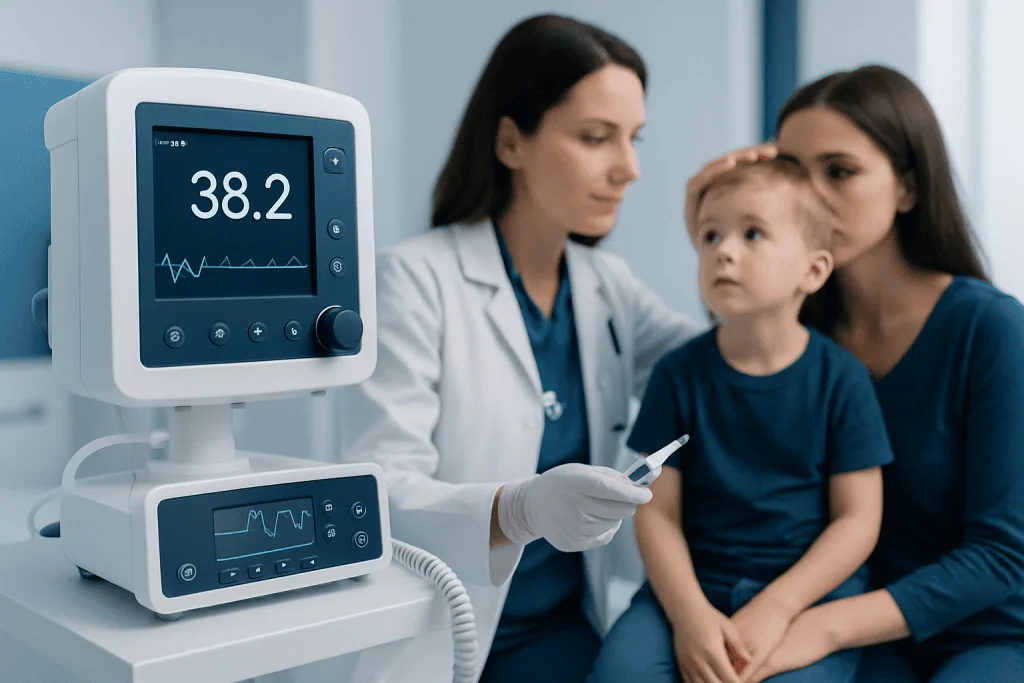
Most healthy children with a short-lived fever and mild cold-like symptoms can be cared for at home with close observation. Suitable home care includes offering regular fluids, allowing sleep and quiet activity, dressing the child in light, comfortable clothing, and monitoring changes in behavior, breathing and urination.
Medical advice is particularly important for infants and for children with long-term health conditions, immune-system problems, cancer treatment, or medicines that affect immunity. A clinician may review the child in person, by phone or through a same-day appointment depending on the symptoms and local care options.
Fever treatment is not a one-size-fits-all procedure. The right plan depends on the likely cause, the child’s age, how the temperature was measured, whether the child has pain or dehydration, and whether there are signs of a more serious infection.
Step-by-Step: What Children's Fever Treatment Usually Involves
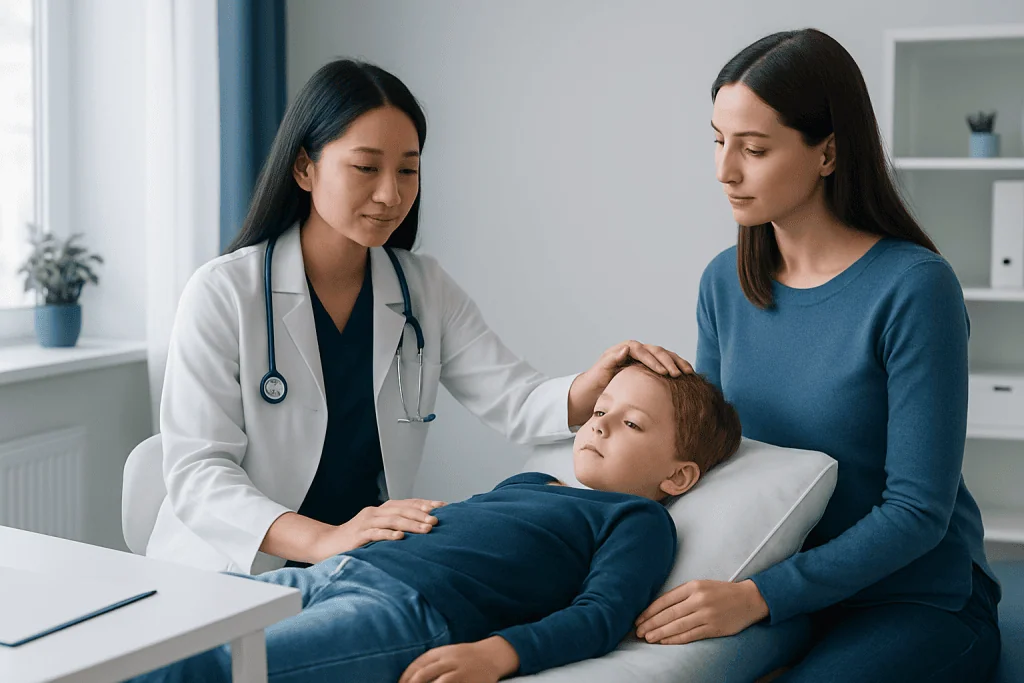
Assessment begins with a reliable temperature measurement and a review of symptoms. Caregivers can note when the fever began, the highest measured temperature, any medicines given, fluid intake, wet diapers or urination, stools, vomiting, rash, pain, cough and contact with unwell people. This information helps a clinician identify patterns and decide whether tests are needed.
At home, offer frequent small drinks. Breastfed infants may feed more often; formula-fed infants and older children can be offered their usual drinks, unless a clinician advises otherwise. Food is less important than fluids during a short illness, and children can eat according to appetite. Avoid forcing food.
If medication is advised, caregivers should use a single-ingredient product and follow the age- and weight-based directions from a clinician or the product label. Paracetamol (acetaminophen) and ibuprofen are commonly used options for eligible children. Ibuprofen is generally avoided in babies younger than 6 months and may not be suitable for a child who is dehydrated, vomiting persistently, has kidney disease or has been advised to avoid it.
Aspirin should not be given to children or teenagers with a viral illness unless specifically prescribed by a clinician, because of the risk of Reye syndrome. Alternating fever medicines or giving combination cold products can increase the chance of dosing mistakes, so this should only be done with clear professional guidance.
How Long Does a Children's Fever Reducer Last?
The effect of a children’s fever reducer varies by medicine, dose, the individual child and the illness causing the fever. Paracetamol (acetaminophen) typically begins to work within about an hour and may provide comfort for several hours. Ibuprofen may also start working within about an hour and can last longer for some children. Caregivers should follow the dosing interval stated on the product label or provided by a healthcare professional.
A temperature may rise again after the medication wears off. This does not automatically mean the illness is worsening; it can reflect the ongoing immune response. What matters most is whether the child is drinking, responding normally for their age, breathing comfortably and having periods when they seem more settled.
Medicines should be used for comfort, not to make a child attend school, sports or other activities while unwell. If fever or symptoms persist beyond the expected course, or medication is repeatedly needed for several days, a clinician should advise on the next steps.
How to Know If a Fever Is Improving
A fever may be improving when temperature peaks become lower, the intervals without fever become longer, and the child becomes more alert or playful between episodes. Improved drinking, more regular urination, easier breathing and better sleep are also reassuring signs. Recovery is often gradual, and mild tiredness or reduced appetite can continue briefly after the temperature settles.
The number on the thermometer is only one part of the picture. A child may still have a fever but look relatively comfortable and interact normally, while a child with a lower temperature may need assessment if they are unusually sleepy, confused, struggling to breathe or unable to drink.
Keeping a simple record of temperatures, symptoms, medicines and fluid intake can be useful, especially if the child is evaluated. Fever can fluctuate naturally throughout the day, so an isolated reading is less informative than the overall trend and the child’s general condition.
What Is the 24-Hour Rule for Fever?
The “24-hour rule” is commonly used to mean that a child should be fever-free for 24 hours without fever-reducing medicine before returning to school, childcare or group activities. This supports recovery and may reduce the chance of spreading an infectious illness. Individual schools, childcare settings and public health guidance may have their own policies.
The rule is not a substitute for medical judgment. A child may need to stay home longer if they are too tired to participate, have vomiting or diarrhea, have a contagious rash, or need frequent care that cannot be provided safely in the usual setting.
For infants and children with concerning symptoms, waiting 24 hours is not appropriate. They should be assessed promptly when warning signs are present, regardless of how long the fever has lasted.
What Are the Three Stages of Fever?
Fever is often described in three broad stages. During the first stage, the body’s temperature set point rises. The child may feel cold, shiver, have chills, look pale or want extra blankets even though the temperature is increasing.
In the second stage, the temperature remains elevated. The child may feel warm or flushed, have less energy, complain of headache or body aches, and drink less than usual. Comfort measures, fluids and observation are most important during this phase.
In the third stage, often called defervescence, the temperature set point returns toward normal. The child may sweat, feel warm and tired, and then gradually become more comfortable. Not every illness follows these stages clearly, and fever may return in cycles while the underlying infection is active.
Benefits, Limits, Risks and When to Seek Medical Care
The benefit of supportive fever care is improved comfort, hydration and rest while the child recovers. Fever-reducing medicines can help with discomfort, aches and sleep, but they do not prevent all complications or identify the cause of fever. Cool baths, ice packs, alcohol rubs and excessive bundling are not recommended because they can make a child uncomfortable or cause harm.
Medicine-related risks include accidental overdose, duplicate ingredients in multi-symptom products, allergic reactions and side effects such as stomach upset. Caregivers should keep all medicines out of reach of children, use the measuring device supplied with the product, and ask a pharmacist or clinician when uncertain about a product or dose.
Seek urgent medical care for a baby younger than 3 months with a rectal temperature of 38°C (100.4°F) or higher. Prompt assessment is also needed for trouble breathing, blue or gray lips, a seizure, severe headache or stiff neck, a rash that does not fade when pressed, persistent severe pain, signs of dehydration, repeated vomiting, confusion, extreme sleepiness, or a child who is difficult to wake.
Contact a doctor if fever persists, returns after improvement, or is accompanied by symptoms that concern the caregiver. Acibadem International’s multidisciplinary specialists and JCI-accredited hospitals can assess and treat children with fever and its underlying causes for international patients.
Frequently asked questions
What temperature is considered a fever in a child?
A fever is commonly defined as a temperature of 38°C (100.4°F) or higher. The reading can vary depending on the measurement method, such as rectal, oral, ear or forehead measurement. For young infants, a rectal temperature is often considered the most accurate method when performed safely.
Should a child always receive medicine for a fever?
No. Fever medicine is generally used to improve comfort, reduce pain or help a child rest and drink, rather than to treat every elevated temperature. A child who is comfortable, drinking fluids and behaving reasonably normally may not need a fever reducer.
How long does a children's fever reducer last?
How long it lasts depends on the medicine and the child. Paracetamol (acetaminophen) commonly provides relief for several hours, while ibuprofen may last longer for some children. Caregivers should use only the interval and amount recommended by a clinician or stated on the product label.
How can caregivers tell whether a fever is improving?
Improvement may include longer periods without fever, lower temperature peaks, better drinking, normal urination and more alert behavior between fever episodes. The child’s overall appearance and ability to interact are often more useful than a single temperature reading. Medical advice is needed if the child seems increasingly unwell despite a lower temperature.
What is the 24-hour rule for fever in children?
The 24-hour rule usually means remaining fever-free for 24 hours without fever-reducing medicine before returning to school or childcare. This allows time for recovery and may reduce infection spread. Local school and public health policies can differ.
When should a child with fever see a doctor urgently?
Urgent assessment is needed for any infant younger than 3 months with a temperature of 38°C (100.4°F) or higher. It is also important to seek prompt care for breathing problems, seizure, dehydration, a non-blanching rash, stiff neck, severe pain, persistent vomiting, confusion or unusual difficulty waking the child.
References
- American Academy of Pediatrics
- Centers for Disease Control and Prevention
- National Health Service
- Mayo Clinic
- World Health Organization
This article is for general information only and is not a substitute for professional medical advice. Please consult a qualified doctor about your individual situation.
Persistent digestive symptoms? Get evaluated in Turkey
JCI-accredited · board-certified surgeons · reply within 24h
Add us as a Preferred Source to see more of our trusted health content across Google Search, AI Overviews and Discover.

More from the Health Library



Related Specialists

Prof. Dr. Berna Özkan
Ophthalmology
Dr. Uğur Önder
Oral & Dental Health
Fzt. Merve Güvendi
Physical Medicine & Rehabilitation
Dt. Yeliz Çavuşoğlu Yüce
Oral & Dental Health