Chin Reduction Surgery: How It Works, Recovery, and What to Expect

Chin reduction surgery usually reshapes the lower jaw bone rather than simply removing soft tissue. A surgeon evaluates facial balance, bite alignment, dental health, skin quality, and personal goals before recommending a procedure.
Key Takeaways
- Chin reduction surgery usually reshapes the lower jaw bone rather than simply removing soft tissue.
- A surgeon evaluates facial balance, bite alignment, dental health, skin quality, and personal goals before recommending a procedure.
- Most visible swelling improves over several weeks, while final contour refinement can take several months.
- Potential risks include numbness, asymmetry, infection, contour irregularities, and changes affecting the lower lip or bite.
- A qualified surgeon can explain whether bone reduction, chin repositioning, or a non-surgical approach is most appropriate.
Chin reduction surgery is a facial procedure that reduces the projection, width, height, or prominence of the chin to create more balanced facial proportions. It may involve carefully reshaping the chin bone, and it requires individualized planning, a period of swelling, and follow-up with an experienced facial plastic or maxillofacial surgeon.
Overview: What Is Chin Reduction Surgery?
Chin reduction surgery, also called reduction genioplasty or chin contouring, is an operation designed to make a chin appear less prominent or more proportionate to the rest of the face. It can reduce forward projection, vertical height, width, or a combination of these features. The aim is not to create a single ideal chin shape, but to improve harmony between the chin, lips, nose, jawline, and overall facial profile.
In many cases, the surgeon works on the chin bone at the front of the lower jaw, known as the mandibular symphysis. Depending on the person’s anatomy and goals, the bone may be carefully shaved, reshaped, or cut and repositioned. This differs from chin augmentation, which adds volume or projection using an implant, filler, or bone repositioning.
Chin prominence may be a normal inherited facial characteristic. For some people, however, it can be accompanied by concerns about bite alignment, jaw position, facial injury, or prior surgery. A consultation is therefore important to distinguish a cosmetic concern from a structural jaw issue that may need a different type of treatment.
How Chin Reduction Changes Facial Contours
The specific technique depends on what makes the chin appear prominent. If the main concern is a broad or sharply projecting lower edge, the surgeon may reduce and smooth selected areas of bone. This is sometimes described as burring or contouring. The approach may be suitable when only a modest adjustment is needed and the bite is stable.
For more significant changes, a sliding genioplasty may be considered. In this procedure, the surgeon makes a controlled cut in the chin bone, moves the lower portion into a planned position, and secures it with small plates and screws. Although sliding genioplasty is often associated with advancing a weak chin, it may also be used to set a chin back, shorten it, or correct asymmetry when clinically appropriate.
Most procedures are performed through an incision inside the lower lip, so there is usually no visible external chin scar. In selected cases, an incision below the chin may be discussed. Computer imaging, photographs, dental records, and sometimes three-dimensional scans can help the surgeon plan the procedure, but digital simulations are educational tools rather than guarantees of an exact result.
Who May Be a Candidate?

Potential candidates are adults whose facial bones have finished developing and who are in generally good health. They may feel that a prominent, long, broad, or asymmetrical chin affects facial balance, or they may have a chin contour concern after injury or previous facial surgery. Realistic expectations are essential: surgery can refine the chin, but it cannot make facial features perfectly symmetrical or remove every concern about appearance.
During assessment, the surgeon reviews the face from the front and side, the relationship of the jaws and teeth, skin thickness, nerve function, and medical history. It is important to report previous jaw surgery, facial trauma, dental implants, gum disease, regular medicines, smoking or nicotine use, and conditions that affect healing or bleeding.
A prominent chin can sometimes reflect the position of the entire lower jaw rather than the chin alone. If there is a significant underbite, chewing difficulty, speech concern, jaw pain, or sleep-related breathing symptoms, an orthodontic and maxillofacial evaluation may be needed. In these situations, isolated chin surgery may not address the underlying skeletal relationship.
Surgeons also take time to discuss emotional wellbeing and motivations for surgery. People who feel intense distress about a perceived flaw, have expectations that surgery will solve wider life problems, or have symptoms of body dysmorphic disorder may benefit from additional mental health support before making a decision.
What Happens During the Procedure?
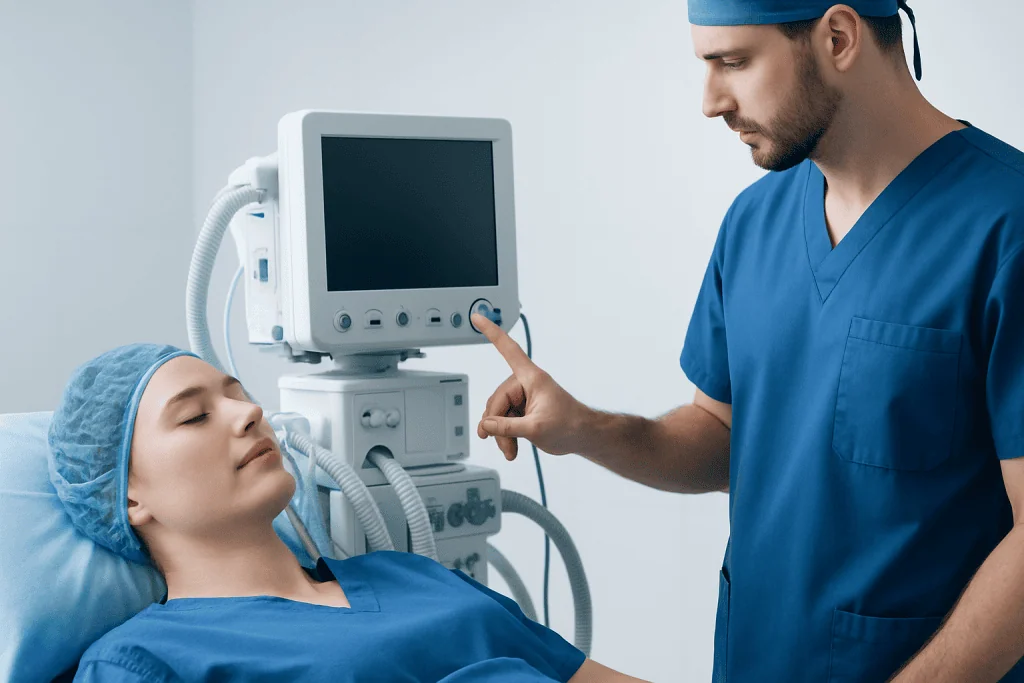
Chin reduction surgery is generally performed in an operating room under general anesthesia, meaning the patient is asleep and does not feel pain during the procedure. The exact duration varies with the technique and whether other facial procedures are performed at the same time. Before surgery, the clinical team confirms the operative plan, reviews medications and allergies, and gives instructions about eating, drinking, and arranging safe travel home.
For an intraoral approach, the surgeon makes an incision inside the lower lip and gently reaches the chin bone while protecting surrounding muscles, soft tissues, and the mental nerves. These nerves provide sensation to the lower lip and chin. The planned bone contouring or repositioning is then carried out with specialized instruments.
If the bone is repositioned, it is usually stabilized using biocompatible plates and screws. The incision is closed with sutures, often dissolvable ones. A compression dressing or chin support may be used temporarily to limit swelling and support healing. Some patients return home the same day, while others may stay overnight depending on their health, the procedure, and local clinical practice.
At Acibadem International, multidisciplinary facial plastic surgery, oral and maxillofacial surgery, anesthesia, and dental specialists can assess chin contour concerns and plan care for international patients in JCI-accredited hospitals.
Recovery Timeline and Aftercare
Swelling, bruising, tightness, and mild discomfort are expected after chin surgery. Numbness or altered sensation in the chin and lower lip can also occur because the area is close to sensory nerves. These symptoms are commonly most noticeable in the first several days and usually improve gradually, although sensory recovery can take longer for some people.
During the first week, patients are generally advised to rest, keep the head elevated, take prescribed or recommended pain relief as directed, and follow instructions for cold compresses and wound care. When the incision is inside the mouth, careful oral hygiene is particularly important. The surgical team may recommend a soft or liquid-based diet initially, then advise when normal foods can be reintroduced.
Many people feel ready to return to desk-based work or social activities after about one to two weeks, but this varies. Strenuous exercise, contact sports, and activities that could injure the jaw should be avoided until the surgeon confirms it is safe. Follow-up visits allow the team to monitor healing, remove any non-dissolving sutures if used, and assess changes in sensation and contour.
Most major swelling settles within several weeks. However, subtle swelling and tissue adjustment can continue for months, particularly after bone repositioning. The final appearance should be judged only after adequate healing time, as early results may look uneven or more pronounced than expected while swelling resolves.
Benefits, Limits, and Possible Risks
A successful chin reduction procedure may improve the balance of the lower face and profile, soften excessive projection, reduce chin height or width, and address selected asymmetries. For appropriately selected patients, changes to the bony chin are long-lasting. The degree of visible improvement depends on the original anatomy, skin and soft-tissue characteristics, healing, and the surgical technique used.
Like all operations, chin surgery has potential risks. These include bleeding, infection, anesthesia-related complications, delayed wound healing, scar concerns, asymmetry, undercorrection or overcorrection, contour irregularities, and the need for revision surgery. Temporary changes in sensation are relatively common; persistent numbness or altered sensation is less common but remains an important risk to discuss.
Other possible concerns include injury to tooth roots, changes in lower lip movement, bone healing problems after repositioning, or changes in the relationship between the jaws. Smoking and nicotine products can increase healing complications and may need to be stopped well before and after surgery according to the surgeon’s advice.
A detailed consultation helps place these risks in context. The surgeon should explain the recommended approach, reasonable alternatives, likely scar placement, expected recovery, and the uncertainties that apply to an individual case before consent is given.
When to Seek Medical Care
Before considering cosmetic chin surgery, a person should seek medical or dental assessment if a prominent chin is associated with an underbite, new facial asymmetry, difficulty chewing, loose teeth, jaw locking, persistent jaw pain, or a history of facial trauma. These signs may suggest a dental, jaw-joint, or skeletal issue that needs assessment beyond cosmetic contouring.
After surgery, patients should contact their surgical team promptly if they develop worsening rather than improving pain or swelling, fever, persistent bleeding, pus-like drainage, difficulty breathing or swallowing, a spreading rash, or an inability to drink enough fluids. Sudden marked asymmetry, a new bite change, or severe numbness should also be reviewed.
Emergency care is appropriate for breathing difficulty, rapidly increasing facial or neck swelling, severe allergic symptoms, chest pain, or loss of consciousness. Following the post-operative instructions and attending scheduled reviews are important parts of safe recovery.
Frequently asked questions
Is chin reduction surgery permanent?
Changes made to the chin bone are generally long-lasting. However, the appearance of the face can continue to change with aging, weight changes, dental changes, and natural soft-tissue shifts. A surgeon can explain what level of permanence is realistic for the planned technique.
Will chin reduction surgery leave a scar?
Many chin reduction procedures use an incision inside the lower lip, which avoids a visible skin scar on the chin. If an external incision is needed, the surgeon will explain its location and scar-care recommendations. Scar appearance varies between individuals and improves gradually as healing progresses.
Is chin reduction surgery painful?
The procedure is performed under anesthesia, so pain is not felt during surgery. Afterwards, discomfort, pressure, tightness, and swelling are common and are usually managed with the care plan provided by the surgical team. Pain that becomes severe or suddenly worsens should be reported.
How long does numbness last after chin surgery?
Temporary numbness or tingling in the chin and lower lip can occur because sensory nerves run near the surgical area. Sensation often improves gradually over weeks to months, but the timeline differs between people. Persistent sensory changes are an uncommon but important risk to discuss before surgery.
Can chin reduction fix an underbite?
Chin reduction alone usually does not correct a true underbite, which involves the relationship between the upper and lower jaws and teeth. People with an underbite may need assessment by an orthodontist and oral and maxillofacial surgeon. In some cases, jaw surgery or orthodontic treatment is more appropriate than isolated chin contouring.
When can a person exercise after chin reduction surgery?
Light walking may be possible soon after surgery, depending on the surgeon’s instructions. More strenuous exercise and contact activities are usually delayed until swelling has improved and the surgeon confirms that healing is progressing well. The recommended timeline depends on whether bone was simply contoured or repositioned.
References
- American Society of Plastic Surgeons
- American Association of Oral and Maxillofacial Surgeons
- British Association of Oral and Maxillofacial Surgeons
- Mayo Clinic
This article is for general information only and is not a substitute for professional medical advice. Please consult a qualified doctor about your individual situation.
Explore treatments in Turkey — costs, top hospitals & a free quote
JCI-accredited · board-certified surgeons · reply within 24h
Add us as a Preferred Source to see more of our trusted health content across Google Search, AI Overviews and Discover.