Chloasma: An Evidence-Based Guide for Patients

Chloasma is a harmless but often stubborn skin pigmentation condition, also commonly called melasma. It is strongly linked to sun exposure, hormonal changes, and genetic tendency.
Key Takeaways
- Chloasma is a harmless but often stubborn skin pigmentation condition, also commonly called melasma.
- It is strongly linked to sun exposure, hormonal changes, and genetic tendency.
- Diagnosis is usually based on a skin examination, sometimes with special light or imaging tools.
- Daily broad-spectrum sun protection is a core part of treatment and prevention.
- Dermatologists may recommend topical medicines, procedures, or a combination plan tailored to skin type and severity.
Chloasma is a common form of skin hyperpigmentation that causes brown or gray-brown patches, most often on the face. It is not dangerous, but it can be persistent, and treatment usually focuses on sun protection, trigger management, and dermatologist-guided therapies.
Overview: what chloasma is
Chloasma is a common skin condition that causes flat brown, tan, or gray-brown patches, usually on the cheeks, forehead, nose, upper lip, or chin. In modern clinical practice, the term melasma is used more often, while chloasma is commonly used when the pigmentation appears during pregnancy or in relation to hormonal changes. Both terms describe the same general pattern of increased pigment production in the skin.
Chloasma is not an infection, not contagious, and not a form of skin cancer. It develops when pigment-making cells called melanocytes produce more melanin than usual in certain areas. The result is uneven facial discoloration that may become more noticeable after sun exposure, heat, or hormonal shifts.
Although chloasma is medically benign, it can affect self-confidence and quality of life. Many people find that the patches fade slowly, return easily, or respond only partly to treatment. A realistic approach is important: improvement is often gradual, and maintenance care is usually needed to keep pigmentation under control.
Symptoms and what it looks like
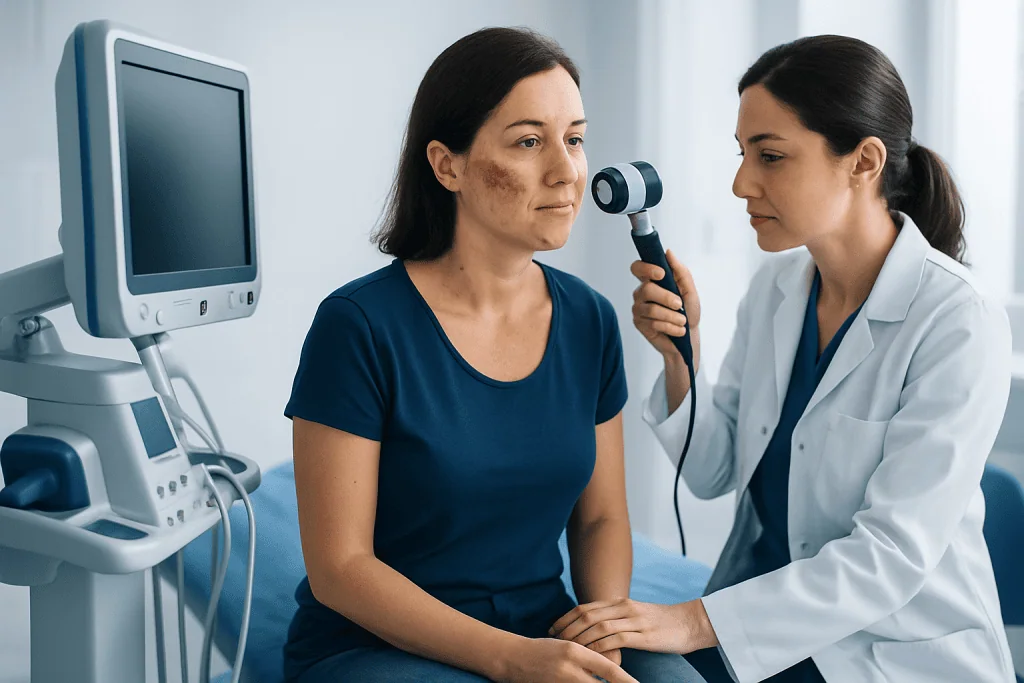
The main symptom of chloasma is symmetrical discoloration of the skin. The patches are usually flat rather than raised, and they do not typically itch, hurt, or peel. In most people, the color ranges from light brown to dark brown, though gray-brown tones may also occur depending on skin type and the depth of pigment.
The most common pattern appears on the central face, especially the forehead, cheeks, bridge of the nose, upper lip, and chin. Some people develop pigmentation mainly on the cheekbones or jawline. Less commonly, similar patches can appear on the forearms or other sun-exposed areas.
Because many other skin conditions can cause dark patches, chloasma is sometimes confused with post-inflammatory hyperpigmentation, freckles, sun spots, or medication-related discoloration. A dermatologist can help distinguish chloasma from other causes of skin discoloration, especially if the pigmentation is new, one-sided, irregular, or changing over time.
- Flat brown or gray-brown patches
- Most often on the face
- Usually symmetrical on both sides
- More visible after sunlight or heat exposure
- Typically no pain, swelling, or bleeding
Causes and risk factors

Chloasma develops through a combination of triggers rather than a single cause. Ultraviolet light is one of the strongest factors because it stimulates melanocytes to make more pigment. Visible light and heat may also contribute, which helps explain why pigmentation can worsen even with brief outdoor exposure or in warm climates.
Hormonal influences are another major factor. Chloasma is more common during pregnancy and may also be associated with oral contraceptives, hormone therapy, and other hormonal changes. A family history can increase the likelihood as well, suggesting a genetic tendency in some people.
People with medium to darker skin tones are often more prone to this condition, though it can affect any skin type. Skin irritation from harsh products, cosmetic procedures, or inflammation may make pigmentation more noticeable in susceptible individuals. In some cases, medicines or endocrine problems may contribute, so a full medical history is useful when symptoms are persistent or unusual.
Chloasma is often discussed alongside other pigmentation concerns such as vitiligo, but the two conditions are different. Chloasma causes darker patches from excess pigment, while vitiligo causes lighter patches because pigment is lost.
How doctors diagnose chloasma
Diagnosis usually begins with a clinical skin examination and a review of personal history. A doctor will ask when the patches first appeared, whether they worsen in the sun, and whether pregnancy, hormonal medicines, new skincare products, or other triggers may be involved. The pattern and location of pigmentation often provide strong clues.
In many cases, a dermatologist may use a Wood’s lamp or dermatoscope to look more closely at the pigment. These tools can help estimate whether the excess melanin is more superficial, deeper in the skin, or mixed. This matters because superficial pigment often responds better to treatment than deeper pigment.
Testing is not always necessary, but it may be considered if the diagnosis is uncertain or if other conditions need to be ruled out. For example, new or unusual pigmentation may occasionally need a broader dermatology assessment, and in selected cases a biopsy may be recommended. Some patients also benefit from dermatology evaluation when over-the-counter products have not helped or the discoloration is spreading.
Treatment options and what to expect
Treatment for chloasma usually combines trigger control with targeted therapy. The foundation is strict daily sun protection, because pigment often returns if ultraviolet or visible light exposure continues. In addition, a dermatologist may recommend topical lightening agents or other prescription treatments to reduce excess melanin production and help even the skin tone over time.
Common dermatologist-guided options may include topical medicines such as hydroquinone, azelaic acid, retinoids, cysteamine, tranexamic acid-based approaches, or combination creams selected according to skin type, pregnancy status, and sensitivity. Some patients may also be candidates for carefully chosen procedures, such as chemical peels, microneedling-based approaches, laser treatments, or other skin care and dermatology interventions. Procedural treatment should be individualized because overly aggressive treatment can worsen pigmentation in some skin types.
It is important to set realistic expectations. Chloasma often improves gradually over weeks to months rather than disappearing quickly. Even after successful treatment, maintenance therapy is usually needed because the condition is prone to relapse, especially after sun exposure or hormonal triggers.
During pregnancy, treatment choices may be more limited, and many doctors focus mainly on sun protection and gentle skincare until after delivery. Patients should avoid self-prescribing strong bleaching products or using unregulated creams, as these can irritate the skin and lead to further discoloration.
Prevention and self-care
Prevention centers on protecting the skin from triggers that stimulate pigment production. The most important step is daily use of a broad-spectrum sunscreen, ideally one that protects against both UVA and UVB and is tinted or contains ingredients that also help block visible light. Reapplication is especially important during outdoor activity, sweating, or prolonged sun exposure.
Simple habits can make a meaningful difference. Wide-brimmed hats, sunglasses, shade, and avoiding peak sun hours help reduce cumulative exposure. Gentle skincare is also useful, since irritation can aggravate pigmentation. Fragrance-free cleansers and moisturizers are often better tolerated than harsh exfoliants or abrasive scrubs.
If hormones seem to be a trigger, it may help to discuss contraceptive or hormone therapy options with a doctor rather than stopping any medication independently. Good self-care also includes patience: repeatedly trying new products can irritate the skin barrier and make results harder to judge.
- Use broad-spectrum sunscreen every day
- Reapply sunscreen as directed when outdoors
- Wear a hat and seek shade
- Avoid harsh scrubs and irritating products
- Follow a consistent treatment plan for several weeks or months
When to seek medical care
Medical care is a good idea if dark patches are new, spreading, difficult to identify, or causing distress. A doctor should also assess pigmentation that affects only one side of the face, has an unusual border, changes rapidly, or appears with other symptoms such as inflammation, scaling, pain, or bleeding. These features are not typical of chloasma and may need further evaluation.
People who are pregnant, breastfeeding, have sensitive skin, or have a history of pigment problems after procedures should speak with a qualified clinician before starting treatment. Professional guidance can help avoid products that may be too irritating or unsuitable. If over-the-counter skincare has not improved the patches after a reasonable trial, a dermatologist can offer safer, more targeted options.
Near the end of the care journey, some patients seek specialist input for persistent or recurrent cases. Acibadem International’s multidisciplinary specialists and JCI-accredited hospitals diagnose and treat skin conditions for international patients, including evaluation for chloasma and related pigment disorders when expert assessment is needed.
Frequently asked questions
Is chloasma the same as melasma?
Yes. The terms are often used interchangeably, although chloasma has traditionally referred to melasma that appears during pregnancy or with hormonal changes. In everyday medical use, melasma is now the more common term.
Does chloasma go away on its own?
It can fade, especially if a hormonal trigger ends, such as after pregnancy. However, it often improves slowly and may return with sun exposure or other triggers. Many people need ongoing sun protection and maintenance treatment.
Is chloasma dangerous or a sign of cancer?
Chloasma itself is benign and is not skin cancer. Still, not every dark patch on the face is chloasma, so new, unusual, or changing pigmentation should be assessed by a doctor. A professional exam helps confirm the diagnosis and rule out other causes.
What makes chloasma worse?
Sun exposure is one of the most common triggers, and visible light and heat may also contribute. Hormonal changes, skin irritation, and inconsistent sunscreen use can make the pigmentation more noticeable or harder to treat. Even small daily exposures can affect people who are prone to it.
Can men get chloasma?
Yes, although it is more common in women. Men can develop chloasma as well, especially if they have significant sun exposure, darker skin types, or a family history. The diagnosis and treatment principles are broadly similar.
Are home remedies enough to treat chloasma?
Home care can support treatment, especially daily sunscreen use and gentle skincare. However, many home remedies are not well studied and some can irritate the skin, which may worsen pigmentation. Persistent cases usually benefit from dermatologist guidance.
This article is for general information only and is not a substitute for professional medical advice. Please consult a qualified doctor about your individual situation.
Explore treatments in Turkey — costs, top hospitals & a free quote
JCI-accredited · board-certified surgeons · reply within 24h
Add us as a Preferred Source to see more of our trusted health content across Google Search, AI Overviews and Discover.

More from the Health Library

Elephantiasis: An Evidence-Based Guide for Patients

Occipital Lymph Nodes — Explained by Medical Evidence, Not Myths

Breathe Right Strips — Explained by Medical Evidence, Not Myths

Peanut Oil — Explained by Medical Evidence, Not Myths

High Functioning Autism: An Evidence-Based Guide for Patients