Cholesterol Deposits in the Eyelids — Explained by Medical Evidence, Not Myths

Yellow, flat or slightly raised eyelid plaques are often called xanthelasma. Xanthelasma does not always mean a person has high cholesterol, but a blood lipid assessment is often appropriate.
Key Takeaways
- Yellow, flat or slightly raised eyelid plaques are often called xanthelasma.
- Xanthelasma does not always mean a person has high cholesterol, but a blood lipid assessment is often appropriate.
- The deposits usually do not affect vision, although any new eyelid change should be assessed if the diagnosis is uncertain.
- Lifestyle changes and lipid-lowering treatment can improve cardiovascular risk but may not remove existing eyelid plaques.
- Removal procedures can be considered for cosmetic reasons, but recurrence is possible.
Cholesterol deposits in the eyelids are most often xanthelasma: soft, yellowish plaques that commonly form near the inner corners of the upper or lower eyelids. They are usually painless and not dangerous to the eye itself, but they can sometimes be associated with raised cholesterol or other metabolic health concerns.
What Are Cholesterol Deposits in the Eyelids?
Cholesterol deposits in the eyelids are usually called xanthelasma. They appear as yellow, cream-colored, or pale orange patches or plaques under the skin, most often close to the inner corner of the eye. The plaques may be flat, slightly raised, soft, or mildly firm, and they can occur on one or both eyelids.
Xanthelasma develops when lipid-containing cells collect in the skin. Although people often call these marks “cholesterol spots,” their presence alone cannot confirm that blood cholesterol is high. Some people with xanthelasma have normal routine cholesterol results, while others have elevated low-density lipoprotein (LDL) cholesterol, triglycerides, or an inherited lipid disorder.
These deposits are generally harmless and are not contagious. They usually do not cause pain, itching, or vision loss. However, because the eyelid area is delicate and similar-looking lesions can have different causes, a clinician should evaluate a new or changing yellow patch rather than relying on appearance alone.
How Xanthelasma Looks and Feels
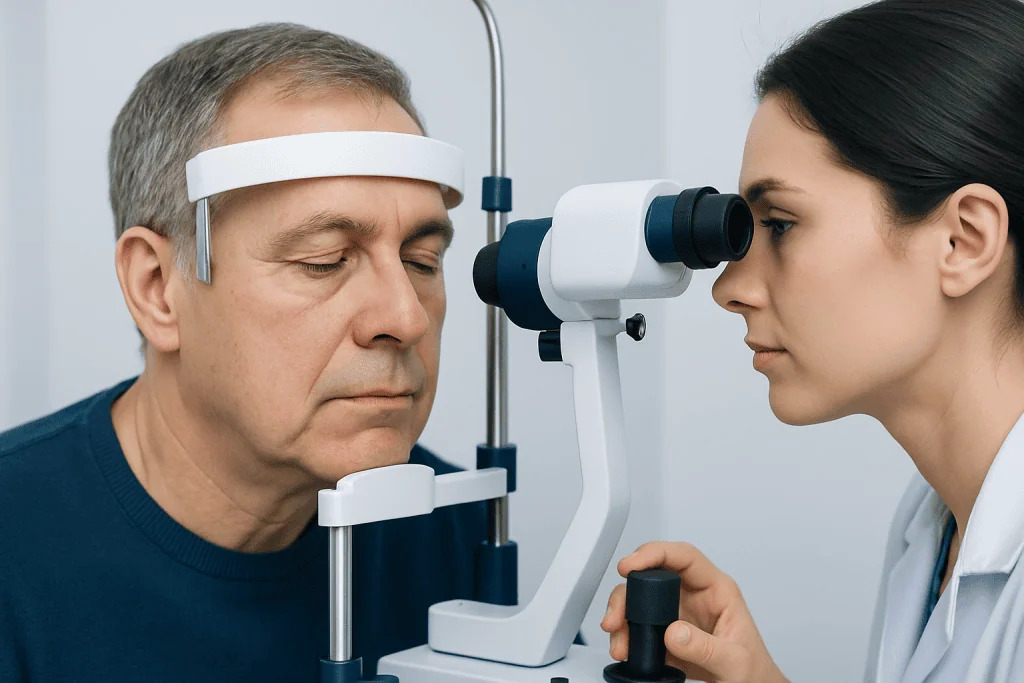
Xanthelasma commonly begins as a small yellow patch near the bridge of the nose and may gradually enlarge over months or years. The borders can be well defined or irregular. It may involve the upper eyelids, lower eyelids, or both, and the deposits are often symmetrical.
Most people notice xanthelasma because of its appearance rather than physical symptoms. It does not typically hurt, bleed, crust, or interfere with blinking. A lesion that is tender, red, swollen, ulcerated, rapidly enlarging, or associated with eyelid drooping should not automatically be assumed to be xanthelasma.
Other conditions can resemble eyelid cholesterol deposits, including milia, skin tags, sebaceous gland changes, inflammatory skin conditions, and less commonly certain skin tumors. A primary care doctor, dermatologist, ophthalmologist, or oculoplastic specialist can often identify xanthelasma during an examination, while arranging further assessment when needed.
Why Do Eyelid Cholesterol Deposits Develop?

Xanthelasma is linked to the accumulation of lipids in skin cells. In some cases, it occurs alongside dyslipidemia, a term for unhealthy levels of cholesterol or triglycerides in the blood. Raised LDL cholesterol, raised triglycerides, low high-density lipoprotein (HDL) cholesterol, and certain inherited disorders of lipid metabolism may all be relevant.
Risk factors that may make abnormal lipid levels more likely include a family history of early cardiovascular disease, diabetes, underactive thyroid function, liver or kidney disease, excess body weight, smoking, and a diet high in saturated or trans fats. Age can also play a role, although xanthelasma may occur in younger adults, particularly when an inherited lipid condition is present.
Not every person with xanthelasma has a recognizable medical cause. Even so, the finding can provide a useful opportunity to review overall cardiovascular health. A clinician may consider blood pressure, blood sugar, smoking status, family history, and other factors alongside cholesterol results rather than viewing the eyelid deposits in isolation.
- Primary xanthelasma: occurs without a clearly identified underlying condition or with normal standard lipid tests.
- Secondary xanthelasma: occurs with an associated condition, such as dyslipidemia, diabetes, thyroid disease, liver disease, or kidney disease.
Medical Assessment and Blood Tests
Diagnosis usually starts with a medical history and examination of the eyelids. The clinician may ask when the patches appeared, whether they are changing, whether relatives have high cholesterol or early heart disease, and whether the person has conditions that can affect lipid levels. Photographs may be useful for monitoring a lesion over time.
A fasting or non-fasting lipid profile may be recommended, depending on local clinical practice and the individual’s health history. This commonly measures total cholesterol, LDL cholesterol, HDL cholesterol, and triglycerides. Additional blood tests may be considered to look for contributing conditions, such as diabetes, thyroid dysfunction, liver disease, or kidney disease.
If cholesterol is substantially raised, especially at a young age or with a strong family history, the doctor may assess for familial hypercholesterolemia or another inherited lipid disorder. This matters because early recognition and treatment of high-risk lipid conditions can help reduce long-term cardiovascular risk.
Assessment is individualized. A normal lipid test does not mean that the eyelid plaques are imaginary or unimportant cosmetically; it means that treatment decisions should consider the person’s full health picture and personal goals.
Treatment: Managing Health Risks and Removing Plaques
Management has two separate aims: addressing any underlying cardiovascular or metabolic risk, and treating the appearance of the eyelid plaques if the person wishes. When blood lipids are abnormal, a doctor may recommend nutrition changes, regular physical activity, weight management where appropriate, smoking cessation, and medicines to lower cholesterol or triglycerides when indicated.
Lipid-lowering treatment is important for heart and blood vessel health when clinically recommended, but it does not reliably make established xanthelasma disappear. Existing deposits may remain the same, shrink slowly, or occasionally continue to grow. People should not stop prescribed medication if plaques persist, as the purpose of medication is risk reduction rather than cosmetic removal.
For persistent plaques that are cosmetically bothersome, clinicians may discuss options such as carefully applied chemical treatment, laser therapy, radiofrequency or electrosurgical techniques, cryotherapy in selected cases, or surgical excision. The best approach depends on the size, depth, location, skin type, and number of plaques, as well as the clinician’s experience.
All removal procedures near the eye require careful assessment. Possible effects include temporary redness, pigment changes, scarring, eyelid contour changes, and recurrence. A specialist can explain which approach is suitable and whether treatment should be staged. Acibadem International’s multidisciplinary specialists and JCI-accredited hospitals diagnose and treat xanthelasma and related lipid concerns for international patients.
Self-Care and Reducing Cardiovascular Risk
No home remedy has been proven to safely dissolve cholesterol deposits in the eyelids. Applying acids, herbal products, toothpaste, sharp tools, or over-the-counter skin treatments near the eyes can cause burns, infection, scarring, or eye injury. It is safest to avoid attempting to squeeze, scrape, cut, or chemically remove the plaques at home.
When a clinician identifies elevated cholesterol or triglycerides, sustainable lifestyle measures can support treatment. These may include choosing more vegetables, fruits, legumes, whole grains, nuts, and unsaturated fats; limiting foods high in saturated fat and avoiding trans fats; staying physically active; and limiting alcohol where triglycerides are elevated or alcohol is otherwise not advised.
Regular follow-up is valuable because cholesterol levels and cardiovascular risk can change over time. People with diabetes, high blood pressure, kidney disease, thyroid disease, or a family history of premature cardiovascular disease may need particularly individualized monitoring and management.
A healthy lifestyle may improve lipid levels and overall wellbeing, but it should not be presented as a replacement for prescribed medication or medical follow-up. Decisions about tests and treatment are best made with a qualified healthcare professional.
When to Seek Medical Care
A non-urgent medical appointment is appropriate for any new yellow eyelid patches, particularly if they are enlarging or if the person has never had cholesterol screening. An assessment can confirm whether the marks are likely to be xanthelasma and identify whether lipid testing or evaluation for another health condition is advisable.
More prompt assessment is needed if an eyelid lesion changes quickly, becomes painful, bleeds, forms a sore, causes persistent redness or swelling, affects eyelid movement, or is accompanied by visual changes. These features are not typical of uncomplicated xanthelasma and should be examined rather than self-treated.
People should also arrange medical review if they have xanthelasma together with a strong family history of early heart attack, stroke, very high cholesterol, or known familial hypercholesterolemia. Early evaluation can help identify preventable cardiovascular risk factors and guide appropriate care.
Frequently asked questions
Are cholesterol deposits in the eyelids dangerous?
Xanthelasma itself is usually harmless and does not typically damage the eye or affect vision. However, it can be associated with abnormal cholesterol or triglyceride levels in some people, so a medical assessment and lipid test are often worthwhile.
Can someone have xanthelasma with normal cholesterol?
Yes. Some people with xanthelasma have normal results on routine lipid testing. A clinician may still review other health factors, including family history, blood pressure, blood sugar, thyroid function, and overall cardiovascular risk.
Will lowering cholesterol remove eyelid deposits?
Lowering cholesterol is important when levels are raised because it can reduce cardiovascular risk. However, existing xanthelasma may not disappear with lifestyle measures or cholesterol-lowering medicines alone, and cosmetic treatment may be considered if desired.
Can cholesterol deposits in the eyelids be removed permanently?
Procedures can often reduce or remove visible plaques, but no method can guarantee permanent results. Recurrence can occur, particularly when lipid abnormalities persist or when there is an underlying tendency to form deposits.
Is it safe to remove xanthelasma at home?
No. Home removal methods can damage the thin eyelid skin and may injure the eye. A dermatologist, ophthalmologist, or appropriately trained specialist should assess the lesion and discuss safe treatment options.
Which doctor treats xanthelasma?
A primary care doctor can arrange initial assessment and blood tests. Depending on the findings and treatment goals, care may also involve a dermatologist, ophthalmologist or oculoplastic specialist, and a clinician managing cholesterol or metabolic conditions.
References
- American Academy of Dermatology Association
- American Heart Association
- National Heart, Lung, and Blood Institute
- National Institute for Health and Care Excellence
- Merck Manual Consumer Version
This article is for general information only and is not a substitute for professional medical advice. Please consult a qualified doctor about your individual situation.
Explore treatments in Turkey — costs, top hospitals & a free quote
JCI-accredited · board-certified surgeons · reply within 24h
Add us as a Preferred Source to see more of our trusted health content across Google Search, AI Overviews and Discover.
Check your numbers in seconds
BMI, calories, due date, blood pressure and 30+ more clinical calculators — free, instant, doctor-reviewed ranges.

More from the Health Library



Related Specialists

Dr. Burhan Turan
Pediatrics
Dr. Özge Kaymaz Yılmaz
Gynecology & Obstetrics
Dr. İletişim | 444 55 44
Aesthetic Plastic & Reconstructive Surgery
Ody. Özlem Gedik Soyuyüce
Audiology