Chorionic Villus Sampling: An Evidence-Based Guide for Patients

Chorionic villus sampling is usually performed between 10 and 13 weeks of pregnancy. It is a diagnostic test, which means it can confirm certain genetic or chromosomal conditions rather than only estimate risk.
Key Takeaways
- Chorionic villus sampling is usually performed between 10 and 13 weeks of pregnancy.
- It is a diagnostic test, which means it can confirm certain genetic or chromosomal conditions rather than only estimate risk.
- The test uses placental tissue collected through the cervix or the abdomen under ultrasound guidance.
- CVS does not screen for every condition and does not assess open neural tube defects.
- Mild cramping or spotting can occur afterward, but heavy bleeding, fever, or severe pain need prompt medical review.
- Genetic counseling helps patients understand why the test is offered, what results may show, and what choices may follow.
Chorionic villus sampling is an early prenatal diagnostic test that examines a small sample of placental tissue to look for certain chromosomal and genetic conditions. It can provide clear diagnostic information in the first trimester, but it also has limits and small procedure-related risks that should be discussed with a qualified specialist.
Overview
Chorionic villus sampling, often called CVS, is a prenatal diagnostic test used to examine a small sample of tissue from the placenta. Because placental cells usually share the baby’s genetic makeup, the sample can be analyzed for certain chromosomal and inherited genetic conditions. CVS is most often offered in the first trimester, typically between 10 and 13 weeks of pregnancy.
For many patients, the main question is simple: what is chorionic villus sampling used for? The answer is that it helps doctors diagnose specific conditions early in pregnancy when screening tests, family history, maternal age, ultrasound findings, or known carrier status suggest a higher chance of a genetic disorder. Unlike screening tests, which estimate probability, CVS can provide a definitive diagnosis for many conditions.
CVS is not recommended for every pregnancy. It is usually considered when the information from the test may guide pregnancy care, future planning, or decisions about additional testing. Before the procedure, patients are usually offered counseling to review the purpose of the test, its benefits, its limitations, and its possible risks.
CVS is one of several approaches to prenatal evaluation. Depending on the situation, a doctor may also discuss ultrasound, noninvasive prenatal screening, or tests such as amniocentesis later in pregnancy. The best option depends on the clinical question, gestational age, and the patient’s preferences.
Why CVS May Be Recommended
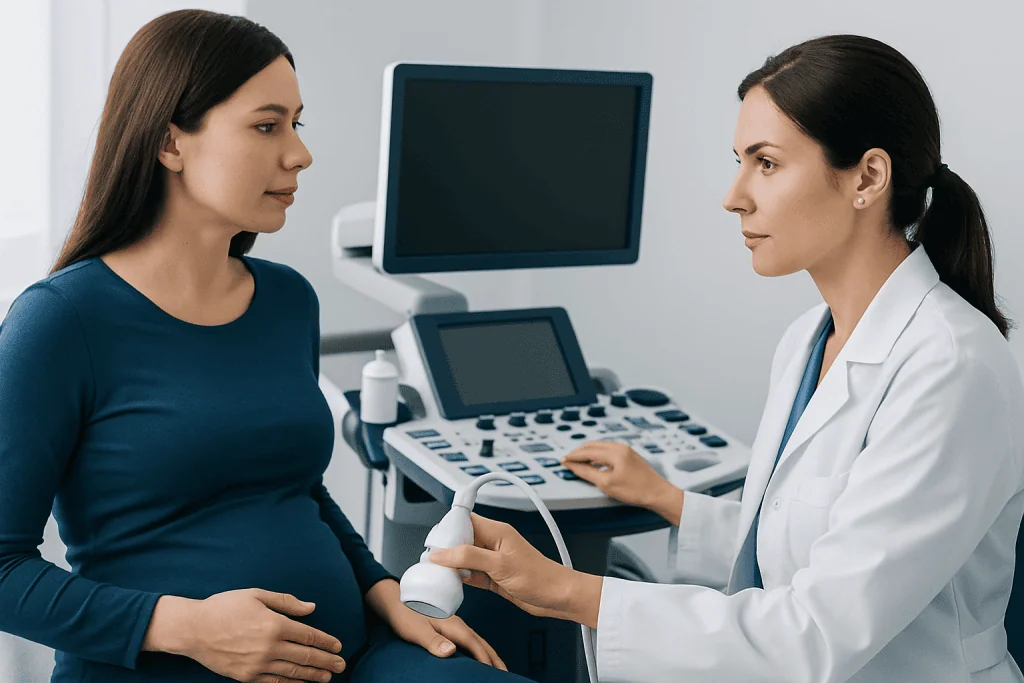
A doctor may recommend chorionic villus sampling when there is a reason to look more closely for a chromosomal or inherited condition. Common reasons include an abnormal result on a prenatal screening test, a previous pregnancy affected by a genetic disorder, a family history of a known inherited condition, or one or both parents being carriers of a specific gene change.
CVS may also be discussed when ultrasound findings raise concern for a fetal abnormality that could be linked to a chromosomal problem. In some pregnancies, the reason is maternal age, especially when age-related chromosomal risks are part of the overall assessment. The goal is not to create alarm, but to provide accurate information as early as possible.
The conditions evaluated depend on the laboratory analysis ordered. CVS can often diagnose conditions involving chromosome number or structure, as well as selected single-gene disorders such as cystic fibrosis, sickle cell disease, or Tay-Sachs disease when these are specifically being investigated. It may be part of the workup if doctors are assessing the possibility of Down syndrome or another chromosomal condition.
Still, CVS does not answer every prenatal question. It does not reliably detect open neural tube defects such as spina bifida, so a later blood test and ultrasound may still be recommended. It also cannot predict all developmental or health outcomes later in life.
How the Procedure Is Performed
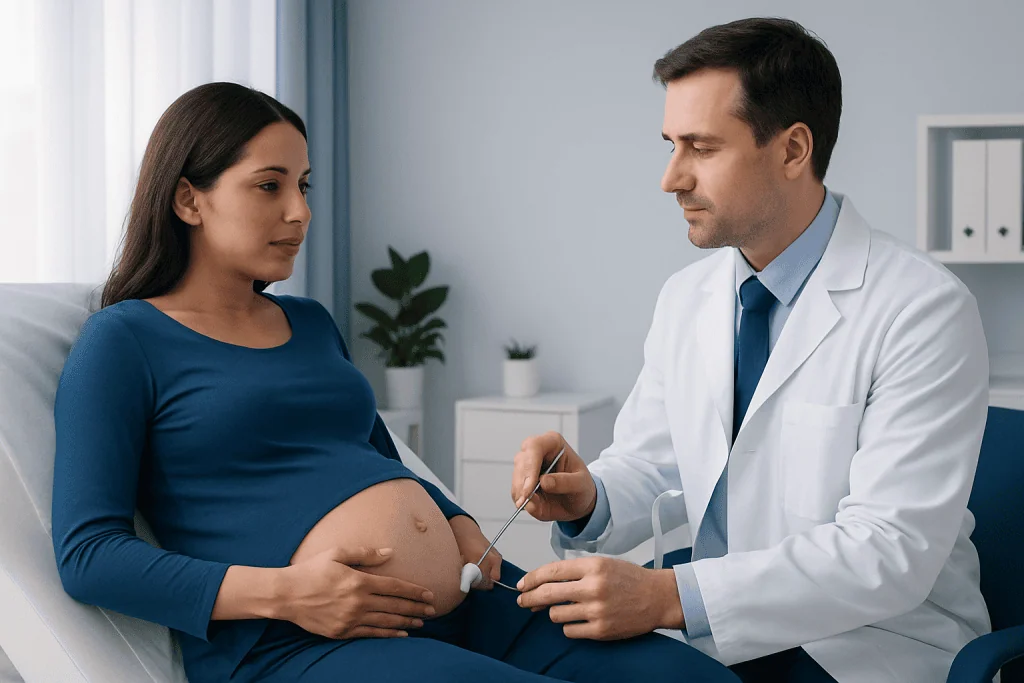
Chorionic villus sampling is performed under continuous ultrasound guidance to help the clinician see the placenta and choose the safest route for sampling. There are two main approaches: transcervical CVS, where a thin tube or forceps is passed through the cervix, and transabdominal CVS, where a thin needle is inserted through the abdomen. The choice depends on the position of the placenta, the stage of pregnancy, and the clinician’s judgment.
Before the procedure, the patient usually has an ultrasound to confirm gestational age, fetal heartbeat, and placental location. The abdomen may be cleaned with antiseptic, and local anesthetic may be used for the transabdominal approach. Many patients describe brief pressure, cramping, or discomfort rather than severe pain, although individual experiences vary.
Only a very small tissue sample is needed. After it is collected, the sample is sent to a laboratory for genetic analysis. The procedure itself is generally short, but the entire visit may take longer because of preparation, counseling, consent, and post-procedure observation.
Afterward, light cramping or mild spotting can happen for a short time. Patients are commonly advised to take it easy for the rest of the day and to follow their doctor’s instructions about activity, travel, and when to report symptoms. In specialized centers, prenatal diagnosis is coordinated closely with imaging and obstetric care, sometimes alongside advanced ultrasound evaluation when needed.
What the Results Can and Cannot Tell You
One of the main advantages of chorionic villus sampling is that it can provide diagnostic information early in pregnancy. Some preliminary results may come back relatively quickly, while more detailed studies can take longer depending on the type of analysis requested. The exact timing varies by laboratory and by whether chromosome testing, microarray analysis, or single-gene testing is being performed.
A normal result can be reassuring, but it does not guarantee that the baby has no medical problems. CVS evaluates specific genetic or chromosomal issues; it does not screen for every birth difference, every rare condition, or all future developmental concerns. Patients often benefit from reviewing results with a genetic counselor or maternal-fetal medicine specialist so the findings are explained clearly and in context.
Sometimes results are uncertain or more complex than expected. For example, placental cells may show a finding that is not present in the fetus, a situation known as confined placental mosaicism. In these cases, follow-up testing, including genetic testing review or amniocentesis, may be recommended to clarify the result.
It is also important to understand that CVS does not evaluate open neural tube defects. Because of this, patients may still need second-trimester screening or anatomy ultrasound. A healthcare team can explain what additional tests are recommended after CVS and why they still matter even when early results are available.
Risks, Limitations, and Emotional Considerations
Chorionic villus sampling is generally considered safe when performed by experienced clinicians, but like any invasive procedure, it carries some risk. The most important concern is a small increased risk of pregnancy loss related to the procedure. The exact level of risk can vary depending on the center, the operator’s experience, the route used, and individual pregnancy factors, so patients should ask their own care team for personalized counseling.
Other possible complications include vaginal spotting, cramping, infection, or leakage of amniotic fluid, although these are uncommon. If a patient’s blood type is Rh-negative, an injection of Rh immune globulin may be recommended after the procedure to reduce the risk of blood group sensitization. Very early CVS, before 10 weeks, is generally avoided because it has been associated with higher complication rates.
There are also practical and emotional limits to consider. Some results may identify a condition clearly, while others may reveal uncertain findings or information that is difficult to interpret. Learning that more testing is needed can be stressful, even when the final outcome is reassuring.
Because of these factors, informed consent and pre-test counseling are essential. Patients should feel comfortable asking what condition is being tested for, how accurate the test is for that condition, whether alternative testing is available, and how the result might affect pregnancy care. Support from a partner, counselor, or genetics professional can make the decision-making process easier.
Aftercare, Self-Care, and Next Steps
After chorionic villus sampling, most patients can go home the same day. Mild cramping or light spotting may occur for a short period and often improves with rest. Patients should follow the instructions given by their healthcare team, which may include avoiding strenuous activity for the rest of the day and monitoring for symptoms.
Self-care after CVS is mainly about observation and communication. Drinking fluids, resting, and avoiding unnecessary physical strain can be sensible in the short term, but recommendations vary. It is best to ask the treating doctor exactly when normal exercise, work, travel, and sexual activity can be resumed.
Emotionally, the waiting period for results can feel difficult. Some people prefer to arrange a follow-up visit in advance so they know when and how results will be discussed. If the test identifies a genetic condition, further conversations may involve obstetrics, maternal-fetal medicine, neonatology, or other specialties depending on the diagnosis.
For patients receiving cross-border care, coordinated services can be helpful. Acibadem International’s multidisciplinary specialists and JCI-accredited hospitals diagnose and manage complex prenatal conditions for international patients, including situations where CVS results may lead to additional evaluation such as high-risk pregnancy care.
When to Seek Medical Care
Patients should contact their doctor promptly if they develop heavy vaginal bleeding, fever, chills, severe abdominal pain, persistent leaking fluid, or contractions after chorionic villus sampling. These symptoms do not always mean a serious complication has occurred, but they should be assessed without delay. Reduced well-being or any symptom that feels unusual should also be reported.
It is also appropriate to seek medical advice if there is uncertainty about post-procedure instructions or concerns about medications, travel, or activity levels. A clinician can explain what is expected after the test and what is not. Clear communication often reduces anxiety and helps patients recover more comfortably.
Urgent assessment may be especially important for patients who have underlying pregnancy complications, a history of cervical problems, significant bleeding, or signs of infection. If immediate contact with the usual care team is not possible, emergency obstetric care should be sought. Patients should not hesitate to reach out if something feels wrong.
Frequently asked questions
What is chorionic villus sampling?
Chorionic villus sampling is a prenatal diagnostic test that examines a small sample of placental tissue. It is used to diagnose certain chromosomal and inherited genetic conditions early in pregnancy, usually between 10 and 13 weeks.
Is CVS the same as amniocentesis?
No. Both are diagnostic prenatal tests, but CVS uses placental tissue and is usually done earlier, while amniocentesis uses amniotic fluid and is usually performed later. The choice depends on timing, the condition being evaluated, and the doctor's recommendation.
Does chorionic villus sampling hurt?
Many patients feel pressure, cramping, or brief discomfort during the procedure rather than strong pain. The experience varies depending on the route used and individual sensitivity. The healthcare team can explain what to expect and how discomfort is minimized.
How accurate is chorionic villus sampling?
CVS is highly accurate for many chromosomal and specific genetic disorders when the test is properly targeted and interpreted. However, it does not detect every possible condition, and some results may need follow-up testing for clarification.
What are the risks of chorionic villus sampling?
The main concern is a small risk of pregnancy loss related to the procedure. Other uncommon risks include cramping, spotting, infection, or fluid leakage. A doctor can explain the individual risk based on the pregnancy and the center performing the test.
Why might someone choose CVS instead of a screening test?
Screening tests estimate the chance of a condition, but CVS can diagnose many conditions directly. Some patients choose CVS when they want a more definite answer early in pregnancy because of family history, abnormal screening results, or personal decision-making needs.
This article is for general information only and is not a substitute for professional medical advice. Please consult a qualified doctor about your individual situation.
Explore treatments in Turkey — costs, top hospitals & a free quote
JCI-accredited · board-certified surgeons · reply within 24h
Add us as a Preferred Source to see more of our trusted health content across Google Search, AI Overviews and Discover.

More from the Health Library

Electrolyte Imbalances: A Complete Medical Overview

Robotripping: What Patients Need to Know

Glabellar Lines: A Complete Medical Overview

Acne Retin — Explained by Medical Evidence, Not Myths

Watermelon: A Complete Medical Overview