Congenital Hypothyroidism: A Complete Medical Overview

Congenital hypothyroidism means a baby is born with too little thyroid hormone. Many newborns have no clear symptoms at first, which is why screening after birth is so important.
Key Takeaways
- Congenital hypothyroidism means a baby is born with too little thyroid hormone.
- Many newborns have no clear symptoms at first, which is why screening after birth is so important.
- Early treatment with thyroid hormone helps protect growth, brain development, and overall health.
- Regular blood tests and follow-up visits are needed to keep treatment on track as a child grows.
- Some cases are permanent, while others may be temporary and can be reassessed later in childhood.
Congenital hypothyroidism is a condition present at birth in which a baby’s thyroid gland does not make enough thyroid hormone. With prompt newborn screening, diagnosis, and early treatment, most children can grow and develop well.
Overview
Congenital hypothyroidism is a disorder present at birth in which the thyroid gland does not produce enough thyroid hormone, or in some cases is absent, underdeveloped, or unable to work properly. Thyroid hormone is essential for brain development, growth, energy use, and the healthy function of many organs. Because the condition can affect development very early in life, it is treated as a time-sensitive diagnosis even when a baby appears well.
One important point for families is that congenital hypothyroidism is often found before symptoms become obvious. In many countries, routine newborn screening includes a blood test that checks for signs of low thyroid function shortly after birth. This screening has greatly improved outcomes because treatment can begin early, often within the first weeks of life.
Congenital hypothyroidism is not the same as acquired hypothyroidism that develops later in childhood or adulthood. The underlying problem begins before or around birth, and care focuses not only on replacing missing hormone but also on closely monitoring growth and neurodevelopment over time. In broader thyroid care, doctors may also evaluate related conditions such as thyroid disorders when considering long-term endocrine health.
How thyroid hormone supports a baby's development
The thyroid gland is a small gland in the neck that produces hormones called thyroxine and triiodothyronine, commonly known as T4 and T3. These hormones help regulate metabolism, body temperature, heart function, growth, and especially early brain maturation. During fetal life and the newborn period, adequate thyroid hormone is especially important for the normal development of the nervous system.
When a newborn has too little thyroid hormone, the body may not use energy efficiently and organs may not function at their best. Over time, untreated hormone deficiency can interfere with physical growth, muscle tone, feeding, bowel activity, and developmental progress. The effects can be subtle at first, which is why relying on symptoms alone is not enough.
Parents sometimes ask whether congenital hypothyroidism is always severe. The answer is no. The amount of hormone deficiency can vary from mild to significant, and the cause can also differ from one child to another. Even milder cases, however, still require careful medical assessment because infants need enough thyroid hormone during a very sensitive period of development.
Symptoms and signs

Many babies with congenital hypothyroidism have no noticeable symptoms in the first days of life. This is one reason newborn screening is so valuable. Some infants still receive a temporary supply of thyroid hormone from the mother during pregnancy, which can make the condition less obvious at birth.
When symptoms do appear, they may be nonspecific and easy to confuse with common newborn issues. Possible signs include prolonged jaundice, sleepiness, poor feeding, constipation, a weak cry, cool or mottled skin, low muscle tone, a puffy face, or a large tongue. Some babies may have a swollen belly, slower growth, or a larger soft spot on the head.
As time passes without treatment, developmental delay and poor growth can become more noticeable. That is why doctors do not wait for symptoms to become clear before acting on abnormal screening results. Families should understand that an abnormal screen does not confirm the diagnosis by itself, but it does mean prompt follow-up testing is needed.
- Sleepiness or low activity
- Feeding difficulties
- Constipation
- Prolonged newborn jaundice
- Poor weight gain or slow growth
- Low muscle tone or delayed development
Causes and risk factors
The most common cause of congenital hypothyroidism is thyroid dysgenesis, meaning the thyroid gland did not form normally. The gland may be missing, smaller than usual, or located in an unusual place in the neck. In other infants, the gland is present but cannot make thyroid hormone properly because of an inherited problem in hormone production. This is sometimes called dyshormonogenesis.
Less commonly, congenital hypothyroidism can result from problems involving the pituitary gland or hypothalamus, which help control thyroid function. Temporary congenital hypothyroidism may also occur in some newborns, for example due to iodine imbalance, maternal antibodies, or certain medicines taken during pregnancy. Because temporary and permanent forms can look similar early on, doctors often treat first and reassess later under specialist guidance.
Most cases occur without a clear family history, but genetics can play a role in some children. A family history of thyroid disease, certain inherited metabolic conditions, or previous affected siblings may raise suspicion in some situations. Related endocrine evaluation may sometimes overlap with assessment for hypothyroidism more generally, especially when planning longer-term follow-up.
How congenital hypothyroidism is diagnosed
Diagnosis usually begins with newborn screening. A small blood sample collected from the baby’s heel measures markers such as thyroid-stimulating hormone and sometimes thyroxine. If results are abnormal, the baby needs confirmatory blood tests promptly. These tests help determine whether thyroid hormone levels are truly low and whether treatment should start right away.
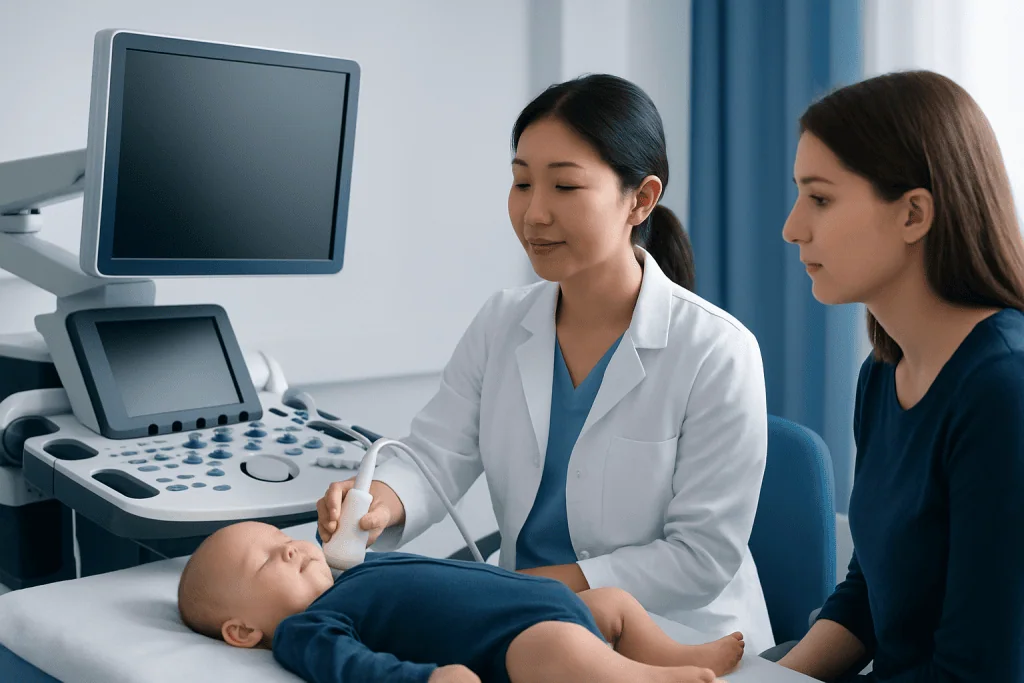
Doctors may also use imaging in selected cases to understand the cause. Thyroid ultrasound can help show whether the gland is present and where it is located. In some infants, nuclear medicine scans may be considered to look at thyroid tissue and function. Imaging is not always necessary before treatment, especially if it could delay starting hormone replacement.
Because timing matters, clinicians often begin treatment as soon as confirmatory tests support the diagnosis. An endocrinologist or pediatric specialist then follows the child with regular blood tests to adjust therapy. Hospital teams with endocrine expertise may use a combination of clinical evaluation, laboratory assessment, and diagnostic imaging when needed to clarify the underlying cause.
Treatment and long-term follow-up
The standard treatment for congenital hypothyroidism is thyroid hormone replacement, usually with levothyroxine. The goal is to restore normal hormone levels quickly and keep them in a healthy range as the baby grows. Treatment often begins within the first two weeks of life when possible, because early correction supports normal brain development and growth.
Parents are usually taught how to give the medicine safely and consistently. Follow-up blood tests are essential, especially during infancy, because a child’s needs change with age and body weight. Doctors adjust the dose based on test results and the child’s growth, feeding, and developmental progress. Families should not change or stop medicine without medical advice.
Some children have permanent congenital hypothyroidism and need lifelong treatment. Others may have a temporary form. In carefully selected children, doctors may later reassess thyroid function after the age recommended by the treating specialist to see whether the thyroid can work normally without medication. If a structural thyroid problem is known, long-term treatment is more likely.
Children who need broader endocrine care may be followed in programs focused on endocrinology, where specialists can monitor hormone levels, growth, and development over time. In rare situations involving complex anatomy or associated findings, clinicians may coordinate with pediatric, radiology, and other specialty teams.
Daily care, outlook, and family support
For most families, daily care centers on giving medicine regularly, attending scheduled blood tests, and keeping follow-up appointments. A written routine can help, especially in the newborn months when feeding and sleep schedules are changing often. Caregivers should tell the child’s doctor about any vomiting, feeding problems, missed doses, or difficulties giving the medication.
The outlook is generally very good when congenital hypothyroidism is detected early and treated consistently. Many children go on to have normal growth and development. Outcomes depend on how early treatment starts, how severe the hormone deficiency was, and how well thyroid levels are maintained over time.
Parents may feel anxious after an abnormal newborn screen, but it can help to remember that screening is designed to find treatable conditions early. Clear communication with the pediatrician and endocrinology team can reduce uncertainty and support confidence in day-to-day care. Near the end of the diagnostic and follow-up journey, some families receiving international care may also seek multidisciplinary assessment at Acibadem International, where JCI-accredited hospitals evaluate and treat endocrine conditions in children and adults.
When to seek medical care
Parents should seek prompt medical care if a newborn screening program reports abnormal thyroid results or if a doctor recommends urgent follow-up testing. Even if the baby seems well, confirmatory blood tests should not be delayed. Early action helps ensure that treatment begins at the right time if it is needed.
Medical review is also important if a baby has persistent jaundice, poor feeding, unusual sleepiness, constipation, a weak cry, poor growth, or developmental concerns. These symptoms can have many causes, but they deserve assessment by a qualified clinician. Families should seek urgent advice sooner if the baby is difficult to wake, is not feeding, or seems generally unwell.
Ongoing care matters just as much as the first diagnosis. Babies and children taking thyroid hormone need regular monitoring so doses can be adjusted safely. If caregivers have trouble giving medication, miss several doses, or have questions about test results, they should contact their child’s doctor rather than guessing or stopping treatment.
Frequently asked questions
What is congenital hypothyroidism?
Congenital hypothyroidism is a condition present at birth in which a baby does not have enough thyroid hormone. This may happen because the thyroid gland is missing, underdeveloped, in an unusual location, or unable to make hormone properly.
Can a baby have congenital hypothyroidism without obvious symptoms?
Yes. Many newborns with congenital hypothyroidism look healthy at first and may not show clear symptoms in the first days of life. That is why routine newborn screening is so important.
How is congenital hypothyroidism treated?
Treatment usually involves daily thyroid hormone replacement with levothyroxine. The child also needs regular blood tests and doctor visits so the dose can be adjusted as they grow.
Is congenital hypothyroidism permanent?
Some children have a permanent form and need long-term treatment, while others have a temporary form. Doctors may reassess thyroid function later in childhood in selected cases to see whether treatment is still needed.
What happens if congenital hypothyroidism is treated early?
When treatment begins early and hormone levels are kept in the target range, many children have normal growth and good developmental outcomes. Early follow-up is an important part of protecting brain development during infancy.
Should parents worry about an abnormal newborn screening result?
An abnormal screening result does not always mean a baby definitely has congenital hypothyroidism. It does mean follow-up testing should happen promptly, because early diagnosis and treatment are important if the condition is confirmed.
References
- American Academy of Pediatrics
- National Institute of Diabetes and Digestive and Kidney Diseases
- National Health Service
- European Society for Paediatric Endocrinology
- American Thyroid Association
This article is for general information only and is not a substitute for professional medical advice. Please consult a qualified doctor about your individual situation.
Hypothyroidism in Turkey — costs, top hospitals & a free quote
JCI-accredited · board-certified surgeons · reply within 24h
Add us as a Preferred Source to see more of our trusted health content across Google Search, AI Overviews and Discover.

Check-up & Preventive Medicine
Comprehensive health screenings designed for early detection and prevention.
3 specialists in this unit