Conjunctivitis Self-care: Symptoms, Causes, and Treatment Options

Conjunctivitis is inflammation of the conjunctiva, often called pink eye. Self-care focuses on hygiene, symptom relief, and avoiding spread to others.
Key Takeaways
- Conjunctivitis is inflammation of the conjunctiva, often called pink eye.
- Self-care focuses on hygiene, symptom relief, and avoiding spread to others.
- Not every case needs antibiotics; treatment depends on the underlying cause.
- Contact lenses should be stopped until the eyes have fully recovered.
- Eye pain, light sensitivity, reduced vision, or symptoms in newborns need prompt medical care.
Conjunctivitis self-care can help ease irritation and reduce spread, but the right approach depends on whether the cause is viral, bacterial, allergic, or irritant-related. Most mild cases improve with supportive care, while pain, vision changes, or severe redness should be assessed by a doctor.
Overview: what conjunctivitis self-care involves
Conjunctivitis self-care usually means keeping the eyes clean, using simple comfort measures, avoiding triggers, and preventing the condition from spreading. These steps can be very helpful for mild cases, especially when symptoms come from a virus, an allergy, or temporary irritation. However, self-care is not a substitute for medical evaluation when symptoms are severe or unusual.
Conjunctivitis is inflammation of the conjunctiva, the thin clear tissue that covers the white part of the eye and the inner eyelids. When it becomes irritated or infected, the eye may look pink or red and feel watery, itchy, gritty, or sticky. Some people develop symptoms in one eye first, while others notice both eyes becoming affected.
The best self-care plan depends on the cause. Viral conjunctivitis often improves with time and supportive care. Allergic conjunctivitis responds best to trigger avoidance and allergy-directed treatment. Bacterial conjunctivitis may also improve on its own in some cases, but some people need prescribed treatment after an eye examination.
Common symptoms and how they may feel
Symptoms can vary from person to person, but the most common ones are redness, watery eyes, mild swelling of the eyelids, discharge, and a burning or gritty sensation. Many people say it feels as though sand or dust is trapped in the eye. The discomfort is often mild, but it can still be distracting and unpleasant.
The type of discharge may offer clues. Viral conjunctivitis often causes watery tearing, while bacterial conjunctivitis is more likely to produce thicker yellow or green discharge that can make the eyelids stick together, especially after sleep. Allergic conjunctivitis commonly causes intense itching, along with watering and puffiness in both eyes.
Some symptoms suggest that the condition may not be simple conjunctivitis and should not be managed with home care alone. These include moderate to severe pain, sensitivity to light, blurred vision that does not clear with blinking, marked swelling, or the feeling that the eye is difficult to open. Similar symptoms can also occur with other eye conditions, including glaucoma and corneal problems, which need professional assessment.
Causes and risk factors

Conjunctivitis has several possible causes. Viral infections are among the most common and may occur with a cold, sore throat, or other upper respiratory symptoms. Bacterial conjunctivitis is caused by bacteria and may produce thicker discharge. Allergic conjunctivitis happens when the immune system reacts to triggers such as pollen, dust mites, pet dander, or mold.
Eyes can also become inflamed from irritants. Smoke, chlorinated water, air pollution, cosmetics, and chemical exposure can all trigger redness and watering. In these cases, symptoms may improve once the irritant is removed and the eye is gently rinsed or allowed to recover. Contact lens wear is another important risk factor because lenses can trap irritants, reduce oxygen to the eye surface, and increase the risk of infection if hygiene is poor.
People may be more likely to develop conjunctivitis if they have seasonal allergies, spend time in close-contact settings, share personal items, or touch their eyes often without washing their hands. Children can spread infectious conjunctivitis easily in school or daycare. Adults may notice it after a family member or coworker develops similar symptoms.
Practical conjunctivitis self-care at home
Safe self-care starts with gentle hygiene. Hands should be washed before and after touching the face or eyes. Any discharge can be wiped away with a clean cotton pad or soft cloth dampened with clean water, using a separate pad for each eye. Rubbing the eyes should be avoided because it can worsen irritation and may spread infection.
Cool compresses can help reduce swelling, burning, and itching. A clean cloth soaked in cool water may be placed over closed eyelids for several minutes at a time. Preservative-free lubricating eye drops, often called artificial tears, may also soothe dryness and grittiness. If symptoms are allergy-related, avoiding triggers and asking a pharmacist or doctor about allergy eye drops may be helpful.
Contact lenses should not be worn until the eyes are fully better and a clinician says it is safe to restart them. Eye makeup should be stopped during recovery, and recently used products may need to be replaced if contamination is suspected. Personal items such as towels, pillowcases, washcloths, and cosmetics should not be shared.
- Wash hands often and avoid touching the eyes.
- Use clean compresses and separate cloths for each eye.
- Stop contact lens use until recovery is complete.
- Do not share towels, pillowcases, or eye cosmetics.
- Stay home from close-contact activities if advised, especially when discharge is active.
Diagnosis and how doctors tell the cause apart
Doctors usually diagnose conjunctivitis by asking about symptoms and examining the eyes. Important clues include whether one or both eyes are affected, the type of discharge, recent cold symptoms, exposure to allergens, contact lens use, and whether vision has changed. In many straightforward cases, no special test is needed.
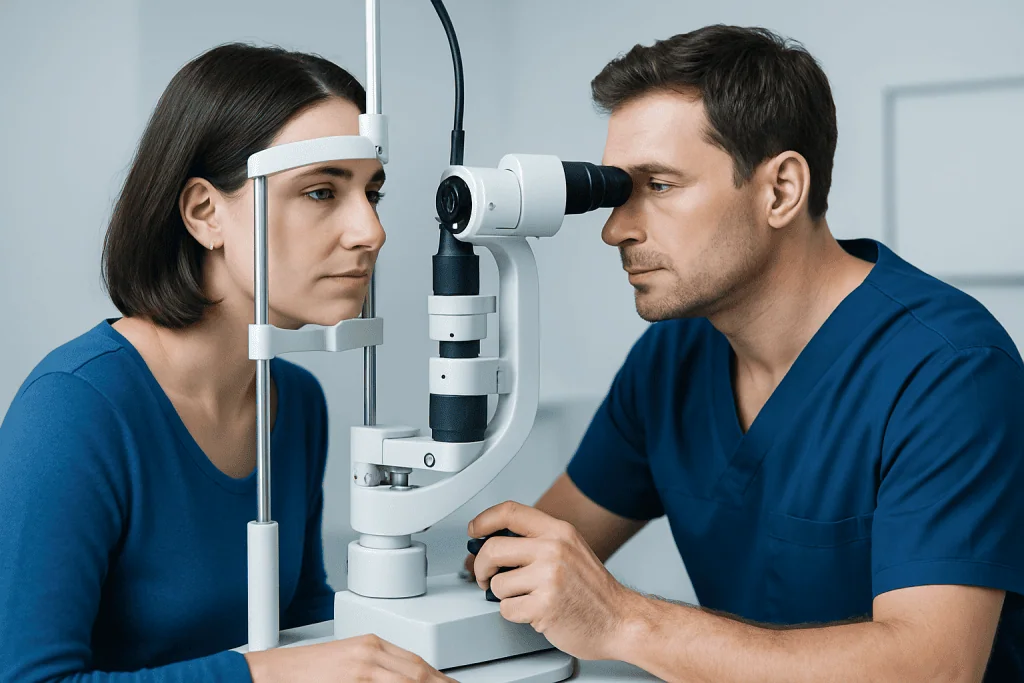
An eye examination helps distinguish conjunctivitis from other problems that may need more urgent care. These include corneal injury, keratitis, uveitis, blocked tear ducts, or elevated eye pressure. If there is concern about deeper eye involvement, the doctor may use magnification, special dye, or other office-based tools to look more closely at the eye surface.
Testing for bacteria or viruses is not routine for every patient, but it may be considered when symptoms are severe, recurrent, unusual, or not improving as expected. People with weakened immune systems, recent eye surgery, or significant contact lens-related symptoms may need a more detailed evaluation. In some situations, an eye specialist may recommend further assessment such as a comprehensive eye exam.
Treatment options beyond self-care
Treatment depends on the cause rather than the redness alone. Viral conjunctivitis usually improves with time, lubrication, cool compresses, and good hygiene. Antibiotics do not help viral infections. Bacterial conjunctivitis may sometimes clear without treatment, but prescribed antibiotic drops or ointment can be useful in selected cases, especially if discharge is significant or symptoms are prolonged.
Allergic conjunctivitis is managed by reducing exposure to triggers and using treatments that calm the allergic response. These may include lubricating drops, antihistamine eye drops, or other anti-allergy medicines recommended by a doctor. Irritant conjunctivitis is treated by avoiding the trigger and supporting the eye surface while it heals.
Contact lens wearers need special caution because red, painful eyes in this setting can signal a more serious corneal infection. Some people may need evaluation by an ophthalmologist and tests to rule out surface damage. If symptoms are persistent or if another eye condition is suspected, a doctor may recommend assessment and treatment through ophthalmology care or, when allergy is a major contributor, allergy evaluation.
Prevention and day-to-day self-care habits
Many cases of infectious conjunctivitis can be limited with basic hygiene. Frequent handwashing, not touching the eyes, and cleaning commonly touched items all help reduce spread. Glasses, eye drops, tissues, and makeup should not be shared. Children may need reminders about hand hygiene and avoiding close face-to-face contact while symptoms are active.
For people with allergies, prevention often means identifying and reducing exposure to triggers. Keeping windows closed during high-pollen periods, showering after time outdoors, washing bedding regularly, and using indoor air measures if appropriate may help. Irritant-related symptoms can improve by reducing exposure to smoke, harsh chemicals, and poorly fitting eye cosmetics.
Healthy contact lens habits are especially important. Lenses should be cleaned and stored exactly as instructed, never worn longer than recommended, and not used while sleeping unless specifically approved. Anyone who repeatedly develops red eyes with lenses may need a review of lens fit, hygiene, or alternatives through other eye conditions assessment.
When to seek medical care
Medical care is important if symptoms are severe, if the diagnosis is uncertain, or if self-care is not helping. Prompt evaluation is recommended for moderate or severe eye pain, sensitivity to light, worsening redness, significant eyelid swelling, pus-like discharge that keeps returning, or vision that is blurred or reduced. These features can point to something more serious than routine conjunctivitis.
Urgent assessment is also advised for people who wear contact lenses, have had recent eye surgery or injury, have a weakened immune system, or have symptoms in a newborn. If the eye has been exposed to chemicals, it should be rinsed immediately with plenty of clean water and medical help should be sought without delay. Conjunctivitis that does not improve within several days, or that keeps coming back, should also be reviewed by a clinician.
For patients who need specialist evaluation, Acibadem International’s multidisciplinary specialists in JCI-accredited hospitals diagnose and treat eye conditions for international patients. Professional care can help confirm the cause, relieve symptoms safely, and rule out related problems such as corneal disease.
Frequently asked questions
What is the best conjunctivitis self-care at home?
The most helpful steps are washing hands often, avoiding eye rubbing, using clean cool compresses, and trying preservative-free artificial tears for comfort. Contact lenses and eye makeup should be stopped until the eyes have fully recovered.
Can conjunctivitis go away without antibiotics?
Yes. Many cases, especially viral conjunctivitis, improve on their own with time and supportive care. Antibiotics only help certain bacterial infections, so they are not needed for every red eye.
How can someone tell if conjunctivitis is viral or bacterial?
Viral conjunctivitis often causes watery discharge and may happen along with cold symptoms. Bacterial conjunctivitis is more likely to produce thicker yellow or green discharge, but symptoms can overlap, so a doctor may be needed to tell the difference.
Should contact lenses be worn during conjunctivitis?
No. Contact lenses should be removed and not worn again until the eyes are fully better and a clinician says it is safe. Wearing lenses during an active infection or irritation can make symptoms worse and may increase the risk of corneal complications.
Is conjunctivitis always contagious?
No. Viral and bacterial conjunctivitis can spread to others, but allergic and irritant-related conjunctivitis are not contagious. Good hygiene is still important because it helps protect the eyes and lowers the risk of secondary infection.
When should someone worry about pink eye symptoms?
Medical attention is important if there is eye pain, light sensitivity, reduced vision, severe swelling, or symptoms that keep getting worse. Babies, contact lens wearers, and anyone with recent eye surgery or injury should be assessed promptly.
References
- American Academy of Ophthalmology
- Centers for Disease Control and Prevention
- National Eye Institute
- American Optometric Association
This article is for general information only and is not a substitute for professional medical advice. Please consult a qualified doctor about your individual situation.
Conjunctivitis in Turkey — costs, top hospitals & a free quote
JCI-accredited · board-certified surgeons · reply within 24h

More from the Health Library



Related Specialists

Dr. Uğur Önder
Oral and Dental Health
Assoc. Prof. Dr. Emrah Erdoğan
Cardiology
Dr. Ahmet Emre Şan
Pediatrics
Embriyolog Feray Farsak
Vitro Fertilization and Reproductive Medicine Center