Contractions — Explained by Medical Evidence, Not Myths

Contractions are not all the same; some are practice contractions, while others signal true labor. True labor contractions usually become regular, closer together, stronger, and harder to talk through.
Key Takeaways
- Contractions are not all the same; some are practice contractions, while others signal true labor.
- True labor contractions usually become regular, closer together, stronger, and harder to talk through.
- Braxton Hicks contractions are often irregular, milder, and may ease with rest, hydration, or changing position.
- Painful contractions before 37 weeks, especially with pelvic pressure or fluid leakage, need prompt medical advice.
- A doctor or midwife may use history, examination, and fetal monitoring to understand what the contractions mean.
Contractions are episodes when the uterine muscles tighten and relax. They can be a normal part of pregnancy, such as Braxton Hicks contractions, or they can be a sign that labor is starting when they become regular, stronger, and are linked with changes in the cervix.
What contractions are and what they usually mean
Contractions are episodes of tightening and relaxing in the muscles of the uterus. In pregnancy, this muscle activity helps prepare the body for birth and, during labor, helps the cervix thin and open so the baby can move down. Many people use the word “contractions” to mean labor, but not every contraction means delivery is about to happen.
Medical evidence shows that contractions exist on a spectrum. Some are mild and irregular, especially later in pregnancy, and are often called Braxton Hicks or “practice” contractions. Others are organized, repetitive, and progressive, which is more consistent with true labor. The main difference is not simply whether they hurt, but whether they become regular and lead to cervical change.
Because people experience contractions differently, there is no single feeling that fits everyone. Some describe tightening across the abdomen, some feel pressure in the pelvis or lower back, and others notice menstrual-like cramping. Looking at the pattern over time is usually more helpful than judging one contraction on its own.
How contractions feel: common symptoms and patterns
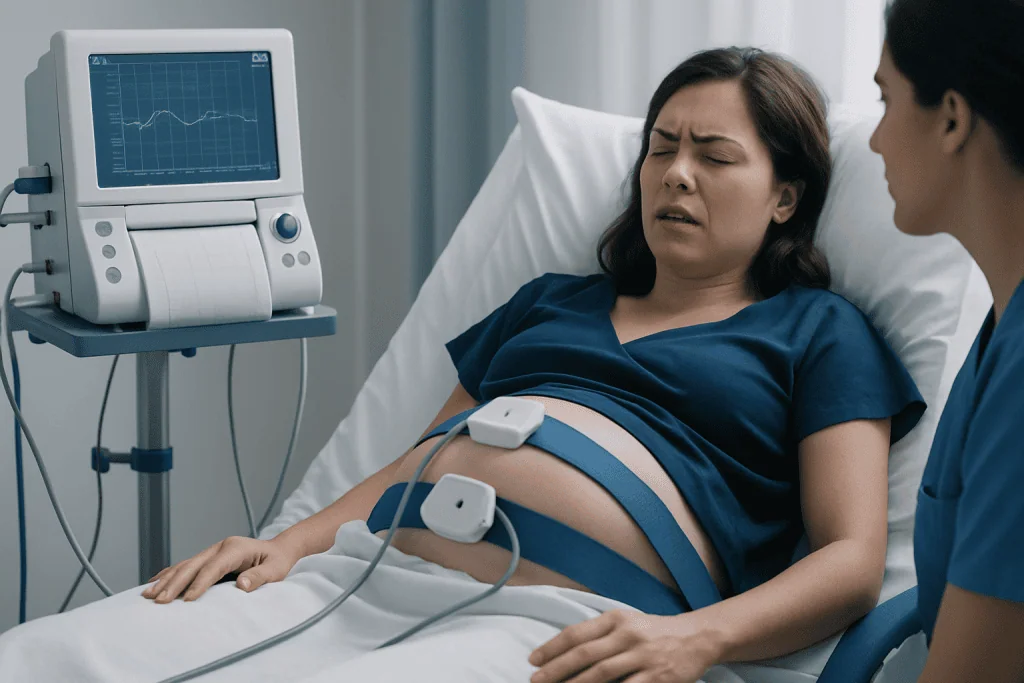
Contractions may feel like a wave of tightening that builds, peaks, and then fades. The abdomen may become firm to the touch during the contraction and then soften again. Depending on the stage of pregnancy and labor, the sensation can range from mild discomfort to stronger cramping, pelvic pressure, back pain, or a need to stop and breathe through the tightening.
True labor contractions often follow a pattern. They usually come at regular intervals, gradually get closer together, last longer, and feel stronger over time. They also tend to continue even if the person changes position, rests, drinks water, or takes a warm shower.
Braxton Hicks contractions are commonly irregular. They may occur after activity, dehydration, a full bladder, or later in the day, and they often improve with rest or hydration. A person may notice:
- Irregular timing with no clear pattern
- Mild to moderate tightening rather than steadily increasing pain
- Symptoms that ease after walking, resting, or drinking fluids
- Tightening mainly in the front of the abdomen
Some people also notice other signs around the time of labor contractions, such as increased pelvic pressure, passage of mucus, low back pain, or rupture of membranes. These signs matter most when they occur together with regular contractions.
Why contractions happen: common causes and risk factors

The uterus is a muscular organ, so some degree of tightening can occur during a normal pregnancy. Braxton Hicks contractions are thought to reflect the uterus “practicing” and responding to normal physical triggers such as activity, dehydration, stress, sexual activity, or an overfull bladder. They are common and, by themselves, are not usually a sign of a problem.
True labor contractions happen when hormonal and mechanical signals in late pregnancy begin coordinating the uterus and cervix for birth. This process involves increasing uterine activity and cervical ripening. At term, that is usually part of normal childbirth. Before 37 weeks, however, regular contractions can raise concern for preterm labor, especially if they come with pelvic pressure, vaginal bleeding, or leaking fluid.
Contractions can also be triggered or worsened by conditions that irritate the uterus. Examples include dehydration, infection, placental problems, multiple pregnancy, or excess stretching of the uterus. Occasionally, abdominal pain that seems like contractions may have another explanation, such as urinary tract infection, gastrointestinal cramping, or another condition that needs assessment.
Risk factors for early or problematic contractions can include a prior preterm birth, carrying twins or more, certain uterine or cervical conditions, smoking, some infections, and significant physical stress. Still, contractions can happen in people without obvious risk factors, so pattern and timing remain important.
False labor vs true labor: how doctors tell the difference
The key medical distinction is whether contractions are causing progressive cervical change. False labor may be uncomfortable and repetitive, but it does not consistently thin or open the cervix. True labor involves contractions that become organized and effective enough to change the cervix over time.
At home, a person can watch for practical clues. True labor contractions usually become more regular, stronger, and closer together. They may begin in the back and move toward the front, or create pressure low in the pelvis. They usually do not stop with hydration, rest, or changing position. By contrast, false labor often remains inconsistent and may settle down.
If symptoms are unclear, a clinician may assess contraction frequency, the baby’s heart rate, and the cervix. In some cases, especially earlier in pregnancy, this evaluation helps rule out premature birth risk. A timely check is particularly important if the person is under 37 weeks pregnant or has fluid leakage, bleeding, fever, or reduced fetal movement.
How contractions are assessed and diagnosed
Diagnosis starts with a careful history. A doctor or midwife usually asks when the contractions began, how often they occur, how long they last, whether they are getting stronger, and whether there is bleeding, fluid leakage, fever, or change in fetal movements. The stage of pregnancy is central to deciding what the contractions are likely to mean.
A physical examination may include checking the abdomen, monitoring the baby’s heart rate, and sometimes assessing the cervix. In labor assessment, the cervix may be checked for thinning and dilation. If membranes may have ruptured, additional tests may be used to confirm whether amniotic fluid is present.
When contractions happen before term or when there are warning signs, clinicians may recommend fetal monitoring, urine or blood tests, or ultrasound. Depending on the situation, this can help identify dehydration, infection, fetal wellbeing, or structural concerns. If symptoms suggest labor, a patient may also be referred for closer observation in an obstetric unit with pregnancy follow-up and delivery services.
The goal of evaluation is not only to confirm labor, but also to identify contractions that reflect another issue. This is why self-diagnosis based on pain intensity alone can be misleading.
Treatment and management options
Treatment depends on the cause, timing, and stage of pregnancy. For Braxton Hicks contractions or mild irregular tightening without warning signs, simple steps may help: resting, changing position, emptying the bladder, and drinking fluids. Many people find that symptoms settle when these triggers are addressed.
When true labor is beginning at term, management focuses on monitoring progress, supporting comfort, and checking maternal and fetal wellbeing. Labor care may include hydration, movement, pain relief options, and regular assessment of the cervix and the baby’s heart rate. If there are complications or specific indications, care may include obstetric procedures or a planned cesarean section.
If regular contractions occur too early, the priorities are different. Doctors assess whether this is true preterm labor and whether treatment is needed to slow contractions, protect the baby, or address an underlying trigger such as infection. In some cases, closer evaluation by a specialist in high-risk pregnancy care is appropriate.
People with repeated painful contractions but no labor may still need medical review if symptoms are severe, persistent, or associated with bleeding or reduced fetal movement. Treatment is based on the medical reason behind the contractions rather than the sensation alone.
Self-care, prevention, and when to seek medical care
Not all contractions can be prevented, especially those that are part of normal labor. Still, some self-care steps may reduce uncomfortable non-labor tightening: staying hydrated, avoiding overexertion, taking breaks during the day, and emptying the bladder regularly. Routine prenatal care is also important because it helps identify conditions that may increase the chance of early contractions or preterm labor.
It can be helpful to time contractions when they start. Counting how far apart they are, how long they last, and whether they are becoming stronger provides more useful information than trying to judge by pain alone. If symptoms improve after rest, fluids, or a change in position, they may be practice contractions, but uncertainty is common and medical advice is appropriate when in doubt.
Medical care should be sought promptly if contractions are regular and painful before 37 weeks, or at any time if there is vaginal bleeding, suspected fluid leakage, fever, severe abdominal pain, faintness, or reduced baby movement. Near term, a patient should contact their maternity team if contractions are becoming regular and closer together, especially if they are hard to talk through or are accompanied by rupture of membranes.
For international patients who need assessment or treatment, Acibadem International’s multidisciplinary specialists and JCI-accredited hospitals provide diagnosis and care across pregnancy and childbirth services, including normal delivery when appropriate.
Frequently asked questions
Are contractions always a sign of labor?
No. Contractions can be part of normal pregnancy without meaning labor has started. Braxton Hicks contractions are common, especially later in pregnancy, and are usually irregular and do not cause progressive cervical change.
How can someone tell the difference between Braxton Hicks and true labor contractions?
Braxton Hicks contractions are often irregular and may improve with rest, hydration, or changing position. True labor contractions usually become regular, stronger, closer together, and continue despite these measures.
Can contractions happen before 37 weeks?
Yes, and this needs attention. Irregular tightening can occur earlier in pregnancy, but regular painful contractions before 37 weeks may be a sign of preterm labor, especially if there is pelvic pressure, bleeding, or leaking fluid.
What do contractions usually feel like?
They often feel like tightening or cramping that comes and goes in waves. Some people feel them mainly in the lower abdomen, while others notice back pain, pelvic pressure, or a firm abdomen during the contraction.
Should someone go to the hospital for contractions?
That depends on the stage of pregnancy and the pattern of symptoms. Urgent assessment is important if contractions are regular before 37 weeks, if waters may have broken, if there is bleeding, fever, severe pain, or reduced fetal movement.
Do contractions always become more painful over time?
Not always, and pain varies widely from person to person. What matters more medically is whether the contractions are becoming regular and causing cervical change, rather than the pain level alone.
This article is for general information only and is not a substitute for professional medical advice. Please consult a qualified doctor about your individual situation.
Explore treatments in Turkey — costs, top hospitals & a free quote
JCI-accredited · board-certified surgeons · reply within 24h
Add us as a Preferred Source to see more of our trusted health content across Google Search, AI Overviews and Discover.

More from the Health Library

Ghrelin: An Evidence-Based Guide for Patients

Urinary Crystals: An Evidence-Based Guide for Patients

Vraylar: A Complete Medical Overview

Sulfites in Wine: A Complete Medical Overview

Skinny Big Breasts: An Evidence-Based Guide for Patients