Core Needle Biopsy: Procedure, Recovery and Results
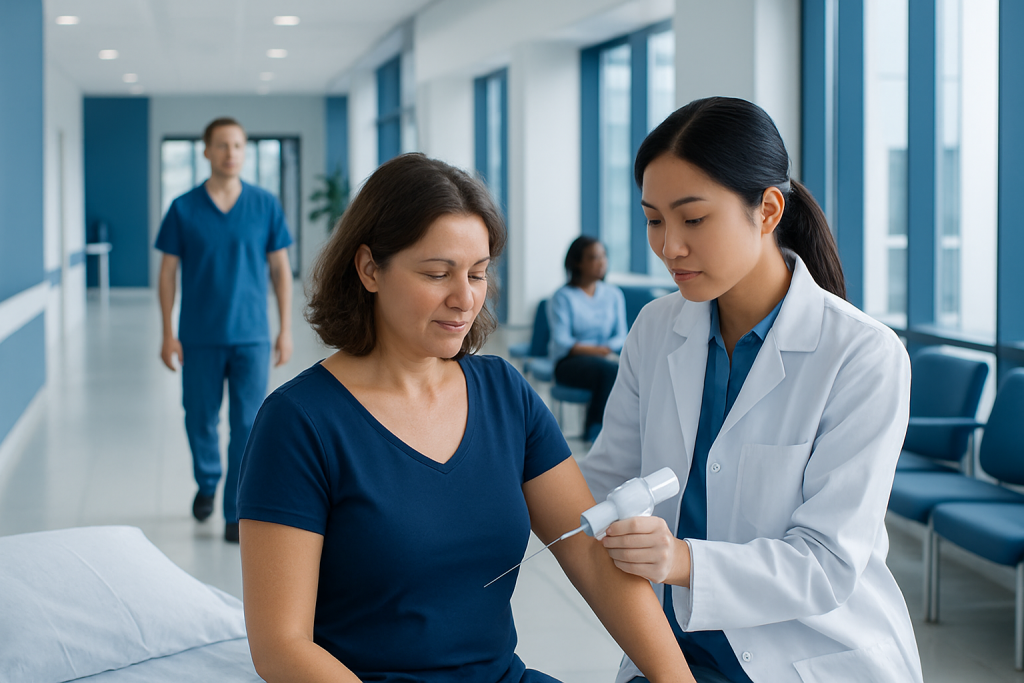
A core needle biopsy collects tissue samples rather than cells alone, allowing detailed laboratory examination. Most procedures are performed with local anaesthetic and take less than an hour, although imaging and preparation may add time.
Key Takeaways
- A core needle biopsy collects tissue samples rather than cells alone, allowing detailed laboratory examination.
- Most procedures are performed with local anaesthetic and take less than an hour, although imaging and preparation may add time.
- Mild soreness, bruising and swelling are common for a few days; serious complications are uncommon.
- Most people can return to light daily activities soon after the biopsy, but strenuous activity may need to wait briefly.
- Results commonly take several working days because tissue must be processed and assessed by a pathologist.
A core needle biopsy is a minimally invasive procedure that uses a hollow needle to collect small cylinders of tissue for laboratory examination. It helps doctors diagnose or clarify changes found in the breast, lymph nodes, thyroid, liver, prostate, lungs, bones, or other areas, often without the need for surgery.
Core Needle Biopsy Overview
A core needle biopsy is a diagnostic procedure in which a doctor uses a hollow needle to remove several small, cylinder-shaped pieces of tissue, called cores. A pathologist examines these samples under a microscope and may perform additional tests to identify inflammation, infection, benign changes or cancer.
The procedure is commonly used after an examination, scan or screening test identifies an area that needs closer assessment. It can be performed in many parts of the body, including the breast, lymph nodes, thyroid, liver, prostate, kidney, lung, bone and soft tissues. The exact approach depends on where the tissue change is located.
Core needle biopsy is different from fine-needle aspiration, which uses a much thinner needle to remove cells or fluid. Because a core biopsy preserves more tissue structure, it can often provide more detailed information for diagnosis and treatment planning. It does not itself mean that cancer is suspected or confirmed; many biopsy results show non-cancerous conditions.
Why a Core Needle Biopsy May Be Recommended
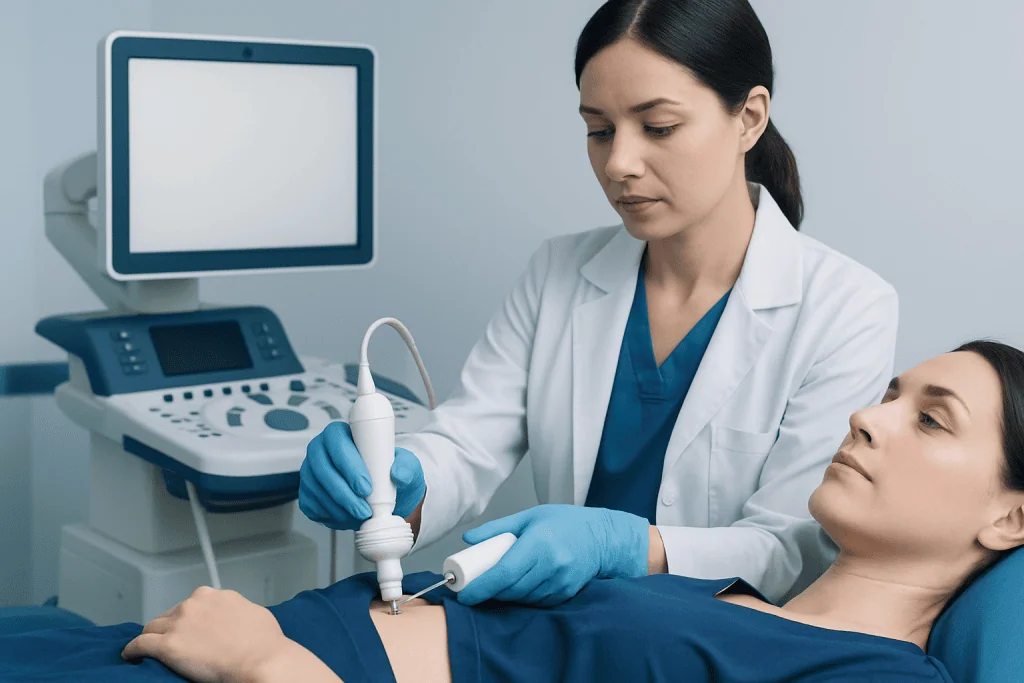
A clinician may recommend a core needle biopsy when imaging or examination identifies a lump, thickening, abnormal lymph node, unusual skin or tissue change, or an area that cannot be reliably characterised by scans alone. The purpose is to obtain a clear tissue diagnosis and guide appropriate next steps.
In breast care, a biopsy may be advised after a mammogram, ultrasound or MRI identifies a finding that requires assessment. It may also help distinguish benign breast changes from conditions that need monitoring or treatment. For example, imaging-guided tissue sampling can help evaluate concerns related to breast cancer while recognising that abnormal imaging findings have many possible explanations.
Core biopsy can also provide information that affects treatment choices. If cancer is diagnosed, pathology testing may identify the tumour type, grade and certain biological features. Doctors consider these findings alongside imaging, physical examination and a person’s medical history.
How the Procedure Is Planned and Performed
Before the procedure, the clinical team reviews medical history, current medicines, allergies and any bleeding problems. People should tell their clinician if they take anticoagulants, antiplatelet medicines, supplements that may affect bleeding, or if they are pregnant. They should not stop prescribed medicines unless the clinician specifically advises them to do so.
The biopsy is usually guided by imaging so the needle can be accurately placed. Depending on the body area, this may involve ultrasound, mammography, CT or MRI. A radiologist, surgeon or another appropriately trained clinician uses the images to identify the target and plan the safest route.
After the skin is cleaned, local anaesthetic is injected to numb the area. A tiny skin opening may be made, then the biopsy needle is advanced to collect several tissue cores. Some devices make a brief clicking sound as they obtain each sample. A small marker clip may be placed after certain breast biopsies to identify the sampled location on future imaging; it remains in place unless there is a clinical reason to remove it.
Pressure is applied afterwards to reduce bleeding, and a dressing or small bandage is placed over the site. The samples are sent to a pathology laboratory. For people undergoing breast investigations, the biopsy is often one part of a broader diagnostic pathway that may include breast cancer treatment planning if malignancy is identified.
How Painful Is a Core Needle Biopsy?
Most people describe a core needle biopsy as uncomfortable rather than painful. There may be a short sting or burning sensation when the local anaesthetic is injected. Once the area is numb, people may feel pressure, pushing or a pulling sensation while samples are taken, but sharp pain should be reported immediately.
The level of discomfort can vary according to the location of the biopsy, the imaging method used and individual sensitivity. Anxiety can also make physical sensations feel more intense. Asking the team to explain each step, using slow breathing and bringing a support person when permitted may help people feel more at ease.
Some soreness is expected after the numbing medicine wears off. The clinician can advise on suitable pain relief, taking into account other medical conditions and medicines. Aspirin-containing products or anti-inflammatory medicines may not be appropriate for everyone soon after a biopsy, particularly where bleeding risk is a concern, so individual guidance is important.
Recovery Timeline and Aftercare
Immediately after a core needle biopsy, the site is usually covered with a dressing and gentle pressure may be applied. Many people go home shortly afterwards. If sedation was used, which is less common for standard needle biopsies, someone else may need to drive them home and remain available for a period as advised by the care team.
During the first 24 to 48 hours, mild tenderness, bruising, swelling or a small amount of spotting on the dressing can occur. Applying a wrapped cold pack for short intervals may help reduce discomfort and swelling. The dressing should be kept clean and dry according to the instructions provided, and any skin closure strips should be allowed to fall off naturally unless the team says otherwise.
Light activities are usually possible the same day or the following day. Clinicians often advise avoiding heavy lifting, vigorous exercise, swimming and activities that repeatedly strain the biopsied area for a short time. Individual instructions may differ, especially after biopsies of internal organs or deeper tissues.
Follow-up is important even when the biopsy site appears to be healing normally. The doctor reviews the pathology result together with the imaging findings to ensure they are consistent. If results and imaging do not match, further testing or a repeat biopsy may occasionally be recommended.
How Long Does It Take to Heal After a Core Needle Biopsy?
Most people feel substantially better within a few days after a core needle biopsy. Tenderness and minor bruising often improve over several days, while a larger bruise or firm area beneath the skin can take one to two weeks, and occasionally longer, to settle.
Healing time depends on the biopsy location, the number of samples taken, whether a person uses medicines that affect bleeding and their general health. A breast biopsy commonly leaves only a small puncture site, whereas biopsies of deeper organs may have different activity restrictions and recovery expectations.
Following the specific aftercare plan is the best way to support recovery. A person should contact the clinical team if pain is worsening rather than improving, if swelling increases significantly, or if the wound has concerning changes.
Do You Need Bed Rest After a Breast Biopsy?
Bed rest is not usually needed after a routine image-guided breast core needle biopsy. Most people can walk, eat, use the bathroom and carry out gentle daily activities after leaving the appointment. Resting at home for the remainder of the day may be comfortable, especially if there is soreness or anxiety after the procedure.
Although complete bed rest is generally unnecessary, it is sensible to avoid strenuous exercise, heavy lifting and repetitive upper-body activity for the period recommended by the clinician, often around 24 to 48 hours. Wearing a supportive bra may improve comfort and help limit movement of the breast while bruising settles.
Instructions can vary based on the type and location of the biopsy, personal bleeding risk and whether any additional procedure was performed. The discharge advice from the biopsy team should take priority over general information.
How Long Do Core Needle Biopsy Results Take to Come Back?
Core needle biopsy results often take several working days, although the exact timeframe varies between laboratories and healthcare systems. Tissue must be fixed, processed into thin sections, stained and examined by a pathologist. Some samples require additional specialised tests, which can extend the waiting period.
When cancer is diagnosed or considered, further laboratory testing may be needed to provide details that help guide care. This can include tests relevant to the tissue type and suspected condition. A clinician should explain what information is available at each stage and when any remaining results are expected.
Waiting for results can feel difficult. It may help to ask at the appointment who will communicate the result, how it will be shared and when to call if no update has been received. A result should be discussed with a qualified clinician, who can put it into context with the scan and examination findings.
Risks, Benefits and When to Seek Medical Care
The main benefit of a core needle biopsy is that it can provide valuable diagnostic information without an open surgical procedure. It generally involves a small skin opening, local anaesthetic and a short recovery. In many situations, the result helps avoid unnecessary surgery or enables treatment to be planned more precisely.
Common effects include brief bleeding, bruising, tenderness and swelling. Less common risks include infection, a larger collection of blood under the skin, injury to nearby structures or an inadequate sample that requires repeat testing. The risk profile differs by biopsy site; for example, biopsies involving the chest or internal organs have specific risks that the clinician should explain beforehand.
A person should seek prompt medical advice if they develop fever, spreading redness, warmth, pus-like drainage, persistent bleeding despite firm pressure, rapidly increasing swelling, severe or worsening pain, dizziness, shortness of breath, or any symptom that feels urgent. Emergency care is appropriate for severe symptoms such as trouble breathing, fainting or uncontrolled bleeding.
Acibadem International’s multidisciplinary specialists and JCI-accredited hospitals assess abnormal findings and coordinate biopsy, pathology and follow-up care for international patients. The next step after any biopsy should be based on the complete pathology report and an individual discussion with the treating doctor.
Frequently asked questions
What is the difference between a core needle biopsy and a fine-needle aspiration?
Fine-needle aspiration uses a very thin needle to collect individual cells or fluid. A core needle biopsy uses a wider hollow needle to remove small tissue cylinders, preserving the tissue structure for more detailed examination. The best option depends on the area being assessed and the information the doctor needs.
Can a core needle biopsy spread cancer?
Needle biopsy is a standard diagnostic procedure, and the risk of cancer cells spreading along the needle path is considered very low. The benefit of obtaining an accurate diagnosis generally outweighs this rare concern. The treating team can explain the considerations for a specific biopsy site.
Can I eat before a core needle biopsy?
Many biopsies performed with local anaesthetic do not require fasting. However, some procedures, particularly those involving sedation or certain internal organs, may require specific preparation. The person should follow the instructions given by the biopsy team rather than relying on general advice.
Will a core needle biopsy leave a scar?
Most core needle biopsies leave a very small mark because they are performed through a tiny skin opening. The site may initially look bruised or slightly raised, then gradually fade as it heals. Scarring can vary according to skin type, biopsy location and individual healing.
What happens if a core needle biopsy is inconclusive?
An inconclusive result may occur if the sample does not contain enough representative tissue or if the pathology findings do not fully explain the imaging appearance. The doctor may recommend another image-guided biopsy, a surgical biopsy, repeat imaging or specialist review. This does not automatically mean a serious condition is present.
Can I drive home after a core needle biopsy?
Many people can drive after a biopsy done with local anaesthetic alone, provided they feel well and can safely control the vehicle. Some centres advise arranging a ride, particularly after a breast biopsy or if soreness may affect arm movement. Driving should be avoided if sedation or medicines that impair alertness were used.
References
- American Cancer Society
- Radiological Society of North America
- National Cancer Institute
- Mayo Clinic
- NHS
This article is for general information only and is not a substitute for professional medical advice. Please consult a qualified doctor about your individual situation.
Oncology care in Turkey — second opinion and treatment plan
JCI-accredited · board-certified surgeons · reply within 24h
Add us as a Preferred Source to see more of our trusted health content across Google Search, AI Overviews and Discover.

More from the Health Library


Related Specialists
Dr. Umut Özbebit (m)
Aesthetic Plastic & Reconstructive Surgery
Prof. Dr. Vahit Emre Özden
Orthopedic Surgery & Traumatology
Dr. Mehmet Ali Sayan
Anesthesiology
Dr. Filiz Gösterişli
Anesthesiology