Deep Breathing Diaphragmatic Breathing — Explained by Medical Evidence, Not Myths

Diaphragmatic breathing means breathing so the abdomen gently rises as the diaphragm moves downward. It may help reduce stress, improve breathing control, and ease unnecessary chest and shoulder tension.
Key Takeaways
- Diaphragmatic breathing means breathing so the abdomen gently rises as the diaphragm moves downward.
- It may help reduce stress, improve breathing control, and ease unnecessary chest and shoulder tension.
- It is useful for many healthy people and may also support people with some respiratory or anxiety-related symptoms when guided appropriately.
- Benefits usually come from regular, calm practice rather than forceful or very deep breathing.
- Sudden shortness of breath, chest pain, blue lips, or severe dizziness need medical assessment rather than breathing exercises alone.
Deep breathing diaphragmatic breathing is a simple technique that uses the diaphragm more effectively, allowing slower, steadier breaths with less upper-chest effort. Medical evidence suggests it can help with relaxation, stress management, and breathing efficiency, but it is not a cure-all and should be used as part of an overall health plan when needed.
What deep breathing diaphragmatic breathing means
Deep breathing diaphragmatic breathing refers to a way of breathing that emphasizes the diaphragm, the main muscle used for breathing. When the diaphragm contracts, it moves downward and the abdomen gently expands. This allows the lungs to fill more efficiently than breathing mainly with the upper chest and neck muscles.
In everyday language, this is often called belly breathing. It does not mean pushing the stomach out forcefully or taking the biggest possible breath. Instead, it means allowing a slow, comfortable breath pattern in which the lower rib cage and abdomen move naturally while the shoulders stay relatively relaxed.
Medical evidence supports diaphragmatic breathing as a practical self-regulation tool. It can help some people reduce the sensation of stress, improve awareness of breathing patterns, and use less unnecessary muscular effort. It is commonly used in rehabilitation, stress-management programs, and supportive care for certain breathing conditions.
At the same time, it is important to separate evidence from myths. Diaphragmatic breathing does not “detox” the body, replace emergency treatment, or cure chronic disease on its own. Its value lies in improving breathing mechanics and helping the nervous system shift toward a calmer, more regulated state.
How the body breathes: diaphragm, lungs, and nervous system
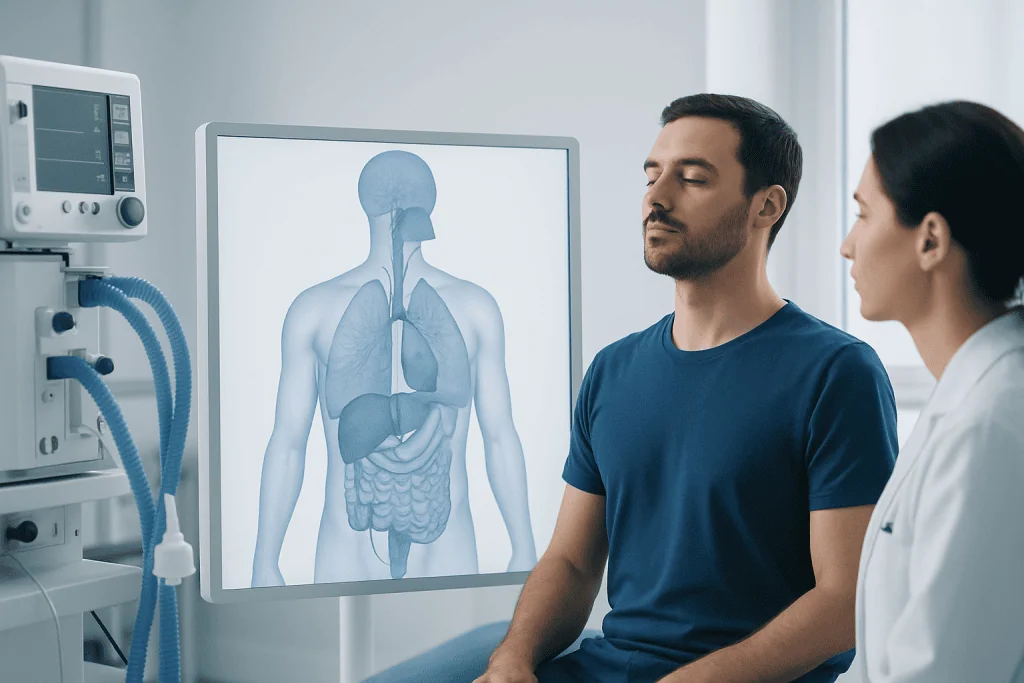
The diaphragm is a dome-shaped muscle located below the lungs. During inhalation, it contracts and flattens downward, creating space for the lungs to expand. During exhalation, it relaxes and rises again. This basic movement is central to efficient breathing, especially during rest and light activity.
When people are tense, in pain, or breathing quickly, they may rely more on the upper chest, neck, and shoulder muscles. That pattern is not always harmful, but if it becomes habitual, breathing can feel shallow, rushed, or tiring. Some people then become more aware of their breathing in a way that increases discomfort or anxiety.
Diaphragmatic breathing can support a slower respiratory rate and often encourages longer exhalation. This may influence the autonomic nervous system, which helps regulate heart rate, stress responses, and relaxation. For that reason, breathing exercises are often included in broader care for stress, recovery, and symptom management.
In people with chronic lung conditions, breathing patterns can be more complex. Diaphragmatic breathing may help some individuals, but in others it should be taught by a clinician to avoid extra effort or breath trapping. For example, people living with COPD often benefit from individualized breathing instruction rather than generic advice.
Evidence-based benefits and what it may help with

Research suggests that diaphragmatic breathing can help lower perceived stress and improve relaxation in many people. It may also support attention, body awareness, and emotional regulation. These effects appear to be related to slower breathing, reduced muscle tension, and changes in the body’s stress-response systems.
Some people use diaphragmatic breathing to manage episodes of tension, performance anxiety, or feelings of overbreathing. It may also be included in supportive care for people with breathing pattern disorders, chronic pain, and sleep-related tension. In rehabilitation settings, it is sometimes paired with posture training, movement therapy, or physical therapy and rehabilitation.
For respiratory symptoms, the goal is usually not to take very large breaths but to breathe more efficiently. In selected patients, clinicians may combine diaphragmatic breathing with strategies such as pacing, gentle exercise, or respiratory therapy. This is especially relevant when shortness of breath has multiple causes, including deconditioning, stress, or chronic lung disease.
It is also useful to recognize its limits. Diaphragmatic breathing is supportive, not a substitute for treatment of asthma, infection, heart disease, or serious mental health concerns. People with recurrent symptoms should seek a proper evaluation so that treatable conditions such as asthma are not overlooked.
Common myths and misunderstandings
One common myth is that deeper is always better. In reality, repeatedly taking very large breaths can make some people feel lightheaded, tight in the chest, or more aware of their breathing. Effective diaphragmatic breathing is usually gentle, quiet, and controlled rather than exaggerated.
Another myth is that everyone should breathe exactly the same way. Breathing patterns naturally change with speaking, exercise, posture, pain, pregnancy, and underlying health conditions. Diaphragmatic breathing is a skill that can be helpful, but it should be adapted to the person rather than forced into a rigid formula.
Some online sources suggest that diaphragmatic breathing can cure major diseases, remove toxins, or replace medical treatment. These claims are not supported by evidence. Breathing exercises may help symptoms and self-management, but they work best alongside standard medical care when a health condition is present.
It is also a misconception that chest movement means a person is breathing incorrectly. Healthy breathing often involves both the abdomen and the rib cage. The aim is balanced, comfortable movement with minimal strain, not complete elimination of chest expansion.
How to practice diaphragmatic breathing safely
A simple starting position is lying on the back with knees bent or sitting upright with the back supported. One hand can rest on the upper chest and the other on the abdomen, just below the rib cage. The person then breathes in slowly through the nose if comfortable, noticing the abdomen rise gently while the upper chest stays relatively calm.
Exhalation can happen through the nose or through softly pursed lips. The out-breath should be relaxed, not forced. Many people find it helpful to make the exhale slightly longer than the inhale, such as breathing in for a comfortable count and breathing out a little more slowly. The pace should remain easy enough to speak afterward without gasping.
Short practice sessions are often better than long ones at first. A few minutes once or twice a day may be enough to learn the pattern. Over time, the technique can be used during walking, stretching, or stressful moments. If dizziness, air hunger, or discomfort appears, the person should stop, rest, and return to normal breathing.
Helpful reminders include:
- Keep the shoulders, jaw, and neck as relaxed as possible.
- Avoid forcing the belly outward or sucking in the abdomen tightly.
- Choose a calm, steady rhythm rather than maximum breath depth.
- Practice regularly when feeling well, not only during distress.
- Ask a clinician for guidance if there is lung disease, chronic breathlessness, or uncertainty about technique.
Who may benefit most and when professional guidance helps
Many healthy adults can use diaphragmatic breathing as part of stress management, mindfulness, or general wellness. It may be helpful for people who notice shallow breathing during work pressure, study, travel, or difficulty falling asleep. Singers, athletes, and people in rehabilitation may also use it to improve breath awareness and control.
People with chronic respiratory symptoms, frequent sighing, panic symptoms, or postural tension may benefit from more structured instruction. In these settings, clinicians often assess breathing pattern, posture, chest wall movement, and symptom triggers rather than teaching a one-size-fits-all exercise. This can be particularly useful when breathlessness coexists with deconditioning or muscle tightness.
Professional support is especially important if symptoms are persistent or the person has a known medical condition. Evaluation may include a clinical exam and, when appropriate, tests of lung function or imaging. Care may involve pulmonology, cardiology, rehabilitation, or mental health support depending on the cause.
For international patients who need assessment of ongoing breath-related symptoms, Acibadem International’s multidisciplinary specialists in JCI-accredited hospitals can diagnose contributing conditions and guide supportive care, including options such as pulmonary rehabilitation when appropriate.
When to seek medical care
Breathing exercises are not the right response to every symptom. Medical care is important if shortness of breath is new, severe, worsening, or associated with chest pain, fainting, confusion, blue lips, or inability to speak in full sentences. These symptoms may signal an urgent problem that needs prompt assessment.
A person should also seek medical advice if they have repeated wheezing, nighttime breathlessness, prolonged cough, swelling in the legs, fever with breathing difficulty, or regular dizziness during breathing exercises. Ongoing symptoms can have many causes, including asthma, chronic lung disease, heart conditions, anemia, or anxiety-related breathing pattern changes.
If diaphragmatic breathing consistently causes distress, it may mean the technique needs adjustment or that another issue is present. A qualified doctor or therapist can help determine whether the problem relates to lung function, conditioning, posture, pain, or stress. This kind of assessment is more useful than trying to push through uncomfortable symptoms alone.
In urgent situations, emergency care should come first. Breathing exercises can be supportive after evaluation, but they should not delay diagnosis or treatment of a potentially serious condition.
Frequently asked questions
Is diaphragmatic breathing the same as belly breathing?
Yes, these terms are usually used to describe the same general technique. Both refer to breathing that allows the diaphragm to work well so the abdomen rises gently during inhalation. The goal is relaxed, efficient breathing rather than forceful expansion.
Can deep breathing diaphragmatic breathing help with anxiety?
It can help many people manage the physical side of stress and anxiety by slowing breathing and reducing muscle tension. However, it is not a complete treatment for anxiety disorders on its own. Persistent anxiety symptoms should be discussed with a qualified healthcare professional.
Should the chest stay completely still during diaphragmatic breathing?
No. Some chest and rib movement is normal in healthy breathing. The main aim is to reduce unnecessary upper-chest strain and allow more balanced movement, not to keep the chest rigid.
Why do some people feel dizzy when practicing deep breathing?
Dizziness can happen if breaths are taken too fast, too deeply, or too forcefully. This may alter carbon dioxide levels and create sensations such as lightheadedness or tingling. A gentler pace and shorter practice sessions often help, but ongoing symptoms should be assessed by a clinician.
Can people with asthma or COPD use diaphragmatic breathing?
Some can benefit, but technique should be individualized. In asthma or COPD, breathing symptoms may have several triggers, and the wrong pattern can sometimes feel uncomfortable. A doctor, respiratory therapist, or rehabilitation specialist can advise on the safest approach.
How long does it take to learn diaphragmatic breathing?
Many people understand the basic pattern within a few practice sessions, but making it feel natural can take longer. Regular short practice is usually more effective than occasional long sessions. Progress is often gradual and depends on posture, tension levels, and any underlying health issues.
References
- World Health Organization
- National Heart, Lung, and Blood Institute
- American Thoracic Society
- National Center for Complementary and Integrative Health
- Cleveland Clinic
This article is for general information only and is not a substitute for professional medical advice. Please consult a qualified doctor about your individual situation.
Explore treatments in Turkey — costs, top hospitals & a free quote
JCI-accredited · board-certified surgeons · reply within 24h
Add us as a Preferred Source to see more of our trusted health content across Google Search, AI Overviews and Discover.
Check your numbers in seconds
BMI, calories, due date, blood pressure and 30+ more clinical calculators — free, instant, doctor-reviewed ranges.

More from the Health Library



Related Specialists

Dr. Sema Eryılmaz
Pediatric Endocrinology
Dr. Mehmet Akkuşaklı
Emergency Service
Asst. Prof. Dr. Zeynep Tuğçe Sarıkaya
Intensive Care
Dr. Oya Duran
Pediatrics