Dental Dam: A Complete Medical Overview

A dental dam is a barrier used during oral-vaginal or oral-anal contact. It can help reduce exposure to sexually transmitted infections, but it does not provide complete protection.
Key Takeaways
- A dental dam is a barrier used during oral-vaginal or oral-anal contact.
- It can help reduce exposure to sexually transmitted infections, but it does not provide complete protection.
- Single-use, correct placement, and plenty of water- or silicone-based lubricant help improve safety and comfort.
- It should not be flipped over, shared, or reused between partners or body areas.
- People with symptoms, recent STI exposure, or questions about testing should speak with a healthcare professional.
A dental dam is a thin sheet of latex or similar material placed over the vulva or anus during oral sex to reduce contact with body fluids and skin, which can help lower the risk of some sexually transmitted infections. It does not remove risk completely, but when used correctly and consistently, it is a practical barrier method for safer sex.
Overview: what a dental dam is and what it does
A dental dam is a thin, flexible sheet used as a barrier during oral sex. It is usually made of latex or non-latex materials such as polyurethane and is placed over the vulva or anus before mouth-to-genital or mouth-to-anal contact. Its purpose is to reduce direct contact with skin, secretions, and tiny amounts of blood that can carry infection.
Although the name comes from dentistry, where similar sheets are used to isolate teeth during procedures, a dental dam in sexual health is used for safer sex. It is especially relevant for oral-vaginal and oral-anal contact. It is not meant for penetrative sex on its own, though some people may use other barrier methods such as condoms for different types of contact in the same sexual encounter.
A dental dam can lower the risk of spreading some sexually transmitted infections, including herpes simplex virus, human papillomavirus, gonorrhea, chlamydia, syphilis, and infections transmitted through fecal-oral contact. Protection is not absolute, because infections may still spread from uncovered skin or from incorrect use. Even so, it is a sensible option for people who want to make oral sex safer without avoiding it completely.
When a dental dam may be useful
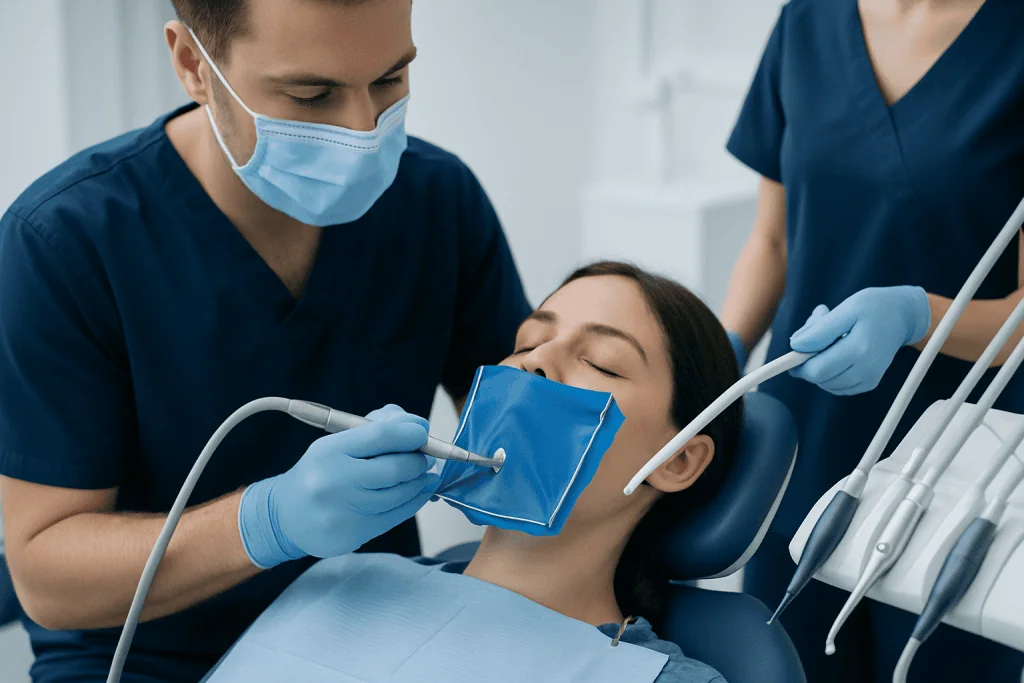
A dental dam can be useful whenever there is oral contact with the vulva or anus, particularly when partners do not know each other’s current STI status, when one partner has symptoms, or when there has been a recent new sexual partner. It can also help when a person wants an extra layer of protection while waiting for STI test results or during treatment for an infection, based on medical advice.
Some people mistakenly assume oral sex carries little or no infection risk. In reality, a number of infections can be transmitted through oral contact. This includes infections that affect the throat, mouth, genitals, or anal area. A barrier can therefore be a practical part of a broader prevention plan that also includes communication, testing, and vaccination where appropriate.
Dental dams may also be helpful for people with small cuts, irritated skin, mouth ulcers, or after shaving or waxing, because broken or inflamed skin can make infection transmission easier. They are not a substitute for medical assessment if symptoms are present. If there are sores, unusual discharge, or pain, it is important to arrange STI evaluation rather than relying on barrier protection alone.
How to use a dental dam correctly
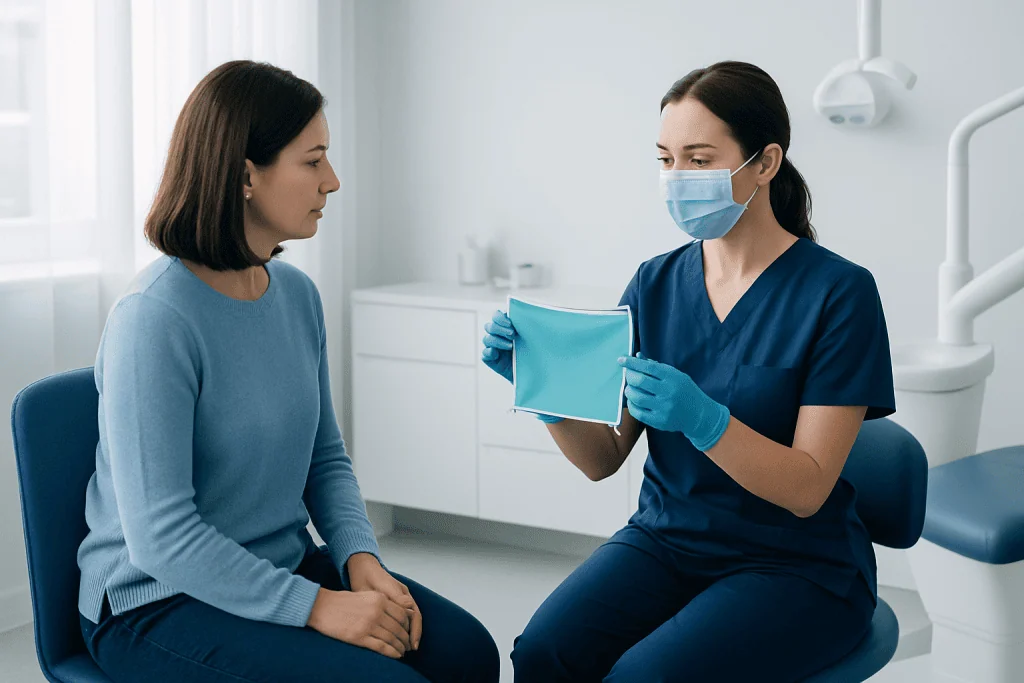
Correct use matters. Before use, hands should be clean, and the packaging should be checked for damage or an expired date if one is listed. The sheet is opened carefully to avoid tearing it with nails, jewelry, or teeth. The dam is then laid flat over the vulva or anus, covering the area that will have oral contact.
It is important to keep one side facing the body and the other side facing the mouth throughout use. The dam should not be flipped over, because fluids on one side can transfer to the other. A fresh dam should be used for each sexual act and for each partner. If moving from the anus to the vulva, or vice versa, a new barrier should be used to reduce the chance of spreading bacteria or viruses.
A small amount of water-based or silicone-based lubricant can be placed on the side touching the skin. This may help the sheet stay in place and can improve sensation. Oil-based products may damage some latex barriers, so they are best avoided unless the product instructions specifically allow them. A dental dam is intended for single use and should be thrown away after use.
- Use a new dam every time.
- Do not stretch it so tightly that it tears.
- Do not reuse, wash, or share it.
- Do not use it if it has holes, tears, or looks brittle.
What a dental dam can and cannot protect against
A dental dam helps reduce exposure to infections spread by oral-genital or oral-anal contact. These can include herpes, gonorrhea, chlamydia, syphilis, human papillomavirus, and some intestinal infections. Because it creates a physical barrier, it may also reduce contact with menstrual blood or other secretions during oral sex.
However, it does not completely prevent infection. Some infections can spread from skin that is not covered by the dam, such as nearby genital, groin, buttock, or inner thigh skin. Risk may also remain if the barrier slips, tears, is reused, or is used incorrectly. This is why safer sex advice usually combines barrier use with regular STI screening and open communication between partners.
Vaccination and testing remain important. Vaccines can help protect against hepatitis B and HPV in eligible people. Regular screening may be advised based on age, sexual practices, number of partners, symptoms, and local health guidance. People who have concerns about sexually transmitted infections should discuss the most suitable prevention and testing plan with a qualified clinician.
Common questions, practical alternatives, and comfort tips
Commercial dental dams may not always be easy to find, and some people feel uncertain about how to introduce them into a sexual relationship. In practice, discussing barriers before intimacy can make them easier to use and can reduce awkwardness. Choosing flavored or non-latex products may improve comfort for some users, especially those with latex sensitivity.
If a commercial dental dam is not available, some public health guidance explains that a new external condom can be cut open and flattened into a sheet. The same principle may apply to a non-microwavable glove cut open into a flat barrier, depending on the material. These alternatives should still be single-use, intact, and free from oil-based products that could weaken latex. Household plastic wrap is not generally recommended as a medical barrier, because product properties vary.
Comfort often improves with practice. Using lubricant on the body side of the barrier can help it stay in place, and partners may find it helpful to hold the sheet gently at the edges. If there is a history of oral lesions, recurrent herpes outbreaks, irritation, or suspected infection, it is better to pause sexual contact and seek medical advice rather than rely only on a barrier.
STI testing, diagnosis, and related medical care
A dental dam is a prevention tool, not a diagnostic one. If someone has symptoms such as sores, genital rash, unusual discharge, bleeding after sex, anal pain, or a sore throat after sexual contact, a clinician may recommend testing. Diagnosis may include a physical examination, swabs from the mouth, throat, genitals, or rectum, urine tests, and blood tests depending on the suspected infection.
Testing recommendations vary by individual risk and symptoms. Some infections can be present without obvious signs, which is why screening can still matter even when a person feels well. Timely diagnosis can support effective treatment and help prevent passing an infection to others. For broader sexual health evaluation, a doctor may also discuss vaccination status, previous infections, and partner notification if relevant.
Treatment depends on the cause. Bacterial infections may be treated with prescription antibiotics, while viral infections such as herpes are managed in different ways. Persistent sores or suspicious mouth lesions may require further assessment in specialists experienced in oral and dental health or infectious diseases.
Prevention and self-care beyond barrier use
Safer sex works best as a combination approach. Along with using a dental dam during oral sex, people can reduce risk by having regular STI testing, limiting contact when sores or symptoms are present, and discussing recent test results with partners. Good oral hygiene supports general health, but brushing or flossing immediately before oral sex may irritate gums in some people, so gentle timing and care may help.
Vaccination is another important layer of prevention. Depending on age, health history, and local guidance, vaccines against HPV and hepatitis B may be recommended. People with repeated infections or concerns about exposure should ask a clinician which preventive steps are most suitable for them. If there is genital or anal irritation from fragrances, spermicides, or certain lubricants, switching products may improve comfort.
For people who experience discomfort, lesions, or ongoing symptoms in the mouth or throat, evaluation may involve an ear, nose, and throat specialist. In some cases, clinicians may recommend assessment through ENT services if symptoms such as persistent sore throat, mouth pain, or swallowing discomfort continue. Near the end of the care journey, some international patients may seek coordinated evaluation at Acibadem International, where multidisciplinary specialists in JCI-accredited hospitals diagnose and treat related conditions.
When to seek medical care
Medical advice is recommended if a person develops genital, anal, or oral sores; a new rash; unusual discharge; pain during sex; bleeding not related to a known menstrual period; or a sore throat that starts after sexual contact and does not settle. Care is also appropriate after a known STI exposure, a barrier failure such as tearing, or contact with a partner who has symptoms.
Urgent assessment is appropriate for severe pelvic pain, fever with genital symptoms, spreading rash, marked swelling, or difficulty swallowing or breathing. These symptoms may have several causes and should not be self-diagnosed. A qualified clinician can decide whether STI testing, treatment, or referral is needed.
People who are pregnant, immunocompromised, or have recurrent infections should be particularly careful about new symptoms and seek medical guidance promptly. Even when symptoms are mild, getting checked can provide reassurance, reduce uncertainty, and support early treatment when necessary.
Frequently asked questions
What is a dental dam used for?
A dental dam is used during oral-vaginal or oral-anal contact as a barrier between the mouth and the body. Its main purpose is to lower exposure to infections that can spread through skin contact, secretions, or tiny amounts of blood.
Does a dental dam fully prevent sexually transmitted infections?
No. A dental dam can reduce risk, but it does not eliminate it completely because some infections can spread from uncovered skin or from incorrect use. It is best used along with regular STI testing and honest communication between partners.
Can a dental dam be reused?
No. A dental dam is meant for single use only. Reusing it or flipping it over can transfer fluids and reduce protection.
What kind of lubricant can be used with a dental dam?
Water-based or silicone-based lubricants are generally the safest choices, especially with latex products. Oil-based products may damage some latex barriers, so checking the product instructions is important.
What if a commercial dental dam is not available?
Some public health guidance explains that a new external condom can be cut open and laid flat to create a temporary barrier. Any alternative should be clean, intact, single-use, and made from a suitable barrier material.
Who should consider using a dental dam?
Anyone having oral-vaginal or oral-anal sex can consider using one, especially with new partners, unknown STI status, symptoms, or while waiting for test results. It may also be helpful when there are small cuts, irritation, or mouth ulcers.
When should someone get tested instead of relying on a dental dam?
Testing is important if there are symptoms such as sores, rash, discharge, pain, or a sore throat after sexual contact. It is also wise after a known exposure, a torn barrier, or if a partner reports an STI or symptoms.
References
- World Health Organization
- Centers for Disease Control and Prevention
- National Health Service
- American Sexual Health Association
This article is for general information only and is not a substitute for professional medical advice. Please consult a qualified doctor about your individual situation.
Explore treatments in Turkey — costs, top hospitals & a free quote
JCI-accredited · board-certified surgeons · reply within 24h
Add us as a Preferred Source to see more of our trusted health content across Google Search, AI Overviews and Discover.

More from the Health Library



Related Specialists

Dr. Salih Manavoğlu
Otorhinolaryngology
Dr. Nilgün Çavdar
Physical Medicine & Rehabilitation
Dr. Macit Dokur
Inpatient Clinic Physicians Clinical Service
Dt. İrem Güllerci
Oral Dental & Maxillofacial Surgery